
Flashlights

Pay in 3 interest-free payments on purchases from £20-£3000 with  . Learn more.
Loading...
End of content
Error - No more pages to load
About Flashlights
Whether you're working in confined spaces, carrying out emergency repairs, or navigating dark job sites, a reliable flashlight is an essential piece of kit for tradespeople and DIY enthusiasts alike. The comprehensive range at Tooled-Up.com includes everything from compact aluminium hand torches for everyday carry to powerful rechargeable spotlight torches that deliver impressive beam distances for outdoor and industrial applications. With offerings from trusted brands including DeWalt, Draper, Sealey, Lighthouse, and LED Lenser, you'll find professional-grade lighting solutions engineered for durability and performance.
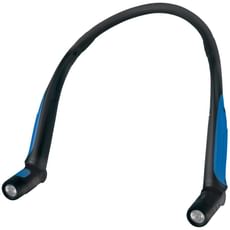
Modern flashlights have evolved significantly beyond traditional incandescent bulbs, with LED technology now dominating the market thanks to its superior energy efficiency, brightness, and longevity. Today's professional torches offer features such as USB rechargeability, multiple brightness modes, hands-free head torch configurations, and innovative designs like neck-mounted lights and COB LED work lights. Many models now incorporate wave sensor technology for convenient hands-free operation, whilst rechargeable options eliminate the ongoing cost and environmental impact of disposable batteries.
From lightweight aluminium EDC (everyday carry) torches that slip easily into your work bag to robust spotlight torches that double as emergency powerbanks, this flashlight category caters to every lighting requirement. Whether you need focused beam patterns for precision work, wide flood lighting for illuminating larger areas, or waterproof construction for outdoor and marine applications, you'll find the right torch for your specific needs.
Jargon Buster
- Lumens - The measurement of total light output from a torch. Higher lumen ratings indicate brighter torches, with professional models ranging from 100 lumens for basic tasks to over 1000 lumens for industrial applications and search operations.
- COB LED - Chip-on-Board LED technology that packages multiple LED chips together to create a single, high-intensity light source. COB LEDs provide excellent flood lighting with minimal shadows, making them ideal for close-range work illumination.
- IP Rating - Ingress Protection rating that indicates a torch's resistance to dust and water. For example, IP65 offers dust-tight protection and resistance to water jets, whilst IP67 provides protection against temporary immersion in water.
- Beam Distance - The maximum distance (measured in metres) at which a torch produces useful light of at least 0.25 lux – roughly equivalent to the brightness of a full moon. Professional torches may achieve beam distances of 100 metres or more.
- Runtime - How long a torch operates on a single charge or set of batteries before the light output drops to 10% of its initial brightness. Runtime varies significantly depending on brightness settings and battery capacity.
- CORE Technology - LED Lenser's proprietary rechargeable battery system that combines custom-designed lithium-ion batteries with advanced charging and power management for extended runtime and battery longevity.
Who Uses Flashlights?
Professional flashlights are essential equipment across numerous trades and industries:
- Electricians and Sparkies - for working in consumer units, loft spaces, and poorly-lit areas where mains power may be isolated
- Plumbers and Heating Engineers - inspecting under sinks, behind boilers, and in crawl spaces where natural light doesn't reach
- Motor Mechanics - examining engine bays, undercarriage components, and conducting detailed vehicle inspections
- Builders and General Contractors - navigating construction sites, working in unlit buildings, and early morning or evening site work
- Carpenters and Joiners - precision work in shadowed areas and assessing timber quality and grain patterns
- HVAC Engineers - inspecting ductwork, ventilation systems, and rooftop equipment in low-light conditions
- Security Professionals - conducting patrols, investigating disturbances, and performing night-time inspections
- Emergency Services - police, fire, and ambulance personnel requiring reliable illumination in critical situations
- Camping and Outdoor Enthusiasts - hikers, campers, and adventure seekers needing dependable portable lighting
- Property Maintenance Teams - caretakers and facilities managers carrying out inspections and repairs across various buildings
How to Choose the Right Flashlights
Selecting the appropriate flashlight depends on your specific requirements and working conditions. Consider these key factors:
Brightness and Beam Pattern: Determine the lumen output you need based on your typical working distance and environment. Spot beams provide long-range illumination ideal for outdoor work and large spaces, whilst flood beams offer wide, even coverage perfect for close-range tasks. Many professional torches offer adjustable focus or multiple brightness modes for versatility.
Power Source: Rechargeable lithium-ion torches eliminate ongoing battery costs and are more environmentally friendly, with USB charging offering convenient top-ups from various sources. However, disposable battery torches (AA, AAA) provide the advantage of instant power restoration by simply swapping batteries – useful for extended field work without access to charging facilities.
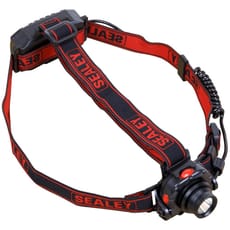
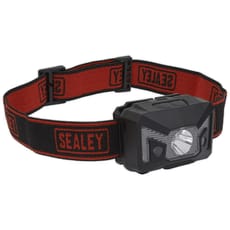
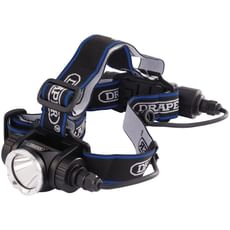
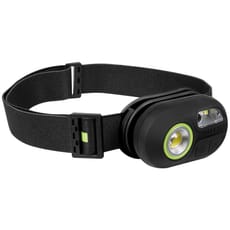
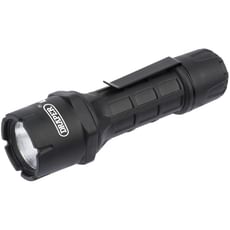
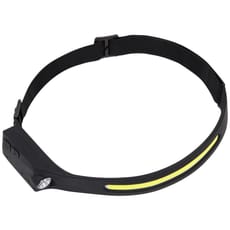
Mounting Configuration: Hand torches offer maximum brightness and beam distance but require one hand to operate. Head torches provide hands-free illumination essential for many trades, allowing you to direct light precisely where you're looking. Neck-mounted torches offer a middle ground with adjustable positioning and reduced neck strain compared to traditional headbands.
Build Quality and Durability: Professional-grade torches available from Tooled-Up should feature robust aluminium or reinforced polymer construction capable of withstanding drops and impacts typical on job sites. Look for waterproof ratings (minimum IP65) if you work outdoors or in wet conditions, and check for impact resistance ratings measured in metres of drop protection.
Runtime and Battery Life: Consider how long you need continuous operation between charges or battery changes. High-lumen spotlights may only run for 2-3 hours on maximum brightness, whilst lower-powered modes can extend runtime significantly. Some models include battery level indicators to prevent unexpected power loss during critical tasks.
Additional Features: Modern flashlights may include useful extras such as wave sensor activation (convenient when wearing gloves), red light modes for preserving night vision, strobe functions for emergencies, magnetic bases for hands-free positioning, and integrated powerbank capability for charging mobile devices.
Popular Accessories
- Spare Rechargeable Batteries - keep a charged backup for extended work periods without downtime
- USB Charging Cables and Adapters - maintain compatibility with various charging sources including vehicle USB ports
- Protective Carry Cases and Holsters - belt-mounted pouches for quick access and protection during transport
- Diffuser Tips - convert focused beams into soft ambient lighting for tent illumination or close work
- Coloured Filter Lenses - red, green, or blue filters for specialised applications and preserving night vision
- Helmet Mounts and Clips - attach head torches securely to hard hats and safety helmets
- Vehicle Chargers - 12V adapters for recharging torches on the move between job sites
- Replacement Straps and Headbands - maintain comfort and fit for head-mounted torches over time
Safety Information
Whilst flashlights are generally safe tools, observe these important precautions to ensure safe operation:
Battery Safety: Always use the correct battery type specified by the manufacturer. Never mix old and new batteries or different battery types. Rechargeable lithium-ion batteries should only be charged with the supplied charger to prevent overheating, fire risk, or battery damage. Remove batteries from torches during extended storage periods to prevent leakage and corrosion.
Heat Management: High-output LED torches can generate significant heat during extended use on maximum brightness settings. Avoid touching the lens area after prolonged operation, and never leave powerful torches running unattended in confined spaces or near flammable materials. Allow adequate cooling time between extended high-output sessions.
Potentially Explosive Atmospheres: Standard torches are not suitable for use in ATEX-rated environments where flammable gases, vapours, or dust may be present. If you work in such conditions (petrochemical facilities, grain stores, paint spray booths), you must use certified intrinsically safe torches that meet relevant BS EN standards.
Eye Safety: Never shine powerful flashlights directly into anyone's eyes, as high-lumen outputs can cause temporary flash blindness or, with prolonged exposure, potential eye damage. This is particularly important on construction sites and when working near colleagues or members of the public.
Frequently Asked Questions
What's the difference between lumens and watts when comparing torch brightness?
Lumens measure the actual light output, whilst watts indicate power consumption. For LED torches, lumens are the meaningful comparison metric. A 10W LED torch may produce 800-1000 lumens, vastly outperforming an old 10W incandescent torch that might only produce 100 lumens. Always compare lumens when assessing brightness.
How long do rechargeable torch batteries typically last?
Quality lithium-ion batteries in professional torches generally maintain performance through 300-500 charge cycles before capacity begins to diminish noticeably. With proper care – avoiding complete discharge, storing at partial charge, and preventing exposure to extreme temperatures – you can expect 2-5 years of reliable service depending on usage frequency.
Are more expensive branded torches worth the investment over budget alternatives?
Professional brands like DeWalt, LED Lenser, and Draper offer superior build quality, genuine waterproof ratings, reliable warranty support, and consistent performance under demanding conditions. Whilst budget torches may appear similar, they often use lower-grade LEDs with poor colour rendering, cheaper materials that fail under stress, and exaggerated specification claims. For daily professional use, quality branded torches provide better value over their lifespan.
Can I use any USB charger with my rechargeable torch?
Whilst many USB-rechargeable torches accept standard 5V USB charging, always check the manufacturer's specifications. Some high-capacity models may require specific amperage (e.g., 2A rather than 1A) for optimal charging speed. Using undersized chargers won't damage the torch but will result in very slow charging. Avoid using damaged cables or non-approved fast-charging adapters that exceed the torch's input specifications.
What IP rating do I need for outdoor and site work?
For general outdoor use and typical UK weather conditions, IP65 provides adequate protection against rain and dust ingress. If you regularly work in very wet conditions, wash down areas, or risk temporary immersion, opt for IP67 or IP68 rated torches that can survive submersion. Remember that impact resistance (measured in metres of drop protection) is equally important for site work durability.