

Full Face Masks & Filters

Pay in 3 interest-free payments on purchases from £20-£3000 with  . Learn more.




Loading...
End of content
Error - No more pages to load
About Full Face Masks & Filters
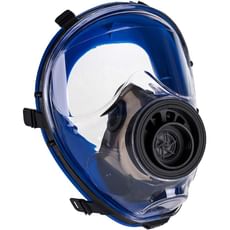
Full face masks and filters deliver comprehensive respiratory protection for professionals and DIY enthusiasts working in environments where airborne contaminants pose serious health risks. Unlike half masks or disposable respirators, full face masks provide complete coverage of the face, protecting the respiratory system, eyes, and facial skin from harmful particles, gases, vapours, and chemical splashes. These essential pieces of PPE are engineered to meet stringent UK and European safety standards including EN 136 for mask bodies and EN 14387 for gas filters, ensuring maximum protection across applications from spray painting and chemical handling to asbestos removal and industrial manufacturing.
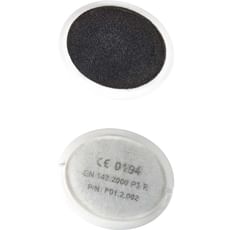
The effectiveness of any full face mask system depends entirely on selecting and using the correct filters for the specific contaminants present in your working environment. Replacement filters come in various classifications—from particulate filters for dust and fibres (P1, P2, P3) to gas filters for organic vapours, acid gases, and ammonia (A, B, E, K designations), plus combination filters that address multiple hazards simultaneously. Understanding these filter ratings is crucial for ensuring adequate protection and compliance with UK health and safety legislation including COSHH regulations. Modern full face masks from leading manufacturers at Tooled-Up.com feature quick-release filter systems, panoramic visors for improved visibility, and adjustable harness systems designed for comfortable all-day wear on site.
Proper maintenance and timely replacement of filters isn't just good practice—it's a legal requirement under UK health and safety law. Using expired or incorrect filters provides a false sense of security whilst exposing workers to dangerous substances. The range available from Tooled-Up includes both mask bodies and the full spectrum of replacement filters to ensure your respiratory protection equipment remains compliant and effective throughout its service life, with options suitable for everything from light-duty woodworking to high-risk asbestos remediation work.
Jargon Buster
- P1, P2, P3 Filter Ratings: European standards for particulate filtration efficiency. P1 offers basic protection against coarse dust, P2 filters at least 94% of airborne particles (suitable for medium-toxicity dusts), and P3 filters at least 99.95% of particles including fine dusts, fumes, and fibres such as asbestos and silica.
- ABEK Filters: Combination gas filters where A protects against organic vapours and solvents, B against inorganic gases (chlorine, hydrogen sulphide), E against acidic gases and sulphur dioxide, and K against ammonia. Often combined with particulate filters (e.g., ABEK2P3) for comprehensive protection.
- APF (Assigned Protection Factor): A numerical rating indicating how much a properly fitted respirator reduces exposure to airborne contaminants. Full face masks typically have an APF of 20 or higher, meaning they reduce exposure by at least 20 times compared to no protection.
- Face Fit Testing: A mandatory procedure under UK HSE regulations requiring quantitative or qualitative testing to ensure the mask creates an adequate seal on an individual wearer's face. Testing must be carried out by a trained person at least every two years or when changing mask models.
- Filter Service Life: The period a filter remains effective once in use. Filters have both a shelf life (typically 5 years unopened) and a service life that depends on contaminant concentration, breathing rate, and environmental conditions. Some advanced filters include end-of-service-life indicators.
- Bayonet Connection: A quick-twist fitting system used to attach filters to mask bodies, allowing rapid filter changes and ensuring secure connection. Most professional full face masks use standardised bayonet fittings compatible with multiple filter types.
Who Uses Full Face Masks & Filters?
- Painters and Decorators: Essential protection against solvent vapours, isocyanates, and paint mists during spray painting and two-pack coating applications
- Asbestos Removal Specialists: Critical PPE for licensed asbestos stripping and remediation work requiring P3 particulate filtration
- Chemical Industry Workers: Protection when handling, mixing, or applying hazardous chemicals, pesticides, industrial solvents, and corrosive substances
- Pharmaceutical Manufacturing: Preventing exposure to active pharmaceutical ingredients (APIs) and powdered compounds during production processes
- Agricultural Professionals: Protection during pesticide and herbicide application, particularly in enclosed spaces like polytunnels and during crop spraying
- Woodworkers and Joiners: Essential protection against fine wood dust, particularly from hardwoods and MDF which can cause respiratory sensitisation and occupational asthma
- Automotive Refinishers: Mandatory for spray booth work, protecting against isocyanate-containing products and two-pack paints
- Industrial Cleaners: When working with aggressive cleaning chemicals, biocides, or in contaminated environments requiring full facial protection
- Laboratory Technicians: Protection in chemical labs and when handling hazardous substances, particularly in research and analytical environments
- Welders and Metal Fabricators: Protection against welding fumes, grinding dust, and metalworking fluids, often used with helmet attachments
How to Choose the Right Full Face Masks & Filters
Identify Your Contaminants: The most critical step is knowing exactly what hazards you're facing. Check safety data sheets (SDS) for all products you'll be working with, which specify required respiratory protection. Particulate-only hazards need P-rated filters, whilst gases and vapours require gas filters (A, B, E, K) or combination filters. When dealing with multiple contaminants or unknown hazards, seek advice from an occupational hygienist or your company's health and safety officer.
Consider the Protection Level Required: Match the filter rating to the toxicity and concentration of contaminants. Low-toxicity dusts may only require P1 filters, whilst highly toxic materials like asbestos, lead, or silica dust demand P3 filtration. Similarly, gas filter classes (1, 2, or 3) indicate capacity for different contaminant concentrations—Class 1 for low, Class 2 for medium, and Class 3 for high concentrations up to 1% by volume.
Ensure Proper Face Fit: Full face masks must create an airtight seal to function correctly. Consider face shape, size, and individual facial characteristics. UK law requires quantitative face fit testing for tight-fitting respirators used in professional contexts—this testing must be carried out by a competent person and repeated every two years or when changing mask models. Remember that facial hair prevents proper sealing and is prohibited where respirators are required.
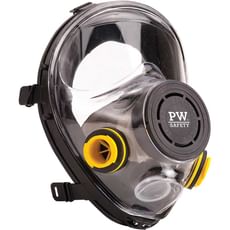
Evaluate Comfort and Visibility: For extended wear, comfort features matter enormously. Look for masks with adjustable head harnesses, soft face seals, and balanced weight distribution to prevent fatigue during long shifts. Panoramic visors provide superior peripheral vision compared to dual-lens designs, crucial for safe working and situational awareness. Anti-fog treatments or ventilation channels help maintain clear vision in humid conditions or during physically demanding work.
Check Filter Compatibility and Running Costs: Verify that replacement filters are readily available and affordable for your chosen mask model. Tooled-Up stocks a comprehensive range of replacement filters for professional mask systems, ensuring you can maintain your equipment cost-effectively. Some masks use proprietary filter systems whilst others accept standard bayonet or threaded filters. Calculate the total cost of ownership including regular filter replacements—high initial quality often proves more economical than cheap masks with expensive or hard-to-find filters.
Verify Standards Compliance: Ensure masks and filters meet relevant EN standards (EN 136 for full face masks, EN 14387 for gas filters, EN 143 for particle filters). Check for CE marking and that the product is suitable for your specific application. For certain high-risk work including asbestos removal, HSE approval or specific certification may be legally required. Never use uncertified or non-compliant respiratory protection equipment.
Popular Accessories
- Filter Adaptors and Cartridge Holders: Allow use of different filter types on the same mask body, increasing versatility across multiple applications
- Pre-filters and Filter Covers: Extend the life of expensive main filters by capturing coarser particles before they reach the primary filter element
- Lens Cleaning Products: Specialist cleaners and anti-fog treatments to maintain visor clarity without damaging polycarbonate lenses or protective coatings
- Replacement Visors and Lenses: Spare visors for when scratching, chemical damage, or pitting compromises visibility and safety
- Head Harness Assemblies: Replacement straps and adjustment systems to restore proper fit on ageing masks and maintain comfort
- Face Seal Gaskets: Replacement seals to maintain airtight fit as original seals wear, harden, or degrade over time
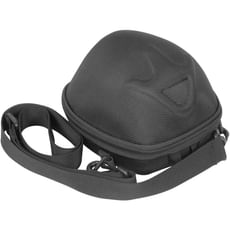
- Storage Cases and Bags: Protective cases to keep masks clean, undamaged, and uncontaminated between uses, essential for maintaining hygiene standards
- Face Fit Testing Kits: Equipment for conducting qualitative fit testing to verify adequate face seal and regulatory compliance
- Spectacle Kits: Prescription lens inserts that fit inside full face masks for wearers requiring vision correction
- Communication Devices: Speaking diaphragms or electronic communication systems for clearer speech whilst masked in noisy environments
Safety Information
Legal Requirements: The use of respiratory protective equipment in the UK is governed by several regulations including the Personal Protective Equipment at Work Regulations 1992, COSHH regulations, and the Control of Asbestos Regulations 2012 for asbestos work. Employers must conduct thorough risk assessments, provide appropriate RPE, and ensure workers are properly trained in its correct use. Full face masks are classified as Category III PPE—the highest risk category—and their selection must be based on competent assessment of workplace hazards.
Face Fit Testing: HSE guidance mandates that tight-fitting facepieces, including full face masks, must be face fit tested to ensure adequate protection factors are achieved. This testing must be carried out by a trained tester, repeated at least every two years, and whenever the mask model changes or the wearer's facial characteristics alter significantly through weight change, dental work, or scarring. Facial hair that comes between the sealing surface and the face is strictly prohibited as it prevents proper sealing and compromises protection.
Filter Selection and Replacement: Using incorrect filters or continuing to use filters beyond their service life is extremely dangerous and may result in serious health consequences or fatality. Always verify that filters are suitable for the specific contaminants present—a particle filter will not protect against gases and vapours. Replace filters according to manufacturer's guidance, whenever breathing becomes difficult, when odour or taste is detected, or if the filter is visibly damaged or saturated. Never remove filters whilst in a contaminated atmosphere.
Maintenance and Inspection: Before each use, thoroughly inspect the mask for cracks, tears, or deterioration of components. Check that inhalation and exhalation valves move freely, filters are correctly fitted and in-date, and the head harness is in good condition with no fraying or damage. After use, clean the mask according to manufacturer's instructions using appropriate cleaners—harsh chemicals or abrasives can degrade seals and damage visors. Store in a clean, dry place away from direct sunlight, extreme temperatures, and contamination.
Limitations of Protection: Full face masks with filters are not suitable for all situations. They do not supply oxygen and must never be used in oxygen-deficient atmospheres (below 19.5% oxygen), confined spaces without adequate ventilation, or situations immediately dangerous to life or health (IDLH) unless specifically rated and approved for such use. For these high-risk situations, supplied-air respirators, airline systems, or self-contained breathing apparatus (SCBA) are required. Always consult HSE guidance or a competent safety professional for high-risk applications.
Frequently Asked Questions
How long do full face mask filters last?
Filter service life varies considerably depending on the type of filter, concentration of contaminants, breathing rate, humidity, and temperature. Particulate filters (P1, P2, P3) last until they become clogged and breathing resistance increases noticeably, which could be days or weeks depending on dust levels. Gas and vapour filters have finite capacity and must be replaced when saturation occurs—this might be after a few hours in high concentrations or several shifts in lower concentrations. Some advanced filters include end-of-service-life indicators that change colour when exhausted. As a general safety rule, if you can smell, taste, or experience irritation from contaminants, replace filters immediately. Many professionals replace gas filters after each day's use in high-concentration environments to ensure safety. Always follow manufacturer's guidance and your workplace procedures.
Can I wear a full face mask with a beard or stubble?
No, absolutely not. Facial hair that lies between the face and the sealing surface of the mask prevents the airtight seal necessary for the respirator to function correctly, potentially allowing contaminated air to bypass the filters entirely and enter the breathing zone. UK HSE guidance is clear that workers must be clean-shaven where the respirator seals to the face. Even a day's stubble can significantly compromise protection and render the mask ineffective. If facial hair is required for religious or medical reasons, alternative respiratory protection such as powered air-purifying respirators (PAPR) with hoods or helmets should be considered, as these don't rely on a tight face seal.
What's the difference between P2 and P3 filters?
P3 filters provide significantly higher filtration efficiency than P2 filters. P2 filters must capture at least 94% of airborne particles and are suitable for moderate-toxicity dusts and mists such as construction dust or non-toxic wood dust. P3 filters must capture at least 99.95% of particles, including the finest dusts, fumes, and fibres. P3 filtration is mandatory for highly toxic materials including asbestos, lead, hardwood dust, silica, pharmaceutical powders, and other carcinogenic or highly toxic particulates. Whilst P3 offers superior protection, they also have higher breathing resistance, so P2 may be adequate and more comfortable for lower-risk applications. Always base your choice on the workplace risk assessment and safety data sheets for the materials you're handling—when in doubt, opt for higher protection.
How do I know which gas filter type I need?
Gas filter selection depends on the specific contaminants you're exposed to in your working environment. Type A filters protect against organic vapours and solvents (acetone, toluene, white spirit), Type B against inorganic gases (chlorine, hydrogen sulphide, hydrogen cyanide), Type E against acidic gases and sulphur dioxide, and Type K against ammonia and organic ammonia derivatives. Many applications involve multiple contaminants, requiring combination filters such as ABEK or ABE. Additionally, many gas filters include particulate filtration, designated as A1P2, ABEK2P3, etc. The safety data sheet (SDS) for the chemicals you're working with should specify the required filter type and class. If multiple substances are present or if you're unsure, consult a health and safety professional or occupational hygienist to ensure appropriate selection for your specific application.
Do full face masks need regular testing and maintenance?
Yes, absolutely. Full face masks require daily pre-use inspection checking for cracks, tears, or damage to the visor, mask body, valves, and head straps. After each use, masks should be cleaned and disinfected according to manufacturer's instructions using approved cleaning products, then stored properly in a clean environment. Face fit testing must be conducted at least every two years by a trained tester to verify the mask still provides an adequate seal for each individual wearer—this is a legal requirement in the UK for most professional applications. Additionally, masks should be thoroughly examined at regular intervals and any worn or damaged components replaced promptly. Keep records of inspections, fit tests, and component replacements as evidence of compliance. Remember that the mask body itself has a finite lifespan—typically 5-10 years depending on usage—after which materials may degrade even if no visible damage is apparent. Always follow manufacturer's guidance on service life and maintenance schedules to ensure continued protection.