

Garden Knives
Pay in 3 interest-free payments on purchases from £30-2000 with  . Learn more.

 Loading...
End of content
Error - No more pages to load
About Garden Knives
Garden knives are precision cutting tools designed for the detailed work that separates good gardening from great gardening. Unlike bulkier secateurs or shears, these specialised knives offer unmatched control and accuracy for delicate tasks such as grafting fruit trees, budding roses, harvesting vegetables, and pruning tender stems. The razor-sharp blades make clean cuts that heal quickly, reducing stress on plants and minimising the risk of disease transmission. For horticulturists, professional gardeners, and serious enthusiasts, a quality garden knife is as essential as a quality trowel.
The selection at Tooled-Up.com features professional-grade garden knives from respected manufacturers including Bahco, Spear and Jackson, Draper, Faithfull, Gardena, and Kew Gardens. These tools typically feature stainless steel blades engineered to resist corrosion from plant sap and moisture whilst maintaining their edge through demanding daily use. Handles are crafted from materials chosen for comfort and durability, from traditional FSC-certified oak that ages beautifully to modern polymer compounds offering enhanced grip and weather resistance. Many models incorporate folding designs with secure locking mechanisms, combining safety during storage with reliability during use.
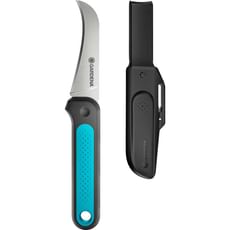
Whether you're a commercial nurseryman requiring a dependable budding knife for grafting operations, a landscape gardener needing a versatile pruning tool that fits in your pocket, or an allotment holder wanting to improve your harvesting technique, garden knives offer capabilities that general-purpose cutting tools simply cannot match. From traditional straight-blade patterns favoured by experienced propagators to innovative designs like the Gardena VEGGIECUT optimised for vegetable work, there's a garden knife engineered for every horticultural application.
Jargon Buster
- Budding Knife
- A specialised garden knife featuring a precisely sharpened blade, usually curved, for making exact cuts when grafting buds onto rootstock. Many include a tapered or spatula-shaped handle end specifically designed for lifting bark during the budding process without causing damage.
- Pruning Knife
- A versatile garden knife with a curved or hooked blade profile designed for trimming branches, cutting twine, and general pruning work. The curved design facilitates smooth, clean cuts that promote faster healing on woody stems and branches.
- Grafting
- The horticultural technique of joining tissues from two different plants so they grow as a single organism. Success depends on making precise, clean cuts with a sharp garden knife to ensure maximum cambium contact between rootstock and scion.
- Drop-Forged Blade
- A manufacturing process where heated metal is shaped under immense pressure, creating exceptionally strong blades with superior edge retention compared to stamped alternatives. Drop-forged garden knives from manufacturers like Bahco maintain their sharpness considerably longer.
- Locking Mechanism
- A safety feature on folding garden knives that secures the blade in the open position during use, preventing accidental closure. Quality mechanisms from brands like Spear and Jackson and Bahco ensure reliable operation throughout the tool's working life.
- Stainless Steel Blade
- Blades manufactured from corrosion-resistant steel alloys that won't rust when exposed to plant sap, moisture, and the acidic compounds found in horticultural environments. Essential for maintaining hygiene and ensuring longevity in garden knife applications.
Who Uses Garden Knives?
- Professional Gardeners and Horticulturists: For daily pruning, grafting, and plant maintenance tasks across multiple client sites
- Nursery Workers and Propagators: Essential tools for budding, grafting, and preparing plant material for propagation work
- Landscape Gardeners: For precision trimming and plant care during installation projects and ongoing maintenance contracts
- Arborists and Tree Surgeons: Particularly budding knives for grafting operations and repair work on ornamental and fruit trees
- Allotment Holders and Vegetable Growers: For harvesting vegetables cleanly, preparing cuttings, and general plot maintenance
- Groundskeepers and Estate Managers: Maintaining ornamental gardens, rose collections, and heritage plantings to professional standards
- Fruit Growers and Orchardists: For grafting new varieties, budding rootstock, and maintaining productive fruit tree collections
- Amateur Gardeners and Enthusiasts: Anyone committed to achieving professional-quality results in their garden
- Botanic Garden Staff: For specialist plant collections requiring expert propagation and maintenance techniques
How to Choose the Right Garden Knives
Blade Type and Purpose: Identify your primary tasks before selecting a knife. Budding knives with spatula ends are engineered for grafting work, whilst curved pruning blades excel at general cutting and branch work. For vegetable harvesting, consider specialist designs like the Gardena VEGGIECUT with its optimised blade geometry. If you perform varied tasks across different plants, a versatile folding pruning knife from Bahco or Spear and Jackson offers excellent all-round capability.
Blade Material and Edge Retention: Stainless steel blades resist corrosion from plant sap and environmental moisture whilst maintaining sharpness through extended use. Premium manufacturers like Bahco use superior steel grades that hold an edge considerably longer, reducing sharpening frequency and ensuring consistently clean cuts that promote plant health and faster healing. Cheaper steel dulls quickly, requiring more cutting pressure that can crush delicate plant tissues.
Handle Comfort and Material: Garden knives often see prolonged use during pruning or harvesting sessions, making ergonomic handles crucial for preventing fatigue and maintaining control. Traditional hardwood handles like FSC-certified oak offer classic aesthetics, natural grip, and excellent durability. Modern polymer designs may provide enhanced ergonomics, superior grip when wet, and complete weather resistance. Handle the knife if possible to ensure it suits your hand size and grip style.
Folding or Fixed Blade: Folding designs offer superior safety for pocket carrying and storage, making them ideal for professional gardeners moving between sites or working from ladders. Quality folding mechanisms from brands like Faithfull and Bahco withstand years of professional use. Fixed-blade designs may offer marginally better durability for intensive commercial applications but require protective sheaths for safe transport and storage.
Brand Reputation and Build Quality: Established manufacturers like Bahco, Faithfull, and Spear and Jackson have decades of experience producing reliable garden tools. Their products typically feature better steel quality, superior edge retention, more comfortable handles, and longer operational life than budget alternatives. For tools used daily by professionals, this quality difference translates directly to better performance and lower long-term costs.
Popular Accessories
- Sharpening Stones and Honing Tools: Essential for maintaining razor-sharp edges and ensuring clean cuts that promote plant health
- Blade Cleaning and Disinfectant Solutions: Specialised products for maintaining hygiene and preventing disease transmission between plants
- Protective Sheaths and Carrying Cases: For safe storage and transportation of fixed-blade models and knife collections
- Garden Tool Belts and Holsters: Convenient carrying solutions keeping knives accessible yet secure during professional work
- Secateurs and Pruning Shears: Complementary cutting tools from Bahco and Spear and Jackson for different pruning tasks
- Grafting Tape and Wax: Essential supplies for successful grafting and budding operations with specialist knives
- Cut-Resistant Gloves: Safety equipment providing hand protection when handling sharp garden knives
- Multi-Tool Garden Kits: Comprehensive sets like the Spear and Jackson kit combining knives with other essential implements
- Tool Maintenance Oils: For protecting metal components and maintaining folding mechanisms
Safety Information
Garden knives feature extremely sharp blades engineered to cut plant tissue with minimal pressure, which means they can cause serious injuries if mishandled. Always cut away from your body and keep fingers well clear of the blade path. Position your non-cutting hand behind the blade, never in front of it. When not actively cutting, ensure folding knives are securely closed or fixed-blade models are properly sheathed.
Maintain clean, sharp blades at all times – dull knives require excessive force and are significantly more likely to slip during use. After each session, clean blades thoroughly to remove plant sap and debris, then disinfect to prevent disease transmission between plants. This practice also prevents sap buildup that accelerates dulling. Store garden knives securely out of reach of children, preferably in a locked toolbox or dedicated storage area.
When working on ladders, in trees, or at height, secure tools with lanyards to prevent dropping them onto people below. Consider cut-resistant gloves for additional protection, particularly during extended pruning sessions or when learning proper technique. Professional gardeners should follow HSE guidelines for safe working practices when using sharp tools. Never use damaged knives with loose blades, compromised locking mechanisms, or cracked handles – replace them immediately to prevent accidents.
Frequently Asked Questions
What's the difference between a budding knife and a pruning knife?
Budding knives feature specialised blades designed for making the precise cuts required when grafting buds onto rootstock, typically with a curved profile and often including a tapered or spatula-shaped handle end for lifting bark without damage. Pruning knives have curved or hooked blades optimised for general cutting, trimming branches, and routine pruning work. The blade geometries serve different purposes, and many professional gardeners own both types. If you only need one knife, a quality pruning knife from Bahco or Spear and Jackson offers greater versatility for general garden work.
How do I keep my garden knife sharp?
Regular honing with a fine sharpening stone maintains the edge between uses and prevents excessive dulling. Clean the blade thoroughly after each session to prevent sap buildup, which significantly dulls the edge over time. For best results, sharpen at a consistent angle of approximately 20-25 degrees, working from the base to the tip in smooth strokes. Quality garden knives from brands like Bahco use superior steel that maintains its edge considerably longer than budget alternatives, requiring less frequent sharpening. If you're unsure about technique, consider professional sharpening services to avoid damaging the blade geometry.
Are folding garden knives as durable as fixed-blade models?
Modern folding garden knives from reputable manufacturers like Bahco, Faithfull, and Spear and Jackson offer excellent durability with the significant advantage of safe pocket carry and storage. The folding mechanisms are engineered to withstand professional daily use for years. Fixed-blade knives may have a marginal durability advantage in extreme commercial applications involving very heavy use, but folding designs suit the vast majority of professional and amateur users perfectly. The safety and convenience benefits of folding knives generally outweigh any theoretical durability difference for most gardeners.
Should I disinfect my garden knife between plants?
Yes, particularly when working with multiple plants or moving between diseased and healthy specimens. Plant pathogens including bacteria, fungi, and viruses can easily transfer via contaminated blades, potentially spreading problems throughout your garden. A quick wipe with methylated spirits, diluted bleach solution, or a proprietary garden disinfectant prevents disease spread and maintains plant health. This practice is especially important when pruning roses (which are susceptible to various diseases), working with fruit trees, or dealing with any plant showing disease symptoms.
Can I use a garden knife instead of secateurs?
Garden knives and secateurs serve different but complementary purposes. Knives excel at precise work like grafting, budding, harvesting vegetables, and cutting soft stems where clean cuts are crucial. They offer superior control for detailed work and make cleaner cuts that heal faster on delicate tissues. However, secateurs are better suited to cutting thicker woody stems and branches where the mechanical advantage of their lever action is necessary. Most serious gardeners benefit from owning both tools – a quality garden knife for precision work and good secateurs for heavier pruning tasks.