

Grease Units
Pay in 3 interest-free payments on purchases from £30-2000 with  . Learn more.
 Loading...
End of content
Error - No more pages to load
About Grease Units
Grease units are indispensable workshop tools designed to deliver controlled, efficient lubrication to machinery, vehicles, and equipment across professional and industrial settings. Whether maintaining agricultural machinery, servicing commercial vehicles, or keeping industrial equipment running smoothly, these specialised tools ensure consistent lubrication delivery whilst minimising waste and mess. The range available at Tooled-Up.com includes automatic grease feeders, manual grease pumps, air-operated systems, and specialist chassis lube fillers that cater to everything from small-scale workshop tasks to heavy-duty industrial applications.
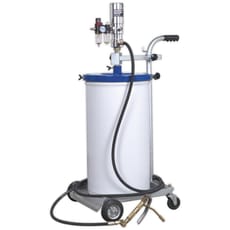
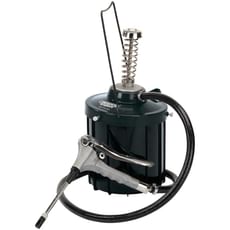
Modern grease units have evolved significantly from basic hand-operated models to sophisticated automatic systems that provide continuous, measured lubrication. Tooled-Up stocks reliable products from trusted manufacturers including Draper Expert and Sealey, offering solutions for different capacities, operating methods, and application requirements. From compact polycarbonate automatic feeders that deliver precise lubrication over extended periods to robust bucket greasers with follower plates for handling 12.5kg drums, these tools are engineered to reduce maintenance time and extend the service life of valuable equipment.
Choosing the right grease unit depends on your specific application, the volume of grease required, and whether you need portable or fixed installation options. Manual double-action pumps offer excellent control for precise applications, whilst air-operated systems provide effortless operation for high-volume workshops. Automatic grease feeders are particularly valuable for hard-to-reach lubrication points or equipment requiring continuous lubrication, reducing manual intervention and ensuring consistent bearing protection.
Jargon Buster
- Automatic Grease Feeder: A self-contained lubrication device that dispenses controlled amounts of grease over a preset period, typically using gas pressure or electro-chemical cells to maintain consistent lubrication without manual operation.
- Double Action Pump: A manual grease pump that delivers grease on both the push and pull strokes, providing more efficient operation and faster delivery compared to single-action pumps.
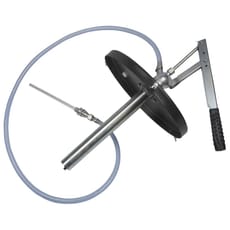
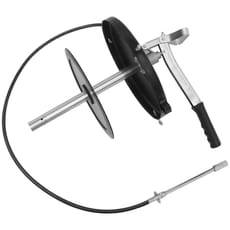
- Follower Plate: A disc that sits atop grease in a drum or bucket, creating a seal to prevent contamination whilst applying even pressure to ensure consistent product flow through the pump system.
- Chassis Lube Filler: A specialised pump designed for transferring grease from bulk containers directly into grease guns or lubrication systems, commonly used for vehicle chassis lubrication points.
- Air-Operated Grease Pump: A pneumatic system that uses compressed air to drive the pump mechanism, ideal for high-volume applications where continuous operation is required without manual effort.
- NLGI Grade: National Lubricating Grease Institute classification system rating grease consistency from 000 (semi-fluid) to 6 (block grease), with Grade 2 being most common for general applications.
Who Uses Grease Units?
- Vehicle Mechanics: For maintaining suspension components, steering linkages, and chassis lubrication points on cars, vans, and commercial vehicles.
- Agricultural Engineers: Essential for servicing tractors, harvesters, and farm machinery with numerous greasing points requiring regular maintenance.
- Plant and Machinery Operators: Maintaining construction equipment, excavators, and industrial machinery with high-capacity lubrication requirements.
- HGV and Fleet Maintenance Teams: For commercial vehicle servicing where bulk grease handling and efficient application is critical.
- Industrial Maintenance Technicians: Servicing production machinery, conveyor systems, and manufacturing equipment requiring scheduled lubrication.
- Marine Engineers: Maintaining boat trailers, winches, and marine equipment exposed to harsh environments requiring protective lubrication.
- Workshop Owners: Professional garages and service centres requiring efficient bulk grease handling and application systems.
How to Choose the Right Grease Units
Operating Method: Consider whether manual, automatic, or air-operated systems best suit your requirements. Manual pumps offer portability and control for occasional use, automatic feeders provide hands-free continuous lubrication, whilst air-operated units deliver high-volume capacity for busy workshops with compressed air already available.
Capacity Requirements: Assess the volume of grease you'll be dispensing. Smaller automatic feeders typically hold 120-250ml for individual bearing points, whilst bucket greasers accommodate 12.5kg drums for high-volume workshop use. Match capacity to your usage patterns to minimise refilling frequency.
Application Type: Different applications demand different delivery systems. Precision bearing lubrication benefits from automatic feeders with controlled discharge rates, chassis lubrication requires robust pumps with follower plates for bulk handling, and general workshop use may need versatile double-action hand pumps.
Installation Requirements: Determine whether you need portable units or fixed installations. Automatic grease feeders can be permanently mounted on equipment, whilst portable pumps and bucket systems offer flexibility for moving between different machines or vehicles.
Environmental Conditions: Consider the operating environment. Polycarbonate housings on automatic feeders offer visibility and corrosion resistance, whilst heavy-duty steel construction suits harsh industrial environments. For outdoor or marine applications, weather-resistant materials are essential.
Refill and Maintenance: Evaluate ease of refilling and ongoing maintenance. Remote refill kits allow automatic feeders to be topped up without removal from equipment, whilst follower plate systems ensure clean, contamination-free grease delivery from bulk containers.
Popular Accessories
- Grease Guns: Essential companion tools for applying grease delivered from bulk units to specific lubrication points.
- Grease Gun Nozzles and Couplers: Various fittings for accessing different grease nipple types and hard-to-reach locations.
- Grease Cartridges: Standard 400g cartridges compatible with manual grease guns and some feeder systems.
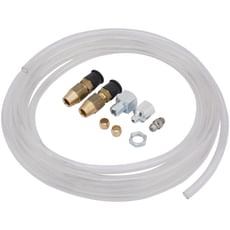
- Remote Refill Kits: Extensions allowing automatic feeders to be refilled without dismounting from equipment.
- Follower Plates: Replacement or additional plates for different drum sizes and grease types.
- Air Hose and Fittings: For connecting air-operated grease pumps to workshop compressed air systems.
- Grease Nipples and Fittings: Various thread sizes and angles for creating or replacing lubrication points.
- Drip Trays and Workshop Mats: Protecting workshop floors from grease spillage during bulk handling.
Safety Information
When operating grease units, always wear appropriate PPE including safety glasses to protect against high-pressure grease injection, which can cause serious injury. Grease under pressure can penetrate skin—never point discharge nozzles at any part of the body and ensure all connections are secure before pressurising systems. Follow COSHH regulations when handling greases and lubricants, consulting safety data sheets for specific products being used.
Air-operated grease pumps must be connected to properly regulated compressed air supplies—excessive pressure can damage equipment and create dangerous operating conditions. Always verify maximum working pressure specifications and use appropriate pressure regulators. Ensure workshop areas are well-ventilated when dispensing grease, as some formulations may release vapours during application.
Keep grease units and surrounding areas clean to prevent slips and falls on contaminated surfaces. Store grease containers securely and dispose of empty containers according to local environmental regulations and HSE guidance. When using automatic grease feeders, ensure they're correctly installed with appropriate mounting to prevent dislodgement during equipment operation. Regularly inspect all grease units for leaks, damaged seals, or worn components that could affect safe operation.
Frequently Asked Questions
What's the difference between manual and automatic grease feeders?
Manual grease pumps require physical operation to dispense grease, offering precise control for intermittent lubrication tasks. Automatic grease feeders use gas pressure or electro-chemical cells to deliver preset amounts of grease continuously over weeks or months, ideal for constant lubrication requirements or hard-to-access points where regular manual greasing is impractical.
How do I know what capacity grease unit I need?
Consider your typical usage patterns and the number of lubrication points you service. For occasional bearing maintenance, smaller 120-250ml automatic feeders or hand-operated pumps suffice. Workshop environments servicing multiple vehicles or machines daily benefit from 12.5kg bucket systems with follower plates, reducing refilling frequency and handling bulk grease more economically.
Can I use any type of grease with these units?
Most grease units accommodate standard NLGI Grade 2 greases, which represent the majority of general-purpose lubricants. However, always check manufacturer specifications—some units are optimised for specific grease consistencies. Automatic feeders may have viscosity limitations, whilst heavy-duty pump systems typically handle thicker greases. Never mix different grease types in the same unit without thorough cleaning between changes.
Do air-operated grease pumps require special installation?
Air-operated units need connection to a workshop compressed air supply, typically operating at 6-8 bar (87-116 PSI). Ensure your air compressor provides adequate pressure and volume, and install an inline pressure regulator and filter/lubricator unit to protect the pump mechanism. Most systems include standard quick-release air fittings compatible with UK workshop air lines.
How often should automatic grease feeders be refilled?
Refill frequency depends on the feeder capacity and discharge rate setting. A 120ml automatic feeder set to dispense over one month requires monthly refilling, whilst larger 250ml units on slower settings may run for several months. Many models feature transparent polycarbonate bodies allowing visual monitoring, whilst remote refill kits enable topping up without removing the unit from equipment.