

Levels & Accessories

Pay in 3 interest-free payments on purchases from £20-£3000 with  . Learn more.
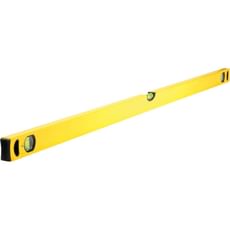
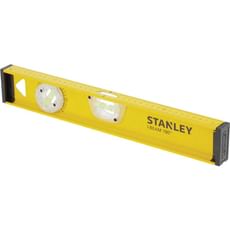
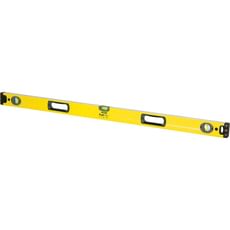
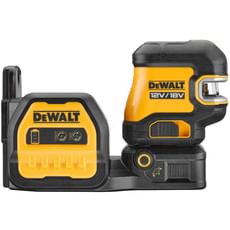
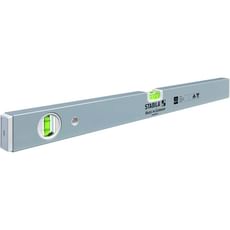
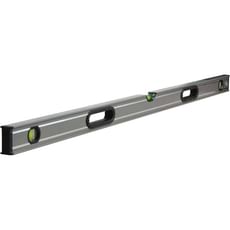
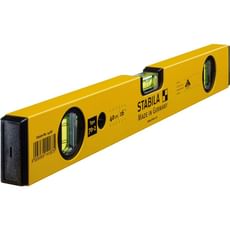
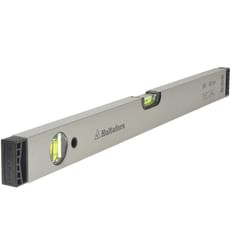
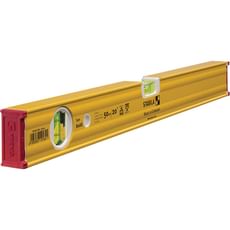
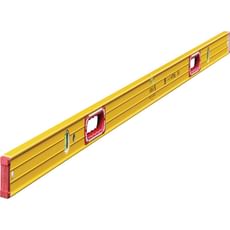
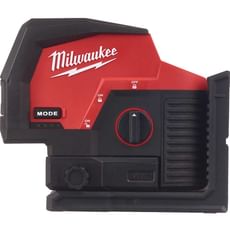
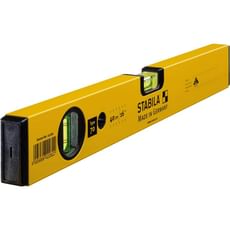
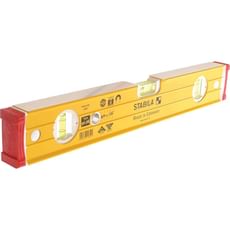
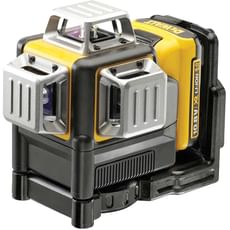
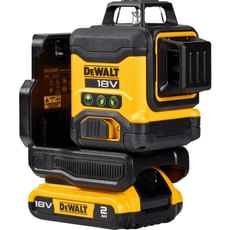
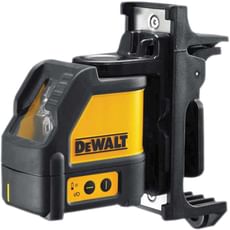
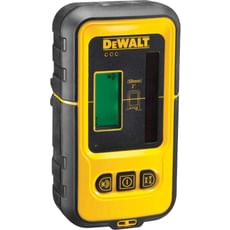
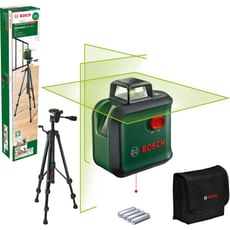
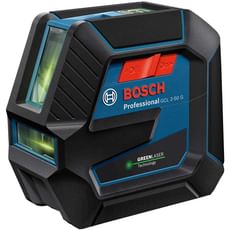
DeWalt DCLE34031 18v Cordless Self Levelling Cross Line GREEN Laser Level
in stock

 Loading...
End of content
Error - No more pages to load
About Levels & Accessories
Accurate levelling forms the cornerstone of professional construction and installation work, whether you're fitting kitchen cabinets, laying foundations, tiling a bathroom, or establishing site datums for major groundwork projects. The difference between adequate and exceptional workmanship often comes down to the precision of your levelling equipment. From traditional spirit levels that have served tradespeople for generations to cutting-edge laser technology that projects reference lines across entire rooms, the right levelling tools transform challenging tasks into straightforward procedures whilst dramatically reducing measurement time and costly errors.
The Tooled-Up range of levels and accessories encompasses solutions for every trade and budget. Laser levels and their associated accessories have revolutionised the industry, allowing single operators to accomplish layout tasks that previously required multiple workers, with cross-line lasers projecting perfectly aligned horizontal and vertical references for tiling and fitting work, whilst rotary lasers create 360-degree reference planes for suspended ceilings and site levelling. Optical levels remain indispensable for surveying, civil engineering, and groundwork where long-range accuracy is paramount. Spirit levels continue to evolve with improved vial sensitivity and robust construction, offering dependable precision for everyday applications from compact torpedo levels for confined spaces to extended box-section models for checking long runs. Supporting this primary equipment, specialist tripods, elevating poles, laser receivers, and mounting accessories ensure stable, repeatable measurements in any working environment.
Investing in quality levelling equipment delivers tangible returns through enhanced accuracy, improved productivity, and the professional finish that distinguishes skilled tradespeople. Modern self-levelling laser systems eliminate setup errors and work in conditions where traditional methods struggle, whilst precision spirit levels from brands like Stanley, Stabila, and Bahco provide reliability that lasts decades with proper care. Whether you're a groundworker establishing drainage gradients, a carpenter hanging doors, an electrician aligning switchgear, or a DIY enthusiast tackling home improvements, selecting appropriate levelling tools matched to your specific applications will elevate both the efficiency and quality of your work.
Jargon Buster
- Self-Levelling – An automated feature in laser levels and some advanced spirit levels that detects and establishes a true level or plumb position within a specified range, typically ±3-5 degrees. This eliminates manual adjustment and user error, with most systems alerting you if they're tilted beyond their self-levelling range.
- Accuracy Rating – Expressed in millimetres per metre (mm/m) for spirit levels or millimetres at a specified distance for laser levels. Professional spirit levels typically offer ±0.5mm/m, whilst quality laser levels achieve ±0.2mm at 10 metres. Lower numbers indicate greater precision, with accuracy becoming increasingly critical over longer distances.
- Cross-Line Laser – Projects both horizontal and vertical laser lines simultaneously, creating perpendicular reference lines on walls and surfaces. Essential for tiling, installing partition systems, aligning electrical fixtures, and any work requiring 90-degree accuracy. Many models allow individual lines to be switched off when only one plane is needed.
- Rotary Laser – A laser level that spins through 360 degrees at high speed, creating a continuous level reference plane visible around an entire room or across large sites. Used primarily for groundwork, drainage gradients, suspended ceiling installation, and establishing level datums over extensive areas. Most accept laser receivers for outdoor use.
- Green Beam vs Red Beam – Refers to the wavelength and colour of the projected laser line. Green lasers operate at approximately 520nm and are up to four times more visible than red beams (around 635nm), particularly outdoors in bright conditions. However, green beam technology typically costs more and consumes battery power faster than red beam equivalents.
- IP Rating – Ingress Protection rating indicating the level of protection against solid objects and liquids. Expressed as two digits (e.g., IP54, IP65), the first number represents dust protection (0-6 scale) and the second indicates water resistance (0-8 scale). For site work, aim for IP54 minimum, with IP65 or higher offering superior protection for harsh conditions.
Who Uses Levels & Accessories?
Levelling equipment is fundamental across virtually every construction and installation trade:
- Bricklayers and Blocklayers – Maintaining level courses, checking plumb on walls, and establishing correct bed heights
- Carpenters and Joiners – Installing doors, windows, staircases, kitchen units, decking, and structural framing
- Electricians – Aligning switches, sockets, consumer units, cable tray systems, and conduit runs
- Plumbers and Heating Engineers – Ensuring correct falls on waste systems, installing radiators, and levelling sanitaryware
- Tilers and Bathroom Fitters – Setting out tiles, establishing level datums, and installing shower enclosures
- Plasterers and Dry Liners – Screeding floors, installing suspended ceilings, fixing partition systems, and checking wall surfaces
- Groundworkers and Civil Engineers – Site levelling, establishing drainage gradients, foundation work, and setting out
- Shopfitters and Interior Installers – Fitting commercial displays, shelving systems, exhibition stands, and interior fixtures
- Landscape Gardeners – Laying patios, constructing retaining walls, establishing drainage, and building garden structures
- Surveyors and Setting Out Engineers – Establishing site datums, transferring levels, and providing dimensional control
- Roofers and Cladding Specialists – Checking falls, aligning fascias, and installing cladding systems
- DIY Enthusiasts and Homeowners – Hanging pictures, installing shelving, building garden features, and general home improvement projects
How to Choose the Right Levels & Accessories
Type of Work: Your primary applications should guide your choice. Basic DIY and occasional installations may only require a quality spirit level in one or two lengths. Tradespeople working on interior fit-outs benefit enormously from cross-line lasers that project reference lines for tiling, electrical work, and partition installation. Groundworkers and those covering large areas need rotary laser systems that create 360-degree reference planes. Surveying and civil engineering projects typically demand optical levels for their exceptional precision and reliability over long distances.
Accuracy Requirements: Consider the tolerances your work demands. Fine carpentry, high-end shopfitting, and precision installations require levels with superior accuracy ratings of ±0.5mm/m or better for spirit levels. General construction work can accommodate slightly less precise tools. For laser levels, check the accuracy specification at your typical working distance – a laser rated at ±0.3mm at 10 metres becomes less accurate over longer ranges. Surveying work demands the tightest tolerances, often requiring optical levels or precision rotary lasers.
Working Range and Scale: Match the tool size to your applications. Compact torpedo levels of 200-300mm suit confined spaces, appliance installation, and toolbag carry. Standard 600mm levels handle general tasks, whilst 1200mm or 1800mm spirit levels are essential for checking door frames, worktops, and longer runs. Laser levels vary dramatically in range from 10-15 metres for basic cross-line models to 50+ metres for rotary systems, with professional models effective over several hundred metres when used with laser receivers.
Indoor vs Outdoor Use: Red beam lasers work well indoors but become difficult to see in bright outdoor conditions. For site work, available at Tooled-Up.com, consider green beam lasers which offer superior visibility, or systems compatible with laser receivers that detect the beam electronically regardless of ambient light. Check IP ratings carefully – IP54 provides basic dust and splash protection, whilst IP65 or higher is essential for outdoor site work and wet conditions.
Power Source and Runtime: Battery-operated levels offer portability but consider runtime per charge, particularly for all-day site use. Rechargeable lithium-ion systems reduce ongoing costs and environmental impact. Some professional models accept standard AA batteries for convenience when charging isn't practical. Be aware that rotary lasers and green beam models typically consume significantly more power than simple red cross-line units, affecting battery life.
Mounting and Stability: Handheld operation significantly reduces accuracy. Many laser levels include mounting options such as magnetic brackets for steel surfaces or 1/4-inch or 5/8-inch thread mounts for tripods. For serious levelling work, invest in a proper tripod or elevating pole – these provide stable platforms and adjustable height for working at different elevations. Look for quick-release mechanisms that speed up repositioning whilst maintaining stability, and consider whether you need wall-mounting brackets or clamps for specific applications.
Durability and Build Quality: Professional-grade tools feature reinforced construction, shock-mounted internal components, and protective cases. Box-section spirit levels resist twisting better than I-beam designs and provide superior accuracy retention. For demanding site work, prioritise robust construction with rubberised end caps and protective features. Higher IP ratings protect precision instruments against dust ingress and water damage. Brands like DeWalt, Bosch, and Stabila offer particularly rugged construction designed for trade use.
Popular Accessories
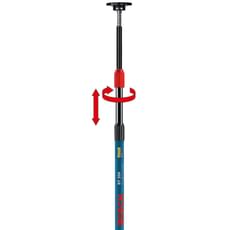
- Tripods and Elevating Poles – Provide stable mounting platforms for laser and optical levels, with adjustable height typically from 1 to 3 metres. Essential for accurate, repeatable measurements. Look for models with quick-release heads and robust leg locks.
- Laser Receivers and Detectors – Extend the working range of laser levels outdoors or in bright conditions by electronically detecting the laser beam. Most feature audible signals and visual indicators to guide precise positioning, effectively doubling or tripling outdoor range.
- Laser Target Plates and Cards – Reflective or contrasting plates that make laser lines more visible on certain surfaces and over longer distances. Particularly useful outdoors, on dark materials, or when working at extended ranges.
- Protective Cases – Purpose-designed storage that protects precision instruments from impact damage during transport and site work. Quality cases feature custom foam inserts that secure tools and prevent movement.
- Mounting Brackets and Clamps – Wall-mounting systems, magnetic bases, pipe clamps, and multi-position brackets that allow levels to be positioned at various angles and on different surfaces. Some feature fine adjustment for precise positioning.
- Staff and Grade Rods – Graduated measuring poles used with optical levels for surveying and groundwork. Available in telescopic or folding designs with clear metric graduations, typically extending to 3, 4, or 5 metres.
- Laser Enhancement Glasses – Tinted eyewear that enhances visibility of laser lines in bright conditions by filtering out ambient light whilst allowing the specific laser wavelength through clearly. Colour-matched to red or green beams.
- Remote Controls – Allow operation of laser levels from a distance, useful when working alone or when the level is mounted in an inaccessible position. Particularly valuable for rotary lasers used over large areas.
- Replacement Vials – Spare bubble vials for spirit levels, though typically requiring professional installation to ensure accuracy calibration is maintained.
- Calibration Certificates – Documentation of accuracy verification, often required for audit trails on commercial and civil engineering projects. Many manufacturers offer calibration services.
Safety Information
Whilst levelling equipment is generally safe to use, laser levels require specific precautions. Never look directly into a laser beam or point lasers towards people, vehicles, or aircraft. Class 2 lasers (the most common construction lasers) are generally safe as the natural blink reflex protects the eye from brief exposure, but Class 3 devices require additional care and should never be aimed at eye level. Always follow the manufacturer's safety guidance and consider using appropriate laser safety eyewear when working with higher-class devices or in environments where accidental exposure is possible.
When using optical levels on construction sites or near roadways, ensure you're visible to site traffic and mobile plant. Wear appropriate hi-visibility clothing as required by HSE guidelines and site-specific safety protocols. Position tripods with legs fully extended and locked, on stable ground away from edges, excavations, or areas where they might be knocked by personnel or equipment. Never leave expensive equipment unattended on active construction sites where theft or accidental damage can occur.
For electrical safety, ensure battery-operated laser levels are suitable for site conditions. Check that IP ratings match the working environment, particularly for damp locations or dusty conditions where ingress could affect operation or safety. When working at height whilst using levelling equipment, follow proper access equipment protocols and never overreach whilst holding or adjusting tools. Store precision instruments in their protective cases when not in use to maintain accuracy calibration and prevent damage that could affect measurement reliability or create safety hazards through providing false readings.
Frequently Asked Questions
What's the difference between a laser level and a spirit level?
Spirit levels use a liquid-filled vial with an air bubble to indicate level or plumb, requiring the user to physically hold or position them against surfaces. Laser levels project visible lines of light that serve as reference points across distances, allowing hands-free operation and making it easy to level multiple points simultaneously without moving the tool. Lasers are significantly faster for large areas, setting out work, and marking multiple points at the same height. Spirit levels excel at checking individual surfaces, work in any lighting condition without batteries, and provide tactile feedback. Many tradespeople use both – spirit levels for verification and checking, lasers for initial layout and multiple-point marking.
Can I use a laser level outdoors in bright sunlight?
Yes, but visibility becomes challenging in direct sunlight, particularly with red beam lasers. Green beam lasers offer up to four times better outdoor visibility but still struggle in very bright conditions. For reliable outdoor work, use a laser receiver (detector) which picks up the beam electronically and indicates when you're on level with audible beeps, effectively working in any light conditions. Alternatively, work during overcast conditions, in shade, or during early morning and late afternoon when sunlight is less intense. Ensure your laser level has an adequate IP rating – IP54 minimum for occasional outdoor use, IP65 or higher for regular site work to protect against moisture and dust ingress.
How accurate does my level need to be?
This depends entirely on your work requirements. For general DIY, hanging pictures, or rough carpentry, accuracy of ±1.0mm/m is adequate. Most trade work benefits from ±0.5mm/m precision for professional results. Fine carpentry, shopfitting, kitchen installation, and high-end work demands ±0.3mm/m or better. Surveying, civil engineering, and groundwork typically requires optical levels or precision rotary lasers with ±0.2mm at 10 metres or superior accuracy. Remember that inaccuracy compounds over distance – a 0.5mm/m error becomes 5mm over a 10-metre run, which may be acceptable for some applications but unacceptable for others. Consider your longest typical working distances when assessing accuracy requirements.
Do I need to calibrate my level regularly?
Quality spirit levels from reputable brands rarely require recalibration if properly maintained and not subjected to impacts. However, they should be checked periodically using the reversal method – place the level on a surface, note the bubble position, rotate it 180 degrees, and check again. If readings differ, the level may be out of calibration. Self-levelling laser levels can drift out of calibration through impacts, drops, or general wear. Many feature built-in calibration warning systems, and some allow user calibration following the manufacturer's procedure. For professional use, annual recalibration by the manufacturer or approved service centre is recommended for tools used daily, or immediately after any significant impact. Keep calibration certificates for audit trails on commercial projects where documented accuracy verification may be required.
What length spirit level should I buy as a tradesperson?
Most tradespeople benefit from owning multiple lengths for different applications. A 600mm level is versatile for general tasks and fits comfortably in most toolbags, making it ideal as an everyday carry tool. A 1200mm level is probably the most useful single length for trades like carpentry, as it handles door frames, worktops, and studwork whilst remaining manageable. For checking longer runs or plastering work, 1800mm or 2400mm levels are invaluable. Short torpedo or boat levels (200-300mm) prove essential for confined spaces, checking appliances, and pipe work. Carpenters often favour 1200mm as their primary level, plasterers prefer 1800-2400mm for screeding, electricians benefit from 600mm for general work plus a torpedo level for consumer units and tight spaces. Consider your most common applications, typical working distances, and available tool storage when making your selection.