

Log Saw Horses

Pay in 3 interest-free payments on purchases from £20-£3000 with  . Learn more.
 Loading...
End of content
Error - No more pages to load
About Log Saw Horses
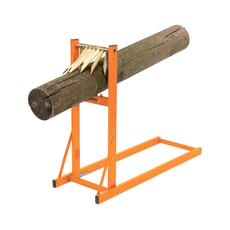
Log saw horses are essential pieces of equipment designed to securely hold logs, branches and timber in place whilst cutting with a chainsaw or manual bow saw. These robust stands feature gripping mechanisms—typically steel teeth or clamp systems—that firmly cradle rounded timber, preventing dangerous rolling or movement during cutting operations. Unlike traditional carpenter's saw horses used for dimensional lumber, log saw horses are specifically engineered to handle the irregular shapes and considerable weight of unseasoned logs and branches, with most models capable of supporting loads between 100kg and 300kg.
The range available from Tooled-Up.com includes both folding portable designs ideal for mobile forestry work and heavier-duty static models suited to regular log processing at a fixed location. Modern log saw horses incorporate thoughtful safety features such as chainsaw blade guards, adjustable height settings, and powder-coated steel construction for durability in outdoor conditions. Many professional-grade models from brands like Makita, Draper and Sealey feature quick-release mechanisms that allow efficient workflow when processing multiple logs, whilst galvanised or corrosion-resistant finishes ensure longevity even when stored outdoors.
Whether you're a professional tree surgeon processing felled timber on site, a countryside estate manager preparing firewood supplies, or a homeowner maintaining a wood-burning stove, a quality log saw horse significantly improves both safety and efficiency. By elevating logs to a comfortable working height and securing them against movement, these stands reduce fatigue, improve cutting accuracy, and most importantly, minimise the risk of dangerous kickback incidents that can occur when cutting unsupported timber.
Jargon Buster
- Gripping Teeth: Sharp steel protrusions or serrated edges that bite into the log's surface to prevent rotation during cutting. More aggressive tooth patterns provide superior grip on wet or icy timber.
- Load Capacity: The maximum weight of timber the saw horse can safely support, typically ranging from 100kg for light-duty domestic models to 300kg for professional forestry equipment. Always check this specification matches your typical log sizes.
- Chainsaw Support/Guard: An integrated protective barrier or guide that helps position the chainsaw blade whilst protecting the saw horse frame from accidental contact with the cutting chain, extending the equipment's lifespan.
- Folding Frame: A collapsible design with hinged legs that allows compact storage and easy transportation between work sites. Essential for mobile tree surgeons and contractors working across multiple locations.
- Powder-Coated Steel: A durable finishing process where electrostatically-applied powder is heat-cured onto steel frames, providing excellent resistance to scratches, chipping and weather damage compared to conventional paint.
- Quick-Release Mechanism: Lever or foot-operated systems that rapidly open and close the gripping mechanism, enabling faster workflow when processing large quantities of logs without manual adjustment.
Who Uses Log Saw Horses?
- Tree Surgeons & Arborists: Processing felled trees and large branches on site, often requiring portable folding models
- Forestry Workers: Commercial timber preparation and logging operations
- Groundskeepers & Estate Managers: Maintaining country estates, parks and large rural properties
- Landscape Gardeners: Clearing vegetation and processing tree waste from landscaping projects
- Firewood Suppliers: Commercial log preparation for retail firewood sales
- Farmers & Smallholders: Maintaining hedgerows, processing fallen timber and preparing winter fuel supplies
- Wood-Burning Stove Owners: DIY enthusiasts preparing their own seasoned firewood
- Campsite & Outdoor Centre Operators: Preparing firewood for guests and maintaining woodland areas
- Construction Site Workers: Processing timber waste and site clearance materials
How to Choose the Right Log Saw Horses
Load Capacity & Log Diameter: Match the saw horse capacity to your typical workload. Domestic users processing standard 150-200mm diameter logs need 100-150kg capacity models, whilst professionals handling larger forestry timber require 200-300kg heavy-duty stands. Consider the maximum log length you'll process—most stands accommodate 400-600mm sections comfortably.
Portability vs Stability: Folding designs from brands like Faithfull and Handy offer excellent portability for mobile work, collapsing to fit in vehicle boots, but may sacrifice some stability compared to fixed-frame professional models. If you're processing logs at a single location, a heavier non-folding stand provides superior rigidity. Weight typically ranges from 8kg for portable units to 25kg for industrial models.
Gripping Mechanism: Steel tooth designs provide aggressive grip on wet or frozen timber and suit chainsaw work, whilst clamp-style mechanisms offer gentler holding for manual bow saw cutting without marking valuable timber. Quick-release foot pedals significantly speed up workflow compared to manual screw adjustments when processing multiple logs.
Chainsaw Compatibility: If using petrol or 240v electric chainsaws, ensure the model features integrated chainsaw guards or blade protection. Specialist chainsaw log horses from Einhell and Makita include purpose-designed supports that guide the saw and protect both blade and stand frame from contact damage.
Construction Quality: Powder-coated or galvanised steel frames resist corrosion when stored outdoors. Tooled-Up stocks models with reinforced welded joints that withstand heavy commercial use. Check for rubber feet or ground spikes that prevent the stand walking during cutting operations, particularly important on uneven ground.
Height & Ergonomics: Working height should position logs at a comfortable level that minimises back strain. Adjustable-height models suit different operators and cutting tools, whilst fixed-height stands should place the log between knee and waist height for optimal ergonomics during extended cutting sessions.
Popular Accessories
- Chainsaws: Petrol models from Makita, Stihl and Husqvarna for remote work; 240v electric chainsaws for domestic use near power supplies
- Bow Saws & Blades: Manual cutting alternatives for smaller logs or quieter environments
- Chainsaw PPE: Safety helmets with visors, chainsaw trousers, protective gloves and steel toe-capped boots meeting HSE requirements
- Chain Sharpening Kits: Files, depth gauges and sharpening guides to maintain optimal cutting performance
- Log Splitting Tools: Hydraulic log splitters, splitting axes and wedges for processing cut rounds
- Moisture Meters: Testing firewood seasoning levels before storage or sale
- Weatherproof Storage Covers: Protecting equipment when stored outdoors
- Work Gloves: Heavy-duty leather or reinforced gloves for handling rough timber
Safety Information
Stable Positioning: Always position the log saw horse on firm, level ground before use. Ensure all locking mechanisms are fully engaged and test stability before loading timber. Unstable positioning is a primary cause of accidents when logs shift unexpectedly during cutting.
Load Limits: Never exceed the manufacturer's specified maximum load capacity. Overloading can cause structural failure, grip slippage or frame collapse, creating serious injury risks from falling timber or loss of chainsaw control.
Proper Log Securing: Ensure logs are fully seated in the gripping mechanism with teeth properly engaged before commencing cutting. Check that irregular-shaped or branched timber won't rotate during cutting. Re-secure the log if repositioning is needed—never attempt to adjust timber whilst the saw is running.
Chainsaw Safety: When using chainsaws with log horses, always wear appropriate PPE including chainsaw trousers, safety boots, gloves, eye protection and hearing defenders as required by HSE guidance. Maintain safe distances from the cutting area and be aware of kickback zones. Ensure 240v electric chainsaws are connected through RCD protection.
Maintenance & Inspection: Regularly inspect gripping teeth for wear, check welded joints for cracks, and ensure folding mechanisms lock securely. Remove sawdust buildup that can reduce grip effectiveness. Replace worn or damaged components before they compromise safety—attempting repairs with faulty equipment significantly increases accident risk.
Frequently Asked Questions
What's the difference between a log saw horse and a standard carpenter's saw horse?
Log saw horses feature specialised gripping teeth or clamps designed to secure round, irregular logs and prevent rolling during cutting. They're built significantly stronger with higher load capacities (typically 100-300kg) and often include chainsaw guards. Standard carpenter's saw horses have flat tops for dimensional lumber and aren't designed for the weight, shape or cutting forces involved in log processing.
Can I use a log saw horse with both chainsaws and manual bow saws?
Yes, most log saw horses accommodate both cutting methods. Models with integrated chainsaw supports like those from Handy and Makita are optimised for chainsaw use but work equally well with bow saws. The gripping mechanism secures logs regardless of cutting tool choice, though some users prefer gentler clamp-style grips when using manual saws on valuable timber to avoid tooth marks.
How do I transport a log saw horse to different work sites?
Folding models from brands like Faithfull and Draper collapse to compact dimensions that fit easily in vehicle boots or on roof racks. Most fold flat in seconds using simple pin or lever mechanisms and weigh 8-15kg for easy handling. For professional mobile work, look for models with carrying handles and protective rubber bumpers that prevent vehicle damage during transport.
What log diameter can a typical saw horse handle?
Most domestic and semi-professional log saw horses accommodate logs from approximately 50mm up to 300-350mm diameter, though this varies by model. The gripping mechanism's jaw opening determines maximum diameter, whilst minimum size depends on tooth spacing. Check manufacturer specifications if you regularly process particularly large forestry timber or small branches outside typical firewood dimensions.
Do I need different saw horses for softwood versus hardwood?
No, the same saw horse handles both softwood and hardwood species. However, hardwoods' greater density means they're heavier at equivalent dimensions, so ensure your chosen model's load capacity accommodates the weight. Green (unseasoned) hardwood logs are particularly heavy and may require professional-grade stands rated for 200kg+ loads, whilst seasoned softwood is considerably lighter.