

Log Splitting Wedges
Pay in 3 interest-free payments on purchases from £30-2000 with  . Learn more.
 Loading...
End of content
Error - No more pages to load
About Log Splitting Wedges
Log splitting wedges are essential hand tools designed to make the task of splitting firewood safer and more efficient than using an axe alone. These robust steel implements work by being driven into the end grain of a log with a sledgehammer or splitting maul, forcing the wood fibres apart along the natural grain lines. Unlike powered log splitters or splitting axes that require significant physical effort and technique, wedges provide a mechanical advantage that makes short work of even the toughest, knotted logs that would be difficult or dangerous to split by other means.
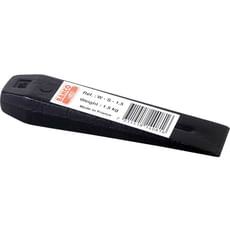
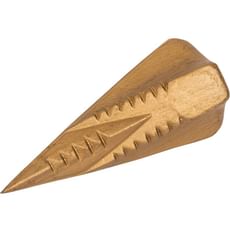
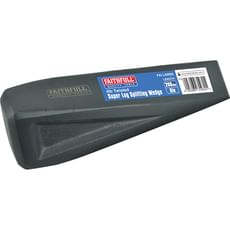
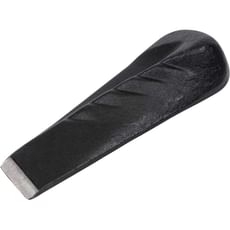
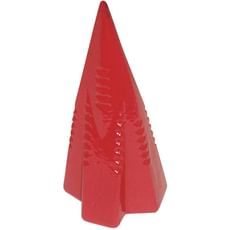
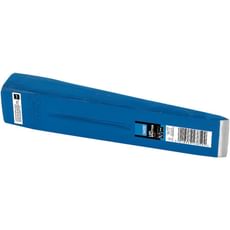
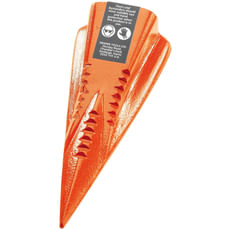
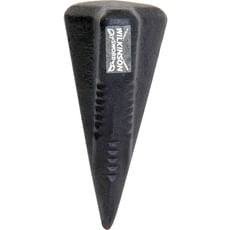
Tooled-Up.com stocks a comprehensive selection of log splitting wedges from trusted manufacturers including Bahco, Draper, Roughneck, Faithfull, Spear and Jackson, and Wilkinson Sword. Available designs range from traditional tapered steel wedges to innovative twisted patterns and multi-way splitting configurations. Some models feature a grenade-style design with multiple splitting edges that create a four-way split in a single strike, whilst others use a helical twist pattern that corkscrews into the wood for maximum splitting force with minimal effort.
Whether you're processing firewood for domestic heating, managing woodland, or preparing logs for commercial sale, the right splitting wedge dramatically reduces the time and physical strain involved in wood processing. These tools are particularly valuable when dealing with large-diameter logs, green wood, or species with interlocking grain that resist conventional splitting methods.
Jargon Buster
- End Grain: The surface of wood exposed when cut perpendicular to the fibres, showing the growth rings. This is where you should position a splitting wedge for most effective results.
- Splitting Maul: A heavy-headed tool similar to an axe but with a blunt wedge-shaped head designed specifically for splitting wood, often used to strike splitting wedges.
- Wood Grenade: A popular term for multi-point splitting wedges that feature four or more cutting edges arranged in a cross pattern, designed to split logs in multiple directions simultaneously.
- Twisted Wedge: A wedge design featuring a helical or spiral cutting edge that rotates as it penetrates the wood, reducing binding and increasing splitting efficiency.
- Hardened Steel: Steel that has been heat-treated to increase its hardness and resistance to deformation, essential for wedges that must withstand repeated heavy impacts without mushrooming or chipping.
- Striking Face: The flat top surface of the wedge that receives hammer blows. Quality wedges feature a properly hardened striking face to prevent mushrooming over time.
Who Uses Log Splitting Wedges?
- Arborists and tree surgeons processing felled timber on site
- Forestry workers preparing logs for timber merchants or firewood suppliers
- Groundskeepers and estate managers maintaining large properties with woodland areas
- Agricultural workers and farmers managing hedgerows and harvesting firewood
- Landscape gardeners dealing with tree removal and wood waste
- Firewood merchants processing logs for commercial sale
- DIY enthusiasts and homeowners preparing firewood for wood-burning stoves and open fires
- Camping and outdoor education centres processing wood for fire pits and outdoor activities
- Allotment holders and smallholders managing trees and creating kindling
How to Choose the Right Log Splitting Wedges
Wedge Design: Traditional tapered wedges work well for straightforward splitting tasks, whilst twisted or spiral designs reduce binding and are excellent for knotty wood. Wood grenade styles with multiple splitting points are ideal for creating kindling-sized pieces quickly but may require more force to drive through larger logs.
Material and Construction: Look for wedges manufactured from hardened or heat-treated steel that can withstand repeated heavy impacts without deforming. The striking face should be properly tempered to resist mushrooming, whilst the cutting edges need sufficient hardness to penetrate tough wood fibres without chipping.
Weight and Size: Heavier wedges (typically 1.5-2.5kg) provide more splitting force and are less likely to bounce out of the log, but lighter models offer better portability. The selection at Tooled-Up includes various weights to suit different log sizes and user preferences.
Splitting Edge Configuration: Consider whether you need a simple single-blade wedge for large logs or a multi-edge design for faster processing of medium-sized pieces. Four-way splitters are particularly efficient for creating stove-ready logs in fewer strikes.
Brand Reputation: Established manufacturers like Bahco, Roughneck, and Faithfull offer proven reliability with proper heat treatment and quality control. Cheaper unbranded wedges may save money initially but often suffer from premature wear or dangerous chipping.
Popular Accessories
- Sledgehammers and splitting mauls (typically 7-14lb) for striking the wedge
- Safety goggles and face shields to protect against flying wood chips and metal fragments
- Heavy-duty work gloves with reinforced palms for better grip and hand protection
- Steel toe-capped boots to protect feet from dropped logs and tools
- Splitting axes and hatchets for complementary wood processing tasks
- Log stands and sawhorses to hold timber at a comfortable working height
- Chainsaws and bow saws for cutting logs to length before splitting
- Tool storage solutions to keep splitting equipment organised and protected
- Sharpening stones and files for maintaining cutting edges
Safety Information
Personal Protective Equipment: Always wear approved safety goggles or a full face shield when using splitting wedges, as both the wedge and striking tool can chip or throw fragments during use. Steel toe-capped boots protect against dropped logs and tools, whilst heavy-duty gloves prevent blisters and improve grip on the hammer.
Inspect Before Use: Check wedges regularly for mushrooming on the striking face, cracks, or chips on the cutting edges. Damaged wedges should be removed from service immediately as they pose a serious safety hazard. Similarly, ensure your sledgehammer handle is secure and free from splits.
Working Position: Always position logs on stable ground or a proper chopping block. Ensure bystanders maintain a safe distance of at least 3 metres, and never allow anyone to stand in line with the splitting plane. Work in a clear area free from trip hazards.
Proper Technique: Strike the wedge squarely on the striking face with controlled blows. Glancing strikes increase the risk of the hammer slipping off and can cause dangerous ricochets. If a wedge becomes stuck, use a second wedge to relieve pressure rather than attempting to lever it free.
Storage and Maintenance: Store wedges in a dry location to prevent rust, and keep cutting edges clean. Light oiling prevents corrosion during storage. Keep wedges separate from other tools to prevent accidental damage to cutting edges.
Frequently Asked Questions
What's the difference between a log splitting wedge and a felling wedge?
Log splitting wedges are designed specifically for splitting already-cut logs along the grain and feature sharp cutting edges and a hardened striking face. Felling wedges are typically made from plastic or aluminium, used during tree felling to control the direction of fall, and are not suitable for splitting firewood as they lack the hardness and cutting geometry required.
Can I use a regular hammer instead of a sledgehammer with a splitting wedge?
No, you should always use a proper sledgehammer or splitting maul (typically 7-14lb) with splitting wedges. Regular claw hammers lack sufficient mass to drive the wedge effectively and their striking faces may chip when hitting hardened steel, creating dangerous flying fragments. The longer handle of a sledgehammer also provides a safer working distance.
How do I prevent my wedge from getting stuck in the log?
Twisted or spiral wedge designs are less prone to binding than traditional straight wedges. If a wedge does become stuck, drive a second wedge into an adjacent position to relieve pressure and open the split further. Never attempt to lever out a stuck wedge with the hammer handle as this can break the handle. Splitting greener wood or working with the natural grain lines also reduces binding.
Do splitting wedges need sharpening?
Unlike axes, splitting wedges don't require a razor-sharp edge to function effectively—they work by forcing wood fibres apart rather than cutting them. However, removing burrs and maintaining a reasonably pointed cutting edge with a file will improve performance. Focus maintenance efforts on removing any mushrooming from the striking face, which should be ground flat when it develops.
What size logs can I split with a wedge?
Splitting wedges excel at processing large-diameter logs (30cm and above) that would be difficult or dangerous to split with an axe alone. There's no practical upper limit—multiple wedges can be used in sequence on very large rounds. For smaller logs under 20cm diameter, a splitting axe is often more efficient, though grenade-style multi-point wedges work well for creating kindling from medium-sized pieces.