

Measuring Wheels
Pay in 3 interest-free payments on purchases from £30-2000 with  . Learn more.
 Loading...
End of content
Error - No more pages to load
About Measuring Wheels
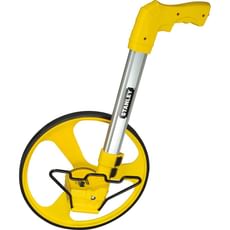
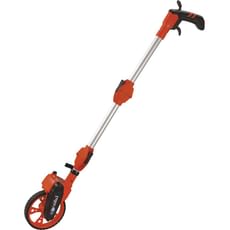
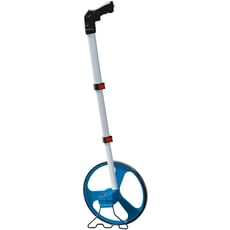
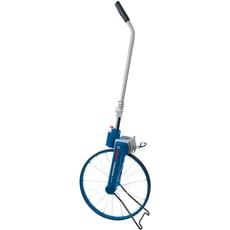
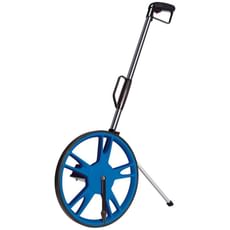
Measuring wheels are indispensable professional surveying tools designed to quickly and accurately measure distances over ground surfaces. Also known as distance measuring wheels, surveyor's wheels, or clickwheels, these precision instruments feature a calibrated wheel attached to a handle with a built-in counter that records the distance travelled as the wheel rolls along the ground. They calculate measurements in metres or feet, making them essential for site surveys, road measurements, fencing projects, landscape planning, and estimating materials for large-scale construction work where traditional tape measures become impractical.
Modern measuring wheels combine robust construction with user-friendly features such as telescopic handles for comfortable operation, folding designs for easy transport, and mechanical or digital counters that reset instantly. Tooled-Up.com stocks professional models from leading brands including Bosch Professional, Stanley, Draper, and Lufkin, offering exceptional accuracy across various terrains from smooth tarmac to rough building sites. Whether you're a surveyor calculating road lengths, a landscape gardener planning installations, or a builder estimating materials, a quality measuring wheel delivers faster and more reliable results than traditional methods over longer distances.
Available in different wheel sizes typically ranging from 160mm to 320mm diameter, these tools are engineered to withstand the rigours of daily site use. Larger wheels generally provide better accuracy over rough ground and cover distance more quickly, whilst smaller wheels offer enhanced manoeuvrability in confined spaces. From basic mechanical counter models to advanced digital displays with memory functions, the selection at Tooled-Up.com includes measuring wheels suited to every professional requirement and budget.
Jargon Buster
- Counter Reset: A mechanism (usually a button or lever) that returns the distance counter to zero, allowing you to start fresh measurements without manual calculation. Essential for measuring multiple sections on the same site.
- Telescopic Handle: An adjustable extending handle that allows users to set a comfortable operating height, reducing back strain during prolonged use and enabling compact storage and transport between sites.
- Wheel Circumference: The distance around the outer edge of the measuring wheel, which determines the counter increment. Larger circumferences mean fewer rotations needed for long distances, potentially improving overall accuracy.
- Accuracy Rating: Typically expressed as a percentage (e.g., ±0.5%), this indicates how precise the measurement will be over a given distance. Professional-grade wheels offer tighter tolerances for survey-level accuracy.
- Imperial/Metric Display: The measurement system shown on the counter. Many models offer switchable units or dual displays showing both metres and feet for versatility across different project requirements.
- Kickstand: A small support arm that allows the measuring wheel to stand upright when not in use, preventing it from rolling away and making it easier to read measurements on site.
Who Uses Measuring Wheels?
Measuring wheels are relied upon daily by a wide range of construction and outdoor professionals:
- Surveyors and Civil Engineers: For road surveying, site measurements, and producing accurate drawings for planning applications
- Landscape Gardeners and Groundworkers: Measuring plot dimensions, planning irrigation systems, and calculating materials for paving and turfing projects
- Builders and General Contractors: Estimating quantities for fencing, drainage, cabling runs, and groundwork across large sites
- Utility Companies: Measuring cable and pipe runs for telecommunications, gas, water, and electrical infrastructure projects
- Highway Maintenance Teams: Assessing road surfaces, planning resurfacing works, and measuring white line markings
- Sports Ground Managers: Marking out pitches, running tracks, and ensuring regulatory dimensions for professional sports facilities
- Property Developers and Estate Agents: Accurately measuring land plots and boundary lines for sales particulars and planning
- DIY Enthusiasts: Tackling garden projects, driveway installations, and other large-scale home improvement tasks where precision matters
How to Choose the Right Measuring Wheels
Wheel Size and Type: Larger diameter wheels (300mm+) are ideal for rough terrain and long-distance measurements on building sites, whilst smaller wheels (160-200mm) offer better control for indoor use or confined spaces. Consider where you'll predominantly work – road wheels with solid rubber tyres suit tarmac and concrete, whilst pneumatic tyres provide better grip on soft or uneven ground.
Counter Display: Mechanical counters are proven, reliable, and require no batteries, making them perfect for everyday site work. Digital displays offer enhanced readability in poor light and often include memory functions to store multiple measurements. Consider whether you need metric-only or switchable imperial/metric readings depending on your client base and project specifications.
Build Quality and Durability: Professional-grade models from brands like Bosch Professional and Stanley feature reinforced frames, impact-resistant counters, and weather-sealed mechanisms that withstand years of site abuse. Look for robust metal construction rather than plastic components if you're using the tool daily. Telescopic handles should lock positively without wobbling, as any play affects measurement accuracy.
Portability and Storage: If you're frequently moving between sites, folding or collapsible designs significantly reduce vehicle space requirements. Check the collapsed dimensions and weight – most professional models weigh between 1.4-3kg. A protective carry bag is worthwhile for preventing damage during transport and keeping the wheel clean between jobs.
Accuracy Requirements: For general construction estimating, accuracy within ±1% is typically sufficient. Surveying and engineering applications may require professional models with ±0.5% tolerance or better. Remember that accuracy degrades on very rough surfaces regardless of wheel quality, so consider your typical working conditions.
Budget Considerations: Entry-level measuring wheels from reputable manufacturers start around £30-50 and suit occasional use or basic distance measurement. Mid-range professional models (£60-120) offer enhanced durability and accuracy for daily site work. Premium digital models with advanced features command £150+, justified for surveying professionals requiring the highest precision and data recording capabilities.
Popular Accessories
- Protective Carrying Cases: Purpose-designed bags that protect your measuring wheel during transport and storage, preventing counter damage and keeping the mechanism free from site debris and moisture.
- Replacement Wheels: Spare wheels allow you to switch between terrain types or replace worn rubber tyres that may affect measurement accuracy after extensive use on abrasive surfaces.
- Marking Paint and Spray: Line marking aerosols work perfectly alongside measuring wheels for laying out building lines, car park spaces, and sports pitch markings once distances are established.
- Site Notebooks and Field Books: Weather-resistant notepads designed for recording measurements on site, with pre-printed grids that help maintain organised survey data.
- Hi-Vis Vests and PPE: Essential when using measuring wheels near roadways or active construction sites, ensuring you remain visible to plant operators and traffic.
- Laser Distance Measurers: Complementary measuring tools for shorter, highly precise measurements or when working at height where measuring wheels aren't practical.
Safety Information
Whilst measuring wheels are straightforward tools, certain safety considerations apply when working with them on site:
High-Visibility Clothing: Always wear appropriate hi-vis workwear when using measuring wheels near roads, active highways, or construction sites with moving vehicles and plant machinery. Ensure you're clearly visible to all traffic and comply with site-specific PPE requirements in accordance with HSE guidelines.
Working Near Roads: Follow proper traffic management procedures and consider using safety barriers or banksmen when measuring alongside live carriageways. Be aware of your surroundings at all times and never assume drivers have seen you.
Terrain Hazards: Watch for trip hazards, excavations, and unstable ground when concentrating on your measurements. Survey the route beforehand and take extra care on slopes or uneven surfaces where you might lose balance whilst operating the wheel.
Manual Handling: Use the telescopic handle at a comfortable height to maintain good posture and avoid back strain during extended measuring sessions. Take regular breaks on large projects to prevent repetitive strain injuries.
Frequently Asked Questions
How accurate are measuring wheels compared to laser measurers?
Professional measuring wheels typically achieve accuracy of ±0.5-1% on smooth, level surfaces, which equals ±50-100mm over 100 metres. Whilst laser distance measurers offer tighter tolerances for straight-line measurements, measuring wheels excel at following paths, curves, and terrain contours that lasers cannot accommodate. For most construction estimating and site layout work, a quality measuring wheel provides more than adequate precision at a fraction of the cost.
Can measuring wheels be used on rough or uneven ground?
Yes, though accuracy decreases on very rough terrain. Larger diameter wheels (300mm+) cope better with obstacles and uneven surfaces as they bridge over small bumps rather than dropping into every depression. For maximum accuracy on rough ground, maintain steady forward pressure and try to follow the smoothest practical route. Some wheel slip is inevitable on loose surfaces like gravel, so add a small tolerance to critical measurements.
Do I need a digital or mechanical counter?
Mechanical counters are bombproof, never need batteries, and suit most professional applications perfectly well. Digital displays offer advantages in poor lighting conditions and typically include memory functions for storing multiple measurements, plus easier switching between metric and imperial units. For straightforward distance measurement in good visibility, a mechanical counter is entirely adequate and more reliable in dusty, wet site conditions.
How do I maintain my measuring wheel for accurate readings?
Keep the wheel clean and free from debris that could affect rotation. Periodically check accuracy by measuring a known distance (such as 10 or 20 metres marked with a tape measure) and adjust if necessary – some models have calibration screws for fine-tuning. Store in a dry location and ensure the telescopic handle locks firmly, as any wobble translates to measurement error. Lubricate moving parts annually and replace worn tyres promptly.
What's the difference between road wheels and standard measuring wheels?
Road wheels typically feature larger diameters (300-320mm) and solid rubber or pneumatic tyres designed for extended use on tarmac and concrete surfaces. They're built for speed and comfort over long distances with reinforced frames to withstand daily professional use. Standard measuring wheels may have smaller diameters and basic plastic wheels suitable for occasional use on prepared surfaces. For serious site work, invest in a professional road wheel from established brands like Bosch Professional, Stanley, or Draper available from Tooled-Up.