

Paint Spray Guns

Pay in 3 interest-free payments on purchases from £20-£3000 with  . Learn more.
 Loading...
End of content
Error - No more pages to load
About Paint Spray Guns
Paint spray guns have transformed how both professional tradespeople and DIY enthusiasts tackle painting projects, delivering professional-quality finishes in a fraction of the time required for traditional brush and roller work. Whether you're redecorating interior walls, refinishing furniture, treating exterior fencing, or working on automotive projects, a quality paint sprayer offers superior coverage, smoother results, and dramatically improved productivity. Modern spray gun technology ranges from compact handheld HVLP systems perfect for detailed cabinetry work to powerful airless models capable of covering large commercial premises with thick masonry paint.
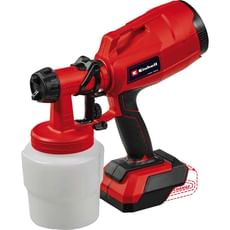
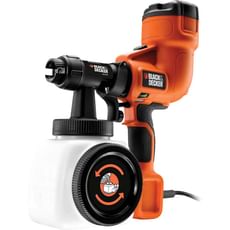
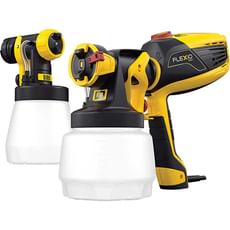
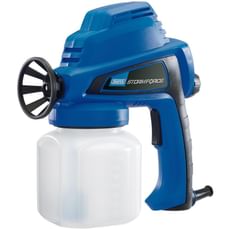
The paint spray guns available at Tooled-Up.com include versatile options to suit different applications, budgets, and working environments. HVLP (High Volume Low Pressure) models such as the Black and Decker HVLP200 excel at producing fine finishes with minimal overspray, making them ideal for furniture restoration and precision work. Airless systems like the Draper Storm Force SG80SF deliver the high-pressure performance needed for large-scale projects with heavy-bodied paints. For maximum flexibility, cordless options including the Einhell TC-SY 18/60 Li eliminate the constraints of mains power when working outdoors or on site, whilst universal sprayers such as the Wagner Spraytech W590 offer exceptional versatility across multiple paint types and viscosities.
Whether you're a professional decorator working across multiple sites, a kitchen fitter achieving factory-finish results on cabinetry, or a homeowner upgrading from conventional painting methods, investing in the right spray equipment can revolutionise both your finish quality and working efficiency. With trusted brands including Wagner, Einhell, Draper, and Black and Decker, Tooled-Up stocks paint spray guns to suit every skill level and application.
Jargon Buster
- HVLP (High Volume Low Pressure): A spray technology using high volumes of air at low pressure to atomise paint, resulting in excellent transfer efficiency and minimal overspray. Ideal for achieving fine, professional finishes on furniture, cabinetry, automotive work, and detailed projects where precision matters.
- Airless Spray: A high-pressure system that pumps paint through a small nozzle tip at extreme pressure, breaking it into fine particles without compressed air. Perfect for covering large surface areas quickly with thicker paints, masonry coatings, and primers on walls, ceilings, and exterior surfaces.
- Nozzle Size: The diameter of the spray tip opening, typically measured in millimetres. Smaller nozzles (1.0-1.5mm) suit thin materials like wood stains, varnishes, and lacquers, whilst larger nozzles (2.0-3.0mm) handle thicker emulsions, primers, and masonry paints.
- Viscosity: The thickness or flow resistance of paint, determining whether thinning is required before spraying. Most spray guns include a viscosity cup to help you test paint consistency and achieve optimal atomisation for smooth, professional results.
- Spray Pattern: The shape of paint distribution from the nozzle, adjustable on most models between horizontal, vertical, and circular patterns to suit different surfaces, working angles, and applications from walls to furniture.
- Flow Rate: The volume of paint delivered per minute, typically measured in millilitres. Higher flow rates enable faster coverage of large areas but require more careful technique to avoid runs, sags, and uneven coating thickness.
Who Uses Paint Spray Guns?
- Professional Decorators and Painters: Completing interior and exterior painting projects efficiently whilst maintaining consistently high finish quality across residential and commercial premises
- Furniture Restorers and Upcyclers: Applying smooth, even coats of paint, lacquer, varnish, or wood stain to furniture pieces, achieving results impossible with brushes
- Kitchen and Bedroom Fitters: Spraying cabinets, doors, drawer fronts, and fitted furniture for factory-finish results that enhance perceived quality
- Automotive Refinishers: Touch-up work, custom painting, panel refinishing, and full vehicle resprays requiring professional-grade finish standards
- Fencing Contractors and Landscapers: Treating and painting fences, decking, sheds, garden furniture, and outdoor structures quickly whilst achieving thorough coverage
- Maintenance Teams and Facilities Managers: Regular repainting and refurbishment of commercial premises, industrial units, schools, and public buildings
- Property Developers and Landlords: Refreshing rental properties between tenancies and preparing homes for sale with professional presentation
- DIY Enthusiasts and Homeowners: Home improvement projects from feature walls and ceilings to garden furniture restoration and upcycling projects
- Model Makers and Hobbyists: Precision painting and finishing of scale models, craft projects, and artistic applications requiring fine control
How to Choose the Right Paint Spray Guns
Selecting the appropriate paint spray gun depends on your specific applications, the materials you'll be spraying, project scale, and working environment. Consider these key factors when making your decision:
Spray Technology Type: HVLP systems excel at producing fine finishes with minimal waste, making them ideal for furniture, cabinetry, trim work, and automotive applications where finish quality is paramount. Airless sprayers deliver high output for large surface areas like walls, ceilings, exterior cladding, and fencing where speed and coverage matter most. Universal sprayers offer versatility across different paint types and project scales, perfect for those tackling varied work.
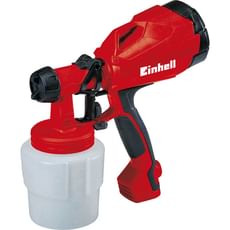
Power Source Considerations: Mains-powered 240v models like the Einhell TC-SY 400 P and Wagner W590 provide consistent, unlimited power for extended use, making them suitable for workshop environments and large projects. Cordless options such as the Einhell TC-SY 18/60 Li offer exceptional portability for working on site, in gardens, or locations without convenient mains access, though battery capacity may limit continuous operation time on extensive projects.
Paint Compatibility: Ensure your chosen spray gun can handle the materials you'll use most frequently. Thinner products like wood stains, varnishes, and lacquers require less power and smaller nozzles, whilst emulsions, masonry paint, and primers need more robust systems with appropriate nozzle sizes and higher pressure capabilities. Check manufacturer viscosity specifications and whether paint thinning is required.
Adjustability and Control Features: Look for models offering adjustable spray patterns, flow rate control, and interchangeable nozzles. These features provide flexibility across different projects and surfaces, from fine detail work to broad coverage applications. Variable pressure settings help achieve optimal results with different paint types and working conditions.
Container Capacity: Smaller 600-800ml containers suit detailed work and reduce arm fatigue during overhead application, whilst larger 1000-1500ml tanks like that found on the Black and Decker HVLP200 minimise refilling interruptions on bigger projects. Consider whether top-mounted or bottom-mounted containers better suit your typical working positions and applications.
Budget and Build Quality: Entry-level models from Black and Decker and Einhell offer excellent value for occasional DIY use and light professional work. Mid-range options from Draper and Wagner provide enhanced durability, performance, and features for regular professional use. Consider long-term cost of ownership including replacement parts, nozzles, and maintenance requirements.
Popular Accessories
- Additional Nozzles and Spray Tips: Different sizes for various paint viscosities and applications, enabling one spray gun to handle everything from fine lacquers to thick masonry coatings
- Spare Paint Containers: Allow quick switching between colours without cleaning, dramatically improving efficiency on multi-colour projects and reducing downtime
- Viscosity Measuring Cups: Accurately measure paint thickness to determine whether thinning is needed for optimal spray performance and finish quality
- Cleaning Kits and Brushes: Specialist tools and cleaning solutions to maintain spray guns properly and prevent paint build-up that affects performance and longevity
- Air Filters and Regulators: For HVLP systems using compressors, these ensure clean, consistent air pressure for superior finish quality free from contaminants
- Masking Film and Tape: Protect surrounding surfaces from overspray whilst creating clean, sharp paint lines and reducing preparation time
- Paint Strainers and Filters: Remove lumps, skin, and impurities before spraying, preventing nozzle blockages and finish defects that require remedial work
- Extension Lances: Reach high walls, ceilings, and awkward areas without ladders, improving both safety and working comfort on larger projects
- Respiratory Protection: FFP2/FFP3 masks or powered respirators rated for paint mists and vapours, essential for safe operation in compliance with HSE guidelines
Safety Information
Paint spraying creates fine airborne particles and potentially hazardous vapours that require appropriate safety precautions to protect your health. Always work in well-ventilated areas or outdoors when possible, and consider using extraction equipment for prolonged indoor use. Never spray in enclosed spaces without adequate ventilation, as this creates dangerous concentrations of paint mist and solvent vapours.
Essential PPE includes respiratory protection rated for paint mists and vapours (minimum FFP2 masks, though powered respirators offer superior protection for extensive professional work), safety goggles or a full face shield to prevent eye contact with paint particles, disposable coveralls or dedicated spray clothing to protect skin and personal clothing, and chemical-resistant gloves suitable for the solvents in your chosen paint system.
Follow COSHH regulations when handling paints, thinners, and cleaning solvents, ensuring proper storage, use, and disposal in accordance with HSE guidelines. Check product safety data sheets for specific hazards, precautions, and first aid measures. Keep spray equipment clean and properly maintained to prevent dangerous malfunctions or pressure-related accidents. Ensure all electrical equipment meets UK safety standards and use RCD protection when working outdoors or in damp conditions with 240v mains-powered models.
Never point spray guns at yourself or others, even when disconnected from power or air supply. Always release pressure and disconnect power before removing containers, changing nozzles, or performing maintenance. Keep flammable materials away from spray areas and avoid creating ignition sources when using solvent-based products. Store equipment and materials securely away from children and unauthorised users.
Frequently Asked Questions
Do I need to thin paint before using a spray gun?
This depends on both the paint type and your specific spray gun specifications. Many modern universal spray guns can handle unthinned emulsions and latex paints, whilst others require thinning for optimal atomisation and smooth finish. Always consult your spray gun's manual for viscosity recommendations and use the supplied viscosity cup to test consistency. Thinner materials like wood stains, varnishes, and lacquers typically spray without thinning, whilst thicker primers, masonry paints, and heavy-bodied coatings often need diluting according to manufacturer guidelines to achieve proper flow.
What's the difference between HVLP and airless spray guns?
HVLP (High Volume Low Pressure) systems use compressed air to atomise paint at low pressure, producing minimal overspray, excellent transfer efficiency, and superior finish quality, making them ideal for furniture, cabinetry, trim work, and automotive applications. Airless sprayers pump paint at extremely high pressure through a small nozzle without using air, offering faster coverage of large areas and the ability to handle much thicker materials, perfect for walls, ceilings, exterior surfaces, and high-volume commercial work. HVLP suits precision finish work whilst airless excels at productivity on bigger projects.
How do I clean my paint spray gun properly?
Thorough cleaning immediately after use is absolutely essential for spray gun longevity and consistent performance. For water-based paints, flush with warm water until it runs completely clear, then disassemble the nozzle, needle, and air cap for detailed cleaning with a soft brush. For solvent-based products, use appropriate thinners or manufacturer-recommended cleaning solutions. Pay particular attention to the nozzle, needle, fluid passages, and seals where dried paint causes blockages and affects spray pattern. Most manufacturers provide specific cleaning instructions in their manuals. Never leave paint to dry inside the gun.
Can I use a paint spray gun indoors safely?
Yes, but with important precautions to protect your health and property. Ensure excellent ventilation by opening windows and doors, and consider using extraction fans to remove paint mist and vapours. Protect surrounding areas thoroughly with dust sheets and masking film, as spray mist travels considerably further than brush splatter. Wear appropriate respiratory protection rated for paint mists in accordance with HSE guidelines. HVLP systems produce significantly less overspray than airless models, making them more suitable for interior work. Water-based paints create less hazardous vapours than solvent-based alternatives and are generally preferable for indoor use.
Are cordless paint spray guns as powerful as mains-powered models?
Modern cordless spray guns like the Einhell TC-SY 18/60 Li offer impressive performance for most common DIY and light professional applications, particularly with thinner materials and small to medium-sized projects. However, 240v mains-powered models generally provide more consistent pressure, higher flow rates, and unlimited runtime for extensive or heavy-duty work with thick paints. Cordless options excel where portability and convenience matter most—outdoor furniture, fencing, site work without power access, working at height—whilst corded models suit workshop environments and large-scale projects requiring continuous operation without battery changes.