

Platform Trucks

Pay in 3 interest-free payments on purchases from £20-£3000 with  . Learn more.
 Loading...
End of content
Error - No more pages to load
About Platform Trucks
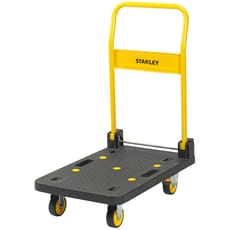
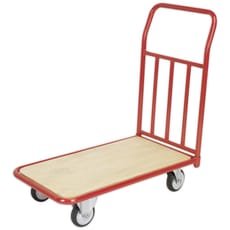
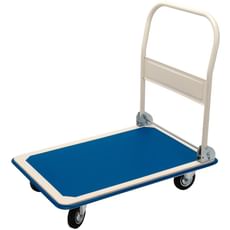
Platform trucks are essential material handling tools designed to transport heavy or bulky loads safely and efficiently across warehouses, workshops, construction sites, and industrial environments. These versatile wheeled platforms feature a flat load-bearing surface mounted on castors or wheels, allowing a single operator to move substantial weights that would otherwise require multiple people or mechanical lifting equipment. From compact folding models ideal for tight spaces to heavy-duty hydraulic lifting platforms capable of handling hundreds of kilograms, platform trucks dramatically reduce manual handling risks whilst improving productivity.
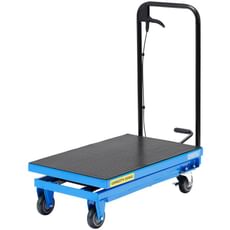
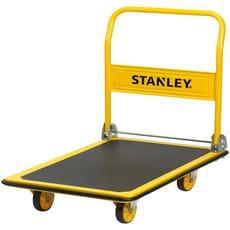
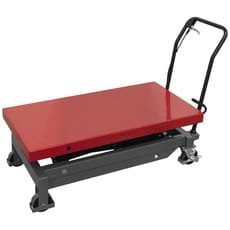
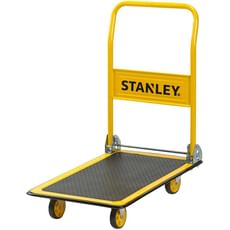
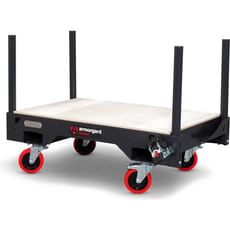
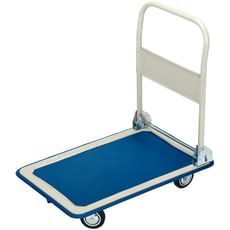
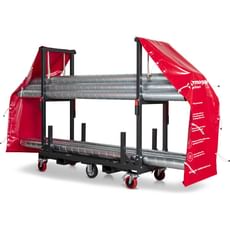
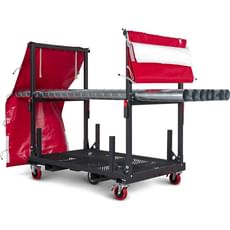
The range available at Tooled-Up.com includes traditional flatbed platform trucks with fixed handles, folding models for space-saving storage, and advanced hydraulic lifting platforms that elevate loads to ergonomic working heights. Specialist variants such as pipe and ductwork trolleys cater to specific trades, whilst heavy-duty models constructed from reinforced steel handle demanding industrial applications. With trusted brands including Sealey, Draper, Armorgard, and Stanley represented, these trolleys feature robust construction, smooth-rolling wheels, and load capacities ranging from 150kg for light-duty models up to 500kg or more for industrial-strength platforms.
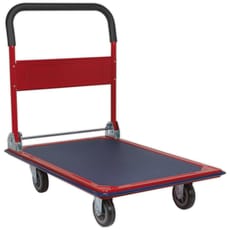
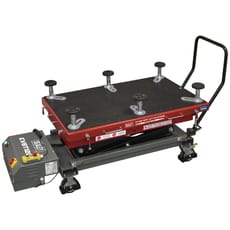
Modern platform trucks incorporate thoughtful design features such as non-slip platform surfaces, ergonomic push handles, brake-equipped castors for load security, and protective corner bumpers. Hydraulic models offer foot-operated lifting mechanisms that raise loads to comfortable working heights, reducing bending and strain. Folding platform trucks collapse to minimal dimensions for van storage or compact workshops, whilst remaining instantly deployable when needed. Whether moving stock between warehouse locations, transporting materials around construction sites, or manoeuvring heavy equipment in automotive workshops, the right platform truck transforms demanding manual handling tasks into straightforward one-person operations.
Jargon Buster
- Load Capacity: The maximum safe working load (SWL) that a platform truck can carry, typically measured in kilograms. Exceeding this rating compromises safety and may damage the truck or cause accidents.
- Castor Configuration: The arrangement and type of wheels fitted to the platform. Common configurations include four swivel castors for maximum manoeuvrability, two fixed and two swivel for directional stability, or larger pneumatic wheels for rough terrain.
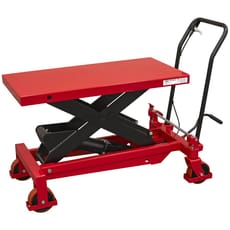
- Hydraulic Lift Mechanism: A foot-operated pump system that raises the platform to elevated positions, reducing manual handling strain. Particularly valuable for loading/unloading at different heights or positioning materials at ergonomic working levels.
- Platform Dimensions: The usable surface area of the load-bearing deck, typically quoted as length × width in millimetres. Larger platforms accommodate bulkier items but require more storage space and turning radius.
- Folding/Collapsible Design: Platform trucks with handles and sometimes platform sections that fold down for compact storage. Essential for mobile tradespeople with limited van space or workshops requiring multiple trucks stored when not in use.
- TPR Wheels: Thermoplastic rubber wheels that combine durability with floor protection. These non-marking castors prevent scuffing on polished floors whilst providing smooth rolling and quiet operation.
Who Uses Platform Trucks?
- Warehouse Operatives: Moving stock, picking orders, and transporting goods between storage areas and dispatch zones
- Logistics and Delivery Drivers: Loading and unloading vans, transporting parcels from vehicle to customer premises
- Builders and General Contractors: Moving building materials, cement bags, plasterboard, and tools around construction sites
- Plumbers and Heating Engineers: Transporting pipework, radiators, boilers, and heavy components, with specialist ductwork trolleys for long pipes
- Electricians: Moving cable drums, distribution boards, lighting fixtures, and toolboxes between work areas
- Maintenance Engineers: Transporting equipment, replacement parts, and tools throughout industrial facilities
- Retail Staff: Stock replenishment, moving merchandise from storage to shop floor, handling deliveries
- Automotive Workshops: Moving engines, transmissions, vehicle batteries, and heavy components, with specialised EV battery lift models
- Facilities Management: General-purpose material handling across commercial buildings, schools, hospitals, and public buildings
- DIY Enthusiasts: Home renovation projects requiring movement of heavy materials, appliances, or furniture
How to Choose the Right Platform Trucks
Load Capacity Requirements: Determine the maximum weight you'll regularly transport. Light-duty models (150-250kg) suit parcel delivery and general warehouse work, mid-range trucks (300-400kg) handle most construction materials and equipment, whilst heavy-duty industrial platforms (500kg+) accommodate substantial loads like machinery, pallet quantities, or automotive components. Always allow a safety margin rather than working at maximum capacity.
Platform Size and Configuration: Consider the dimensions of typical loads. Standard platforms measure approximately 700mm × 450mm, suitable for boxes, toolboxes, and general materials. Larger platforms (900mm × 600mm or more) accommodate bulkier items like sheet materials or multiple boxes. Specialist models available at Tooled-Up include extended-length pipe trolleys with adjustable supports for ducting and tube transport.
Mobility and Manoeuvrability: Assess your working environment. Four swivel castors provide maximum manoeuvrability in tight warehouse aisles or congested workshops. Two fixed and two swivel wheels offer better directional control when pushing heavy loads over longer distances. For outdoor sites or uneven surfaces, pneumatic wheels handle rough terrain better than solid castors. Consider castor diameter—larger wheels roll more easily over obstacles and uneven flooring.
Storage and Portability: If space is limited or the truck requires van transportation, folding models collapse to minimal dimensions. These designs typically feature folding handles and sometimes collapsible platform edges. Mobile tradespeople particularly benefit from compact storage, whilst fixed-location warehouses may prefer non-folding models offering greater structural rigidity.
Lifting Capability: Hydraulic platform trucks eliminate manual lifting when loading or unloading at different heights. Foot-operated pumps raise the platform from ground level to waist height, significantly reducing strain when positioning materials onto workbenches, shelving, or vehicle load beds. Particularly valuable for automotive workshops handling heavy batteries or components, these models combine transport and lifting functions.
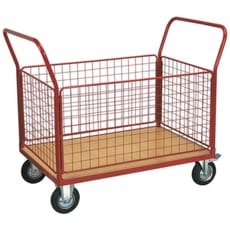
Construction Quality and Durability: Professional-grade platforms feature reinforced steel frames, robust welded construction, and industrial-quality castors. Mesh platform surfaces prevent debris accumulation and reduce weight, whilst solid decks offer maximum support for smaller items. Non-slip platform coatings improve load security. Powder-coated finishes resist corrosion in damp environments. Tooled-Up stocks models from established manufacturers including Sealey, Draper, and Armorgard, known for commercial-grade construction suitable for daily professional use.
Handle Design and Ergonomics: Comfortable push handles reduce operator fatigue during extended use. Some models feature handles at multiple positions for two-person operation with long loads. Folding handles should lock securely in both deployed and stored positions. Consider handle height relative to operator stature for comfortable pushing posture.
Popular Accessories
- Ratchet Straps and Bungee Cords: Secure loads to prevent shifting during transport, particularly important when moving items over uneven surfaces or up ramps
- Edge Protectors and Corner Guards: Protect both the load and surrounding walls, doorways, and fixtures from impact damage during manoeuvring
- Replacement Castors and Wheels: Maintain optimal performance by replacing worn wheels; upgrade to different wheel types for changed applications
- Loading Ramps: Enable platform trucks to traverse steps, kerbs, or loading bay edges safely when moving between different levels
- Platform Truck Covers: Protect stored equipment from dust and moisture, particularly valuable for tools and materials stored outdoors
- Work Gloves: Proper handling gloves improve grip on handles and protect hands when loading/unloading materials
- Hi-Visibility Vests: Essential PPE when operating platform trucks in busy warehouses, construction sites, or areas with vehicle traffic
- Security Chains and Padlocks: Secure valuable tools and equipment transported on platform trucks, deterring opportunistic theft on busy sites
Safety Information
Load Distribution and Stability: Always position loads centrally on the platform with the centre of gravity as low as possible. Unbalanced loads may cause tipping, particularly when turning or traversing slopes. Never exceed the manufacturer's stated load capacity, as overloading compromises structural integrity and creates serious injury risks. Stack items securely and use straps to prevent shifting during transport.
Manual Handling Technique: Despite reducing manual handling requirements, platform trucks still require proper technique. Push rather than pull whenever possible, maintaining an upright posture with hands at comfortable handle height. Use body weight to initiate movement rather than arm strength alone. Take care when starting, stopping, and turning—heavy loads have considerable momentum. Never place hands or feet beneath the platform whilst moving or stationary.
Operating Environment Awareness: Assess routes before moving loads, identifying obstacles, uneven surfaces, slopes, or confined spaces requiring careful navigation. Ensure adequate visibility around tall loads—use a second person as a guide if necessary. Be particularly cautious near pedestrians, especially in retail or public environments. When working on construction sites, wear appropriate PPE including safety footwear with steel toe caps and hi-visibility clothing. The HSE provides guidance on safe manual handling practices applicable to platform truck operation.
Hydraulic Platform Safety: When using hydraulic lifting models, ensure the platform is fully lowered before moving. Never transport loads on an elevated platform as this dramatically raises the centre of gravity and creates tipping hazards. Keep hands and feet clear of the lifting mechanism during operation. Regularly inspect hydraulic systems for leaks or damage. Always lower the platform fully before leaving unattended.
Maintenance and Inspection: Conduct regular inspections checking wheel condition, handle security, platform integrity, and hydraulic function where applicable. Replace damaged or excessively worn components immediately. Keep wheel bearings lubricated and remove debris that may impede castor rotation. Store platform trucks in designated areas where they won't create tripping hazards. Folding models should lock securely in both deployed and collapsed positions.
Frequently Asked Questions
What's the difference between a platform truck and a sack truck?
Platform trucks feature a horizontal flat surface for transporting loads that sit on top, ideal for boxes, materials, and equipment. Sack trucks (hand trucks) have a vertical frame with a small toe plate, designed for sliding under loads and tilting back to transport in an upright position. Platform trucks typically handle wider, bulkier items and offer greater stability for multiple boxes or irregular shapes, whilst sack trucks excel at moving tall, heavy individual items like appliances or sacks.
Can platform trucks be used outdoors on construction sites?
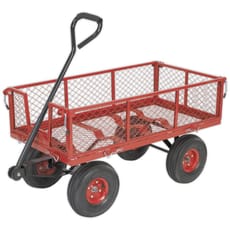
Yes, though wheel selection significantly affects performance. Models with larger diameter wheels (150mm+) or pneumatic tyres navigate rough, uneven ground more effectively than small solid castors designed for smooth warehouse floors. Armorgard and Sealey offer robust construction site models with reinforced frames and suitable wheel configurations. Consider the terrain—very rough ground may still require alternative handling equipment. Ensure outdoor-stored trucks have corrosion-resistant finishes.
How much weight can folding platform trucks safely carry compared to fixed models?
Quality folding platform trucks from reputable manufacturers handle similar capacities to fixed equivalents, typically 150-300kg depending on model size and construction. The folding mechanism, when properly designed and maintained, doesn't significantly compromise load capacity. However, ensure folding handles and platform sections lock securely before loading. Always check the manufacturer's stated capacity—this varies considerably between light-duty folding models and heavy-duty fixed platforms which may handle 500kg or more.
Do I need brakes on a platform truck?
Brakes aren't essential for all applications but provide valuable load security when stationary, particularly on sloped surfaces or when loading/unloading. Hydraulic lifting platforms typically include brakes to prevent movement whilst elevated. For warehouse use on level floors, non-braked castors usually suffice. However, if you're working on construction sites with gradients, loading vehicles on sloped driveways, or handling particularly heavy loads, brake-equipped castors significantly improve safety.
What maintenance do platform trucks require?
Platform trucks require minimal but important maintenance. Regularly inspect wheels for wear, damage, or debris wrapped around axles. Lubricate wheel bearings periodically according to usage intensity—busy commercial environments may require monthly attention whilst occasional DIY use needs only annual lubrication. Check platform surface integrity, handle security, and frame welds for cracks or damage. For hydraulic models, inspect for fluid leaks and test lifting function regularly. Clean platforms after transporting materials that leave residue. Store in dry conditions to prevent corrosion, particularly important for outdoor use.