

Plugs

Pay in 3 interest-free payments on purchases from £20-£3000 with  . Learn more.
 Loading...
End of content
Error - No more pages to load
About Plugs
Industrial plugs and sockets are essential electrical connection components designed for demanding environments where standard domestic fittings simply aren't sufficient. From construction sites and workshops to outdoor events and industrial facilities, specialised plugs provide safe, reliable power distribution for heavy-duty equipment and high-amperage applications. Unlike standard 13A household plugs, industrial plugs are built to BS EN 60309 standards, featuring robust construction, colour-coded voltage identification, and weatherproof designs that can withstand the rigours of professional use.
The selection at Tooled-Up.com includes both 110V and 240v plugs in various amperage ratings, from 16A to 32A configurations. Industrial plugs are specifically engineered with features such as twist-and-lock mechanisms, integrated cable grips, and IP-rated weather protection to ensure secure connections in challenging conditions. Whether connecting power tools on a building site, distributing electricity at temporary installations, or maintaining industrial machinery, the right plug ensures both safety and performance.
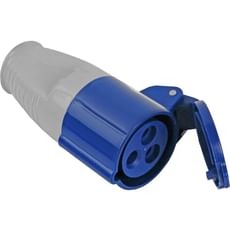
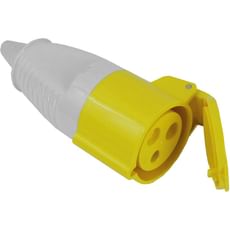
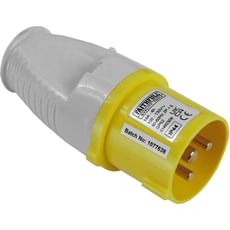
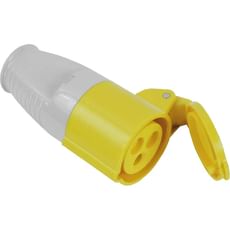
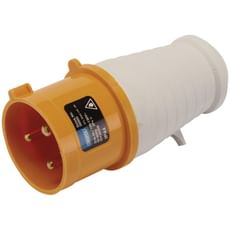
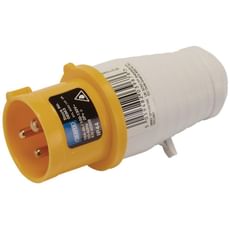
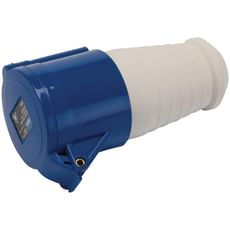
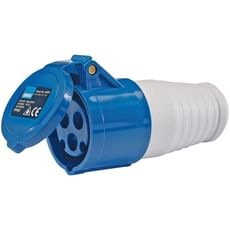
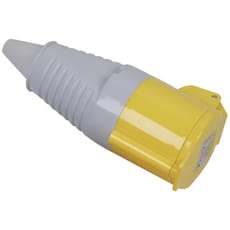
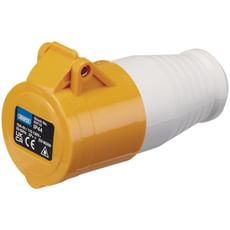
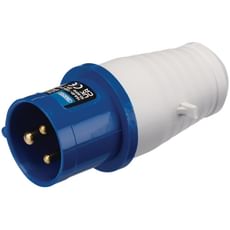
Available from trusted manufacturers including Draper, Faithfull, Sealey, and Defender, these industrial-grade connectors feature ergonomic designs for quick fitting and inspection, along with robust housings that protect internal connections from dust, moisture, and impact damage. Many models incorporate colour-coded bodies that instantly identify voltage ratings—yellow for 110V site applications and blue for 240v connections—helping prevent potentially dangerous mismatches on busy worksites.
Jargon Buster
- BS EN 60309: The British and European standard governing industrial plugs and sockets, specifying design requirements, pin configurations, and colour coding to ensure safe, standardised connections across different equipment and manufacturers.
- IP Rating (Ingress Protection): A two-digit code indicating the level of protection against solid objects and liquids. IP44-rated plugs, for example, resist splashing water and solid objects above 1mm, making them suitable for outdoor site work.
- Centre Earth (CE) Connection: A safety feature where the earth pin makes contact before the live conductors when plugging in, and disconnects last when unplugging, ensuring continuous earth protection during connection and disconnection.
- Amperage Rating: The maximum current a plug can safely carry, typically 16A or 32A for industrial applications. Using a plug below the required amperage for your equipment can cause overheating and presents a serious fire risk.
- Twist-and-Lock: A securing mechanism where the plug body rotates to lock into the socket, preventing accidental disconnection from vibration, cable tension, or knocks—essential for maintaining power to critical equipment on active sites.
- Cable Gland: The integrated component that grips the cable sheath, providing strain relief to prevent pulling forces from being transferred to the electrical connections inside the plug body.
Who Uses Plugs?
Industrial plugs are essential equipment for a wide range of professionals and industries:
- Electricians and Electrical Contractors: Installing, maintaining, and testing industrial electrical systems and temporary power distributions
- Construction Workers and Site Managers: Connecting power tools and equipment on building sites where 110V systems are standard for safety
- Maintenance Engineers: Servicing industrial machinery and equipment requiring high-amperage connections
- Event Technicians: Setting up temporary power distribution for outdoor events, festivals, and exhibitions
- Facilities Managers: Maintaining industrial and commercial buildings with specialist electrical requirements
- Groundskeepers and Landscapers: Powering outdoor equipment in locations exposed to weather and moisture
- Hire Companies: Maintaining rental equipment fleets with standardised, robust electrical connections
- Workshop Owners: Equipping workshops with proper industrial power distribution for machinery and tools
- Caravan and Marine Electricians: Installing weatherproof electrical systems in mobile and marine environments
How to Choose the Right Plugs
Voltage Requirements: Determine whether you need 110V (typically yellow, standard for UK construction sites for safety) or 240v (blue, for industrial and workshop applications). Site work generally mandates 110V centre-tapped earth systems to reduce shock risk, whilst permanent workshop installations typically use 240v connections.
Amperage Rating: Match the plug's amperage to your equipment's requirements. 16A plugs suit most power tools and light equipment, whilst 32A connections are necessary for high-draw machinery, welders, and large compressors. Always choose a rating equal to or exceeding your equipment's maximum current draw.
Environmental Protection: Consider the working environment when selecting IP ratings. Tooled-Up stocks IP44-rated plugs suitable for outdoor use and damp locations, providing essential protection against water splashing and solid particle ingress. Indoor-only applications may use lower-rated options, though IP44 provides added peace of mind.
Build Quality and Standards: Ensure plugs are certified to BS EN 60309 standards, guaranteeing proper pin configuration, earth continuity, and safe operation. Look for features like integrated grip points for easy handling, single-screw access for quick wiring, and robust housings from reputable brands such as Draper, Faithfull, and Defender.
Socket Compatibility: Consider your existing infrastructure and equipment. Industrial plugs use specific pin configurations that vary by voltage and amperage, so ensure compatibility across your power distribution system. Adaptors are available for transitioning between different plug types, such as 16A industrial to standard 13A domestic connections.
Frequency of Use: For daily professional use, invest in premium plugs with ergonomic designs, reinforced strain relief, and high-quality contacts that resist wear. Occasional-use applications may require less heavy-duty specifications, though safety standards should never be compromised.
Popular Accessories
- Industrial Sockets: Matching sockets and couplers in corresponding voltage and amperage ratings to complete your power distribution system
- Extension Leads: Pre-wired industrial extension cables with fitted plugs and sockets for convenient power distribution across sites
- Adaptor Leads: Converting between different plug types, such as 16A industrial to 13A domestic connections for versatile equipment use
- Cable Reels: Industrial-rated cable reels for organised, safe power distribution across large working areas
- RCD Protection: Residual current devices providing additional electrical safety by detecting earth leakage and preventing electric shock
- Distribution Units: Multi-outlet power distribution boxes with integrated protection for supplying multiple tools from a single source
- Replacement Contacts: Spare internal components for maintaining and refurbishing existing industrial plugs
- Cable Markers: Identification systems for managing multiple cables and connections on complex sites
- Electrical Testing Equipment: Socket testers and multimeters for verifying correct wiring and safe operation
Safety Information
Qualified Installation: Industrial plug wiring should only be undertaken by persons competent in electrical work and familiar with BS 7671 wiring regulations. Incorrect wiring can result in electric shock, fire, or equipment damage. If uncertain, always consult a qualified electrician.
Regular Inspection: Inspect plugs before each use for signs of damage including cracks in the housing, exposed conductors, damaged pins, or compromised cable glands. Remove damaged plugs from service immediately and replace them—never attempt repairs with tape or temporary fixes on electrical connections.
Correct Rating: Never exceed the amperage rating of a plug or use adaptors to connect equipment drawing higher currents than the plug is rated for. Overloading causes overheating, insulation breakdown, and presents serious fire risks. Calculate total load when connecting multiple tools through distribution units.
Weather Protection: Even IP-rated plugs require sensible precautions. Avoid submersion in water, and where possible, position connections away from standing water and direct rainfall. Keep plugs elevated off wet ground and ensure covers are properly secured when connected.
Disconnection Protocol: Always switch off equipment and isolate power before connecting or disconnecting industrial plugs. Making or breaking connections under load can cause arcing, damaging contacts and creating potential shock hazards. Never pull cables to disconnect—always grip the plug body.
Compliance with HSE Guidelines: When working on construction sites or industrial environments, ensure electrical installations comply with HSE requirements and site-specific electrical safety policies. Many sites mandate 110V systems and portable RCD protection as standard safety measures.
Frequently Asked Questions
What's the difference between 110V and 240v plugs, and which do I need?
The primary difference is voltage: 110V plugs (colour-coded yellow) are standard on UK construction sites because they use centre-tapped earth systems that reduce the voltage to earth to just 55V, significantly minimising electric shock risk if equipment is damaged. The 240v plugs (blue) operate at standard mains voltage and are used in workshops, industrial facilities, and permanent installations where the reduced shock risk of 110V isn't mandated. If you're working on construction sites, you'll almost certainly need 110V equipment and plugs. Workshop and fixed industrial applications typically use 240v systems.
Can I wire my own industrial plugs or do I need an electrician?
Whilst there's no legal requirement preventing competent persons from wiring industrial plugs, it requires proper knowledge of electrical regulations, correct colour coding, and safe termination techniques. If you understand BS 7671 wiring regulations, can identify live, neutral, and earth conductors, and know how to achieve secure, safe connections with appropriate cable clamping, you may wire plugs yourself. However, if you're uncertain about any aspect, consult a qualified electrician. Incorrect wiring can result in potentially fatal electric shock or fire. Commercial and site applications may require certification of electrical work.
What does IP44 rating mean and do I need it?
IP44 indicates the plug is protected against solid objects larger than 1mm (the first digit, 4) and splashing water from any direction (the second digit, 4). This makes IP44 plugs suitable for outdoor use, damp environments, and typical construction site conditions where exposure to rain, splashing, and dust is likely. If you're working outdoors, in workshops without climate control, or anywhere moisture might be present, IP44-rated plugs provide essential protection. Indoor-only applications in dry conditions may not require this level of protection, though it provides added safety margin.
Why are some plugs rated 16A and others 32A?
The amperage rating indicates the maximum current the plug can safely carry continuously. Most portable power tools draw less than 16A, making 16A plugs suitable for drills, grinders, saws, and similar equipment. However, high-powered machinery such as large compressors, welders, industrial vacuum systems, and some heavy-duty workshop equipment may draw currents exceeding 16A, requiring 32A connections. Always check your equipment's maximum current draw (found on the rating plate) and select a plug with equal or greater amperage rating. Using an under-rated plug causes dangerous overheating.
Are industrial plugs compatible with standard 13A sockets?
No, industrial plugs conforming to BS EN 60309 use completely different pin configurations and cannot physically connect to standard 13A domestic sockets. This is a deliberate safety feature preventing incompatible voltage and amperage connections. However, adaptor leads are available that convert from industrial plug formats (such as 16A 240v) to standard 13A plugs, allowing you to connect industrial-socketed equipment to domestic supplies where the power requirements are within safe limits. Always ensure the equipment's power draw doesn't exceed 13A (approximately 3000W) when using such adaptors.