

Quick Clamps

Pay in 3 interest-free payments on purchases from £20-£3000 with  . Learn more.
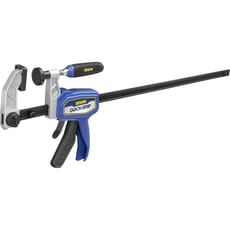
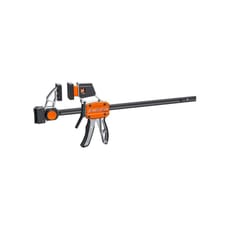
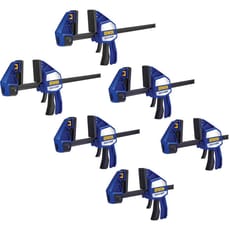
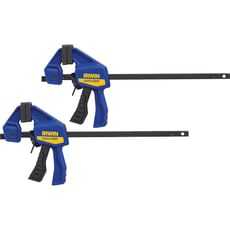

 Loading...
End of content
Error - No more pages to load
About Quick Clamps
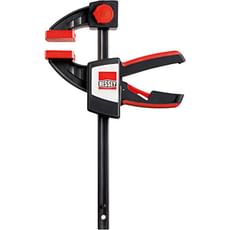
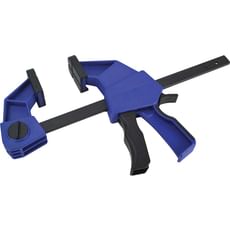
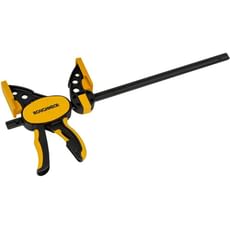
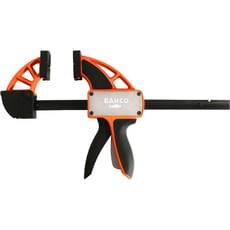
Quick clamps are essential workshop tools designed for rapid, one-handed operation, allowing tradespeople and DIY enthusiasts to secure workpieces efficiently whilst keeping their other hand free to position materials accurately. Unlike traditional G-clamps or screw clamps that require time-consuming adjustments, quick clamps feature trigger mechanisms or sliding bars that enable users to apply clamping pressure in seconds, making them invaluable in fast-paced construction and workshop environments where productivity matters.
The selection at Tooled-Up.com includes quick clamps from leading manufacturers such as Bessey, Bahco, Quick-Grip, Draper, and Stanley, offering clamping capacities from light-duty applications up to heavy-duty models capable of holding 230kg or more. These tools are available in various configurations including bar clamps, trigger clamps, and dual-action models, with many featuring reversible jaw mechanisms that convert the clamp into a spreader for pushing materials apart. Whether you're working with timber, sheet materials, or assembling furniture, quick clamps provide the versatility and speed that modern tradespeople demand.
Professional-grade quick clamps incorporate features such as soft-grip handles for comfortable extended use, removable contact pads with V-grooves for securing pipes and rounded materials, and quick-release systems that maintain maximum clamping force for extended periods. Some advanced models include guide rail compatibility for precise alignment work, whilst mega clamping sets provide comprehensive solutions for workshops requiring multiple clamps in various sizes.
Jargon Buster
- Clamping Capacity: The maximum distance between the jaws when fully opened, typically measured in millimetres. This determines the thickness of material the clamp can accommodate, ranging from 150mm for compact models up to 900mm or more for larger bar clamps.
- Clamping Force: The amount of pressure a quick clamp can apply to hold materials together, usually measured in kilograms. Professional models can deliver forces between 80kg and 230kg, with higher forces required for dense materials or large-scale assemblies.
- Trigger Mechanism: The pistol-grip style handle that allows one-handed operation of the clamp. Squeezing the trigger advances the movable jaw along the bar to grip the workpiece, whilst a quick-release button enables rapid jaw retraction.
- Reversible Jaws: A feature allowing the clamping heads to be rotated or repositioned so the tool functions as a spreader rather than a clamp, useful for pushing materials apart or applying outward pressure during installation work.
- Dual-Action: Quick clamps with both clamping and spreading functions built into a single tool, eliminating the need to reverse the jaws manually. These models feature a switch or lever to change between modes quickly.
- Contact Pads: Protective caps on the jaw faces that prevent damage to workpiece surfaces. Many are removable and feature V-grooves for gripping cylindrical objects like pipes or dowels securely.
Who Uses Quick Clamps?
- Carpenters and Joiners: For holding timber assemblies, gluing operations, and securing workpieces during cutting or routing
- Cabinet Makers: Essential for furniture assembly, carcass construction, and laminating operations requiring multiple clamps simultaneously
- Shopfitters: For on-site installations where speed and one-handed operation are crucial when positioning fixtures and fittings
- Picture Framers: Securing mitred corners whilst adhesive sets, with soft pads protecting delicate mouldings
- General Builders: Temporary fixings during construction, holding materials for marking or cutting, and assembly work
- Metalworkers and Fabricators: Positioning components for welding or bolting, particularly when working alone
- DIY Enthusiasts: Home workshop tasks including furniture repairs, woodworking projects, and general assembly work
- Set Builders and Exhibition Contractors: Rapid assembly and dismantling of temporary structures requiring quick, reliable clamping
- Boat Builders: Laminating curved sections and holding components during epoxy application
- Flooring Installers: Securing boards whilst adhesive cures or during scribing and fitting operations
How to Choose the Right Quick Clamps
Clamping Capacity: Measure the maximum thickness of materials you'll be working with regularly. For general workshop use, clamps with 300-600mm capacity cover most applications, whilst furniture makers may require 900mm or larger. Tooled-Up stocks quick clamps ranging from compact 150mm models to heavy-duty bar clamps exceeding 1000mm.
Clamping Force: Consider the density and size of materials being clamped. Softwoods and sheet materials require less force (80-150kg), whilst hardwoods, laminates, and metal fabrication benefit from heavy-duty models delivering 200kg or more. Higher forces ensure secure joints during adhesive curing.
One-Handed vs Dual-Action: Standard one-handed quick clamps suit most applications where you need to position materials with your free hand. Dual-action models that convert between clamping and spreading without jaw reversal are ideal for versatile workshop use, saving time when switching between tasks.
Jaw Design and Reversibility: Check whether the clamp features reversible jaws if you need spreading functionality. Look for models with removable contact pads if you're working with finished surfaces that require protection, or V-grooved pads for gripping pipes and cylindrical materials securely.
Build Quality and Brand: Professional tradespeople benefit from premium brands like Bessey, Bahco, and Quick-Grip that offer superior durability and consistent clamping pressure. These brands use reinforced bars, robust trigger mechanisms, and quality materials that withstand daily site use. Budget-conscious users can find reliable options from Draper, Sealey, and Faithfull for occasional use.
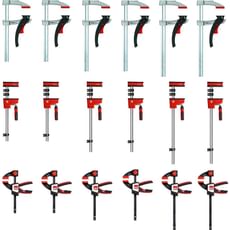
Quantity Requirements: Many woodworking and assembly tasks require multiple clamps simultaneously. Consider clamping sets that provide several sizes at better value than purchasing individually. The Bessey 18-piece mega clamping set, for example, offers comprehensive coverage for workshop applications.
Specialised Features: For specific applications, consider features like guide rail compatibility (Bessey EZR series) for precise alignment work, extra-long reaches for large assemblies, or hybrid designs combining trigger action with traditional screw adjustment for maximum force.
Popular Accessories
- Replacement Contact Pads: Spare soft pads and V-grooved jaw covers to replace worn components or adapt clamps for different materials
- Clamp Stands and Racks: Wall-mounted or freestanding storage solutions keeping quick clamps organised and accessible in the workshop
- Bench Dogs and Clamping Blocks: Accessories that work alongside quick clamps for securing workpieces to benches during machining operations
- Corner Clamps: Specialised right-angle fixtures used with quick clamps for perfect 90-degree assemblies in cabinet making and picture framing
- Clamp Edge Guides: Straight edges that attach to quick clamps, providing precise guides for circular saw and router operations
- Parallel Jaw Attachments: Extensions ensuring even pressure distribution across wide workpieces, preventing distortion during glue-ups
- Anti-Slip Pads: Rubber or cork sheets placed between clamp jaws and workpieces for extra grip and surface protection
- Pipe Clamp Conversion Kits: Components allowing quick clamps to grip standard diameter pipes for extended reach applications
Safety Information
Clamping Force Awareness: Quick clamps can apply significant pressure – ensure workpieces are properly supported and won't slip or collapse under clamping force. Always position clamps to distribute pressure evenly and avoid concentrating force on weak points that could cause material failure.
Trigger Operation: Keep fingers clear of the jaw area when operating the trigger mechanism, as the moving jaw can trap fingers against the workpiece. Always maintain a firm grip on both the clamp and workpiece during one-handed operation to prevent unexpected movement.
Surface Protection: Use appropriate contact pads when clamping finished surfaces, veneers, or soft materials to prevent indentation or damage. For delicate work, consider placing scrap material between the clamp jaws and the workpiece as additional protection.
Inspection and Maintenance: Regularly inspect quick clamps for damaged bars, worn contact pads, or malfunctioning trigger mechanisms. Clean slides and moving parts to ensure smooth operation, and replace any clamps showing cracks, bends, or unreliable clamping action that could compromise workpiece security.
Appropriate Application: Whilst quick clamps excel at speed and convenience, recognise their limitations compared to traditional screw clamps for maximum-force applications. For heavy-duty metalwork or dense hardwood assemblies requiring extreme pressure, consider supplementing with G-clamps or sash clamps as needed.
Frequently Asked Questions
What's the difference between quick clamps and G-clamps?
Quick clamps offer one-handed, rapid operation with trigger mechanisms or sliding bars, making them ideal for speed and convenience when positioning materials. G-clamps provide higher maximum clamping forces through screw adjustment but require two hands and more time to operate. Quick clamps are preferred for general workshop tasks where speed matters, whilst G-clamps suit heavy-duty applications requiring maximum pressure on smaller workpieces.
Can quick clamps be used as spreaders?
Many quick clamps feature reversible jaws that allow them to function as spreaders, applying outward pressure to push materials apart. Some models, particularly dual-action designs, can switch between clamping and spreading modes without jaw reversal. Check product specifications to confirm spreading functionality, as not all quick clamps offer this feature.
How many quick clamps do I need for a typical workshop?
Most woodworkers benefit from having at least four to six quick clamps in commonly used sizes (300-600mm capacity) for basic assembly work. Serious furniture makers and cabinet shops often require 12 or more clamps in various sizes to handle complex glue-ups simultaneously. Starting with a clamping set provides good coverage at better value than purchasing individually, with the option to add specific sizes as requirements develop.
What clamping capacity should I choose for general woodworking?
For typical DIY and furniture-making projects, quick clamps with 450-600mm capacity handle most applications including table assemblies, cabinet carcasses, and panel glue-ups. Smaller 150-300mm clamps are useful for detail work and repairs, whilst 900mm or larger models suit wider panels and specialist applications. Having a range of sizes provides maximum versatility for different project scales.
Are expensive quick clamps worth the investment?
Premium brands like Bessey, Bahco, and Quick-Grip deliver superior clamping force consistency, more durable construction, and smoother operation compared to budget alternatives. For professional tradespeople using clamps daily, the enhanced reliability and longevity justify the investment. Occasional DIY users can achieve satisfactory results with mid-range options from Draper or Faithfull, reserving premium purchases for frequently used sizes.