

Riveting Tools

Pay in 3 interest-free payments on purchases from £20-£3000 with  . Learn more.
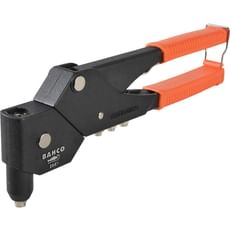
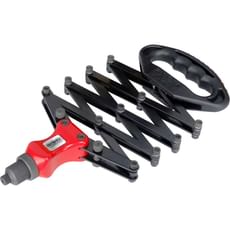
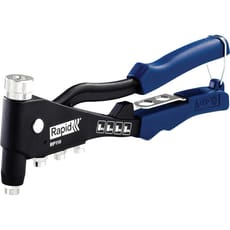
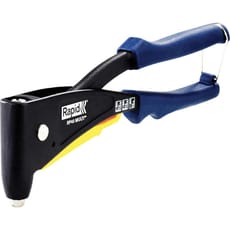

 Loading...
End of content
Error - No more pages to load
About Riveting Tools
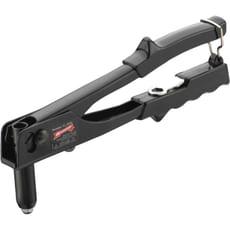
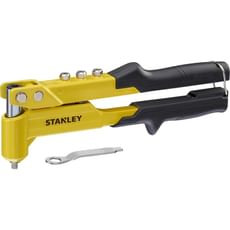
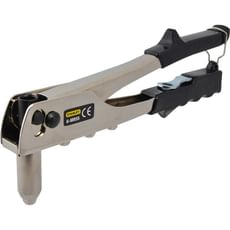
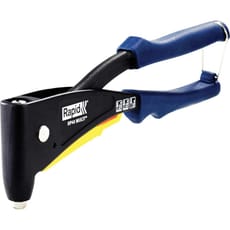
Riveting tools are essential fastening devices used to permanently join two or more materials together using rivets – mechanical fasteners that create strong, reliable connections without requiring access to both sides of the workpiece. From hand-operated rivet guns to pneumatic and cordless powered models, these tools are indispensable across manufacturing, construction, automotive repair, and metalworking applications. Whether you're fabricating sheet metal components, repairing vehicle bodywork, or assembling aluminium structures, the right riveting tool ensures professional results with minimal effort.
The selection at Tooled-Up.com includes manual hand rivet guns, which remain popular for their portability and ease of use on smaller projects, alongside more powerful options for high-volume industrial applications. Modern riveting tools accommodate various rivet sizes and materials, including aluminium, steel, and stainless steel, making them versatile solutions for joining dissimilar metals, plastics, and composite materials. Most quality rivet guns feature interchangeable nozzle pieces to accept different rivet diameters, typically ranging from 2.4mm to 6.4mm, with quick-change mechanisms for efficient workflow.
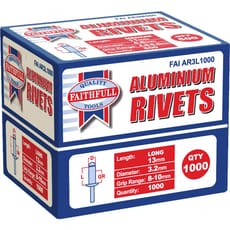
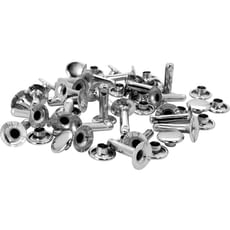
Alongside the tools themselves, Tooled-Up stocks a comprehensive range of rivets in various materials, lengths, and diameters, plus essential accessories such as replacement nozzles, mandrel collectors, and lubricants. Whether you're a professional sheet metal worker requiring industrial-grade pneumatic riveters or a DIY enthusiast tackling occasional home repairs with a manual rivet gun, investing in proper riveting equipment ensures clean, flush finishes and structural integrity that alternative fastening methods simply cannot match.
Jargon Buster
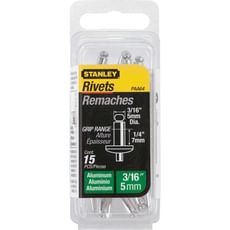
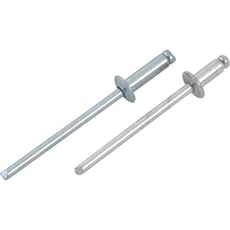
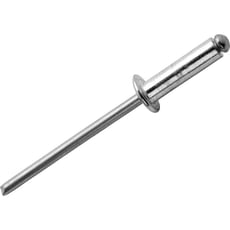
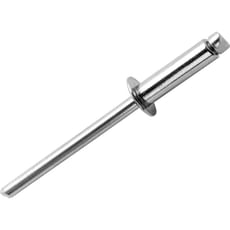
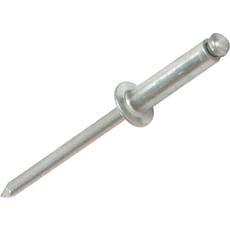
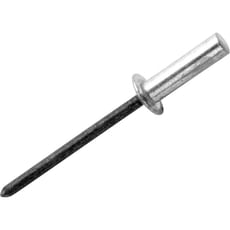
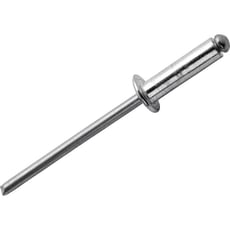
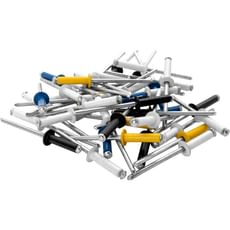
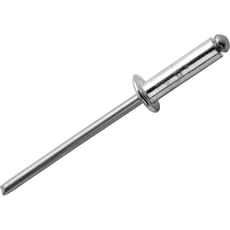
- Blind Rivet (Pop Rivet): A tubular fastener with a mandrel that can be installed from one side of the workpiece, making it ideal when you cannot access the rear of the material. The mandrel breaks off once the rivet is set, leaving a permanent connection.
- Mandrel: The central pin or stem that runs through a blind rivet. During installation, the riveting tool pulls the mandrel through the rivet body, causing it to expand and form a secure fastening before the mandrel snaps off at a predetermined break point.
- Nozzle (Nose Piece): The interchangeable attachment on the front of a rivet gun that holds the rivet in place during installation. Different nozzle sizes accommodate various rivet diameters, typically 2.4mm, 3.2mm, 4.0mm, 4.8mm, and 6.4mm.
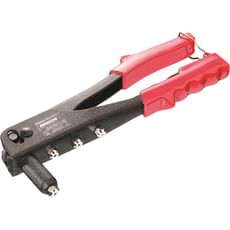
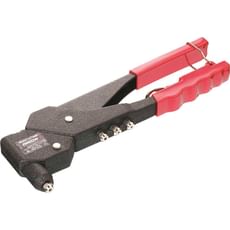
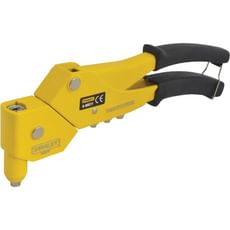
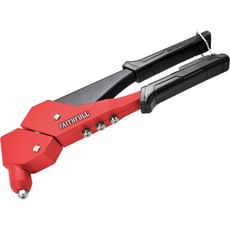
- Fixed Head vs Swivel Head: Fixed head riveters maintain a straight alignment between handles and nozzle, whilst swivel head models feature a rotating head that allows angled access in confined spaces or awkward positions.
- Rivet Grip Range: The thickness of material (or combined materials) that a specific rivet can effectively fasten, measured in millimetres. Selecting the correct grip range ensures the rivet expands properly to create a secure joint.
- Setting Force: The amount of pulling power required to deform the rivet body and snap the mandrel. Manual tools rely on hand strength, whilst pneumatic and battery-powered models provide consistent force for faster, less fatiguing operation.
Who Uses Riveting Tools?
- Sheet Metal Workers: Fabricating ductwork, cladding, roofing components, and HVAC installations
- Automotive Technicians: Repairing vehicle bodywork, replacing panels, and restoring classic cars
- Aerospace Engineers: Assembling aircraft components where weight-sensitive, permanent fastening is critical
- Shopfitters & Joiners: Installing aluminium framing, signage, and decorative metalwork
- Boat Builders: Fastening aluminium and composite materials in marine construction and repair
- Agricultural Engineers: Maintaining and repairing farm machinery, trailers, and metal structures
- Maintenance Professionals: Conducting repairs across industrial facilities, warehouses, and commercial premises
- DIY Enthusiasts: Tackling home improvement projects, garden furniture assembly, and hobby metalworking
- Fabricators & Welders: Creating steel structures, gates, railings, and architectural metalwork
How to Choose the Right Riveting Tools
Tool Type: Manual hand rivet guns offer portability and affordability for occasional use and lighter materials, whilst pneumatic models provide superior power and speed for high-volume industrial applications. Cordless battery-powered riveters deliver a middle ground – portable like manual tools but with power-assisted operation that reduces hand fatigue on larger jobs.
Rivet Size Capacity: Ensure your chosen tool accommodates the rivet diameters you'll be using most frequently. Entry-level hand riveters typically handle 2.4mm to 4.8mm rivets, whilst heavy-duty industrial models extend to 6.4mm or larger. Consider whether interchangeable nozzles are included or available separately.
Material Compatibility: Check that your riveting tool can handle the rivet materials you'll be working with. Aluminium rivets require less force than steel or stainless steel, so verify the tool's setting force matches your application. Some tools specify maximum material hardness ratings.
Head Configuration: Fixed head riveters suit straightforward applications with clear access, whilst swivel or rotating head designs provide crucial flexibility when working in tight spaces, around corners, or at awkward angles – particularly valuable for automotive and maintenance work.
Handle Design & Ergonomics: For extended use, comfortable, cushioned handles with good leverage significantly reduce hand strain. Longer handles generally provide better mechanical advantage, requiring less grip strength per rivet – an important consideration for high-volume work.
Build Quality & Durability: Professional-grade tools feature hardened steel construction, replaceable jaws, and robust mechanisms that withstand thousands of riveting cycles. Budget models may suffice for occasional DIY use, but tradespeople should invest in recognised brands with proven reliability and parts availability.
Popular Accessories
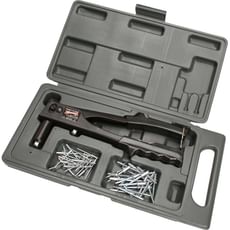
- Rivet Assortments: Mixed packs containing various sizes and materials for versatile applications
- Replacement Nozzle Sets: Spare nose pieces in different diameters to maintain tool functionality
- Mandrel Collectors: Attachable containers that capture spent mandrels for cleaner working and easier disposal
- Rivet Nut Tools: Specialised devices for installing threaded inserts into thin materials
- Drill Bits: Correctly sized bits for creating precise pilot holes before rivet installation
- Lubricating Oil: Maintenance products to keep mechanisms operating smoothly
- Rivet Removal Tools: Drill bits and punches designed to extract rivets without damaging surrounding material
- Safety Glasses: Essential eye protection when mandrels snap during riveting
- Tool Cases: Organised storage solutions for riveters, nozzles, and rivet stocks
Safety Information
Always wear appropriate eye protection when using riveting tools, as mandrels can snap unexpectedly and become projectiles. The sudden release of tension during rivet setting poses a risk of eye injury from flying debris or metal fragments. Safety glasses or face shields meeting BS EN 166 standards are essential.
Ensure proper hand positioning to avoid pinching fingers between the tool handles during operation. Maintain a secure grip and keep hands clear of the nozzle area. When working overhead or in confined spaces, be aware of your body position to maintain balance and prevent strain injuries.
Inspect riveting tools regularly for worn or damaged components, particularly jaws, nozzles, and handle mechanisms. Worn parts can result in incomplete rivet setting or tool failure during operation. Replace damaged components promptly and follow manufacturer maintenance recommendations to ensure safe, reliable performance.
Frequently Asked Questions
What's the difference between a rivet gun and a pop rivet gun?
The terms are often used interchangeably, though "pop rivet" is technically a brand name that has become generic. Both refer to tools that install blind rivets from one side of the workpiece. Professional tradespeople typically call them rivet guns or riveters, whilst "pop rivet gun" remains common in DIY contexts.
Can I use a hand rivet gun for stainless steel rivets?
Yes, but stainless steel rivets require significantly more force to set than aluminium or mild steel. Ensure your hand riveter is rated for stainless steel applications and features robust construction. For frequent stainless steel work, pneumatic or battery-powered tools reduce hand fatigue and provide more consistent results.
How do I know which rivet size to use?
Choose a rivet diameter appropriate to the structural load and material thickness. The rivet's grip range must match or slightly exceed the combined thickness of materials being joined. As a general rule, rivet diameter should be at least three times the thickness of the thinnest material for adequate strength.
Why won't my rivet gun pull the mandrel through?
Common causes include worn jaws that cannot grip the mandrel properly, incorrect nozzle size for the rivet diameter, or insufficient handle force. Check that you're using the correct nozzle, inspect jaws for wear, and ensure you're applying firm, complete squeezes of the handles until the mandrel snaps.
Do I need different tools for different rivet materials?
A single quality rivet gun can typically handle aluminium, steel, and stainless steel rivets, though you may need to upgrade from a basic manual tool to a more powerful model for harder materials. The key factor is whether the tool can generate sufficient setting force for the material hardness you're working with.