
Safety Helmets & Visors

Pay in 3 interest-free payments on purchases from £20-£3000 with  . Learn more.
Loading...
End of content
Error - No more pages to load
About Safety Helmets & Visors
Safety helmets and visors are essential personal protective equipment (PPE) for anyone working in environments where head injuries, facial impacts, or flying debris pose a risk. From forestry work and landscaping to construction sites and workshop operations, protective headgear can prevent serious injury or even save lives. Modern safety helmets combine impact-resistant shells with integrated or attachable visors, offering comprehensive protection for both the head and face whilst maintaining comfort during extended wear.
The range available at Tooled-Up.com includes dedicated forestry helmets with mesh visors and ear defenders, general-purpose hard hats with attachable face shields, and specialist systems designed for specific tasks like chainsaw operation or hedge trimming. Many models feature adjustable harness systems for a secure fit, ventilation channels to reduce heat build-up, and quick-release mechanisms for visor adjustment. Brands such as Portwest, Draper, ALM, and Trend provide options suitable for both professional tradespeople and serious DIY enthusiasts who understand the importance of proper head protection.
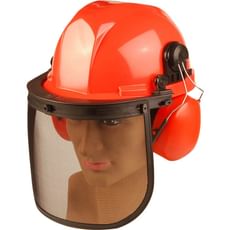
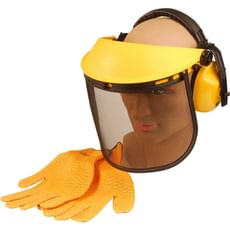
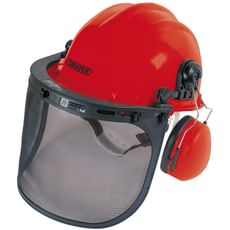
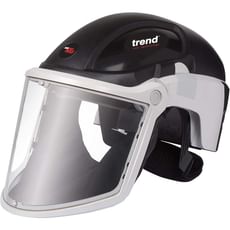
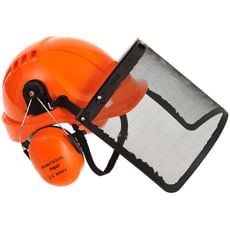
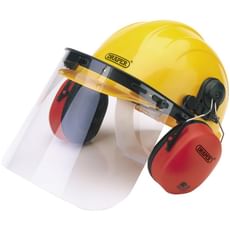
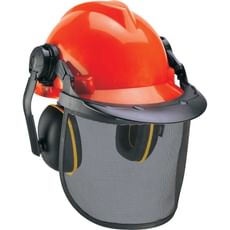
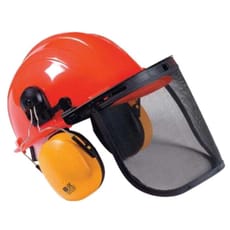
Modern safety helmets often incorporate multi-functional designs that combine several protective elements into one system. Forestry helmets, for example, typically include an impact-resistant helmet shell, mesh or polycarbonate visor for face protection, and integrated ear defenders to guard against noise-induced hearing damage. More advanced systems like powered air-purifying respirators (PAPR) offer even greater protection by incorporating filtered breathing apparatus, making them ideal for dusty environments or applications involving harmful particulates.
Jargon Buster
- EN397: The European standard for industrial safety helmets, specifying requirements for shock absorption, penetration resistance, and flame resistance. All safety helmets sold in the UK must meet this standard as a minimum.
- EN166: The standard covering personal eye protection, including visors and face shields. Different classifications (such as 3B) indicate the level of protection against mechanical impacts and other hazards.
- Mesh Visor: A face shield constructed from metal mesh rather than solid plastic, offering excellent visibility and ventilation whilst protecting against larger flying debris. Particularly popular for forestry work and brush cutting.
- Harness System: The internal cradle and adjustment mechanism inside a safety helmet that ensures proper fit, weight distribution, and maintains the crucial gap between the helmet shell and the wearer's head.
- PAPR (Powered Air-Purifying Respirator): An advanced respiratory protection system using a battery-powered fan to draw air through filters, providing clean breathing air inside a helmet or hood assembly.
- APF (Assigned Protection Factor): A numerical rating indicating the level of respiratory protection provided. An APF40 rating, for example, means the system reduces airborne contaminant exposure by a factor of 40.
Who Uses Safety Helmets & Visors?
- Arborists and tree surgeons requiring protection from falling branches, chainsaw kickback, and wood chips
- Forestry workers operating chainsaws and other cutting equipment in woodland environments
- Groundskeepers and landscapers using brush cutters, hedge trimmers, and strimmers
- Construction workers on sites where falling objects and overhead hazards are present
- Workshop operators using angle grinders, lathes, and machinery that generates flying debris
- Demolition contractors working in environments with multiple overhead and impact hazards
- Metalworkers and fabricators exposed to grinding sparks, swarf, and cutting debris
- Concrete workers using disc cutters, breakers, and other equipment creating dust and fragments
- Serious DIY enthusiasts undertaking projects involving power tools, cutting, or grinding operations
How to Choose the Right Safety Helmets & Visors
Consider Your Primary Application: Forestry helmets typically include integrated mesh visors and ear defenders, whilst general construction hard hats may accept attachable visors as needed. Chainsaw operators require specific EN ISO 17249 compliant systems, whereas workshop users might prioritise lightweight designs with clear polycarbonate shields.
Visor Type Matters: Metal mesh visors offer superior ventilation and prevent fogging but provide protection primarily against larger debris. Polycarbonate visors give better protection against fine dust and small particles but can scratch over time and may require anti-fog treatments. Some helmets at Tooled-Up offer interchangeable visor options for maximum versatility.
Integrated vs Modular Systems: All-in-one forestry helmets provide convenience and guaranteed compatibility between components, whilst modular hard hat systems allow customisation with different visor types, ear defenders, or chin straps as your requirements change.
Comfort and Fit: Look for adjustable harness systems with multiple size settings, padded headbands, and adequate ventilation. Helmets worn for extended periods benefit from features like moisture-wicking materials and balanced weight distribution. The gap between helmet shell and head should be maintained for proper impact protection.
Compliance Standards: Verify that helmets meet EN397 as a minimum, with visors compliant to EN166 and ear defenders (if included) meeting EN352 standards. Specialist applications may require additional certifications – chainsaw helmets, for instance, should meet specific forestry standards.
Replacement and Maintenance: Check availability of replacement visors, headbands, and other wearing parts. Safety helmets have a finite lifespan (typically 3-5 years from manufacture) and should be replaced after any significant impact, even if damage isn't visible.
Popular Accessories
- Replacement mesh visors and polycarbonate face shields
- Replacement harness systems and comfort padding
- Chin straps for secure retention in windy conditions or overhead work
- Helmet-mounted ear defenders meeting EN352 standards
- Hard hat lamps and torch clips for low-light working
- High-visibility helmet covers and reflective stickers
- Replacement filters for powered respirator systems
- Storage bags and helmet carriers for transport protection
- Anti-fog treatments for polycarbonate visors
- Safety glasses or goggles for additional eye protection
Safety Information
Always inspect your safety helmet before use, checking for cracks, dents, or UV degradation that could compromise protection. Even minor damage can significantly reduce impact resistance, so replace damaged helmets immediately. Never drill holes, apply stickers, or modify helmets, as this can weaken the shell structure and void safety certifications.
Ensure the harness system is properly adjusted to maintain the correct distance (typically 25-50mm) between your head and the helmet shell – this gap is crucial for absorbing impact energy. The helmet should sit level on your head, not tilted backwards or forwards, with the adjustment knob centred at the back of your skull.
Be aware of expiry dates and manufacturer recommendations for replacement intervals. Even without visible damage, the materials in safety helmets degrade over time through UV exposure, temperature variations, and general wear. Most manufacturers recommend replacement every 3-5 years, with some forestry helmets requiring more frequent renewal due to harsh working conditions.
Store helmets away from direct sunlight, extreme temperatures, and chemicals when not in use. Clean regularly with mild soap and water – harsh solvents can degrade the shell material. For powered respirator systems, maintain filters according to the manufacturer's schedule and ensure batteries are charged and functioning correctly before each use. Remember that HSE guidelines require employers to provide appropriate PPE and ensure it's properly maintained and used.
Frequently Asked Questions
What's the difference between a safety helmet and a hard hat?
Whilst the terms are often used interchangeably, safety helmets typically refer to full systems with integrated or attachable visors and sometimes ear defenders, designed for specific tasks like forestry work. Hard hats are usually simpler construction helmets primarily offering impact protection from falling objects, though many accept modular attachments for additional protection.
Can I use a forestry helmet for general construction work?
Yes, forestry helmets meeting EN397 provide suitable head protection for most construction applications. However, they may be heavier and warmer than necessary for general site work where the integrated visor and ear defenders aren't required. Check that any helmet meets the specific standards required for your work environment.
How often should I replace the visor on my safety helmet?
Replace visors when they become scratched, cracked, or significantly discoloured, as damage reduces visibility and protective capability. Mesh visors typically last longer than polycarbonate shields, which can scratch more easily. Keep spare visors available and inspect them regularly, particularly if working in harsh environments with lots of abrasive dust or debris.
Do safety helmets protect against electrical hazards?
Standard EN397 helmets provide limited electrical insulation, but specific electrical work requires helmets tested to EN50365 for protection against low-voltage electrical conductors. If working near live electrical equipment or overhead cables, ensure your helmet carries the appropriate electrical protection classification and never rely solely on the helmet – always follow proper electrical safety procedures.
Can I attach a headlamp or camera to my safety helmet?
Only use mounting systems specifically designed for safety helmets and approved by the manufacturer. Drilling holes or using adhesives not recommended by the maker can compromise the helmet's structural integrity and void its safety certification. Many modern helmets include dedicated mounting points for accessories that don't compromise protection.