

Socket Cap Screws

Pay in 3 interest-free payments on purchases from £20-£3000 with  . Learn more.

 Loading...
End of content
Error - No more pages to load
About Socket Cap Screws
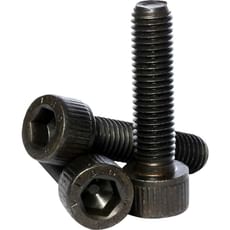
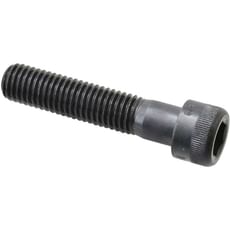
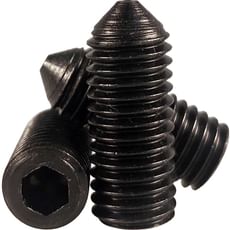
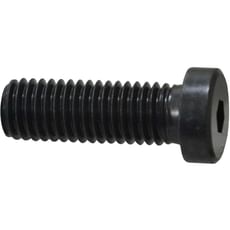
Socket cap screws are high-strength fasteners characterised by their cylindrical head with an internal hexagonal (Allen key) drive. Designed for applications requiring superior clamping force and a low-profile finish, these precision-engineered fixings are essential components in mechanical assemblies, machinery, automotive work, and structural fabrication. The internal socket design allows for higher torque application than traditional external drives while maintaining a compact, streamlined appearance that won't snag on moving parts or create protrusions.
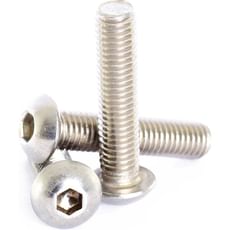
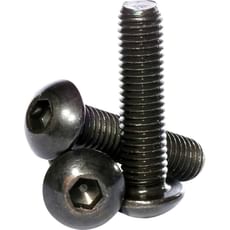
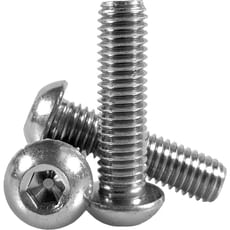
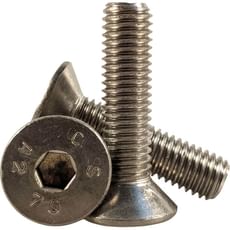
Tooled-Up.com stocks socket cap screws in various head styles including standard socket head cap screws, button head socket screws for applications requiring a lower profile, and countersunk socket screws for flush-mounted applications. Available in multiple grade specifications – particularly 10.9 and 12.9 grades for high-tensile strength – these fasteners are manufactured to exacting standards from alloy steel, stainless steel (A2 304 and A4 316), and feature finishes including bright zinc plated (BZP) for corrosion resistance. Thread types span metric, BSW (British Standard Whitworth), and UNC (Unified National Coarse) specifications to suit diverse engineering requirements.
Premium brands including Holokrome, Sirius, Sealey, and Timco ensure professional tradespeople and engineers have access to reliable fixings manufactured to BS and ISO standards. These screws are particularly valued for their consistent quality, precise threading, and ability to withstand repeated assembly and disassembly cycles without compromising the socket drive integrity.
Jargon Buster
- Grade 10.9 / 12.9: Numerical classification indicating tensile strength of metric fasteners. Grade 10.9 offers 1000 N/mm² tensile strength with 90% yield strength ratio, whilst grade 12.9 provides 1200 N/mm² – higher grades suit applications requiring greater clamping force and resistance to shearing.
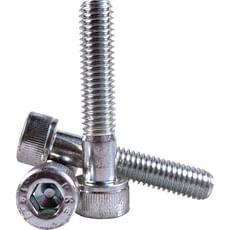
- BZP (Bright Zinc Plated): Electroplated zinc coating providing corrosion protection and a bright silver finish. Suitable for indoor applications and light-duty outdoor use, offering economical rust resistance compared to stainless steel alternatives.
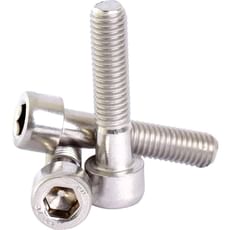
- Socket Head Cap Screw: The standard cylindrical head design with internal hexagon drive, offering maximum head height and the strongest clamping force. Ideal where space permits and maximum strength is required.
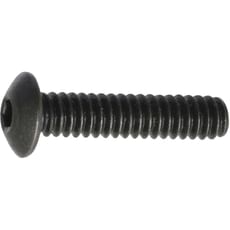
- Button Head Socket Screw: Lower profile alternative with a domed head approximately half the height of standard socket caps. Provides a neater appearance whilst maintaining good strength characteristics for space-restricted assemblies.
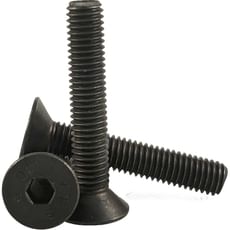
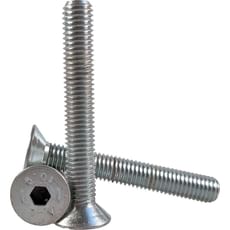
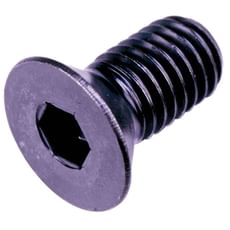
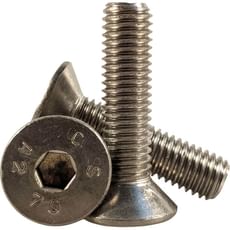
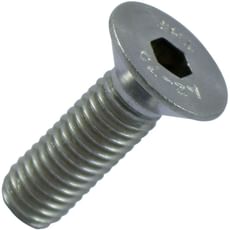
- Countersunk Socket Screw: Features a conical head designed to sit flush with or below the material surface when fully tightened. Essential for applications requiring smooth surfaces without protrusions.
- A2 / A4 Stainless Steel: Corrosion-resistant grades – A2 (304) suits most environments whilst A4 (316) offers superior resistance to marine, chemical, and chloride-rich conditions.
Who Uses Socket Cap Screws?
- Mechanical Engineers: Precision machinery assembly, jig and fixture construction, equipment maintenance
- Manufacturing Facilities: Production line equipment, automated machinery, conveyor systems
- Automotive Technicians: Engine components, suspension systems, chassis modifications
- Fabricators and Welders: Structural steelwork, bespoke metalwork assemblies, adjustable fixings
- Maintenance Engineers: Plant machinery servicing, equipment overhaul, replacement fastenings
- Product Designers: Prototype assembly, testing rigs, small-batch production
- Hydraulic and Pneumatic Engineers: Cylinder mounting, manifold assembly, pressure vessel construction
- Aerospace and Marine Industries: Where high-strength, corrosion-resistant fasteners with low aerodynamic profile are essential
- Furniture Manufacturers: High-quality joinery, metal furniture frames, adjustable mechanisms
- DIY Enthusiasts: Custom projects requiring professional-grade fixings and clean aesthetic finishes
How to Choose the Right Socket Cap Screws
Head Style Selection: Standard socket head cap screws provide maximum strength and clamping force for general engineering applications. Button head variants suit applications where lower profile is advantageous whilst maintaining good strength. Countersunk types are essential when flush surfaces are required to prevent snagging or for aesthetic considerations.
Material Grade: Grade 10.9 alloy steel fasteners offer excellent strength for most mechanical assemblies and equipment mounting. Specify grade 12.9 where higher tensile strength is required, particularly in high-stress automotive, aerospace, or heavy machinery applications. The range available at Tooled-Up includes both grades across multiple sizes and thread types.
Corrosion Protection: For indoor applications and general engineering, BZP (bright zinc plated) steel screws provide economical corrosion resistance. Outdoor installations, marine environments, or food-processing equipment demand A2 stainless steel as minimum specification. Chemical plants, coastal locations, and chloride-exposure situations require A4 (316) stainless steel for long-term reliability.
Thread Type and Size: Metric threads are standard for most modern applications and offer widest availability. BSW (British Standard Whitworth) suits heritage machinery, classic vehicle restoration, and older British equipment. UNC threads are specified for American equipment compatibility. Always verify thread pitch and diameter match existing assemblies or engineering drawings.
Length Considerations: Calculate required length based on material thickness plus sufficient thread engagement – typically 1.5 times the screw diameter for steel, more for softer materials like aluminium. Allow for washers, clearance, and ensure the screw doesn't bottom-out before achieving proper clamping force.
Popular Accessories
- Hex Key Sets: Quality Allen keys from brands like Wera and Wiha in metric, imperial, and Torx profiles for proper socket engagement
- Torque Wrenches: Essential for precision tightening to manufacturer specifications, preventing over-tightening or under-torquing
- Washers: Spring washers, plain washers, and Nord-Lock washers to distribute load and prevent loosening
- Thread-Locking Compounds: Loctite and similar products for vibration-resistant assemblies
- Taps and Dies: Thread-cutting tools for creating matching threaded holes or repairing damaged threads
- Socket Screw Assortments: Comprehensive kits like the Sealey 108-piece sets providing commonly-used sizes for workshop stock
- Anti-Seize Compounds: Copper or ceramic-based lubricants preventing galling and facilitating future disassembly
Frequently Asked Questions
What's the difference between Grade 10.9 and Grade 12.9 socket cap screws?
Grade 12.9 fasteners offer approximately 20% higher tensile strength (1200 N/mm² versus 1000 N/mm²) compared to Grade 10.9. Whilst Grade 10.9 suffices for most general engineering applications, Grade 12.9 is specified where maximum strength is critical – high-stress automotive components, heavy machinery, or safety-critical assemblies. The higher grade also provides better resistance to stripping under high torque.
Can I use socket cap screws in outdoor applications?
BZP (bright zinc plated) socket cap screws suit sheltered outdoor applications but will eventually corrode in prolonged exposure to moisture. For reliable outdoor performance, specify A2 (304) stainless steel as minimum. Marine environments, coastal locations, or chemical exposure demand A4 (316) stainless steel for long-term corrosion resistance without maintenance.
Why do socket cap screws strip more easily than hex head bolts?
Socket cap screws don't inherently strip more easily – quality fasteners from brands like Holokrome and Sirius feature precisely-machined socket drives. Stripping typically results from using worn or incorrect-size hex keys, applying excessive torque, or contamination preventing full key engagement. Always use correctly-sized, quality hex keys and ensure the socket is clean and undamaged before tightening.
What size hex key do I need for metric socket cap screws?
Socket size corresponds to screw diameter: M3 uses 2.5mm, M4 uses 3mm, M5 uses 4mm, M6 uses 5mm, M8 uses 6mm, M10 uses 8mm, and M12 uses 10mm hex keys. Button head screws typically use smaller keys than equivalent standard socket caps. Always verify before purchase and maintain a comprehensive metric hex key set for versatility.
Should I use washers with socket cap screws?
Plain washers distribute clamping load across softer materials (aluminium, plastics, wood) and protect finished surfaces. Spring washers or Nord-Lock washers prevent loosening in vibration-prone assemblies like machinery or automotive applications. For structural steel-to-steel joints with proper hole tolerances, washers may be unnecessary, but they're generally recommended for optimal load distribution and assembly longevity.