

Socketry

Pay in 3 interest-free payments on purchases from £20-£3000 with  . Learn more.
 Loading...
End of content
Error - No more pages to load
About Socketry
Socketry forms the backbone of any professional mechanic's, engineer's or tradesperson's toolkit. This essential category encompasses the complete range of socket-based hand tools used for tightening and loosening fasteners of all types, from basic hex nuts and bolts to specialist applications requiring unique drive configurations. Whether working on automotive maintenance, industrial machinery, construction equipment or general mechanical repairs, quality socketry enables efficient and precise fastening work across countless applications.
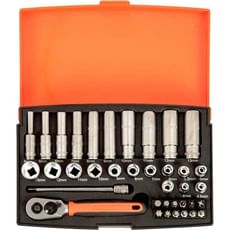
The socketry available from Tooled-Up.com spans everything from individual sockets in various drive sizes (1/4", 3/8", 1/2" and larger) through to comprehensive socket sets containing hundreds of pieces. The range includes standard hex sockets, deep sockets for recessed fasteners, impact-rated sockets for power tool use, and specialist profiles like Torx, E-Torx and XZN. Beyond the sockets themselves, this category covers all the essential drive tools and accessories that make socket work possible: ratchets with fine-tooth mechanisms for restricted access, extension bars to reach awkward locations, universal joints for angled applications, and breaker bars for high-torque fastener removal.
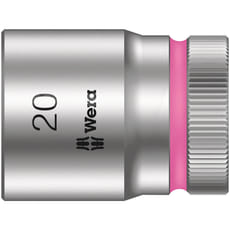
Modern socketry combines precision engineering with durable materials, typically chrome vanadium steel or chrome molybdenum alloy for impact applications. Premium brands like Bahco, Wera, and Stanley offer professional-grade socketry with lifetime guarantees, whilst manufacturers such as DeWalt and Milwaukee produce comprehensive sets tailored to specific trades. For electricians working on live equipment, VDE-insulated sockets and ratchets provide essential protection when working near electrical installations up to 1000v, far exceeding standard 240v household supply voltages.
Jargon Buster
- Drive Size: The square recess dimension that connects sockets to drive tools, measured in inches. Common sizes include 1/4" (for light-duty work), 3/8" (general purpose), 1/2" (heavy-duty automotive), 3/4" and 1" (industrial applications).
- Tooth Count: The number of engagement points inside a ratchet mechanism. Fine-tooth ratchets (72-tooth or higher) require less swing arc, making them ideal for confined spaces, whilst coarser mechanisms (24-36 tooth) offer greater durability under heavy loads.
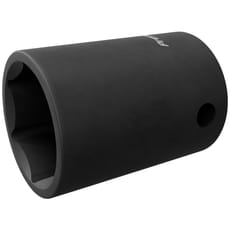
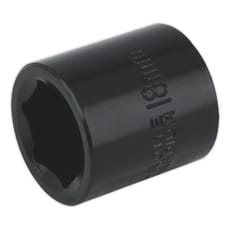
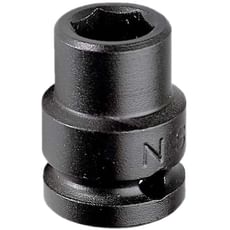
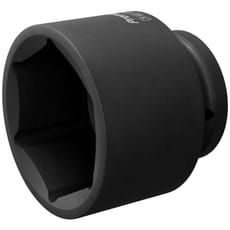
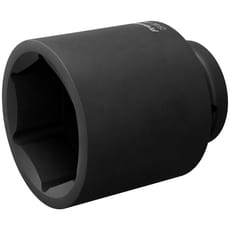
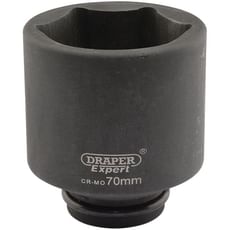
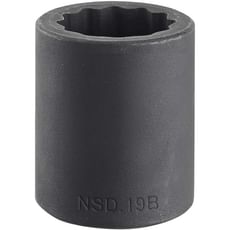
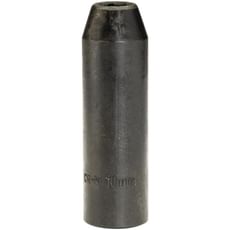
- Impact Rating: Sockets specifically designed with thicker walls and different heat treatment to withstand the repetitive shock loads from impact wrenches and impact drivers. Usually identified by dark phosphate or black oxide finishes rather than chrome plating.
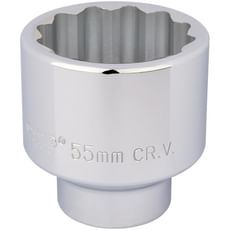
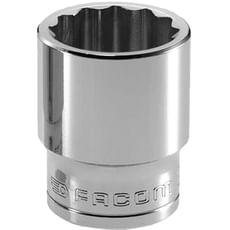
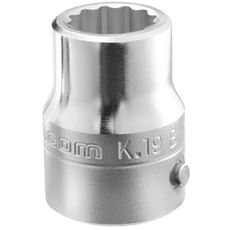
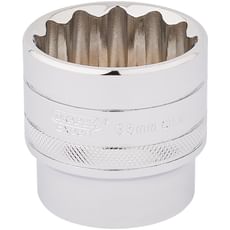
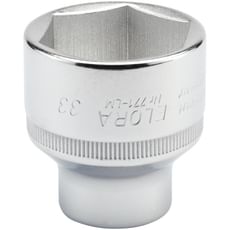
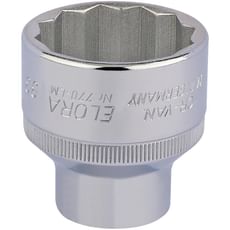
- Bi-Hexagonal (6-Point) vs 12-Point: 6-point sockets grip fastener flats directly, providing maximum torque transfer and reduced rounding risk. 12-point sockets offer easier alignment but apply force to fastener corners, suitable for light-duty applications only.
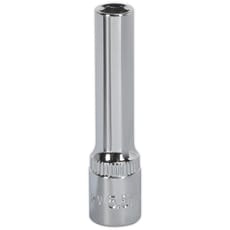
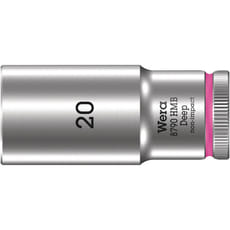
- Deep Socket: Extended length sockets designed to reach fasteners on long threaded studs or recessed in deep housings. Typically 50-100% longer than standard sockets of the same size.
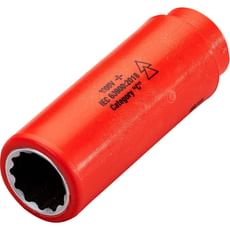
- VDE Certification: German safety standard (VDE 0680-6) certifying hand tools for live working up to 1000v AC. Each tool is individually tested and marked, essential for electrical work near energised components.
Who Uses Socketry?
- Motor Mechanics and Automotive Technicians: Heavy daily users requiring comprehensive socket sets for engine work, suspension repairs, and general vehicle maintenance
- Plant Engineers and Industrial Fitters: Working on heavy machinery, production equipment and industrial installations requiring robust socketry in larger drive sizes
- Maintenance Engineers: Across all sectors needing versatile socket collections for equipment servicing and breakdown repairs
- Agricultural Engineers: Maintaining farm machinery, tractors and implements often in challenging outdoor conditions
- HVAC Engineers: Installing and servicing heating, ventilation and air conditioning systems with various fastener types
- Construction Workers and Steel Erectors: Assembling structural steelwork, scaffolding and temporary works requiring high-torque fastening
- Electricians: Using VDE-insulated socketry when working near live electrical equipment and installations
- Bicycle Mechanics: Requiring precision 1/4" drive socketry for delicate component assembly
- DIY Enthusiasts and Home Mechanics: Building practical socket collections for vehicle maintenance and general household repairs
How to Choose the Right Socketry
Drive Size Selection: Match drive size to your typical applications. The 1/4" drive suits light assembly work and small fasteners (4-10mm). The versatile 3/8" drive handles most general automotive and mechanical work (8-19mm), whilst 1/2" drive provides the torque capacity for suspension work, wheel nuts and larger fasteners (10-32mm). Industrial applications may require 3/4" or 1" drive systems.
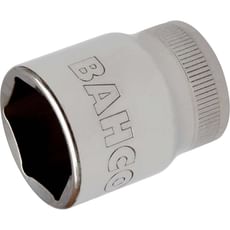
Socket Profile: Choose 6-point (bi-hexagonal) sockets for serious mechanical work as they grip fastener flats directly, minimising rounding risk and providing superior torque transfer. Reserve 12-point sockets for light-duty applications where their easier alignment in restricted spaces provides benefit.
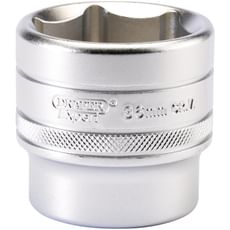
Standard vs Deep Sockets: Standard depth sockets suit most applications and offer better access in confined spaces. Deep sockets become essential when fasteners sit on extended threaded studs (common on engine manifolds and suspension components) or recessed into deep housings. A balanced socket set includes both types.
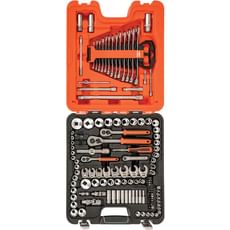
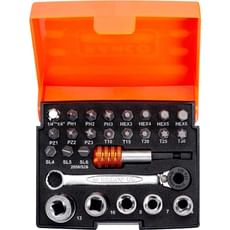
Sets vs Individual Pieces: Comprehensive socket sets from Tooled-Up provide excellent value for those building a complete toolkit, typically including sockets, ratchets, extension bars and accessories in organised storage cases. Experienced professionals often prefer selecting individual high-quality pieces to complement existing collections or replace worn items.
Impact-Rated Requirements: If using pneumatic or cordless impact wrenches, impact-rated sockets are essential. Their reinforced construction withstands repeated shock loads that would fracture standard chrome sockets. The distinctive black finish identifies impact socketry immediately.
Material Quality: Professional-grade socketry uses chrome vanadium steel (Cr-V) offering excellent strength and wear resistance. Premium ranges may feature chrome molybdenum (Cr-Mo) for even greater toughness. Budget sets often use lower-grade materials with shorter working lives and greater rounding risk.
Ratchet Mechanism: Fine-tooth ratchets (72-tooth or higher) excel in confined spaces requiring minimal swing arc but may prove less durable under extreme loads. Coarser 36-45 tooth mechanisms offer bombproof reliability for heavy-duty applications with adequate access.
Popular Accessories
- Socket Rails and Organisers: Magnetic rails, socket trays and foam organiser inserts for tool chest drawers keeping socketry organised and instantly accessible
- Torque Wrenches: Click-type, beam or digital torque wrenches ensuring critical fasteners meet manufacturer specifications
- Impact Drivers and Wrenches: Cordless and pneumatic power tools dramatically increasing productivity on repetitive fastening tasks
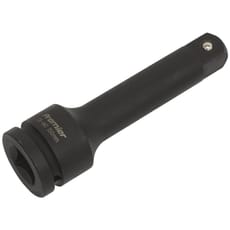
- Extension Bars: Various lengths (50mm to 500mm+) reaching deeply recessed fasteners and awkward locations
- Universal Joints: Allowing angular offset between drive tool and socket, essential for accessing fasteners at difficult angles
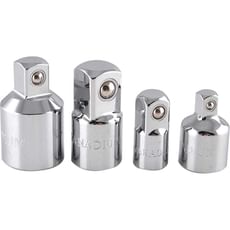
- Socket Adaptors: Converting between drive sizes, enabling use of different socket sizes with single ratchet handles
- Breaker Bars: Non-ratcheting T-bars and sliding handles providing maximum leverage for seized or high-torque fasteners
- Impact Socket Rails: Heavy-duty storage solutions specifically for thicker-walled impact socketry
- Socket Bits and Bit Holders: Screwdriver bits, Torx bits and hex bits adapted for socket drive systems
- Thread Cleaning Taps and Dies: Restoring damaged threads before reassembly with socketry
Safety Information
Correct Socket Selection: Always use the precise socket size matching the fastener. Undersized or oversized sockets risk rounding fastener heads, creating dangerous situations when components cannot be properly secured or removed. Metric and imperial sizes appear similar but are not interchangeable.
Impact vs Standard Sockets: Never use standard chrome sockets with impact tools. The sudden shock loads cause chrome sockets to shatter, creating dangerous projectile fragments. Impact-rated sockets feature thicker walls and different heat treatment specifically for power tool use.
Extension Bar Limitations: Excessive extension bar length significantly increases applied torque at the socket, potentially exceeding fastener specifications or breaking socket components. Use torque wrenches for critical fasteners and avoid "cheater bars" on ratchet handles.
VDE Requirements: When working near live electrical equipment, only VDE-certified insulated socketry rated to 1000v provides adequate protection. Standard tools with plastic handles offer no electrical protection. Each VDE tool should display individual testing marks and remain free from cuts or damage that compromise insulation.
Worn Socket Replacement: Replace sockets showing rounded internal corners, cracks or excessive wear. Damaged sockets slip under load, potentially causing hand injuries from unexpected movement or fastener damage requiring professional removal.
Proper Extension Usage: Ensure extension bars and sockets fully engage with drive tools. Partial engagement causes premature wear and sudden disconnection under load. Check spring-loaded detent balls remain functional, holding components securely together.
Frequently Asked Questions
Q: What's the difference between 6-point and 12-point sockets?
A: 6-point (bi-hexagonal) sockets grip the flat sides of hex fasteners, providing maximum torque transfer and minimal rounding risk, making them ideal for heavy-duty professional work. 12-point sockets contact fastener corners rather than flats but offer easier alignment in restricted spaces. For serious mechanical work, 6-point sockets are strongly preferred.
Q: Can I use metric sockets on imperial fasteners or vice versa?
A: Absolutely not. Whilst some sizes appear close (19mm and 3/4" for example), they're not identical and using incorrect sockets will round fastener heads. Always use the correct measurement system matching your fasteners. Quality socket sets clearly mark each piece to prevent confusion.
Q: How do I know if I need impact-rated sockets?
A: If you're using pneumatic impact wrenches, cordless impact drivers or impact wrenches, you must use impact-rated sockets. Standard chrome sockets will shatter under the repeated shock loads, creating dangerous flying fragments. Impact sockets feature thicker walls, different metallurgy and distinctive black finishes (phosphate or black oxide coating).
Q: What drive size should beginners choose?
A: For general automotive and mechanical DIY work, a 3/8" drive socket set provides the best versatility, handling fasteners from approximately 8mm to 19mm comfortably. This covers most car maintenance, bicycle repairs and household mechanical tasks. Add 1/2" drive for wheel nuts and suspension work, or 1/4" drive for delicate assembly work as your needs expand.
Q: Why are some socket sets so much cheaper than others?
A: Quality differences in materials, manufacturing precision and longevity. Budget sets use lower-grade steel with looser tolerances, leading to faster wear, rounded internal corners and potential fastener damage. Professional brands like Bahco, Wera and Stanley use superior chrome vanadium steel with precise manufacturing, often backed by lifetime guarantees. For occasional DIY use, mid-range sets offer good value; professionals should invest in quality that withstands daily use.