

Standard Washers

Pay in 3 interest-free payments on purchases from £20-£3000 with  . Learn more.
 Loading...
End of content
Error - No more pages to load
About Standard Washers
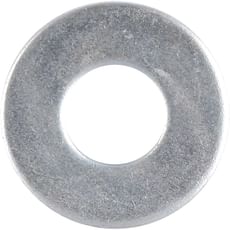
Standard washers are essential fastening components used across countless construction, engineering and maintenance applications. These circular discs with a central hole serve multiple critical functions: they distribute load from a nut or bolt head across a wider surface area, prevent damage to the material being fastened, and provide a smooth bearing surface that reduces friction during tightening. Whether you're assembling machinery, constructing timber frames, or carrying out general repair work, the humble washer plays a vital role in creating secure, long-lasting connections.
The selection available from Tooled-Up.com includes both zinc-plated steel washers and stainless steel variants, catering to different environmental demands and budget considerations. Zinc-plated washers offer excellent value for internal applications and general purpose use, with their protective coating providing resistance against corrosion. Stainless steel washers, manufactured from A2 grade material, deliver superior corrosion resistance for external applications or environments where moisture, chemicals or coastal conditions might compromise carbon steel fasteners. Both types conform to Form A specifications, representing the traditional flat washer design that's been the industry standard for decades.
Brands like Timco supply these reliable fastening components in various sizes to suit different bolt diameters and application requirements. Standard washers are manufactured to precise tolerances, ensuring consistent performance whether you're working with M6 fixings on light domestic projects or heavy-duty M20 bolts on structural steelwork. The variety in material finish and sizing means there's a suitable washer for virtually every bolted connection you'll encounter on site or in the workshop.
Jargon Buster
- Form A Washer: The standard flat washer design with parallel faces and a central hole, conforming to DIN 125 and ISO 7089 specifications. This is the most common washer type for general clamping and spacing applications.
- Zinc Plating: A protective coating applied to carbon steel washers through electroplating, providing corrosion resistance for indoor and dry environments. Modern zinc plating typically uses trivalent chromium, which is more environmentally friendly than older hexavalent chromium processes.
- A2 Stainless Steel: Also known as 304 or 18/8 stainless steel, this austenitic grade contains approximately 18% chromium and 8% nickel, offering excellent corrosion resistance for most outdoor applications. It's the most commonly specified stainless steel grade for general fastening purposes.
- Load Distribution: The primary function of a washer – spreading the clamping force from a bolt or nut across a larger surface area, preventing localised stress that could damage softer base materials or cause the fastener to pull through.
- Bearing Surface: The contact area between the washer and the material being fastened. A larger bearing surface reduces pressure per square millimetre, protecting softer materials and improving joint integrity.
- Inner Diameter (ID) and Outer Diameter (OD): Critical dimensions when selecting washers. The ID must accommodate the bolt shaft with minimal clearance, whilst the OD determines the load distribution area and must suit the application's requirements.
Who Uses Standard Washers?
- General Builders: For timber framing, structural connections, and securing fixtures throughout residential and commercial construction projects
- Steel Erectors: Essential for bolted structural steelwork connections where load distribution and bearing surface area are critical
- Mechanical Engineers: Used extensively in machinery assembly, equipment maintenance, and mechanical repairs across all industries
- Shopfitters: For securing racking systems, shelving units, display fixtures and fittings in retail and commercial environments
- Vehicle Mechanics: Required for automotive repairs, agricultural machinery maintenance, and plant equipment servicing
- Electricians: When mounting electrical enclosures, switchgear, cable management systems and other electrical infrastructure
- Plumbers: For securing pipe brackets, mounting boilers and water heaters, and installing sanitary fixtures
- Joiners and Carpenters: Preventing pull-through when bolting timber connections and installing architectural ironmongery
- Maintenance Engineers: For equipment servicing, repair work and refurbishment projects across industrial and commercial facilities
- DIY Enthusiasts: Essential stock for home improvement projects, furniture assembly, garden construction and general repairs
How to Choose the Right Standard Washers
Match the Material to Your Environment: Select zinc-plated steel washers for internal applications and dry environments where cost-effectiveness is important. Choose stainless steel washers for external use, coastal locations, or anywhere exposed to moisture, chemicals or corrosive conditions. Using incompatible materials can lead to galvanic corrosion when mixed with dissimilar metals.
Size According to Your Fasteners: The washer's inner diameter must suit your bolt size with minimal clearance – typically 1-2mm larger than the bolt shaft diameter. Standard metric washers are designated M6, M8, M10, M12 and so on, corresponding to the appropriate bolt size. The outer diameter should provide adequate bearing surface for your base material without being so large it interferes with adjacent components.
Consider the Base Material: Softer materials like timber, plasterboard or plastics require larger bearing surfaces to prevent the washer embedding or pulling through under load. Harder materials like steel or concrete can typically work with standard outer diameter washers. For particularly soft materials, consider penny washers or repair washers with significantly larger outer diameters.
Assess Load Requirements: Higher loads demand washers with greater surface area to distribute stress effectively. Structural applications, suspended loads, or high-tension connections may require larger diameter or thicker specification washers. Tooled-Up stocks various sizes to accommodate both light-duty and heavy-duty applications.
Check Corrosion Resistance Needs: In addition to material selection, consider the expected service life and maintenance accessibility. Hard-to-reach fixings benefit from superior corrosion protection, even if initial cost is higher. External structural connections typically justify the investment in stainless steel, whilst internal furniture fixings can use more economical zinc-plated variants.
Quantity Planning: Standard washers are typically required for both sides of a connection – under the bolt head and beneath the nut – so purchase accordingly. Buying in bulk packs is more economical for larger projects and ensures you have spares for future maintenance.
Popular Accessories
- Hex Head Bolts and Screws: The primary fasteners used in conjunction with standard washers for creating secure bolted connections
- Hex Nuts: Essential fastening components that work with bolts and washers to complete the clamping assembly
- Spring Washers: Lock washers that provide additional vibration resistance when used alongside standard flat washers
- Penny Washers: Large outer diameter washers for applications requiring maximum load distribution on softer materials
- Nyloc Nuts: Self-locking nuts that prevent loosening through vibration, often used with standard washers in mechanical assemblies
- Socket Sets and Spanners: Essential hand tools for tightening bolts and nuts to the correct torque specification
- Torque Wrenches: Precision tools for achieving specified tightening torque, particularly important in structural and mechanical engineering applications
- Thread Locking Compound: Chemical adhesives that prevent fastener loosening whilst still allowing future disassembly
- Anti-Seize Compound: Protects threads from seizure due to corrosion, particularly important with stainless steel fasteners
- Bolt Cutters and Grinders: For removing seized or damaged fasteners during maintenance and refurbishment work
Frequently Asked Questions
What's the difference between zinc-plated and stainless steel washers?
Zinc-plated washers consist of carbon steel with a protective zinc coating applied through electroplating, offering good corrosion resistance for internal and dry environments at an economical price point. Stainless steel washers (typically A2 grade) are manufactured from corrosion-resistant alloy throughout, providing superior protection against moisture, chemicals and weathering. Use zinc-plated for general indoor applications and stainless steel for external use, coastal locations, or anywhere exposed to corrosive conditions. Never mix stainless steel fasteners with zinc-plated washers or vice versa, as this can cause galvanic corrosion.
Can I use standard washers with both bolts and screws?
Yes, standard washers work equally well with both bolts (used with nuts) and wood screws or self-tapping screws. The washer serves the same function in both applications: distributing load, protecting the base material, and providing a smooth bearing surface. With wood screws, the washer prevents the screw head pulling into softer timber under tension. Ensure the washer's inner diameter suits the screw shaft diameter, and that the outer diameter provides adequate bearing surface for your specific application.
How do I know what size washer I need?
Washer sizing corresponds to the bolt diameter it's designed to fit. An M8 washer fits an 8mm bolt, an M10 washer fits a 10mm bolt, and so on. The inner diameter will be approximately 1-2mm larger than the bolt size to allow easy assembly whilst minimising excess clearance. The outer diameter varies depending on the washer form and intended application, but Form A standard washers follow established dimensional standards. When replacing existing washers, simply match the bolt size; for new applications, select based on your chosen fastener size.
Do I need washers on both sides of the connection?
Best practice typically involves using washers under both the bolt head and the nut, particularly when fastening softer materials or where load distribution is critical. This ensures balanced load distribution and prevents damage to both surfaces. In some applications with hard base materials like steel-to-steel connections, a washer under the rotating component (usually the nut) may be sufficient. However, using washers on both sides is generally recommended for optimal joint integrity and longevity.
Will zinc-plated washers rust outdoors?
Zinc plating provides limited protection against outdoor weathering and will eventually corrode when continuously exposed to moisture, particularly in coastal or industrial environments. For temporary or short-term outdoor use in dry climates, zinc-plated washers may suffice, but for permanent external installations, stainless steel washers are the appropriate choice. The trivalent chromium zinc coating on modern washers offers better corrosion resistance than older finishes, but still cannot match stainless steel's long-term durability in exposed conditions.