

Tap & Die Sets
Pay in 3 interest-free payments on purchases from £30-2000 with  . Learn more.
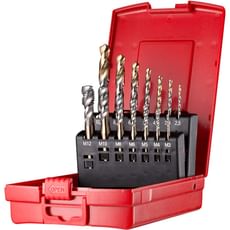
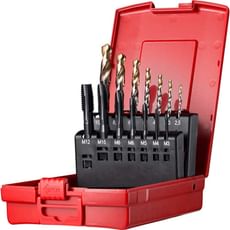
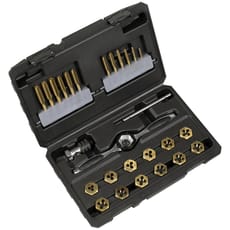
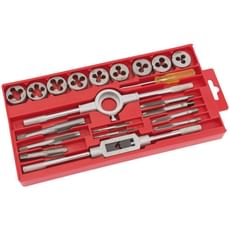
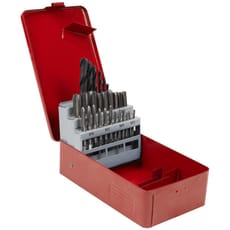
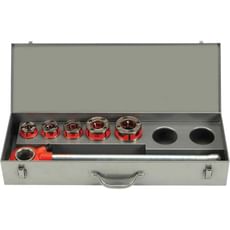
 Loading...
End of content
Error - No more pages to load
About Tap & Die Sets
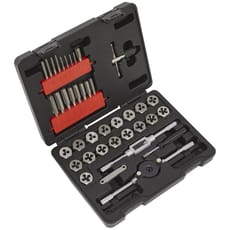
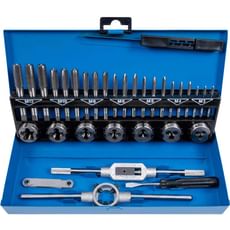
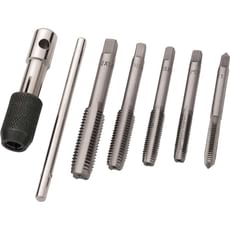
Tap and die sets are essential threading tools used to create or repair internal and external threads on metal, plastic, and other materials. A tap is designed to cut internal threads inside a drilled hole, whilst a die cuts external threads onto rods, bolts, or pipes. These precision tools enable tradespeople and engineers to produce custom threaded fasteners, repair damaged threads, or create threaded connections where standard components aren't suitable. Whether working with metric or imperial measurements, having a comprehensive tap and die set ensures you can tackle threading tasks quickly and accurately on site or in the workshop.
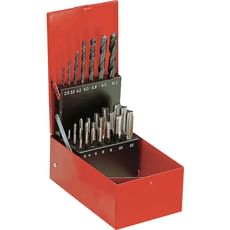
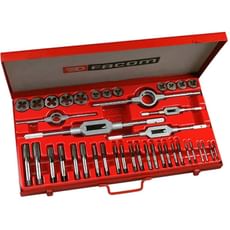
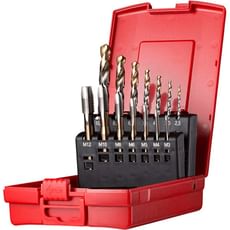
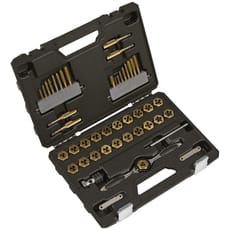
Tooled-Up.com stocks a wide selection of tap and die sets from trusted manufacturers including Sealey, Draper, Dormer, and Facom, ranging from compact sets with essential sizes through to professional 42-piece collections. Many sets include matching drill bits specifically sized for pre-drilling holes to the correct diameter before tapping, eliminating guesswork and ensuring clean, accurate threads every time. Available in both metric and imperial (UNF/UNC) configurations, these sets typically come supplied in organised storage cases with tap wrenches or die stocks for immediate use. High-speed steel (HSS) construction ensures durability and longevity, whilst spiral point and spiral flute designs help clear swarf efficiently during the cutting process.
Jargon Buster
- Tap: A hardened steel cutting tool with spiral flutes used to cut internal threads inside a pre-drilled hole. Available in taper, second, and plug configurations for different applications.
- Die: A hardened steel tool used to cut external threads onto round stock, rods, or bolts. Usually held in a die stock (handle) and rotated around the workpiece.
- HSS (High-Speed Steel): A wear-resistant tool steel alloy that maintains its hardness at high temperatures, ideal for cutting threads in various materials without losing its edge.
- Spiral Point Tap: Also known as a gun tap, this design pushes swarf (metal chips) ahead of the cutting action, making it ideal for through-holes and preventing chip clogging.
- Spiral Flute Tap: Features helical flutes that draw swarf upwards and out of blind holes, preventing chips from accumulating at the bottom of the hole.
- Pitch: The distance between adjacent threads, typically measured in millimetres for metric threads or threads per inch (TPI) for imperial threads.
Who Uses Tap & Die Sets?
- Mechanical Engineers - for creating custom threaded components and repairing damaged threads on machinery
- Automotive Mechanics - essential for exhaust repairs, engine work, and restoring damaged bolt threads
- Plumbers - for cutting threads on pipes and fittings when working with threaded connections
- General Engineers - across manufacturing and maintenance roles requiring thread creation or restoration
- Fabricators and Metalworkers - when building custom metal structures requiring threaded connections
- Agricultural Engineers - for field repairs on farm equipment and machinery with damaged threads
- Maintenance Technicians - in factories, facilities, and industrial settings requiring on-site thread repairs
- Model Engineers and Hobbyists - for precision work on scale models and engineering projects
- DIY Enthusiasts - tackling home repairs, restoration projects, and custom fabrication work
How to Choose the Right Tap & Die Sets
Metric or Imperial: Determine which thread standard you'll work with most frequently. Metric threads (measured in millimetres) are standard throughout the UK and Europe, whilst imperial threads (UNC/UNF) appear on older British equipment, American machinery, and certain automotive applications. Professional workshops often require both systems.
Set Size and Range: Smaller 10-15 piece sets cover common sizes suitable for occasional use and general repairs, whilst larger 32-42 piece sets provide comprehensive coverage for professional applications. Consider which thread sizes you encounter regularly - sets available from Tooled-Up typically range from M3 to M12 in metric or equivalent imperial sizes.
Material Construction: High-speed steel (HSS) offers excellent durability and edge retention for most applications. Premium sets may feature enhanced coatings or alloys (such as Dormer's HSS E-series taps) that provide superior performance and extended tool life when working with harder materials or in demanding production environments.
Tap Type: Basic sets include standard hand taps, whilst professional collections may feature spiral point taps for through-holes or spiral flute taps for blind holes. These specialised designs improve swarf clearance and reduce the risk of tap breakage, particularly important when working with softer metals like aluminium.
Included Accessories: Many comprehensive sets include matching drill bits sized for pre-drilling pilot holes, plus tap wrenches or die stocks for holding the tools. Sets with integrated drill bits eliminate the need to reference tap drill charts, speeding up workflow considerably. Quality storage cases keep tools organised and protected between jobs.
Brand and Quality: Professional brands like Dormer, Facom, and Sealey offer precision-ground cutting edges and consistent quality control, essential for clean threads and reliable performance. Budget options from Blue Spot or Faithfull suit occasional users and light-duty applications where cost considerations outweigh intensive daily use.
Popular Accessories
- Cutting Fluid and Tapping Compound - reduces friction, improves thread finish, and extends tap life
- Adjustable Tap Wrenches - precision holders for accurate alignment and controlled cutting
- Die Stocks - handles for holding circular dies when cutting external threads
- Thread Gauges - for verifying thread pitch and identifying existing threads before repair
- Drill Bit Sets - specifically sized pilot drill bits for creating correctly sized holes before tapping
- Screw Extractors - for removing broken taps or damaged fasteners from threaded holes
- Thread Repair Kits - helicoil and time-sert systems for restoring severely damaged threads
- Centre Punches and Markers - for accurately marking hole positions before drilling
- Deburring Tools - for cleaning hole edges before tapping to prevent cutting edge damage
Safety Information
Personal Protection: Always wear safety glasses or goggles when cutting threads, as metal swarf can be ejected during the tapping or die-cutting process. Work gloves protect hands from sharp edges on both the tools and workpieces, though avoid loose gloves that might catch on rotating components.
Tool Condition: Inspect taps and dies before use for damage, wear, or dull cutting edges. Damaged tools are more likely to break during use, potentially ruining the workpiece and creating sharp fragments. Never force a tap or die - if resistance increases significantly, reverse the tool to break chips and clear swarf before continuing.
Workpiece Security: Always secure workpieces firmly in a vice or clamp before threading operations. Hand-held work can slip, causing injury or tool breakage. Ensure the workpiece is positioned to allow the tap or die to enter squarely and perpendicular to the surface for straight, accurate threads.
Proper Technique: Apply appropriate cutting fluid to reduce heat and friction, particularly when working with harder materials or using smaller taps prone to breakage. Use steady, controlled pressure and advance slowly - taps especially are brittle and can snap if forced. Follow the recommended turn-and-reverse technique (typically one turn forward, half turn back) to break chips and prevent binding.
Frequently Asked Questions
What size drill bit do I need before using a tap?
The pilot hole should be slightly larger than the minor diameter of the thread. Many tap and die sets from Tooled-Up include matching drill bits sized correctly for each tap, eliminating guesswork. As a general rule, for metric threads, subtract the pitch from the thread size (e.g., M6 × 1.0mm requires a 5mm drill). Refer to a tap drill chart or the set's documentation for precise measurements, as incorrect hole size produces weak or incomplete threads.
Can I use tap and die sets on materials other than steel?
Yes, HSS taps and dies work effectively on aluminium, brass, copper, plastics, and other non-ferrous materials. Softer materials often require slower speeds and appropriate cutting fluid or coolant - distilled water works well for plastics, whilst specific cutting fluids suit different metals. Adjust technique for softer materials to prevent swarf from clogging the flutes, and use spiral flute taps when working with materials that produce stringy chips.
What's the difference between metric and imperial tap and die sets?
Metric threads are measured in millimetres (e.g., M8 × 1.25) with the first number indicating diameter and the second indicating pitch. Imperial threads use inches and threads-per-inch (e.g., 1/4"-20 UNC). The two systems are not interchangeable - a metric tap cannot cut imperial threads or vice versa. UK tradespeople primarily use metric threads, though imperial sizes remain necessary for older British equipment and American machinery.
Why do taps break, and how can I prevent it?
Tap breakage typically results from excessive force, misalignment, insufficient lubrication, or incorrect pilot hole size. Prevent breakage by ensuring the workpiece is secure and perpendicular, using proper cutting fluid, selecting the correct drill bit size, and employing the turn-and-reverse technique to clear chips. Smaller taps (below M4) are particularly fragile. If you encounter significant resistance, stop immediately, reverse the tap to clear swarf, add more cutting fluid, and proceed slowly.
Do I need separate sets for different thread types like UNC and UNF?
Yes, UNC (Unified Coarse) and UNF (Unified Fine) threads have different pitches despite sharing the same nominal diameter, requiring separate taps and dies. Similarly, metric threads come in coarse and fine pitch variants. Professional sets often focus on one thread type - check the set specification carefully before purchase. For comprehensive imperial thread work, you'll need both UNC and UNF sets to cover standard and fine thread applications.