

Threadlocking
Pay in 3 interest-free payments on purchases from £30-2000 with  . Learn more.
 Loading...
End of content
Error - No more pages to load
About Threadlocking
Threadlocking adhesives are specialist chemical fastening solutions engineered to prevent nuts, bolts, screws, and other threaded fasteners from loosening due to vibration, thermal cycling, or mechanical stress. These anaerobic compounds cure in the absence of oxygen when confined between closely mating metal surfaces, forming a robust bond that secures threaded connections whilst still allowing controlled disassembly when required. Whether you're working on automotive repairs, machinery maintenance, construction projects, or precision assembly work, threadlocking compounds provide reliable insurance against fastener failure that could lead to costly downtime, equipment damage, or safety hazards.
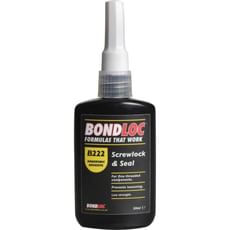
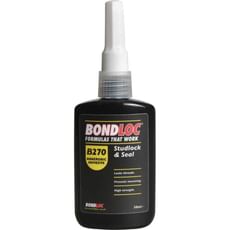
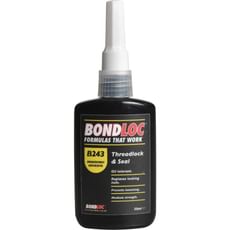
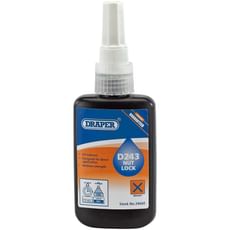
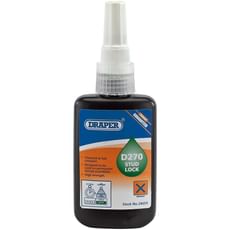
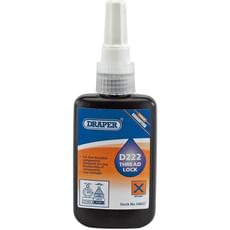
The threadlocking selection at Tooled-Up.com includes products from trusted brands such as Bondloc, Draper, Sealey, J-B Weld, and Everbuild. These products are available in three standard strength grades – low, medium, and high – each formulated for specific applications and disassembly requirements. Low strength threadlockers (typically designated 222 and often blue in colour) are ideal for small fasteners and applications requiring regular adjustment. Medium strength formulations (usually 243 designation, green or blue) suit general-purpose applications and can be removed with hand tools. High strength threadlockers (270 designation, red) create permanent bonds for critical applications where fasteners should rarely or never be disassembled.
Modern threadlocking compounds offer numerous advantages over traditional mechanical locking methods such as lock washers, nylon inserts, or lock nuts. They fill the entire gap between threads, distributing load evenly and protecting against corrosion whilst taking up no additional space. This makes them particularly valuable in compact assemblies or where weight and space are at a premium. Professional tradespeople and serious DIY enthusiasts rely on threadlocking adhesives to ensure their work remains secure and dependable long after the initial installation, preventing the vibration loosening that commonly occurs on machinery, vehicles, and structural assemblies.
Jargon Buster
- Anaerobic Adhesive: A type of adhesive that cures (hardens) in the absence of oxygen when confined between close-fitting metal surfaces. Threadlockers are anaerobic adhesives that remain liquid until applied to threaded fasteners, then cure to form a tough thermoset plastic.
- Breakaway Torque: The amount of rotational force required to initially loosen a fastener that has been secured with threadlocker. This measurement helps determine whether a fastener can be removed with standard hand tools or requires heat application for disassembly.
- Fixture Time: The period required for a threadlocker to develop sufficient strength to handle the assembly without disturbing the bond. During this time, parts should not be moved or stressed. Fixture times vary by product and temperature but typically range from 10 minutes to several hours.
- Service Temperature Range: The minimum and maximum temperatures at which a cured threadlocker maintains its locking properties and mechanical strength. Most standard threadlockers perform effectively between -55°C and +150°C, though high-temperature formulations are available for exhaust systems and other specialist applications.
- Wicking Grade: A low-viscosity threadlocker designed to penetrate pre-assembled fasteners through capillary action. These products are applied after assembly rather than during initial fitting, making them ideal for remedial work on existing connections where disassembly isn't practical.
- Thixotropic: A property where the adhesive becomes less viscous when agitated or dispensed, then returns to a thicker consistency when at rest. This prevents threadlocker from running off vertical surfaces or dripping from fasteners before curing begins.
Who Uses Threadlocking?
Threadlocking products are essential for a wide range of professional tradespeople and industries:
- Mechanical Engineers and Fitters: Securing critical fasteners on industrial machinery, pumps, gearboxes, compressors, and production equipment in manufacturing environments
- Automotive Technicians: Preventing loosening of engine components, suspension fasteners, brake assemblies, exhaust systems, and timing covers subject to constant vibration
- Plant Maintenance Teams: Maintaining reliability of rotating equipment, conveyors, processing machinery, and production lines in factories and industrial facilities
- Agricultural Engineers: Securing fasteners on tractors, harvesters, combine equipment, and farm machinery subject to extreme vibration and outdoor conditions
- HVAC Installers: Locking connections on heating systems, ventilation units, air conditioning equipment, and pipework installations in commercial and residential settings
- Electrical Contractors: Securing terminal connections, cable glands, mounting hardware in control panels, distribution boards, and electrical enclosures
- Construction Workers: Preventing loosening of scaffold fittings, formwork connections, structural fixings, and temporary works on building sites
- Marine Engineers: Protecting threaded connections from vibration and corrosion in boat engines, outboard motors, deck equipment, and navigation systems
- Bicycle and Motorcycle Mechanics: Securing critical fasteners on frames, engines, suspension components, brake calipers, and handlebar assemblies
- Manufacturing Assembly Workers: Ensuring reliable connections in production environments where consistent quality and vibration resistance are essential
- DIY Enthusiasts: Securing home repairs, workshop projects, garden equipment maintenance, and hobby engineering applications
How to Choose the Right Threadlocking
Selecting the appropriate threadlocker depends on several critical factors:
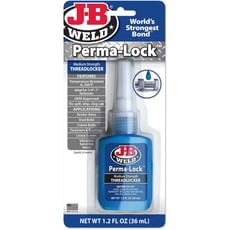
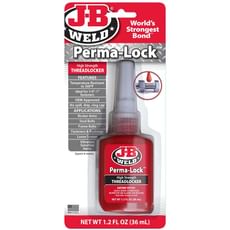
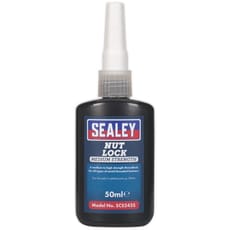
Thread Size and Fastener Type: Low strength threadlockers like Bondloc B222 or Draper D222 are recommended for small fasteners up to M12, as they prevent damage to fine threads during removal and are ideal for set screws and adjustable components. Medium strength products such as Bondloc B243 or Sealey Medium Strength Nut Lock suit fasteners between M6 and M20 for general-purpose applications. High strength formulations like Bondloc B270 or J-B Weld PermaLock Red are designed for larger bolts and studs from M12 upwards where permanent assembly is required.
Disassembly Requirements: Consider how often you'll need to remove the fastener. Low strength (blue) threadlockers permit easy disassembly with standard hand tools and spanners, making them perfect for maintenance items. Medium strength (green/blue) products require normal hand tools but more effort to remove. High strength (red) threadlockers create permanent bonds requiring heat (typically 250°C) for disassembly and may damage some components during removal, so they're only suitable for truly permanent assemblies.
Application Environment: Standard threadlockers available from Tooled-Up perform well in most industrial and workshop conditions, but consider your specific operating environment. Check the service temperature range matches your requirements – particularly important for exhaust systems, engine components, or equipment operating in cold storage facilities. Outdoor applications benefit from products with enhanced corrosion protection properties.
Material Compatibility: Whilst most threadlockers work excellently on steel fasteners, some metals like stainless steel, aluminium, brass, or zinc-plated components may cure more slowly due to inactive surfaces. Certain products include activators to improve performance on these materials. For plastic fasteners, verify compatibility to avoid chemical damage to sensitive polymers.
Brand Selection: Professional brands like Bondloc, J-B Weld, Everbuild, and Sealey offer reliable performance with consistent quality backed by technical data sheets. Their product numbering often corresponds to industry-standard specifications (such as 222, 243, and 270 designations) making it straightforward to select equivalent products across different manufacturers based on proven formulations.
Bottle Size and Applicator: Consider usage frequency when selecting size. Smaller 10ml bottles suit occasional use and have longer shelf life once opened, whilst larger 50ml bottles offer better value for workshop or site environments with regular applications. Ensure the applicator nozzle suits your fastener size for accurate dispensing without waste.
Popular Accessories
- Surface Activators and Primers: Accelerate cure times on inactive surfaces and improve performance on non-ferrous metals, stainless steel, plastics, and plated fasteners where standard cure times would be extended
- Degreasing Solvents: Clean fasteners before threadlocker application to ensure maximum bond strength by removing oil, grease, cutting fluids, and contamination from threads
- Threadlocker Removal Tools: Specialist solvents and heat guns designed to break down cured threadlocker for fastener removal, thread cleaning, and component reuse
- Torque Wrenches: Essential for applying correct tightening torque before threadlocker cures, ensuring proper fastener preload and preventing over-tightening that could damage threads
- Thread Repair Kits: Helicoil and thread insert sets for repairing damaged or stripped threads before applying threadlocker to restore full fastener strength
- Pipe Sealants: Complementary PTFE tapes and anaerobic pipe sealants for sealing tapered pipe threads whilst providing anti-seize properties on plumbing connections
- Gasket Makers and Sealants: Anaerobic flange sealants and instant gaskets for complete sealing solutions alongside threadlocking on engine covers and housings
- Retaining Compounds: Cylindrical assembly adhesives for securing bearings, bushings, gears, and cylindrical parts in housing bores
- Dispensing Equipment: Precision applicators and needle tips for accurate threadlocker application in confined spaces or on small fasteners
Safety Information
Threadlocking adhesives are chemical products that require proper handling and storage to ensure safe use in compliance with UK health and safety regulations:
Personal Protection: Always wear appropriate safety glasses or goggles to protect eyes from splashes during application. Nitrile or chemical-resistant gloves prevent skin contact, which can cause irritation or sensitisation in some individuals. Work in well-ventilated areas to avoid breathing vapours, particularly important when applying larger quantities or working in confined spaces as required under COSHH regulations. Ensure adequate ventilation in workshops and assembly areas.
Skin Contact: If threadlocker comes into contact with skin, do not attempt to pull bonded skin apart forcefully. Instead, soak the affected area in warm soapy water and gently peel apart. Avoid using harsh solvents on skin. Wash thoroughly after handling and before eating or smoking. Seek medical attention if irritation persists or if product enters eyes.
Storage Requirements: Store threadlocking products in cool, dry conditions away from direct sunlight and heat sources. Keep bottles tightly sealed between uses to prevent premature curing and maintain product performance. Most products have shelf lives of 12-24 months when stored correctly in unopened containers. Check expiry dates before use as aged products may have reduced performance and extended cure times.
Fire Safety: Threadlockers are generally non-flammable once cured, but liquid products should be kept away from naked flames, welding operations, and heat sources. When removing high-strength threadlockers with heat guns or torches, be aware of fire risks from nearby materials, cables, and combustible components. Ensure adequate fire safety precautions and extinguishers are available.
Disposal: Dispose of empty containers and waste material according to local authority regulations and environmental guidelines. Never pour unused threadlocker down drains or into watercourses. Consult product safety data sheets (available from manufacturers or Tooled-Up.com) for specific disposal requirements, hazard classifications, and environmental considerations. Follow HSE guidance for workplace chemical disposal.
Frequently Asked Questions
Can I use threadlocker on stainless steel fasteners?
Yes, threadlocker works effectively on stainless steel, though it may cure more slowly than on mild steel due to the passive oxide layer creating an inactive surface. For best results, consider using a surface activator or primer, particularly with austenitic stainless grades (304, 316). The anti-corrosion properties of threadlocker are particularly valuable on stainless steel as they prevent galling – a common problem where stainless threads seize together through friction welding. This makes threadlocker essential for marine applications and food industry equipment.
How long should I wait before putting an assembly into service?
Fixture time varies by product and ambient temperature but typically ranges from 10 minutes to 3 hours for handling strength sufficient to move the assembly. However, full cure takes 24 hours for maximum strength and vibration resistance. Low strength threadlockers like Bondloc B222 generally fixture faster than high strength products. Working at room temperature (20-22°C) provides optimal cure speeds – cold workshop conditions significantly extend cure times, whilst heat accelerates curing.
What's the difference between blue and red threadlocker?
Blue threadlocker (low to medium strength, such as J-B Weld PermaLock Blue) is designed for fasteners requiring regular maintenance or adjustment. It allows disassembly with standard spanners and hand tools without applying heat. Red threadlocker (high strength, like J-B Weld PermaLock Red) creates permanent bonds for critical applications such as suspension components and structural fasteners. Removal typically requires heating to approximately 250°C with a heat gun or torch, which may damage some components, gaskets, or nearby plastics. Choose blue for serviceable connections and red for permanent assemblies.
Will threadlocker damage plastic components or nylon fasteners?
Most anaerobic threadlockers are compatible with common engineering plastics and won't cause damage, as they only cure in the absence of oxygen between metal surfaces and remain inert when exposed to air. However, some aggressive solvents in certain formulations might affect sensitive plastics like polycarbonate or acrylic. Always check manufacturer compatibility information on the product label or technical data sheet, and consider using specialist plastic-safe threadlockers for critical applications involving nylon, acetal (Delrin), PEEK, or other engineering polymers.
Can I apply threadlocker to fasteners that are already installed?
Yes, using wicking grade threadlockers specifically designed for this purpose. These low-viscosity products penetrate pre-assembled threads through capillary action when applied around the nut-bolt interface with a brush or dropper applicator. This makes them invaluable for remedial work, retrofit applications, or situations where disassembly isn't practical due to seized components or inaccessible locations. However, for best results and maximum strength, always clean threads thoroughly and apply threadlocker during initial assembly when possible, ensuring even coverage on all thread surfaces.