

Torque Wrenches & Multipliers

Pay in 3 interest-free payments on purchases from £20-£3000 with  . Learn more.
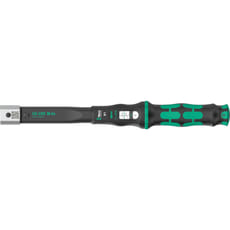
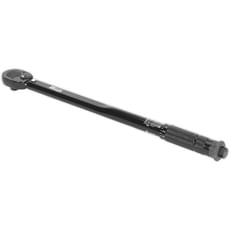
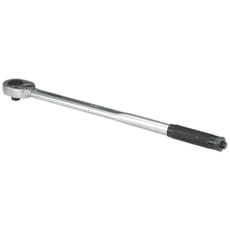
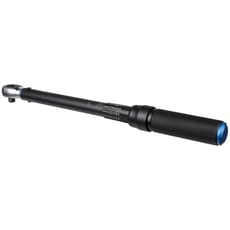
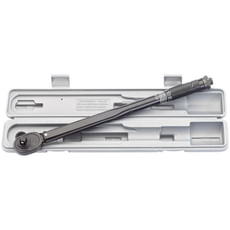
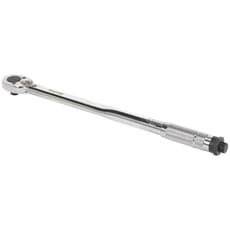
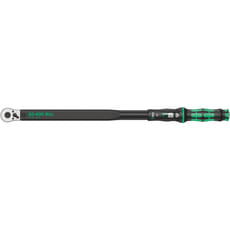
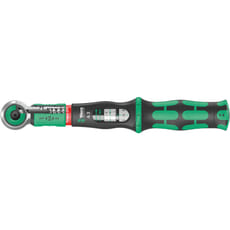
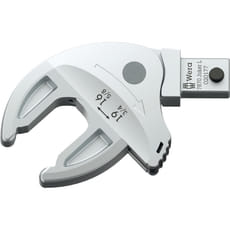
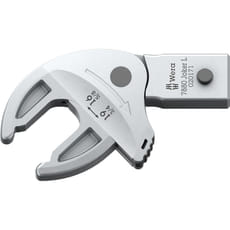
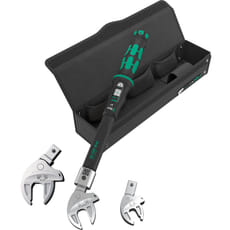
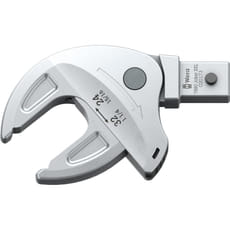
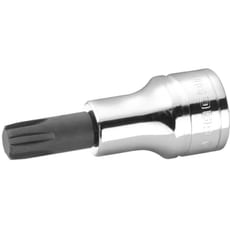
Wera 7870 Joker Self Setting Insert Spanner for X and XP Click Torque Wrenches
available
 Loading...
End of content
Error - No more pages to load
About Torque Wrenches & Multipliers
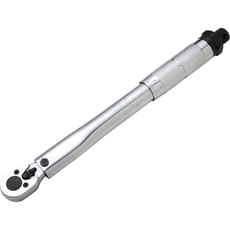
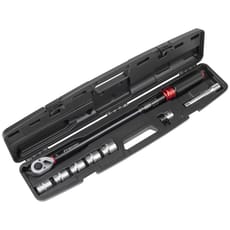
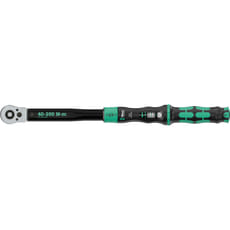
Torque wrenches are precision tools designed to apply a specific amount of rotational force to fasteners such as nuts and bolts, ensuring they are tightened to the manufacturer's exact specifications. This level of accuracy is essential in applications where over-tightening could damage components or under-tightening could lead to dangerous failures. From automotive assembly and engine rebuilds to structural steelwork and machinery maintenance, torque wrenches provide the control and consistency that critical fastening operations demand. Available in various drive sizes including 1/4", 3/8", and 1/2", these tools cater to everything from delicate electronics work to heavy-duty industrial applications.
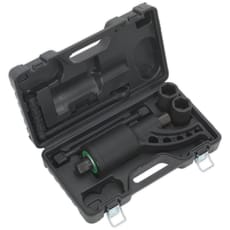
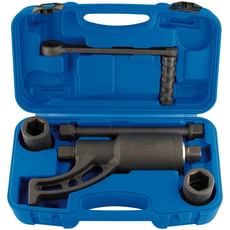
Torque multipliers are force-amplifying tools that allow users to achieve significantly higher torque outputs without the need for excessive physical effort or pneumatic equipment. By using a gear reduction system, multipliers can increase the input torque by ratios typically ranging from 3:1 to 125:1, making them invaluable for loosening seized fasteners or tightening large bolts in construction, mining, and heavy industrial settings. Tooled-Up.com stocks a comprehensive selection from trusted manufacturers including Norbar, Draper, Expert by Facom, and Milwaukee, ensuring tradespeople have access to both precision measurement tools and force multiplication equipment suitable for professional use.
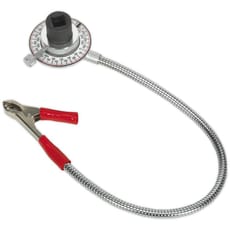
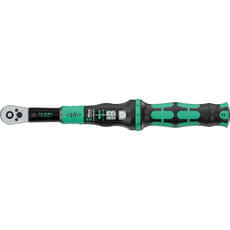
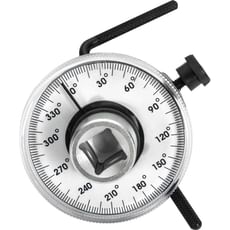
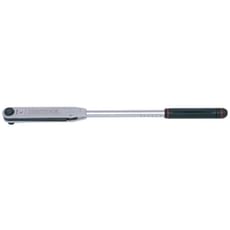
Modern torque wrenches come in several designs including click-type, beam-style, digital, and dial models, each offering different advantages for specific applications. Click-type wrenches provide audible and tactile feedback when the preset torque is reached, whilst digital versions offer enhanced accuracy with LCD displays and often include data logging capabilities. The range at Tooled-Up includes everything from compact 1/4" drive wrenches for precision work to robust 1/2" drive models capable of handling substantial torque loads, alongside specialist tools such as torque angle gauges that measure the angular rotation of fasteners beyond initial torque application.
Jargon Buster
- Drive Size: The square fitting on the torque wrench head (typically 1/4", 3/8", or 1/2") that connects to sockets. Larger drive sizes accommodate higher torque loads and are used with bigger fasteners.
- Torque Range: The minimum and maximum torque values that a wrench can accurately measure and apply, usually expressed in Newton-metres (Nm), pound-feet (lb-ft), or kilogram-force metres (kgf·m). Selecting a wrench with an appropriate range for your application is crucial for accuracy.
- Click-Type Mechanism: A ratcheting torque wrench that produces an audible click and releases slightly when the preset torque value is reached, signalling the operator to stop applying force.
- Torque Angle: A tightening method that involves applying an initial torque value followed by rotating the fastener through a specified angle, commonly used in critical applications like cylinder head bolts. Angle gauges measure this additional rotation in degrees.
- Calibration: The process of verifying and adjusting a torque wrench to ensure it delivers accurate readings. Professional torque tools should be calibrated regularly, typically annually or after a specified number of uses, to maintain certification and accuracy.
- Multiplication Ratio: In torque multipliers, this expresses how many times the input torque is amplified at the output. For example, a 5:1 multiplier converts 100Nm of input force into 500Nm at the output drive.
Who Uses Torque Wrenches & Multipliers?
- Motor Vehicle Technicians: Essential for wheel nut tightening, engine assembly, cylinder head work, and chassis component installation where manufacturer torque specifications must be followed precisely.
- Plant Engineers and Maintenance Fitters: Used extensively for machinery assembly, equipment servicing, and maintaining industrial plant where fastener integrity is critical to operational safety.
- Structural Steel Erectors: For tightening high-strength structural bolts in construction projects, ensuring connections meet engineering specifications and building regulations.
- HGV and Commercial Vehicle Mechanics: Crucial for wheel hub assembly, brake system components, and chassis work on lorries, buses, and heavy commercial vehicles where torque accuracy prevents failures.
- Bicycle Mechanics: Precision torque control prevents damage to lightweight carbon fibre components and ensures proper assembly of critical parts like stem bolts, crank arms, and disc brake mounts.
- Aerospace and Marine Engineers: Industries where fastener failure could have catastrophic consequences, demanding certified torque tools with traceable calibration.
- Wind Turbine Technicians: Torque multipliers are particularly valuable in renewable energy sectors for working with large-diameter bolts at height.
- DIY Enthusiasts: Home mechanics undertaking vehicle maintenance, fabrication projects, or machinery repairs benefit from the accuracy and confidence torque tools provide.
How to Choose the Right Torque Wrenches & Multipliers
Determine Your Torque Requirements: Identify the torque specifications for your typical applications. Check manufacturer service manuals or engineering drawings for the fastener sizes and torque values you'll be working with. Remember that torque wrenches are most accurate in the middle 20-80% of their range, so select a model where your commonly used values fall within this sweet spot rather than at the extremes.
Select the Appropriate Drive Size: Match the drive size to your socket collection and typical fastener dimensions. Quarter-inch drives (1/4") suit delicate work from 5-25Nm, three-eighths drives (3/8") handle medium applications from 20-110Nm, whilst half-inch drives (1/2") are designed for heavier work typically from 40-340Nm. Tooled-Up stocks wrenches across all drive sizes from brands including Norbar, Draper, and Facom.
Choose the Right Mechanism Type: Click-type torque wrenches offer excellent reliability and don't require batteries, making them ideal for workshop and site environments. Digital models provide higher precision, data logging, and multiple unit displays, valuable in quality-controlled environments. Beam-type wrenches are simple, durable, and don't require calibration but demand careful observation whilst tightening. Consider your working environment and whether you need certifiable accuracy.
Consider Calibration and Certification: Professional environments often require annual calibration certificates for quality assurance and insurance purposes. Check whether your chosen wrench comes with factory calibration certification and whether the manufacturer or local calibration services can provide ongoing certification. Some digital models feature user-adjustable calibration capabilities.
Assess Build Quality and Durability: Professional-grade tools from manufacturers like Norbar and Expert by Facom feature robust construction with hardened components, comfortable grip handles, and clear scale markings that resist wear. Consider the environment where the tool will be used—workshops allow for careful handling, whilst site work demands greater ruggedness and perhaps a protective carry case.
Evaluate Torque Multipliers for High-Load Applications: When working with fasteners requiring torque beyond comfortable manual application (typically above 400Nm), multipliers become essential. Calculate the multiplication ratio needed based on your input capability and required output torque. Remember that multipliers introduce reaction forces that must be properly supported, and they operate at slower speeds than direct wrenches.
Popular Accessories
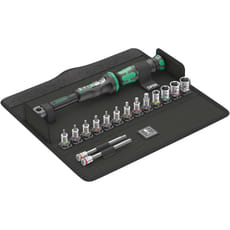
- Socket Sets: Impact-rated socket sets in matching drive sizes (1/4", 3/8", 1/2") are essential companions, available in both metric and imperial sizes with deep and shallow variants for different fastener accessibility.
- Extension Bars: Allow torque wrenches to reach recessed fasteners whilst maintaining accuracy. Choose quality extensions that don't flex under load, as this can affect torque readings.
- Universal Joints and Adapters: Enable angled access to awkward fasteners, though be aware that angular use can affect torque accuracy—consult correction factors when precision is critical.
- Torque Angle Gauges: Specialist gauges that measure the angular rotation of fasteners after initial torque application, essential for torque-to-yield bolt procedures common in modern engine assembly.
- Calibration Equipment: Torque analysers and calibration benches for workshops maintaining their own tool certification programmes.
- Protective Storage Cases: Proper storage cases protect precision tools from impacts, moisture, and contamination whilst maintaining calibration between uses.
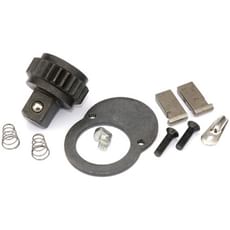
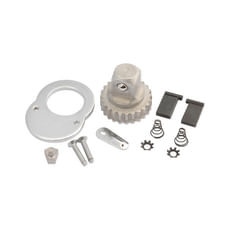
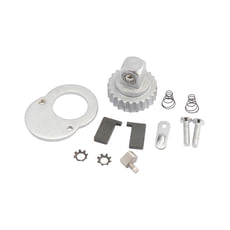
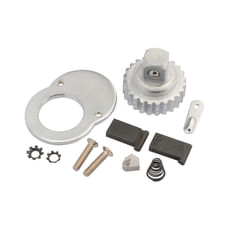
- Torque Wrench Repair Kits: Maintenance kits containing replacement mechanisms, springs, and service parts for extending tool lifespan and maintaining accuracy.
- Torque Sticks: Torsion bars that flex at predetermined torque values, commonly used with impact wrenches for rough tightening before final torque wrench application.
Safety Information
Never Use Torque Tools as Breaker Bars: Torque wrenches are precision instruments designed for tightening to specification, not for breaking loose seized fasteners. Using them to loosen tight bolts can damage the internal mechanism and destroy calibration. Always use a standard breaker bar or ratchet to loosen fasteners before applying a torque wrench for final tightening.
Store at Lowest Setting: Click-type torque wrenches should always be returned to their lowest torque setting after use. Leaving them set at high values keeps the internal spring under constant compression, which can lead to calibration drift and reduced accuracy over time. This simple habit significantly extends tool life and maintains precision.
Apply Force Smoothly: Jerky or rapid force application can cause overshooting of the target torque value before the click mechanism engages. Apply steady, smooth pressure and stop immediately when the click or signal occurs. Never "bounce" or pump the wrench, and avoid continuing to pull after the release point.
Use Correct Technique: Hold the torque wrench by the handle grip only, never by the head or using extensions on the handle itself, as this alters the effective length and results in inaccurate torque application. Pull the handle rather than pushing where possible, maintaining control and reducing the risk of injury if the fastener suddenly releases.
Mind Reaction Forces with Multipliers: Torque multipliers generate substantial reaction forces that must be properly braced against a solid surface or reaction arm. Failure to adequately support the reaction can result in sudden rotation causing injury or damage. Always ensure the reaction point is secure and positioned to prevent the multiplier spinning if the fastener suddenly moves.
Maintain Regular Calibration: HSE guidance recommends that torque tools used in critical applications should be calibrated at regular intervals, typically annually or after significant impacts. Using uncalibrated wrenches in safety-critical applications like brake systems, steering components, or structural connections poses serious risks. Keep calibration certificates accessible and ensure tools are clearly marked with calibration due dates.
Frequently Asked Questions
How often should I calibrate my torque wrench?
Professional torque wrenches should be calibrated annually for general workshop use, or more frequently in high-volume or critical applications. If a wrench is dropped, subjected to overload, or shows signs of inconsistent operation, it should be recalibrated immediately. Many manufacturers recommend calibration after approximately 5,000 cycles. Keep records of calibration dates and certificates, particularly in commercial environments where quality assurance documentation may be required.
Can I use a torque wrench to loosen bolts?
No—torque wrenches should only be used for tightening fasteners to specification. Using them to loosen bolts, particularly seized or over-torqued ones, can damage the precision mechanism and compromise calibration. The forces involved in breaking loose fasteners often exceed the wrench's rated capacity and occur suddenly, which can destroy internal components. Always use a standard ratchet or breaker bar for loosening work.
What's the difference between Nm, lb-ft, and kgf·m torque measurements?
These are different units for measuring torque (rotational force). Newton-metres (Nm) is the standard metric unit preferred in the UK and Europe. Pound-feet (lb-ft) is the imperial unit commonly used in American specifications. Kilogram-force metres (kgf·m) is an older metric unit still occasionally encountered. Most quality torque wrenches feature dual or triple scales, or in the case of digital models, easy unit conversion. As a rough guide: 1 kgf·m ˜ 9.81 Nm ˜ 7.23 lb-ft.
Why does my click-type torque wrench click multiple times?
A properly functioning click-type wrench should produce one distinct click when reaching the set torque, followed by a slight release in the handle. If you continue pulling past this point, you may hear additional clicks, but this indicates you're over-torquing the fastener. The correct technique is to stop applying force immediately upon hearing and feeling the first click. Multiple clicks during a single smooth pull could indicate the wrench needs calibration or internal service.
Do I need different torque wrenches for different jobs?
Ideally, yes—torque wrenches are most accurate in the middle portion of their range, so having multiple wrenches covering different torque values ensures precision across all applications. A typical professional workshop might have a small 1/4" drive wrench (5-25Nm) for delicate components, a mid-range 3/8" drive (20-110Nm) for general automotive work, and a heavy-duty 1/2" drive (40-340Nm) for wheel nuts and major assemblies. For occasional DIY use, a single mid-range wrench covering your most common applications may be sufficient, but avoid using a wrench at the extreme ends of its scale.