

Wood Working Vices
Pay in 3 interest-free payments on purchases from £30-2000 with  . Learn more.
 Loading...
End of content
Error - No more pages to load
About Wood Working Vices
A woodworking vice is an essential fixture for any workshop, providing a secure and stable method of clamping timber and boards during cutting, planing, sanding, drilling, and assembly work. Unlike metalworking vices, woodworking vices feature wider jaws with protective wooden or composite faces that grip workpieces firmly without marring the surface. The selection at Tooled-Up.com includes traditional screw-operated bench vices, quick-release models, and versatile clamp-mount designs suitable for both permanent workshop installations and temporary setups.
Modern woodworking vices typically feature robust cast iron construction with smooth operating mechanisms and adjustable components. Quick-release versions incorporate a spring-loaded mechanism that allows the jaw to slide rapidly along the screw thread, enabling fast adjustments between different workpiece sizes. Many models include integrated bench dogs or adjustable front stops, which work in conjunction with bench dog holes to secure longer boards horizontally across the workbench surface. This functionality proves invaluable when edge-planing, routing, or finishing extended lengths of timber.
Available capacities range from compact hobby vices with 100mm jaw widths ideal for model-making and small joinery, through to heavy-duty bench vices exceeding 250mm jaw width capable of handling substantial hardwood sections and large panel work. The range stocked by Tooled-Up includes trusted manufacturers such as Record, Faithfull, Draper, Sealey, and Stanley, each offering different mounting options, throat depths, and jaw opening capacities to suit various workshop requirements and budgets.
Jargon Buster
- Quick Release Mechanism: A spring-loaded system allowing the vice jaw to slide freely along the screw thread when disengaged, enabling rapid positioning before final tightening. This significantly speeds up workflow when changing between different sized workpieces.
- Bench Dog: A removable peg or stop that fits into holes drilled along the workbench surface. The adjustable front dog on a vice works with bench dogs to clamp long boards horizontally for planing and routing operations.
- Jaw Width: The horizontal measurement across the vice jaws, typically ranging from 100mm to 300mm. Wider jaws distribute clamping pressure across a larger area and accommodate bigger workpieces.
- Throat Depth: The distance from the front face of the jaws to the nearest part of the vice body. Greater throat depth allows clamping of wider boards further from the bench edge.
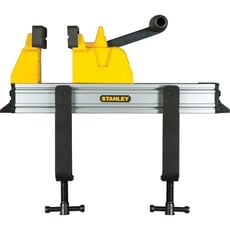
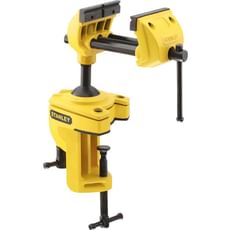
- Clamp Mount Vice: A portable vice design that attaches to benchtops or work surfaces using a screw clamp rather than permanent bolts, offering flexibility for temporary installations or limited workshop space.
- Buttress Thread: A trapezoidal thread profile used on vice screws that provides superior load-bearing capability and smoother operation compared to standard threads, particularly important for heavy-duty applications.
Who Uses Wood Working Vices?
- Joiners and Carpenters: For preparing timber, cutting joints, and assembling furniture both on-site and in workshop environments
- Cabinet Makers: Essential for precision work when crafting bespoke furniture and fitted cabinetry
- Boat Builders: Securing curved and shaped timber components during shaping and fitting
- Restoration Specialists: Working on antique furniture and period joinery requiring careful, secure clamping
- Timber Frame Contractors: Preparing joints and components for traditional oak frame construction
- Musical Instrument Makers: Luthiers and craftspeople requiring secure yet gentle clamping of tonewoods
- DIY Enthusiasts: Home woodworkers undertaking projects from shelving to garden furniture
- Model Makers: Hobbyists working with smaller components requiring precision holding
- Workshop Tutors: Educational facilities teaching woodworking skills and craftsmanship
- Theatre Set Builders: Constructing and modifying scenic elements and props
How to Choose the Right Wood Working Vices
Jaw Width and Capacity: Select a jaw width appropriate to your typical workpiece sizes. Hobby and light DIY work suits 100-150mm widths, whilst professional joinery and furniture making benefits from 200-250mm or wider. Consider maximum jaw opening capacity—typically 200-350mm—ensuring it accommodates your largest anticipated projects.
Mounting Method: Permanent bench-mounted vices bolt through the workbench top, providing maximum stability for heavy work but requiring suitable bench construction. Clamp-mount designs offer portability and suit temporary setups, though they're generally limited to lighter applications. Ensure your bench thickness and construction can support your chosen mounting style.
Quick Release Function: Quick-release mechanisms dramatically improve efficiency when frequently changing workpiece sizes. Whilst slightly more expensive than plain screw vices, the time savings prove worthwhile for professional use. Traditional screw-only operation remains perfectly adequate for occasional users or those working with consistent dimensions.
Construction Quality: Close-grain cast iron bodies provide durability and resistance to distortion under clamping forces. Examine screw thread quality—buttress threads offer smoother operation and greater longevity. Steel screws outperform cast versions for heavy-duty applications. Check that moving parts operate smoothly without excessive play or binding.
Bench Dog Integration: If your workbench features dog holes, or you plan to drill them, select a vice with an adjustable front dog. This vastly expands clamping versatility for edge work on long boards. The dog should adjust smoothly and lock securely at various heights.
Jaw Faces: Wooden jaw liners protect workpiece surfaces from damage and provide excellent grip. Some vices include replaceable timber faces, whilst others require DIY addition. Ensure adequate fixing provision exists for attaching wooden liners securely to the metal jaws.
Popular Accessories
- Replacement Jaw Faces: Hardwood or composite liners to refresh worn surfaces or customise jaw configuration
- Bench Dogs: Additional round or square dogs in various heights for extended workholding options
- Vice Handle Extensions: Increased leverage for tightening large workpieces or when extra clamping force is required
- Bench Stops: Surface-mounted or pop-up stops working in conjunction with vice dogs
- Protective Pads: Cork, leather, or rubber inserts for clamping delicate or finished surfaces
- Mounting Bolts and Fixings: Heavy-duty coach bolts and washers for secure bench installation
- Workshop Benches: Dedicated woodworking benches with integrated dog hole systems
- Holdfast Clamps: Traditional clamping tools working with bench holes to complement vice holding
Safety Information
Secure Installation: Ensure vices are mounted with appropriate fixings through solid bench construction. Inadequate mounting can lead to vice failure under load, potentially causing workpiece ejection and injury. Use coach bolts of sufficient diameter with large washers distributing load across the underside of the bench.
Clamping Force: Avoid over-tightening, which can damage delicate workpieces, crack timber, or distort vice components. Apply only sufficient pressure to secure the work—excessive force gains nothing and risks component failure. Never use extensions on vice handles unless specifically designed for the purpose.
Workpiece Support: Ensure long boards are adequately supported beyond the vice jaws. Cantilever loading can cause the workpiece to suddenly rotate or slip, potentially trapping fingers. Use bench dogs, roller stands, or additional support as required.
Clear Working Area: Maintain clear space around the vice to prevent obstructions interfering with handle operation. Sudden handle movement from releasing clamping pressure can cause impact injuries if the surrounding area is cluttered.
Regular Maintenance: Keep screw threads clean and lightly lubricated with machine oil. Check mounting bolts periodically for tightness, as vibration from workshop activities can gradually loosen fixings. Inspect jaw faces for damage that might affect grip security.
Frequently Asked Questions
What size woodworking vice do I need for general DIY and home projects?
A vice with 150-200mm jaw width and approximately 200-250mm maximum opening capacity suits most home workshop applications. This accommodates typical DIY projects including furniture repairs, shelving construction, and general joinery work. Quick-release operation adds convenience for varied project work. Brands like Faithfull and Draper offer excellent mid-range options providing good value for occasional use.
Can I mount a woodworking vice to any workbench?
The bench must provide sufficient thickness and structural integrity to support the vice and withstand clamping forces. Minimum bench thickness of 40mm solid timber or equivalent engineered board is recommended, with 50-75mm preferred for larger vices. The mounting area should be solid hardwood or substantial ply—avoid chipboard or hollow constructions. Clamp-mount vices offer greater flexibility for thinner or temporary work surfaces.
What's the difference between quick-release and plain screw woodworking vices?
Quick-release vices incorporate a split nut mechanism allowing the front jaw to slide freely along the screw when the handle is slightly turned, enabling rapid positioning. Final tightening engages the thread for secure clamping. Plain screw vices require the handle to be turned through the full travel distance, which is slower but provides a simpler, robust mechanism. For professional use or frequent workpiece changes, quick-release significantly improves productivity.
Do I need to add wooden faces to the vice jaws?
Yes, wooden jaw liners are essential for woodworking applications. They protect workpiece surfaces from the metal jaws, provide better grip through increased friction, and can be replaced when worn or damaged. Use hardwood such as beech or maple approximately 15-20mm thick, cut to match jaw dimensions. Secure with countersunk screws through existing holes in the metal jaws. Some vices include timber faces, whilst others require DIY addition.
How do I maintain a woodworking vice for longevity?
Clean screw threads regularly using a wire brush to remove sawdust and debris, then apply light machine oil to ensure smooth operation. Check mounting bolts quarterly and re-tighten as necessary. Inspect wooden jaw faces for wear or damage, replacing when grip becomes compromised. Avoid leaving excessive clamping pressure on the vice when not in use, as this can stress components unnecessarily. Store in dry conditions to prevent rust on metal components.