

Battery Packs
Pay in 3 interest-free payments on purchases from £30-2000 with  . Learn more.
 Loading...
End of content
Error - No more pages to load
About Battery Packs
Battery packs are the powerhouse behind modern cordless tools, delivering the reliable energy needed to keep professional tradespeople and DIY enthusiasts productive throughout the day. Whether you're working on a remote construction site without access to 240v mains power or simply need the freedom to move around your workshop without trailing cables, a quality battery pack is essential for uninterrupted workflow. The selection at Tooled-Up.com includes genuine replacement batteries and high-capacity upgrade options from leading manufacturers including Bosch Professional (Blue), Bosch Home and Garden (Green), and Black & Decker, ensuring compatibility with your existing cordless tool platform.
Today's lithium-ion battery technology offers superior performance compared to older nickel-cadmium (Ni-CAD) and nickel-metal hydride (Ni-MH) chemistries, providing longer runtime, faster charging, and no memory effect. Battery packs are available in various voltages from compact 10.8V/12V models for light-duty applications through to powerful 18V, 36V and 54V options for demanding professional tasks. Most manufacturers now offer platform-based systems where a single battery range powers multiple tools, making it cost-effective to build a comprehensive cordless toolkit. Investing in additional battery packs or higher capacity alternatives means you can work continuously by rotating batteries whilst one charges, with many modern packs featuring integrated charge level indicators and CoolPack technology for extended cell life.
Jargon Buster
- Amp Hours (Ah): The measure of a battery's capacity and runtime. A higher Ah rating means longer working time between charges. For example, a 4.0Ah battery will typically run twice as long as a 2.0Ah battery under the same load conditions.
- Lithium-Ion (Li-ion): The modern battery chemistry that offers superior energy density, lighter weight, and no memory effect compared to older technologies. Li-ion batteries can be recharged at any point without degrading performance, making them ideal for professional use.
- Voltage (V): The electrical potential of the battery, which determines its power output. Common voltages include 10.8V/12V for compact tools, 18V for general-purpose applications, and 36V for heavy-duty professional equipment requiring sustained power delivery.
- CoolPack Technology: An advanced cooling system integrated into some premium batteries that helps dissipate heat during intensive use, prolonging battery cell life and maintaining consistent performance even under demanding working conditions.
- Platform Compatibility: Refers to battery systems designed to work across multiple tools from the same manufacturer, such as DeWalt XR, Makita LXT, or Milwaukee M18, allowing one battery type to power your entire cordless toolkit.
- Memory Effect: A phenomenon in older Ni-CAD batteries where incomplete discharge cycles reduced capacity over time. Modern lithium-ion batteries do not suffer from this issue and can be topped up at any time.
Who Uses Battery Packs?
- Electricians (sparkies) working on site installations and maintenance requiring portable power sources away from 240v mains
- Carpenters and joiners (chippies) using cordless drills, saws, and nailers throughout the day on residential and commercial projects
- Plumbers needing reliable battery power for pipe cutters, crimping tools, and press tools in locations without established power supplies
- General builders requiring multiple batteries to rotate through various cordless tools on site for uninterrupted productivity
- Landscapers and groundworkers using battery-powered garden equipment away from mains electricity in outdoor environments
- Maintenance engineers carrying out repairs and installations in diverse locations including industrial and commercial premises
- Roofing contractors working at height where cordless tools offer enhanced safety without trailing cables
- Kitchen and bathroom fitters installing units in properties under renovation without established power supplies
- DIY enthusiasts building their home workshop toolkit with the convenience and flexibility of cordless power
- Mechanics and vehicle technicians using battery-powered impact drivers and ratchets in automotive workshops
How to Choose the Right Battery Packs
Brand Compatibility: This is absolutely critical – battery packs are manufacturer-specific and cannot be interchanged between brands. Always verify you're purchasing the correct brand for your tools. Note that Bosch operates two distinct ranges: Professional (Blue) for tradespeople and Home and Garden (Green) for DIY users, with different battery systems that are not interchangeable.
Voltage Matching: Your replacement or spare battery must match your tool's voltage rating. However, there are some intelligent exceptions: Bosch 12V lithium-ion batteries work interchangeably with their older 10.8V li-ion tools. Some manufacturers offer flexible voltage systems, such as DeWalt's Flexvolt batteries that automatically change voltage to suit different tool platforms.
Battery Chemistry: Lithium-ion is now standard for tools manufactured in recent years, offering the best performance, convenience and energy density. However, if you're maintaining older equipment, you may still require Ni-CAD or Ni-MH batteries. It's worth checking whether current lithium-ion batteries are backwards compatible with older tools from the same platform.
Capacity Selection (Ah Rating): Once you've confirmed brand, voltage, and chemistry compatibility, you can choose any capacity battery you prefer. Higher amp-hour ratings provide extended runtime but add weight and cost. Professional tradespeople often invest in a mix – compact 2.0Ah batteries for lighter tools and overhead work, with hefty 4.0Ah or 5.0Ah packs for demanding applications requiring sustained power throughout the working day.
Genuine Manufacturer Batteries: Tooled-Up stocks genuine manufacturer batteries that guarantee compatibility, safety, and warranty protection. Genuine batteries are designed specifically for your tools and typically include advanced features like cell monitoring, temperature protection, and charge level indicators for peace of mind.
Popular Accessories
- Battery Chargers: Fast chargers and multi-bay charging stations to minimise downtime between jobs and maximise productivity on site
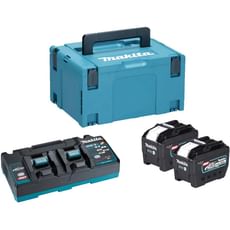
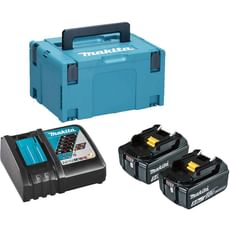
- Twin Battery Packs: Convenient starter sets including two batteries and a charger for immediate productivity when building a new cordless toolkit
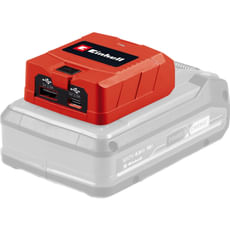
- Battery Adaptors: USB charging adaptors that convert your tool batteries into portable power banks for charging mobile devices on site
- Tool Belts and Holders: Dedicated battery holsters and pouches for convenient carrying on site without returning to your van or toolbox
- Storage Solutions: Battery storage within tool storage systems like DeWalt TSTAK, Milwaukee PACKOUT and Makita MakPac for organised transportation
- Maintenance Products: Contact cleaners and protective storage cases to extend battery lifespan and maintain optimal performance
Safety Information
Proper Storage: Store battery packs in a cool, dry location away from direct sunlight and heat sources. Extreme temperatures can degrade battery cells and reduce lifespan. Never store batteries in vehicles during hot weather or freezing conditions, as temperature extremes compromise performance and safety.
Transport Regulations: When transporting lithium-ion batteries, particularly in quantity or by air, be aware of regulations governing dangerous goods as defined by HSE guidance. Damaged or swollen batteries should never be transported and must be disposed of properly at designated recycling centres to prevent potential fire hazards.
Charging Safety: Only use manufacturer-approved chargers designed for your specific battery type and voltage. Never leave batteries charging unattended for extended periods, and ensure adequate ventilation around charging areas. Disconnect chargers when not in use to prevent unnecessary power consumption and reduce fire risk, particularly overnight or when away from the premises.
Damage Prevention: Inspect batteries regularly for signs of damage, including cracks, swelling, leaking, or unusual heat during charging. Damaged batteries pose serious safety risks and should be removed from service immediately. Never attempt to disassemble or repair battery packs yourself – this should only be undertaken by qualified professionals with appropriate equipment.
Disposal and Recycling: Battery packs contain materials that must be recycled responsibly under UK environmental regulations. Never dispose of batteries in general waste. Return end-of-life batteries to appropriate recycling facilities or retailers offering take-back schemes to recover valuable materials and prevent harmful substances entering landfill.
Frequently Asked Questions
Can I use a higher capacity battery than originally supplied with my tool?
Yes, absolutely. As long as the brand, voltage, and battery chemistry match your tool, you can upgrade to any capacity you prefer. A higher Ah rating simply provides longer runtime and won't damage your tool. The only consideration is that higher capacity batteries are heavier, which may cause fatigue during extended overhead work or when using lightweight compact tools.
How long should I expect my battery pack to last?
Quality lithium-ion batteries typically maintain good performance for 3-5 years or 500-1000 charge cycles, depending on usage patterns and care. Factors affecting lifespan include storage conditions, charge/discharge habits, and working temperature. Batteries used in extreme conditions or left discharged for extended periods will degrade faster than those maintained properly.
Why won't my battery hold charge anymore?
Battery capacity naturally degrades over time through repeated charge cycles and age. If your battery is several years old and no longer holds adequate charge, it's likely reached the end of its service life and requires replacement. Occasionally, dirty contacts can prevent proper charging – try cleaning the battery terminals with a dry cloth. If a relatively new battery won't charge, it may be faulty and covered under the manufacturer's warranty.
Should I run my battery completely flat before recharging?
No – this advice applied to older Ni-CAD batteries that suffered from memory effect. Modern lithium-ion batteries perform best when topped up regularly rather than being fully discharged. In fact, deep discharges can actually reduce li-ion battery lifespan. Charge your batteries whenever convenient without worrying about incomplete discharge cycles affecting performance.
Can I leave my battery on the charger permanently?
Most modern intelligent chargers will automatically switch to maintenance mode once the battery is fully charged, making them safe for extended connection. However, it's generally good practice to remove batteries once charged to prevent unnecessary power consumption and reduce wear on both charger and battery. Never leave batteries charging completely unattended for days at a time as a fire safety precaution.