

Bosch Professional Filters
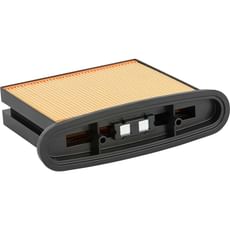
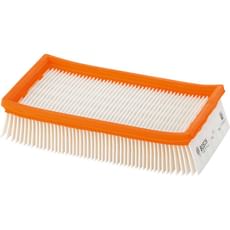
 Loading...
End of content
Error - No more pages to load
Bosch Professional Filters at Tooled-Up.com
Bosch Professional has earned its reputation as a leader in power tool technology, and this expertise extends comprehensively to their filtration systems designed for dust extraction and workshop cleanliness. The Bosch Professional Filters range available from Tooled-Up.com represents decades of engineering excellence, developed specifically to work in harmony with Bosch's extensive portfolio of power tools and extraction equipment. These filters are engineered to meet the demanding requirements of professional tradespeople who cannot afford downtime or compromised air quality on site.
Whether you're managing fine wood dust from sanding operations, concrete dust from grinding work, or general workshop debris, Bosch Professional Filters deliver exceptional filtration efficiency whilst maintaining optimal airflow. The range encompasses replacement filters for wet and dry extractors, specialist HEPA filters for hazardous dust applications, and fleece filter bags designed for various Bosch extraction units. Each filter is manufactured to exacting standards, ensuring compatibility, longevity, and compliance with UK health and safety regulations governing dust exposure.
Professional contractors and serious DIY enthusiasts choose Bosch Professional Filters because they understand that effective dust extraction is not merely about cleanliness—it's about protecting health, maintaining tool performance, and meeting HSE requirements. Tooled-Up stocks the complete range of genuine Bosch Professional replacement filters, ensuring tradespeople have access to the correct filtration solutions for their specific extraction equipment and working conditions.
Why Choose Bosch Professional Filters?
Bosch Professional's commitment to quality manifests clearly in their filtration products. Each filter undergoes rigorous testing to ensure it meets strict performance criteria for dust retention, airflow maintenance, and durability. The brand's reputation for engineering excellence means these filters are designed with real-world applications in mind—they perform reliably in dusty construction environments, withstand the rigours of daily professional use, and maintain their effectiveness throughout their service life.
The filtration media used in Bosch Professional Filters incorporates advanced materials that capture microscopic particles whilst preventing premature clogging. This balanced approach ensures extractors maintain suction power for longer periods, reducing the frequency of filter changes and minimising operational costs. Many Bosch filters feature innovative designs such as pleated surfaces that maximise filtration area, easy-clean mechanisms that extend filter life, and clear labelling systems that prevent compatibility errors.
Genuine Bosch Professional Filters guarantee perfect compatibility with Bosch extraction equipment, eliminating the fit and performance issues often associated with generic alternatives. This precision engineering ensures proper sealing, prevents dust bypass, and maintains the extraction system's overall efficiency. For professionals working under COSHH regulations or managing L-class and M-class dust, using manufacturer-approved filters is essential for compliance and worker protection.
Who Uses Bosch Professional Filters?
Bosch Professional Filters serve a diverse range of trades and applications across the construction and woodworking sectors:
- Joiners and Cabinet Makers – requiring fine dust filtration for wood dust from sanding, routing, and sawing operations
- Builders and General Contractors – managing mixed dust types on varied construction sites
- Decorators and Drywall Specialists – extracting fine plaster dust during sanding and finishing work
- Flooring Installers – controlling dust from cutting and preparation of various flooring materials
- Stone Masons and Tilers – requiring higher-grade filtration for silica-containing dusts
- Workshop Managers – maintaining clean air quality in professional workshops and fabrication facilities
- Maintenance Engineers – using extraction equipment across diverse industrial applications
- Serious DIY Enthusiasts – investing in professional-grade filtration for home workshops
Key Features of Bosch Professional Filters
Bosch Professional Filters incorporate several distinctive technologies and design features that distinguish them from standard filtration products. The polyester fleece construction used in many Bosch filter bags provides superior tear resistance and maintains structural integrity even when handling sharp debris or working with wet extraction applications. This durability translates directly to fewer filter failures and reduced replacement costs over time.
Advanced pleating technology increases the effective surface area of flat filters, enabling them to capture more dust before reaching capacity. This design maximises the time between filter changes whilst maintaining consistent suction performance. Many Bosch filters also feature antistatic properties that prevent dust adhesion, facilitating easier cleaning and extending usable filter life significantly.
The range includes specialist HEPA filters that capture 99.95% of particles down to 0.3 microns, essential for managing hazardous dusts including silica, asbestos, and certain wood dusts. These filters meet stringent European filtration standards and are classified for specific dust classes, ensuring compliance with UK workplace exposure limits. Easy-fit mechanisms and colour-coded systems prevent installation errors, whilst robust construction ensures filters maintain their seal integrity throughout their service life.
Popular Bosch Professional Filters
The Bosch Professional Filters range at Tooled-Up encompasses several popular product categories tailored to different extraction requirements. Fleece filter bags remain among the most frequently specified items, offering convenient disposal for accumulated dust and debris. These bags suit various Bosch wet and dry extractors, from compact site vacuums to larger workshop extraction units, with different capacity options available to match specific models.
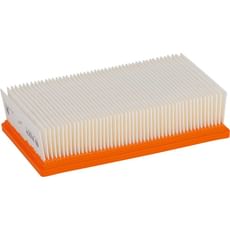
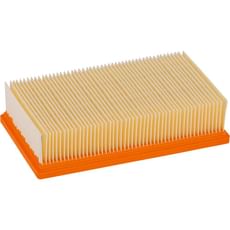
Flat pleated filters represent another essential category, particularly valued by professionals who regularly clean and reuse filters to reduce consumable costs. These durable filters withstand repeated cleaning cycles whilst maintaining filtration efficiency, making them ideal for high-volume applications. HEPA filters cater to the most demanding applications where maximum filtration efficiency is mandatory for health protection or regulatory compliance.
Pre-separator filters and foam filter elements complete the range, designed for wet extraction applications or as protective pre-filters that extend the life of main filtration elements. Each filter type is clearly marked with compatibility information, ensuring users select the correct specification for their particular Bosch extraction equipment model and intended application.
Safety and Compliance
Using appropriate filtration is fundamental to meeting UK health and safety requirements under COSHH regulations. Bosch Professional Filters are classified according to European dust class standards—L-class for low-risk dusts, M-class for medium-risk dusts including wood and mineral dusts, and H-class (HEPA) for high-risk carcinogenic dusts including hardwood dusts and materials containing silica or asbestos.
Selecting the correct filter classification for your specific application ensures compliance with HSE workplace exposure limits and protects operatives from respiratory health risks. Professional tradespeople should always match filter specifications to the dust hazard level they encounter, upgrading to higher classifications when working with potentially harmful materials. Regular filter maintenance and timely replacement are essential—clogged or damaged filters compromise extraction efficiency and may expose workers to harmful dust concentrations.
Proper disposal of used filters is equally important, particularly when they contain hazardous materials. Filters contaminated with carcinogenic dusts should be sealed in appropriate bags and disposed of according to local authority guidelines for hazardous waste. Always wear suitable respiratory protection when changing filters that have been used with harmful dusts.
Frequently Asked Questions
How often should Bosch Professional Filters be replaced?
Replacement frequency depends on usage intensity and dust type. Fleece bags typically require changing when 70-80% full to maintain suction. Flat pleated filters can often be cleaned and reused multiple times before replacement becomes necessary. Monitor extraction performance—reduced suction indicates filter saturation. For hazardous dust applications, follow manufacturer guidelines and never exceed recommended service intervals regardless of apparent condition.
Can I clean and reuse Bosch fleece filter bags?
Fleece filter bags are designed as disposable items and should not be emptied and reused. Attempting to clean and reuse them compromises filtration efficiency and risks dust exposure during emptying. Flat pleated filters and some foam elements are designed for cleaning and reuse—consult your specific filter's documentation to determine whether it's suitable for multiple uses.
What's the difference between L-class, M-class, and H-class filters?
These classifications relate to filtration efficiency and permitted dust types under European standards. L-class filters (>99% efficiency) suit low-risk dusts like gypsum. M-class filters (>99.9% efficiency) are required for wood dust, mineral dusts, and other medium-risk materials. H-class HEPA filters (>99.95% efficiency) are mandatory for carcinogenic dusts including certain hardwoods, silica, and asbestos. Always match filter class to your dust hazard assessment.
Are genuine Bosch filters worth the investment compared to generic alternatives?
Genuine Bosch Professional Filters guarantee precise compatibility, proper sealing, and filtration performance that meets stated specifications. Generic filters may appear similar but often use inferior materials, provide inconsistent fit, or fail to achieve claimed filtration efficiency. For professional applications—particularly where health protection and regulatory compliance matter—genuine filters represent essential rather than optional expenditure.
How do I identify which filter fits my Bosch extractor?
Check your extractor's model number (typically found on the rating plate) and consult the compatibility information provided with replacement filters or in your equipment's manual. Bosch filters include clear compatibility listings. If uncertain, contact the Tooled-Up team with your extractor model details for confirmation of the correct filter specification for your particular unit.