

Draper Try Squares
 Loading...
End of content
Error - No more pages to load
Draper Try Squares at Tooled-Up.com
Draper Tools has been a cornerstone of British manufacturing excellence since 1919, and their try squares exemplify the precision engineering that has made the brand a favourite among UK tradespeople for over a century. The Draper try square range combines traditional craftsmanship with modern quality control standards, delivering measuring and marking tools that professionals can depend on for accurate 90-degree angle verification across joinery, carpentry, metalworking and general construction applications.
Tooled-Up.com stocks a comprehensive selection of Draper try squares designed to meet the exacting demands of professional tradespeople and serious DIY enthusiasts alike. From compact 150mm models perfect for detailed cabinet work to larger 300mm versions suited to site carpentry, each Draper try square is manufactured to tight tolerances ensuring consistent accuracy across repeated measurements. The range encompasses both engineer's try squares with precision-ground steel blades and traditional woodworking try squares featuring hardwood or aluminium stocks, providing solutions for every trade discipline.
Whether you're a time-served joiner checking cabinet carcass assemblies, a metalworker marking out fabrication work, or a builder verifying door frame installations, Draper's try square collection available from Tooled-Up delivers the reliability that professional work demands. Each tool undergoes rigorous quality assurance testing to ensure it meets the brand's exacting standards for squareness, durability and consistent performance across thousands of uses.
Why Choose Draper Try Squares?
Draper's reputation for producing dependable measuring tools at accessible price points has made them a staple in British workshops for generations. Their try squares are manufactured using high-grade materials including hardened steel blades, robust aluminium stocks and carefully selected hardwoods, ensuring longevity even under demanding site conditions. The precision grinding processes employed in manufacture deliver blade edges that are genuinely perpendicular to the stock, with accuracy typically maintained to within 0.1mm over the blade length.
Value represents another compelling reason to choose Draper try squares. The brand successfully balances quality with affordability, making professional-grade accuracy accessible to tradespeople at all career stages without the premium pricing associated with some continental European brands. This combination of British engineering heritage, proven durability and competitive pricing explains why Draper measuring tools consistently appear in tool kits across construction sites, workshops and joinery shops throughout the UK.
Draper's commitment to continuous product refinement means their try squares incorporate practical design features developed through decades of user feedback. Deep-etched or permanently marked graduations resist wear, ergonomic stock profiles provide comfortable handling during extended use, and robust construction withstands the inevitable knocks and drops that occur in working environments. The brand's comprehensive warranty support and readily available replacement parts further underscore their confidence in product longevity.
Who Uses Draper Try Squares?
Draper try squares serve a diverse range of trades and applications:
- Joiners and Cabinet Makers: Verifying right angles in frame construction, checking drawer assemblies and marking cross-cuts for precision furniture work
- Carpenters and Shopfitters: Checking timber cuts, marking door frames and verifying studwork installations on commercial and residential projects
- Metalworkers and Fabricators: Marking out steel sections, checking welded joints and verifying perpendicularity in fabrication assemblies
- Engineers and Machinists: Inspecting machined components, setting up workpieces and checking perpendicularity in precision engineering applications
- Builders and General Tradespeople: Verifying installations, marking materials and general site measurement tasks
- DIY Enthusiasts: Home improvement projects requiring accurate right-angle marking and verification
- Education Sector: College workshops and training centres teaching traditional trade skills and measurement techniques
Key Features of Draper Try Squares
Draper try squares incorporate several distinctive features that enhance their practicality and longevity. Precision-ground steel blades deliver genuine 90-degree accuracy essential for professional work, with hardened edges resisting wear even after thousands of marking operations. The blade surfaces typically feature both metric graduations and permanent etching that remains legible throughout the tool's working life, eliminating the frustration of faded markings common with cheaper alternatives.
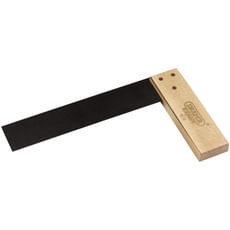
Stock construction varies across the range to suit different applications. Engineer's pattern try squares feature robust steel or aluminium stocks with accurately machined internal and external reference edges, whilst traditional woodworking models incorporate carefully selected hardwoods or impact-resistant aluminium. Many Draper try squares include practical details such as stock rebates that allow the tool to sit flush against workpiece edges without interference from saw teeth or surface irregularities.
The blade-to-stock joint represents the critical element determining long-term accuracy. Draper employs secure fixing methods including precision riveting and epoxy bonding that maintain perpendicularity even after years of workshop use. Some models feature replaceable blades, extending tool life and providing economical servicing options for high-volume users. Protective lacquer finishes on steel components resist corrosion in humid workshop environments, whilst clear graduation markings ensure excellent visibility under varied lighting conditions.
Popular Draper Try Squares
The Draper try square range encompasses several popular configurations suited to different trades. The 150mm (6-inch) try square represents the most versatile size, offering sufficient capacity for general joinery and carpentry whilst remaining compact enough for detailed cabinet work. This size proves particularly popular with joiners and shopfitters who value portability alongside functionality.
For larger-scale work, Draper's 300mm (12-inch) models provide extended reach necessary for site carpentry, door hanging and general building applications. These larger try squares typically feature robust construction capable of withstanding the rigours of busy construction sites whilst maintaining the accuracy essential for professional installations.
Engineer's pattern try squares from Draper cater specifically to metalworking and precision engineering applications, featuring all-steel construction with hardened blades and accurately machined reference surfaces. These tools deliver the rigidity and stability required for marking out fabrication work and inspecting machined components where tolerances matter.
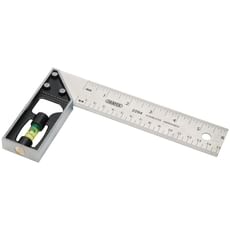
Combination square offerings within the Draper range extend try square functionality by incorporating adjustable blade positions, spirit levels and scribing capabilities, appealing to tradespeople seeking multi-functional measuring tools that reduce the number of instruments required on site.
Safety and Compliance
Whilst try squares don't present significant safety hazards compared to powered equipment, proper handling practices ensure longevity and maintained accuracy. Store Draper try squares in protective cases or dedicated tool storage to prevent damage to the critical blade-stock junction. Avoid using try squares as prying tools, hammers or chisels, as impact forces can compromise perpendicularity and render the tool inaccurate.
Regular accuracy verification forms good practice, particularly for professional users where measurement errors could prove costly. Check Draper try squares periodically against known accurate reference surfaces or certified master squares, replacing tools that have developed inaccuracy through wear or damage. Clean blades regularly to remove sawdust, metal swarf and other debris that could interfere with accurate positioning against workpieces.
When marking with try squares, ensure adequate lighting and stable workpiece support to prevent measurement errors. Use appropriate marking implements – sharp pencils for woodwork, scriber points for metalwork – to achieve clear, accurate lines. For professional users, maintaining calibration records for precision try squares supports quality management systems and demonstrates compliance with workplace measurement standards.
Frequently Asked Questions
How do I verify the accuracy of my Draper try square?
Place the try square against a known straight edge and draw a perpendicular line. Flip the try square over and align it with the same line from the opposite direction. If the blade aligns perfectly with the drawn line in both orientations, your try square is accurate. Any discrepancy indicates the tool has lost its perpendicularity and should be replaced or recalibrated.
What's the difference between engineer's and woodworking try squares?
Engineer's try squares typically feature all-steel construction with precisely machined reference surfaces suited to metalworking and precision measurement. Woodworking try squares often incorporate wooden or aluminium stocks with steel blades, designed for the specific requirements of joinery and carpentry. Draper manufactures both types to suit different trade applications.
Can I replace the blade on my Draper try square if it becomes damaged?
Some Draper try square models feature replaceable blades secured with removable fixings, whilst others employ permanent bonding methods. Check your specific model's construction – replaceable blade versions offer economical servicing, though permanently fixed designs often provide superior long-term accuracy through more rigid blade-stock joints.
What size Draper try square should I choose for general carpentry work?
A 200mm or 250mm try square represents the ideal compromise for most carpentry applications, providing sufficient capacity for common timber dimensions whilst remaining manageable for detailed work. Many carpenters maintain both a compact 150mm version for cabinet work and a larger 300mm model for site carpentry, covering the full spectrum of typical tasks.
How should I maintain my Draper try square to ensure longevity?
Store try squares in protective cases or dedicated storage locations away from moisture. Clean blades regularly with a dry cloth to remove debris, and apply a light coating of tool oil to steel components if storing for extended periods in humid environments. Avoid dropping or impacting the blade-stock junction, as this represents the critical accuracy point most vulnerable to damage. Regular accuracy checks ensure any developing issues are identified before affecting work quality.