

Facom Tap & Die Sets
 Loading...
End of content
Error - No more pages to load
Facom Tap & Die Sets at Tooled-Up.com
Facom's reputation as a premium French tool manufacturer extends seamlessly into their range of tap and die sets, where precision engineering meets practical workshop demands. With over a century of experience in creating professional-grade hand tools, Facom has developed tap and die solutions that deliver exceptional thread-cutting performance across automotive, engineering, and general maintenance applications. Each set is meticulously designed to provide tradespeople with the accuracy and durability required for creating and repairing both metric and imperial threads in various materials.
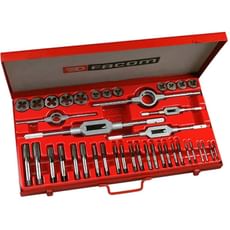
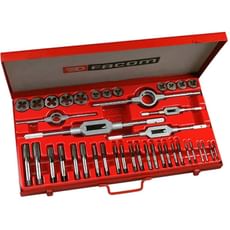
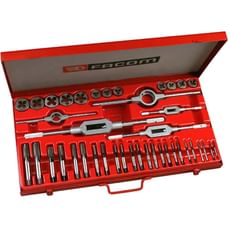
The Facom tap and die collection encompasses comprehensive sets that cater to different threading requirements, from basic repair work to complex fabrication projects. These sets typically feature high-speed steel (HSS) construction with precise ground threads, ensuring clean cuts and extended tool life. Tooled-Up.com stocks Facom's tap and die solutions in various configurations, including compact sets for mobile engineers and extensive workshop sets for facilities requiring comprehensive threading capabilities.
What distinguishes Facom's approach to thread-cutting tools is their commitment to creating sets that balance completeness with practicality. Rather than overwhelming users with excessive sizes, Facom focuses on the most commonly required thread specifications, whilst ensuring each component meets exacting manufacturing standards. The robust storage cases provided with these sets reflect Facom's understanding of professional workshop environments, offering organised storage that protects these precision tools whilst facilitating quick size identification.
Why Choose Facom Tap & Die Sets?
Facom's standing among professional tradespeople stems from their unwavering commitment to quality and performance. Their tap and die sets are manufactured using premium-grade materials with stringent quality control processes that ensure consistent thread accuracy across every component. The brand's French engineering heritage brings a level of precision to thread-cutting tools that translates directly into cleaner threads, reduced breakage rates, and longer tool life compared to budget alternatives.
The heat treatment processes applied to Facom taps and dies create optimal hardness characteristics that maintain sharp cutting edges whilst resisting the brittleness that can plague inferior tools. This balance is particularly important when working with tougher materials or in situations where broken taps could result in costly component damage. Professional mechanics and engineers consistently choose Facom because they understand that the initial investment is offset by reliability, reduced downtime, and the confidence that comes from using tools that won't fail at critical moments.
Beyond the tools themselves, Facom's comprehensive approach includes clear size marking, ergonomic tap wrenches and die stocks where applicable, and logical set configurations based on real-world usage patterns. The brand's extensive experience in professional tool markets means their sets contain the sizes that tradespeople actually need, rather than padding sets with rarely-used specifications.
Who Uses Facom Tap & Die Sets?
Facom tap and die sets are the go-to choice for a diverse range of professionals who demand precision and reliability in their thread-cutting operations:
- Automotive technicians and mechanics repairing damaged threads in engine blocks, gearboxes, and chassis components
- Plant maintenance engineers servicing industrial machinery and manufacturing equipment
- Agricultural mechanics working on farm equipment where thread damage is common due to environmental exposure
- General engineering fabricators creating custom threaded components and assemblies
- MOT bay technicians dealing with corroded fixings and exhaust system repairs
- HGV and commercial vehicle mechanics maintaining heavy-duty vehicles with both metric and imperial thread standards
- Maintenance contractors requiring reliable threading tools across multiple site locations
- Serious DIY enthusiasts investing in professional-quality tools for home workshop projects
Key Features of Facom Tap & Die Sets
Facom incorporates several distinctive features into their tap and die sets that enhance both performance and user experience. The high-speed steel construction across their range provides the hardness necessary for cutting through steel, stainless steel, and other challenging materials whilst maintaining edge retention through repeated use. Precision ground threads on both taps and dies ensure accurate thread profiles that meet international standards for pitch and tolerance.
The sets available from Tooled-Up typically include taper, second, and plug taps where appropriate, giving users the correct progression for hand-threading operations. This is particularly important for blind holes where plug taps are essential for threading to the full depth. Facom's dies are manufactured with optimal chip clearance geometry, reducing the risk of binding and allowing smoother operation with less torque requirement.
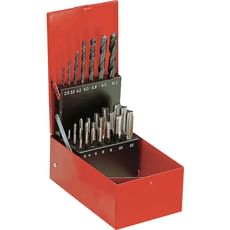
Storage solutions integrated into Facom sets reflect professional requirements, with clearly marked compartments that facilitate quick size selection and inventory management. The robust cases protect these precision tools from workshop knocks whilst remaining compact enough for mobile applications. Many sets include thread pitch gauges or reference charts, supporting accurate identification of existing threads before repair work commences.
Popular Facom Tap & Die Sets
Within the Facom tap and die range, certain configurations have proven particularly popular among UK tradespeople. Metric sets covering the most common sizes from M3 through to M12 or M16 represent the core requirement for automotive and general engineering work, where metric fasteners dominate modern applications. These comprehensive metric sets typically include multiple tap types per size alongside corresponding dies and appropriate tap wrenches or handles.
Combined metric and imperial sets appeal to mechanics working on older vehicles, imported machinery, or restoration projects where both thread standards are encountered. These dual-standard sets provide the versatility needed in workshops that service diverse equipment types without requiring separate tool kits. Facom's approach to combination sets focuses on including the most frequently used sizes from both standards, creating practical solutions rather than unwieldy collections.
Specialist sets focusing on specific size ranges or applications are also available, including fine-pitch metric sets for precision engineering work and larger diameter sets for heavy industrial applications. The modular nature of the Facom range allows workshops to build comprehensive threading capabilities tailored to their specific requirements.
Safety and Compliance
Safe operation of tap and die sets requires proper technique and appropriate safety equipment. Users should always wear safety glasses or face protection when cutting threads, as metal chips can be ejected during the process. Securing workpieces firmly before threading operations prevents dangerous movement, and using appropriate cutting fluids reduces heat buildup whilst extending tool life and improving thread quality.
When using taps, particular care should be taken to align the tap squarely with the hole to prevent breakage and ensure accurate thread geometry. The use of tap wrenches with adjustable centres helps maintain this alignment. Regular inspection of taps and dies for wear or damage is essential, as worn cutting edges increase the force required and raise the risk of tool breakage or poor thread quality.
Facom tools are manufactured to meet relevant European quality standards, ensuring dimensional accuracy and material specifications appropriate for professional use. Proper storage in the provided cases protects cutting edges from damage and maintains the precision of these tools throughout their service life.
Frequently Asked Questions
What's the difference between HSS and carbon steel taps in Facom sets?
Facom primarily uses high-speed steel (HSS) in their professional tap and die sets due to its superior hardness, heat resistance, and edge retention compared to carbon steel. HSS taps maintain their cutting ability when working with harder materials and withstand the heat generated during threading operations without losing temper. This makes them significantly more durable and versatile for professional applications where tool reliability is essential.
Can Facom tap and die sets handle stainless steel threading?
Yes, Facom's HSS tap and die sets are capable of threading stainless steel, though this material presents additional challenges due to its work-hardening characteristics. Success requires sharp tools, appropriate cutting fluid, slower cutting speeds, and regular chip clearing to prevent tap breakage. For extensive stainless steel work, cobalt-alloyed HSS taps offer enhanced performance, though standard Facom HSS sets can handle occasional stainless steel threading when proper technique is employed.
How do I know which tap to use first when threading a hole?
Facom sets typically include taper taps (identified by a longer tapered lead), second taps (intermediate taper), and plug taps (shortest taper for threading to depth). For through-holes, a taper tap alone may suffice. For blind holes, start with the taper tap to establish the thread, follow with a second tap to deepen it, and finish with a plug tap to thread close to the bottom. This progression reduces the torque required and minimizes breakage risk.
What size pilot hole should I drill before tapping?
The correct pilot hole size depends on the thread size and pitch being cut. Facom sets often include reference charts specifying drill sizes for each tap. As a general principle, the pilot hole should be approximately equal to the thread's core diameter. For metric threads, this can be roughly calculated as the thread diameter minus the pitch (e.g., for M8 × 1.25, use approximately 6.75mm). Always verify with tap drill charts for precision work.
How should I maintain my Facom tap and die set?
After use, clean taps and dies thoroughly to remove metal chips and cutting fluid residue, then apply a light coating of rust-preventive oil before returning them to their case. Store in a dry environment to prevent corrosion. Inspect cutting edges regularly for wear or damage. Avoid dropping or striking taps, as they can crack or chip due to their hardness. When properly maintained and stored in their protective case, Facom tap and die sets provide decades of reliable service.