

Facom Taps & Dies

 Loading...
End of content
Error - No more pages to load
Facom Taps & Dies at Tooled-Up.com
Facom has earned its reputation as one of the most trusted names in professional hand tools, and their taps and dies exemplify the precision engineering and durability that French craftsmanship is renowned for. The Facom taps and dies range available from Tooled-Up.com represents decades of metallurgical expertise, delivering thread cutting and forming solutions that meet the exacting demands of professional engineers, mechanics, and maintenance technicians across the UK.
Manufactured from premium high-speed steel and specially formulated alloys, Facom taps and dies are designed to cut clean, accurate threads in a wide variety of materials including mild steel, stainless steel, aluminium, and cast iron. Whether you're restoring damaged threads, creating new threaded holes, or working on precision engineering projects, Facom's comprehensive metric and imperial thread cutting tools provide the reliability and consistency that professional tradespeople depend upon daily.
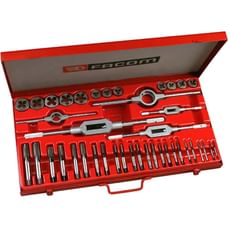
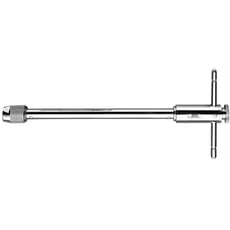
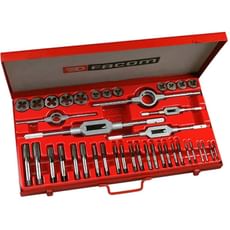
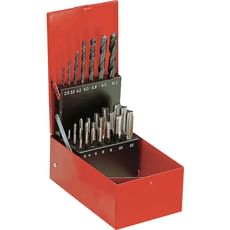
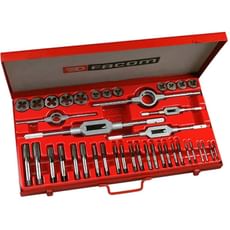
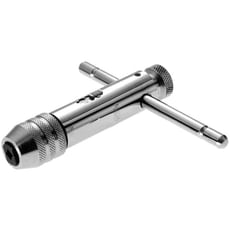
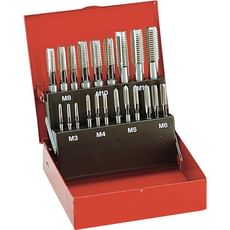
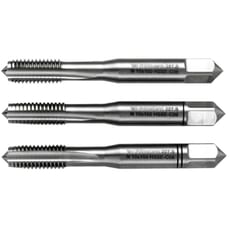
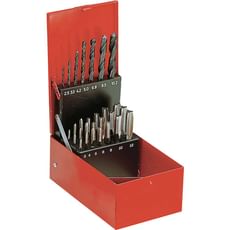
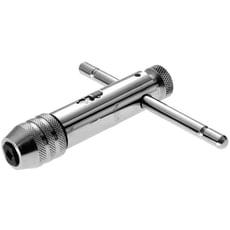
The Tooled-Up Facom range encompasses individual taps in taper, second, and plug configurations, complete tap and die sets for workshop and mobile applications, plus specialist threading tools including adjustable dies, die stocks, and tap wrenches. Each tool undergoes rigorous quality control to ensure dimensional accuracy and longevity, making them a sound investment for any professional toolkit.
Why Choose Facom Taps & Dies?
Facom's heritage in precision tool manufacturing stretches back over a century, and this experience is evident in every tap and die they produce. The brand's commitment to metallurgical excellence means their taps feature optimised flute geometry and cutting angles that reduce torque requirements whilst maximising chip evacuation—critical factors when working with challenging materials or in confined spaces where tap breakage could prove costly.
Professional users choose Facom taps and dies for their exceptional wear resistance and ability to maintain sharp cutting edges through extended use. The heat treatment processes employed by Facom ensure optimal hardness levels that strike the perfect balance between cutting performance and resistance to brittleness, reducing the risk of tap breakage that can ruin workpieces and cause expensive downtime.
Facom's reputation for accuracy is particularly valued in automotive, aerospace, and precision engineering sectors where thread tolerances are critical. Their taps consistently produce threads that meet BS and ISO specifications, ensuring proper fit and function for critical fasteners and components. The clearly marked sizing on every Facom tap and die eliminates guesswork and speeds up tool selection on busy workshop floors.
Who Uses Facom Taps & Dies?
Facom taps and dies are the preferred choice for a diverse range of professional users including:
- Motor mechanics and automotive technicians who regularly repair stripped threads in engine blocks, gearboxes, and chassis components
- Plant and machinery fitters maintaining industrial equipment where thread repair is essential for operational continuity
- Precision engineers and machinists requiring accurate thread cutting for custom fabrication and component manufacture
- Agricultural engineers working on farm machinery and equipment in field and workshop environments
- Maintenance electricians creating threaded fixings for switchgear, cable management systems, and electrical enclosures
- Plumbers and heating engineers threading pipes and creating custom fittings for commercial installations
- Bicycle mechanics and specialist vehicle technicians requiring fine thread precision
- Mobile engineers needing reliable thread repair capabilities whilst working on-site
Key Features of Facom Taps & Dies
Facom taps and dies incorporate several distinctive features that enhance performance and user experience. The precision-ground cutting edges are engineered to specific rake and clearance angles optimised for different material types, ensuring clean thread formation with minimal cutting force. This reduces operator fatigue during manual tapping operations and extends tool life significantly.
The high-speed steel construction, often enhanced with cobalt or other alloying elements, provides superior hot hardness—the ability to maintain cutting edge integrity even when friction generates heat during operation. This is particularly valuable when cutting threads in stainless steel or other work-hardening materials that challenge lesser quality taps.
Facom's tap designs feature carefully engineered flute configurations that facilitate efficient chip removal, preventing the binding and tap breakage that occurs when swarf accumulates in the cutting zone. The chamfer lengths on taper, second, and plug taps are precisely controlled to ensure proper thread engagement and progressive cutting action.
The dies in Facom's range feature adjustment mechanisms that allow precise control over thread diameter, enabling users to cut threads to exact specifications or compensate for die wear over time. The die stocks and tap wrenches designed by Facom provide secure tool holding with excellent feel and control, essential for sensing when taps require backing off to clear chips.
Popular Facom Taps & Dies
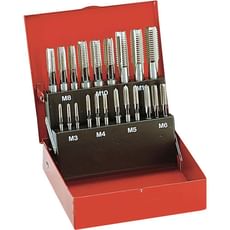
Amongst the most sought-after Facom threading tools are their metric tap sets, which cover the most commonly used thread sizes from M3 through to M12, providing workshops with comprehensive coverage for standard fastener threads. These sets typically include taper, second, and plug taps for each size, allowing proper three-stage thread cutting for maximum accuracy and tool life.
Facom's imperial tap and die sets remain essential for those working on British and American vehicles, machinery, and equipment, covering popular sizes including UNC (Unified National Coarse) and UNF (Unified National Fine) thread standards. The adjustable circular dies in these sets enable external thread cutting on rods, bolts, and pipe work.
Individual Facom taps in specialist configurations—such as spiral point taps for through-hole applications and spiral flute taps for blind holes—are popular with production engineers and machinists requiring optimised performance for specific operations. Facom's bottoming taps, with their minimal chamfer length, enable thread cutting to the bottom of blind holes where full thread engagement is essential.
Safety and Compliance
When using Facom taps and dies, adherence to proper safety practices is essential. Always ensure workpieces are securely clamped before beginning tapping operations to prevent movement that could cause tap breakage or personal injury. Use appropriate cutting lubricants for the material being threaded—cutting oil for steel, paraffin for aluminium, and specialist compounds for stainless steel—to reduce friction, improve thread quality, and extend tool life.
Wear appropriate personal protective equipment including safety glasses to protect against metal chips, and gloves when handling sharp taps and dies. Be aware that broken taps represent a significant hazard, as the extremely hard material is difficult to remove and may require specialist extraction tools or EDM processes. Always back off taps regularly during cutting to clear chips and prevent binding.
Facom taps and dies should be stored properly to protect cutting edges from damage. Keep them in designated holders or cases, separated to prevent contact damage. Regular inspection for wear, chipping, or damage to cutting edges helps maintain thread quality and prevents tap breakage. Tooled-Up.com recommends replacing worn taps promptly, as attempting to use damaged threading tools compromises both thread quality and operator safety.
Frequently Asked Questions
What's the difference between taper, second, and plug taps in Facom sets?
Facom taper taps have a long chamfer (typically 7-10 threads) for easy starting and are used first when hand tapping. Second taps have a medium chamfer (3-5 threads) for intermediate cutting, whilst plug taps have minimal chamfer (1-2 threads) for finishing threads or tapping close to the bottom of blind holes. Using all three in sequence produces the most accurate threads with longest tap life.
Can Facom taps be used in power tools or are they hand-tapping only?
Whilst Facom hand taps are primarily designed for manual use with tap wrenches, they can be used carefully in drill presses or pillar drills at very low speeds with appropriate toolholding. However, for power tapping applications, specialist machine taps with different geometries are recommended. Always use cutting lubricant and ensure perfect alignment to prevent tap breakage when using any power assistance.
How do I know which size Facom tap to use for a specific bolt?
For metric threads, the tap size matches the bolt diameter—an M8 bolt requires an M8 tap with 1.25mm pitch (standard) or 1.0mm pitch (fine thread). For imperial threads, the sizing is marked on the tap (e.g., 1/4" UNC). Facom taps are clearly marked with size and pitch information. Always verify thread pitch using a thread gauge before selecting your tap to ensure proper fit.
What materials can Facom HSS taps cut threads in?
Facom high-speed steel taps are suitable for threading mild steel, medium carbon steel, stainless steel, aluminium, brass, bronze, and cast iron. The appropriate cutting lubricant is essential—use cutting oil for ferrous metals, paraffin or WD-40 for aluminium, and specialist tapping compounds for stainless steel. Harder materials like hardened steel or tool steel generally cannot be tapped and require thread forming rather than cutting.
How can I prevent Facom taps from breaking during use?
Tap breakage prevention requires correct technique: ensure the pilot hole is drilled to the correct size (slightly larger than the tap's core diameter), keep the tap perpendicular to the work surface, use appropriate cutting lubricant, and back off the tap a quarter turn every half turn forward to break and clear chips. Never force a tap—if resistance increases significantly, back out completely, clear chips, add more lubricant, and proceed carefully. Starting with a taper tap before using second and plug taps also reduces breakage risk.