

Record Spare Irons
 Loading...
End of content
Error - No more pages to load
Record Spare Irons at Tooled-Up.com
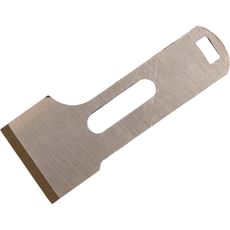
Record has been a trusted name in British hand tool manufacturing since 1908, and their spare irons for hand planes represent over a century of precision engineering expertise. When a plane iron reaches the end of its working life or becomes damaged beyond resharpening, replacing it with a genuine Record spare iron ensures your plane maintains the performance standards that made Record the preferred choice of joiners, furniture makers, and woodworkers across the UK. Tooled-Up.com stocks genuine Record replacement irons designed to fit Record's extensive range of bench planes, block planes, and specialist woodworking planes.
These replacement cutting irons are manufactured to the same exacting standards as the originals, ensuring perfect fit and optimal performance when installed in your Record plane. Whether you're maintaining vintage Record planes that have served faithfully for decades or keeping modern Record tools in peak condition, genuine spare irons deliver the edge retention, flatness, and quality that professionals demand. Each iron is precision ground and ready for final honing to your preferred angle.
From smoothing plane irons to jack plane replacements, the Record spare iron range covers the most commonly used bench plane sizes, ensuring that woodworkers can keep their essential tools operational without compromise. The availability of genuine spares extends the working life of Record planes considerably, making them a sound long-term investment for any serious woodworker.
Why Choose Record Spare Irons?
Genuine Record spare irons are manufactured from high-carbon tool steel that's been heat-treated to achieve the optimal balance between hardness for edge retention and toughness to resist chipping. This metallurgical expertise, refined over generations, means Record irons take and hold a keen edge through extended use, reducing downtime for resharpening during demanding projects. The precision grinding ensures each iron arrives flat and parallel, eliminating the extensive lapping often required with inferior replacements.
Record's reputation for quality control means every spare iron meets strict dimensional tolerances for width, thickness, and the critical mouth opening clearance. Using genuine Record replacements maintains the precise engineering relationships between iron, cap iron, and frog that determine planing performance. Generic or pattern parts may appear identical but often feature inferior steel grades, inconsistent heat treatment, or dimensional variations that compromise planing quality and require extensive fettling to achieve acceptable results.
The heritage and ongoing manufacturing standards associated with the Record brand provide assurance that replacement irons will deliver service life comparable to the original components. This reliability is particularly valued by professional furniture makers and joiners whose livelihoods depend on tools that perform consistently day after day.
Who Uses Record Spare Irons?
Record spare irons are essential for several professional and enthusiast groups:
- Bench Joiners and Furniture Makers – professionals who rely on hand planes for fine surface preparation and fitting work require dependable replacement irons to maintain workshop productivity
- Restoration Specialists – craftspeople restoring antique furniture use Record planes for sympathetic repairs that match traditional construction methods
- Shopfitters and Carpenters – tradespeople who use planes for door hanging, window installation, and architectural joinery keep spare irons on hand to minimise job delays
- Heritage Building Specialists – professionals working on listed buildings and conservation projects where hand tools are often specified
- Woodworking Enthusiasts – hobbyists and amateur furniture makers who maintain vintage Record planes or prefer hand tool techniques
- Tool Collectors and Restorers – individuals bringing old Record planes back to working condition with correct replacement components
Key Features of Record Spare Irons
Record spare irons incorporate several important characteristics that distinguish them from generic alternatives. The high-carbon steel composition typically contains carefully balanced alloying elements that enhance edge-holding properties whilst maintaining the ability to sharpen cleanly using conventional oilstones, waterstones, or diamond plates. This makes them practical for workshop use where exotic sharpening equipment may not be available.
The precision grinding of the back ensures flatness across the critical area behind the cutting edge, allowing proper bedding against the frog and enabling the woodworker to achieve the perfect cap iron-to-cutting-edge relationship that prevents tearout in difficult grain. The consistent thickness specification means the existing depth adjustment mechanisms and lateral adjustment levers function correctly without modification.
Record spare irons feature the correct slot dimensions and positioning for the cap iron securing screw, ensuring proper cap iron seating and preventing the juddering that can occur with poorly matched components. The width specifications adhere to traditional British plane sizing standards, providing proper clearance within the mouth whilst minimising gaps that could allow shaving jams.
Popular Record Spare Irons
The most frequently replaced irons correspond to Record's most popular bench plane models. Number 4 smoothing plane irons see high demand from furniture makers and finishers who use this versatile plane size for surface preparation and fine finishing work. The 50mm (2-inch) width handles most furniture components whilst remaining manoeuvrable for detailed work.
Number 5 jack plane irons are essential replacements for this workhorse plane size used for initial stock dimensioning and general-purpose work. The 2?-inch width removes material efficiently whilst the iron length provides good feedback during use. Number 4½ smoothing plane irons cater for woodworkers who prefer the additional width and mass of this larger smoothing plane format.
Spare irons for Record block planes, including low-angle and standard angle versions, support the tool commonly used for end grain work, chamfering, and fine trimming operations. Replacements for Number 7 jointer planes serve woodworkers who perform edge jointing and flattening of longer stock. Browse the complete selection of Record replacement irons at Tooled-Up to find the correct specification for your plane model.
Safety and Compliance
Whilst hand plane irons don't require electrical safety certification, their safe use demands proper handling procedures. The cutting edges of sharpened plane irons are extremely keen and can cause serious lacerations if handled carelessly. Always store spare irons with edge protection, either in the original packaging or with the edge wrapped in cloth or card to prevent accidental contact.
When installing or removing plane irons, ensure the plane is secured and cannot move unexpectedly. Position hands behind or to the side of the cutting edge, never in line with it. HSE guidance on hand tool safety emphasises the importance of maintaining cutting tools in proper condition – dull irons require excessive force and are more likely to slip, causing injury or workpiece damage.
When sharpening replacement irons, use appropriate eye protection to guard against metal particles, and ensure sharpening stations are stable and properly secured. Follow manufacturer guidance regarding honing angles for different plane types – bedding angles combined with sharpening angles create the effective cutting angle that determines performance in various timber species.
Frequently Asked Questions
Are Record spare irons compatible with other plane brands?
Record irons are manufactured to traditional British sizing standards, which means they may fit other British-made planes of the same nominal size, particularly vintage models. However, variations in throat width, iron thickness, and cap iron slot position mean compatibility isn't guaranteed. For optimal performance and proper fit, Record spare irons should be used in Record planes where all components are engineered to work together precisely.
How do I identify the correct replacement iron for my Record plane?
The plane model number is typically cast into the body, usually on the toe or heel. Record bench planes follow the Bailey numbering system – Number 4, Number 5, etc. The iron width corresponds to the plane number, though measuring your existing iron width provides confirmation. Check whether your plane uses a two-piece cap iron assembly or single-piece construction, as this affects iron selection.
Do Record spare irons come pre-sharpened?
Record replacement irons arrive with precision ground backs and primary bevels, but require final honing before use. The factory grind provides the basic geometry, but achieving a truly sharp working edge requires honing at your preferred angle using sharpening stones or other abrasive media. This allows woodworkers to customise the edge to suit their working style and the timber species being processed.
Can I upgrade my Record plane with a thicker replacement iron?
Whilst aftermarket thick irons are available, fitting them to Record planes designed for standard thickness irons may require modification to the mouth opening, cap iron, and adjustment mechanisms. Genuine Record spare irons maintain the original design specifications, ensuring drop-in compatibility without fettling. For most applications, correctly sharpened standard-thickness Record irons provide excellent performance without modification.
How long should a Record plane iron last before replacement?
With proper use and maintenance, a plane iron can last many years, even with regular resharpening. Replacement becomes necessary when repeated sharpening reduces the iron length to the point where proper cap iron positioning becomes impossible, or when damage such as deep nicks, cracks, or corrosion compromises the edge. Professional woodworkers typically keep spare irons available to minimise downtime when replacement becomes necessary.