

Stanley Club Hammers

 Loading...
End of content
Error - No more pages to load
Stanley Club Hammers at Tooled-Up.com
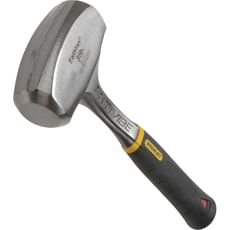
Stanley has been manufacturing dependable hand tools since 1843, and their club hammers represent over 180 years of engineering expertise and innovation. Known for their distinctive yellow and black branding, Stanley club hammers deliver the perfect balance of controlled striking force and user comfort for masonry work, demolition tasks, and general construction applications. Tooled-Up.com stocks a comprehensive range of Stanley club hammers designed to meet the demanding requirements of professional tradespeople and serious DIY enthusiasts across the UK.
Each Stanley club hammer in the collection features the brand's signature anti-vibration technology and precision-engineered striking faces that ensure accurate, powerful blows with reduced user fatigue. From compact 1.8kg models perfect for lighter masonry work to robust 4kg variants built for heavy-duty demolition, the Stanley range available from Tooled-Up provides reliable performance across diverse applications. The forged steel heads undergo rigorous heat treatment processes to guarantee exceptional durability and resistance to mushrooming, whilst the carefully designed handle systems offer superior grip and shock absorption.
Whether you're chiselling brickwork, driving cold chisels, breaking up concrete, or dismantling structures, Stanley club hammers deliver the consistent striking power and build quality that professional contractors have relied upon for generations. The brand's commitment to continuous improvement ensures that even traditional hand tools benefit from modern material science and ergonomic research.
Why Choose Stanley Club Hammers?
Stanley's reputation in the hand tool industry is built upon decades of proven reliability on construction sites and workshops worldwide. Their club hammers exemplify the brand's core philosophy: creating tools that work harder and last longer than the competition. The forged steel construction used throughout the Stanley club hammer range provides exceptional strength-to-weight ratios, allowing tradespeople to work efficiently without unnecessary fatigue from wielding overly heavy implements.
Quality control standards at Stanley ensure every club hammer meets exacting specifications before leaving the factory. The precision-ground striking faces deliver flat, square contact with chisels and bolsters, maximising energy transfer and improving accuracy. Stanley's proprietary handle designs incorporate fibreglass cores with cushioned grips that absorb impact vibrations, significantly reducing the risk of repetitive strain injuries during extended use. The brand also backs their club hammers with comprehensive warranties, demonstrating confidence in the longevity and performance of their products.
Innovation distinguishes Stanley from generic alternatives, with continuous investment in ergonomic research and material technology. Their club hammers feature optimised weight distribution that enhances swing control, whilst the handle-to-head connection systems are engineered to prevent loosening even under intensive professional use. For tradespeople who depend on their tools daily, Stanley club hammers represent a sound investment in reliability and comfort.
Who Uses Stanley Club Hammers?
Stanley club hammers are the tool of choice for numerous trades and applications:
- Bricklayers and Masons: For driving cold chisels, bolsters, and cutting bricks with precision
- Demolition Contractors: Breaking up concrete, tiles, and masonry structures efficiently
- General Builders: All-purpose striking tasks on residential and commercial construction sites
- Landscapers: Setting paving slabs, breaking stone, and installing hard landscaping features
- Maintenance Engineers: Demolition work and structural repairs in industrial facilities
- Stonemasons: Detailed stone cutting and shaping with chisels and punches
- DIY Enthusiasts: Home improvement projects requiring controlled demolition and masonry work
- Groundworkers: Installing foundations, kerbing, and concrete formwork
Key Features of Stanley Club Hammers
Stanley club hammers incorporate several distinctive features that enhance performance and user safety:
- Forged Steel Construction: One-piece drop-forged heads deliver superior strength and durability compared to cast alternatives
- Heat-Treated Striking Faces: Precisely hardened surfaces resist chipping, cracking, and mushrooming even with intensive use
- Anti-Vibration Handles: Fibreglass cores with shock-absorbing grips reduce transmitted vibrations by up to 70%
- Ergonomic Design: Contoured handles and optimised weight distribution minimise fatigue during extended work sessions
- Secure Head Attachment: Epoxy bonding and mechanical fixing systems prevent head loosening or detachment
- Multiple Weight Options: Comprehensive range from 1.8kg to 4kg accommodates different applications and user preferences
- High-Visibility Markings: Stanley's iconic yellow colouring ensures tools remain visible on busy construction sites
- Slip-Resistant Grips: Textured handle surfaces maintain secure purchase even in wet or dusty conditions
Popular Stanley Club Hammers
The Tooled-Up Stanley club hammer selection includes several popular configurations:
2.5lb (1.1kg) Club Hammers: Lightweight models ideal for precision work with cold chisels and bolsters where control takes precedence over striking force. Perfect for detailed brickwork and tile removal.
4lb (1.8kg) Club Hammers: The most versatile weight class, offering excellent balance between striking power and manoeuvrability. These represent the go-to choice for general construction and masonry applications.
7lb (3.2kg) Club Hammers: Heavy-duty variants designed for demanding demolition work and breaking thick concrete. The increased mass delivers substantial impact energy whilst maintaining Stanley's ergonomic handle design.
Fibreglass Handle Models: Feature advanced vibration-dampening technology and exceptional durability, particularly suited to intensive professional use where handle failure could compromise safety and productivity.
Safety and Compliance
Stanley club hammers manufactured for the UK market comply with relevant British and European safety standards, including BS EN ISO 13734 for hammers and striking tools. Users should always wear appropriate personal protective equipment when operating club hammers, including safety goggles or face shields to protect against flying debris, and robust work gloves to improve grip and protect hands from impact injuries.
Regular inspection of club hammers is essential for maintaining safe operation. The Health and Safety Executive (HSE) recommends checking striking faces for mushrooming, cracks, or chips before each use, as damaged heads can shed dangerous fragments during operation. Handle integrity should also be verified, ensuring no cracks, splits, or looseness exists at the head connection point. Any club hammer showing signs of damage should be withdrawn from service immediately.
Proper striking technique significantly reduces injury risk. Always ensure the workpiece is securely positioned and that bystanders maintain a safe distance. Strike squarely with the hammer face perpendicular to the target, avoiding glancing blows that can cause tools to slip or deflect unpredictably. Store Stanley club hammers in dry conditions away from corrosive substances, and never use them for applications involving live electrical conductors.
Frequently Asked Questions
What weight Stanley club hammer should I choose for general bricklaying work?
A 4lb (1.8kg) Stanley club hammer represents the optimal choice for most bricklaying applications. This weight provides sufficient striking force to drive cold chisels and bolsters through brick and mortar whilst remaining light enough for precise control and extended use without excessive fatigue. Professional bricklayers often keep both 4lb and 2.5lb variants to hand, using the lighter model for detailed work and the heavier for routine cutting tasks.
How do Stanley fibreglass handles compare to traditional wooden handles?
Stanley fibreglass handles offer several advantages over traditional ash or hickory wooden handles. They provide superior vibration dampening, reducing transmitted shock to the user's hand and wrist by up to 70%. Fibreglass construction is impervious to moisture, preventing the rot and degradation that can affect wooden handles stored in damp conditions. The material also offers greater impact resistance, making handle breakage far less likely even under intensive professional use. Additionally, fibreglass handles maintain consistent performance across temperature variations, whereas wooden handles can shrink in dry conditions, potentially loosening the head connection.
Can Stanley club hammers be used for steel work and driving steel pins?
Whilst Stanley club hammers are primarily designed for masonry work with chisels and bolsters, they can be used for driving steel pins and light steel forming tasks. However, for extensive metalworking applications, a dedicated engineer's hammer or ball-pein hammer would be more appropriate. The hardened striking faces on Stanley club hammers can withstand occasional steel contact, but repeated direct strikes on hardened steel surfaces may eventually cause damage. Always use the appropriate striking tool for the specific material and application to maximise tool longevity and working safety.
How should I maintain my Stanley club hammer to ensure maximum lifespan?
Regular maintenance significantly extends Stanley club hammer service life. After each use, wipe the head clean of dust, mortar, and moisture, then apply a light coating of oil to prevent rust formation on the striking faces. Inspect the handle regularly for cracks or damage, paying particular attention to the head connection area. Store club hammers in dry conditions, preferably hanging vertically to prevent handle warping. If the striking faces develop minor mushrooming, carefully grind away the protruding edges using an angle grinder, maintaining the original face profile. However, extensive mushrooming, cracks, or chips indicate the hammer should be replaced rather than repaired.
Are Stanley club hammers suitable for demolishing ceramic and porcelain tiles?
Stanley club hammers excel at tile removal applications when used with appropriate cold chisels or bolster chisels. The controlled striking force allows precise breaking of individual tiles without excessive damage to underlying substrates. For ceramic tiles, a 2.5lb or 4lb Stanley club hammer provides optimal control, whilst tougher porcelain tiles may benefit from the additional impact energy of a 4lb model. Always wear safety goggles and gloves during tile removal, as sharp fragments can cause serious injuries. Position the chisel at grout lines or tile edges rather than centres to maximise breaking efficiency and minimise jarring impacts that cause user fatigue.