

Stanley Coping Saws

 Loading...
End of content
Error - No more pages to load
Stanley Coping Saws at Tooled-Up.com
Stanley has been a trusted name in hand tools since 1843, and their coping saws continue this legacy of reliable craftsmanship. Designed for precision cutting of intricate curves, joints, and detailed woodwork, Stanley coping saws combine traditional tool design with modern manufacturing quality. Whether you're a professional joiner working on bespoke furniture or a DIY enthusiast tackling home improvement projects, Stanley's coping saw range delivers the accuracy and durability required for fine detail work.
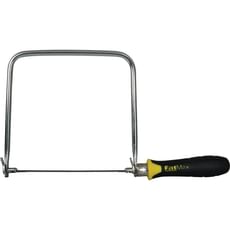
The Stanley coping saw design features a robust steel frame with a comfortable grip handle, allowing for controlled cutting through various materials including softwood, hardwood, and plastic. With tensioning mechanisms that keep blades taut and secure, these tools ensure clean, accurate cuts when working on skirting boards, architraves, dovetail joints, and decorative woodwork. Tooled-Up.com stocks Stanley's professional-grade coping saws that have become workshop staples for tradespeople across the UK.
Stanley coping saws are engineered for longevity and consistent performance, with easily replaceable blades and ergonomic handles that reduce hand fatigue during extended use. The adjustable blade holders allow for 360-degree blade rotation, enabling users to tackle complex cuts from multiple angles whilst maintaining optimal control and visibility of the cutting line.
Why Choose Stanley Coping Saws?
Stanley's reputation for producing dependable hand tools spans nearly two centuries, and their coping saws embody the brand's commitment to quality and value. Each Stanley coping saw is built to withstand the demands of professional use whilst remaining accessible for home workshop applications. The brand's focus on user-friendly design means that even complex joinery tasks become more manageable with the right tool in hand.
One of the key advantages of choosing Stanley is the widespread availability of replacement blades and spare parts. Unlike lesser-known brands, Stanley's standardised fittings mean you can easily source compatible blades in various tooth configurations for different materials and cutting requirements. This interchangeability makes Stanley coping saws a practical long-term investment rather than a disposable tool.
Stanley's quality control standards ensure consistent manufacturing tolerances, meaning the frame alignment and tensioning mechanisms perform reliably throughout the tool's lifespan. The brand's commitment to ergonomic design reduces user strain, allowing for more precise control during intricate cutting work where accuracy is paramount.
Who Uses Stanley Coping Saws?
Stanley coping saws are the tool of choice for a diverse range of professionals and enthusiasts, including:
- Joiners and Carpenters – for cutting precise curves in door frames, skirting boards, and bespoke joinery work
- Cabinet Makers – for detailed work on furniture joints and decorative elements
- Shop Fitters – for trimming and fitting work around fixtures and fittings
- Theatre Set Designers – for creating curved scenery components and prop fabrication
- Model Makers – for precision cutting in wood, plastic, and composite materials
- DIY Enthusiasts – for home renovation projects requiring detailed cutting work
- Restoration Specialists – for sympathetic repairs to period properties and antique furniture
- Musical Instrument Makers – for intricate shaping work on wooden components
Key Features of Stanley Coping Saws
Stanley coping saws incorporate several design features that enhance their performance and usability. The hardened steel frame provides the rigidity necessary to maintain blade tension during cutting, preventing blade deflection that can compromise accuracy. The tensioning mechanism allows users to adjust blade tightness to suit different materials and blade types, ensuring optimal cutting performance.
The wooden or composite handles are ergonomically shaped to fit comfortably in the hand, with sufficient grip surface to maintain control during prolonged use. The handle design positions the user's hand at the optimal angle for natural cutting motion, reducing wrist strain and improving cutting accuracy.
Stanley's blade mounting system allows for quick blade changes without requiring additional tools, saving valuable time on site or in the workshop. The pivoting blade holders enable full 360-degree rotation, allowing the blade to be oriented for cutting in any direction whilst keeping the frame clear of the workpiece. This feature is particularly valuable when cutting internal curves or working in confined spaces.
The throat depth – the distance between the blade and the back of the frame – is optimised to provide maximum cutting capacity whilst maintaining frame strength. This balance ensures that Stanley coping saws can handle both small detail work and larger workpieces without compromising structural integrity.
Popular Stanley Coping Saws
Stanley's coping saw range includes both traditional designs and enhanced models suited to different applications. The standard Stanley coping saw features a 165mm (6.5-inch) frame depth, providing ample clearance for most joinery and woodworking tasks. This versatile model accepts standard 165mm pin-end blades available in various tooth configurations from coarse to fine.
For professionals requiring increased durability, Stanley offers heavy-duty variants with reinforced frames and upgraded tensioning mechanisms. These models maintain blade tension even during demanding cutting operations in hardwoods and engineered materials. Browse the Stanley selection at Tooled-Up to find the model that best suits your specific cutting requirements and workshop needs.
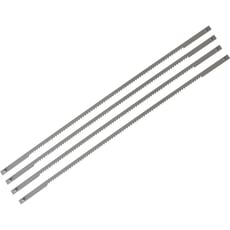
Stanley also produces replacement blade sets specifically designed for their coping saw frames, including fine-tooth blades for detailed work, medium-tooth general-purpose blades, and coarse-tooth blades for rapid stock removal. Having multiple blade options available allows users to optimise their coping saw's performance for each specific task.
Safety and Compliance
When using Stanley coping saws, following proper safety procedures ensures both personal protection and optimal tool performance. Always secure workpieces firmly in a vice or clamp before cutting to prevent movement that could cause blade breakage or injury. Maintain proper blade tension – an insufficiently tensioned blade can buckle and snap, whilst over-tensioning can damage the frame or cause premature blade failure.
Keep blades sharp and replace them when worn, as dull blades require excessive force and reduce cutting control. When changing blades, ensure pins are properly seated in the blade holders and that the blade teeth face forward (towards the handle) for efficient cutting. Wear safety glasses to protect against small debris particles, particularly when cutting materials that may splinter.
Stanley coping saws should be stored with blade tension released to prevent frame distortion and metal fatigue. Keep the tool in a dry environment to prevent rust formation on the frame and blade mounting hardware. The HSE recommends regular inspection of hand tools to ensure they remain in safe working condition, including checking for frame cracks, handle damage, and secure blade mounting mechanisms.
Frequently Asked Questions
What blade lengths fit Stanley coping saws?
Stanley coping saws typically use standard 165mm (6.5-inch) pin-end blades. These are widely available from the Tooled-Up range in various tooth configurations. Always ensure replacement blades have pins at both ends that match your saw's blade holder type.
How do I tension the blade correctly on a Stanley coping saw?
To tension a Stanley coping saw blade, install the blade with pins secured in both holders, then turn the handle clockwise whilst holding the frame steady. The blade should be taut enough to produce a clear "ping" when plucked, but not so tight that the frame begins to bend. Proper tension prevents blade wandering during cuts whilst protecting the frame from damage.
Can Stanley coping saws cut metal?
Whilst Stanley coping saws are primarily designed for wood, plastic, and soft materials, they can cut thin soft metals when fitted with appropriate fine-tooth metal-cutting blades. However, for regular metalwork, a dedicated hacksaw or junior hacksaw would be more suitable. Always match blade type to material for best results and blade longevity.
What's the difference between a coping saw and a fret saw?
Stanley coping saws have deeper frames (typically 165mm throat depth) and use coarser blades, making them suitable for general joinery and cutting thicker materials. Fret saws have shallower frames and use much finer blades for extremely delicate work. For most carpentry and joinery applications, a Stanley coping saw provides the versatility required.
How often should I replace Stanley coping saw blades?
Replace blades when you notice decreased cutting efficiency, increased effort required, rough cut edges, or visible damage to blade teeth. Professional tradespeople working daily may replace blades weekly, whilst occasional users might find blades last several months. Tooled-Up stocks replacement blades in multi-packs for convenient availability when needed.