

Stanley Drills

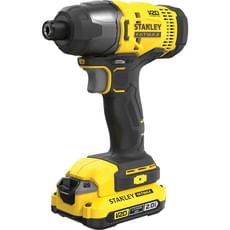
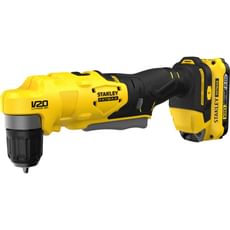
 Loading...
End of content
Error - No more pages to load
Stanley Drills at Tooled-Up.com
Stanley has been a trusted name in professional tools since 1843, and their drill range continues this proud heritage of reliability and innovation. Whether you're a professional tradesperson requiring dependable equipment for daily site work or a serious DIY enthusiast tackling home improvement projects, Stanley drills deliver the performance and durability that the brand is renowned for. From compact cordless models for tight spaces to powerful 240v corded drills for heavy-duty applications, the Stanley drill collection represents decades of engineering expertise focused on real-world trade demands.
The Stanley drill range available from Tooled-Up.com encompasses both cordless and corded options, each designed with the practical needs of working professionals in mind. Stanley's commitment to ergonomic design ensures reduced user fatigue during extended use, whilst their focus on robust construction means these tools can withstand the rigours of demanding job sites. Many Stanley drill models feature in their established power tool systems, allowing tradespeople to build a cohesive toolkit with interchangeable batteries and accessories that maximise efficiency and value.
Stanley drills are engineered to provide the perfect balance between power, control, and comfort. With features such as variable speed triggers, LED work lights, and multiple torque settings, these drills offer the versatility required for diverse applications from pilot holes to heavy-duty masonry drilling. Tooled-Up stocks Stanley's drill range to ensure both trade professionals and DIY users can access tools that won't let them down when precision and reliability matter most.
Why Choose Stanley Drills?
Stanley's reputation for quality spans generations, making their drills a sensible investment for anyone serious about their craft. The brand's extensive research and development ensures that each drill incorporates practical features requested by actual tradespeople rather than unnecessary gimmicks. Stanley drills are built to withstand daily professional use, with robust housings, quality motors, and components designed for longevity rather than planned obsolescence.
One of the key advantages of choosing Stanley drills is the brand's commitment to after-sales support and parts availability. Unlike some manufacturers who discontinue support for older models quickly, Stanley maintains comprehensive service networks and spare parts supplies, protecting your investment for years to come. Their drills also represent excellent value for money, positioned at price points that make professional-grade tools accessible without compromising on the quality features that matter on site.
Stanley's integration with broader power tool systems means purchasing a drill often opens the door to an entire ecosystem of compatible tools. Battery platforms allow tradespeople to invest in additional tools without repeatedly purchasing expensive battery packs, whilst standardised accessory fittings ensure your existing drill bits and attachments remain useful across multiple tools and upgrade cycles.
Who Uses Stanley Drills?
- Carpenters and Joiners: For precise pilot holes, countersinking, and general timber work
- Electricians: Drilling through joists, wall chases, and panel installations
- Plumbers: Creating pipe penetrations and fixing brackets
- General Builders: All-round drilling tasks from blockwork to steel fixings
- Shop Fitters: Installing fixtures, fittings, and display units
- Maintenance Engineers: Equipment repairs and facility upkeep
- Kitchen and Bathroom Fitters: Drilling tiles, worktops, and wall materials
- Landscapers: Constructing decking, fencing, and outdoor structures
- Serious DIY Enthusiasts: Home improvement projects requiring reliable equipment
- Property Maintenance Professionals: Varied drilling tasks across different materials
Key Features of Stanley Drills
Stanley drills incorporate numerous features designed to enhance both performance and user experience. Variable speed control allows precise operation when starting holes or working with delicate materials, whilst the ability to achieve higher speeds ensures efficient drilling through tougher substrates. Many models feature keyless chucks for rapid bit changes without requiring separate chuck keys, saving valuable time on busy job sites.
Ergonomic design is central to Stanley's drill engineering, with soft-grip handles positioned to reduce wrist strain and improve control during extended use. Compact drill designs enable access to confined spaces such as between joists or inside cabinets, whilst maintaining sufficient power for effective drilling. LED work lights illuminate the drilling area in poorly-lit conditions, improving accuracy and safety when working in loft spaces, under stairs, or in other challenging environments.
Torque adjustment settings on Stanley drills prevent over-tightening of screws and allow the tool to function effectively as a screwdriver as well as a drill. This versatility reduces the number of tools required on site and streamlines workflow. Battery gauge indicators on cordless models help prevent unexpected power loss mid-task, whilst brushless motor technology in premium ranges delivers improved efficiency, longer runtime, and extended tool lifespan.
Popular Stanley Drills
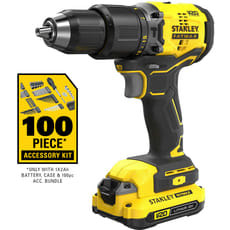
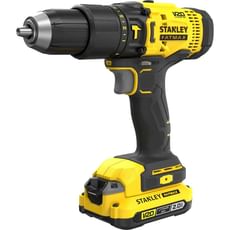
Stanley's cordless drill range represents the most popular choice amongst modern tradespeople, offering the freedom of battery power without compromising performance. These models typically feature lithium-ion batteries that hold charge well and resist the memory effect that plagued older battery technologies. Compact drill drivers suit everyday tasks, whilst hammer drill functions enable work with masonry and concrete.
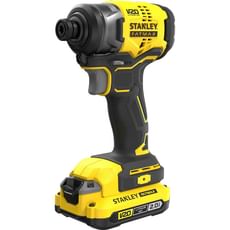
For users requiring consistent power without battery concerns, Stanley's corded 240v drills provide reliable performance for workshop use or sites with accessible power supplies. These models often deliver higher torque outputs suitable for heavy-duty applications such as mixing materials or drilling large-diameter holes. Impact drivers within the Stanley range offer exceptional torque for driving long screws and bolts, particularly useful in decking, fencing, and structural applications.
Combi drills from Stanley combine multiple functions in one tool, typically offering standard drilling, hammer drilling, and screwdriving capabilities. This versatility makes them ideal for tradespeople who require one reliable tool capable of handling diverse tasks throughout the working day, reducing tool carriage and simplifying equipment management on site.
Safety and Compliance
All Stanley drills supplied through Tooled-Up comply with UK and European safety standards, bearing appropriate CE markings and conforming to relevant regulations. Users should always wear appropriate personal protective equipment including safety glasses to protect against flying debris, and hearing protection when operating drills for extended periods, particularly hammer drills in masonry applications.
Ensure corded 240v Stanley drills are connected through properly rated extension leads with appropriate circuit protection, and regularly inspect cables for damage that could create electric shock hazards. When using cordless models, only charge batteries with the supplied Stanley chargers to prevent damage or safety risks. Always remove batteries or disconnect power before changing drill bits or performing maintenance.
Follow HSE guidelines for working at height when drilling overhead, and be aware of hidden services such as electrical cables and water pipes before drilling into walls or ceilings. Use appropriate detection equipment to locate services, and select the correct drill bit type for the material being worked. Never force a drill beyond its design capabilities, and allow adequate cooling periods during intensive use to prevent motor damage.
Frequently Asked Questions
Are Stanley drill batteries interchangeable across their power tool range?
Many Stanley drills use battery platforms that are compatible across multiple tools within the same voltage range and system family. This allows tradespeople to build a comprehensive toolkit whilst sharing battery packs between tools, representing significant cost savings. Always check specific model compatibility, as Stanley operates several distinct battery systems across their extensive power tool catalogue.
What's the difference between a standard Stanley drill and a hammer drill?
Standard Stanley drills rotate the bit to cut through materials like wood, metal, and plastic. Hammer drills add a percussive action that pulverises masonry, making them essential for drilling into brick, concrete, and stone. Many Stanley combi drills offer both functions with a selector switch, providing maximum versatility for varied applications without requiring multiple tools.
How long do Stanley drill batteries typically last?
Battery runtime depends on capacity (measured in amp-hours) and workload intensity. Stanley's lithium-ion batteries generally provide several hours of typical use per charge, with higher-capacity packs lasting longer. Battery lifespan in terms of charge cycles typically extends to several years of professional use when properly maintained, stored at moderate temperatures, and charged using genuine Stanley chargers.
Can Stanley drills be used for mixing paint or plaster?
Whilst some higher-powered Stanley drills can accommodate mixing paddles for light mixing tasks, purpose-built mixers are recommended for regular or heavy-duty mixing applications. Mixing imposes significant strain on drill motors and gearboxes not specifically designed for sustained side-loading. Check your specific model's manual for guidance, and consider Stanley's dedicated mixing tools for professional trade use.
What warranty coverage do Stanley drills come with?
Stanley typically provides manufacturer warranties on their drills, with coverage periods varying by model and range. Professional-grade tools often carry more extensive warranty protection than entry-level models. Register your Stanley drill after purchase to ensure warranty validation, and retain proof of purchase. Warranty terms generally cover manufacturing defects but exclude damage from misuse, wear items, and consumables such as batteries in some cases.