

Stanley Hand Saws
 Loading...
End of content
Error - No more pages to load
Stanley Hand Saws at Tooled-Up.com
Stanley has been at the forefront of hand tool innovation for over 175 years, and their hand saw range exemplifies the brand's commitment to precision, durability, and professional-grade performance. From traditional panel saws to specialized cutting solutions, Stanley hand saws combine time-tested design principles with modern materials engineering to deliver tools that professional tradespeople and serious DIY enthusiasts can rely on day after day.
The Stanley hand saw collection available from Tooled-Up.com represents generations of sawing expertise, featuring everything from classic hardpoint saws for general carpentry work to precision-ground back saws for fine joinery. Each saw is manufactured to exacting standards, with carefully selected blade steel, ergonomically designed handles, and tooth patterns optimised for specific cutting applications. Whether you're working with softwood, hardwood, engineered boards, or composite materials, Stanley has developed specialized saws to match the demands of modern construction and woodworking.
Stanley's reputation for producing hand saws that maintain their sharpness and cutting accuracy over extended use has made them a workshop staple across the UK. Their innovative Jet-Cut technology, triple-ground teeth, and ergonomic handle designs set new benchmarks in the hand saw category, whilst remaining competitively priced for both professional procurement and individual purchase.
Why Choose Stanley Hand Saws?
Stanley hand saws have earned their place in toolboxes nationwide through consistent quality, reliable performance, and genuine value for money. The brand's commitment to blade technology means their saws maintain cutting efficiency far longer than budget alternatives, with hardened tooth points that resist dulling even when cutting through abrasive materials like MDF and chipboard.
What truly distinguishes Stanley in the hand saw market is their practical innovation. Rather than pursuing gimmicks, Stanley focuses on genuine performance improvements—better tooth geometry for faster cutting, improved handle ergonomics to reduce fatigue during extended use, and blade coatings that reduce friction and prevent corrosion. Their saws are designed by people who understand real-world cutting applications, resulting in tools that simply work better on actual job sites and in working workshops.
The brand's heritage also provides reassurance. When you invest in Stanley hand saws, you're purchasing from a company with over a century of sawing expertise, backed by comprehensive warranties and the knowledge that replacement parts and compatible accessories will remain available. This longevity matters for professional users who depend on their tools for their livelihood.
Who Uses Stanley Hand Saws?
Stanley hand saws are the choice of a diverse range of users including:
- Carpenters and joiners who require precision cutting for framework, door hanging, and first-fix applications
- Cabinet makers and furniture builders who need fine-tooth back saws for detailed joinery work
- General builders who value reliable, multi-purpose saws for varied site cutting tasks
- Shopfitters working with diverse materials in retail and commercial installations
- Property maintenance professionals requiring dependable tools for repair and renovation work
- Set designers and theatrical carpenters who need accurate cutting for custom builds
- Landscapers and fencing contractors for cutting timber posts and structural components
- Serious DIY enthusiasts undertaking home improvement projects who want professional-quality results
- Heritage restoration specialists who appreciate traditional sawing techniques and tool quality
Key Features of Stanley Hand Saws
Blade Technology: Stanley employs advanced tooth grinding techniques that create sharper, longer-lasting cutting edges. Their hardpoint technology induction-hardens the teeth to maintain sharpness through demanding cutting applications, whilst the blade body retains flexibility to prevent binding.
Ergonomic Handle Design: Stanley hand saw handles feature scientifically designed grips that distribute pressure evenly across the palm, reducing fatigue and improving cutting control. Many models incorporate bi-material construction with soft-grip inserts for enhanced comfort during extended use.
Optimised Tooth Patterns: Different Stanley saw models feature tooth configurations specifically engineered for their intended application—aggressive rip-cut patterns for cutting with the grain, fine crosscut patterns for clean cuts across grain direction, and universal patterns for general-purpose work.
Blade Coatings: Selected Stanley saws feature low-friction blade coatings that reduce cutting resistance, prevent pitch build-up, and protect against corrosion in site environments. These coatings extend blade life and maintain cutting performance.
Clear Blade Marking: Stanley incorporates clear measurement markings and cutting guides on many saw blades, assisting with accurate cuts and reducing measurement errors during repetitive cutting tasks.
Popular Stanley Hand Saws
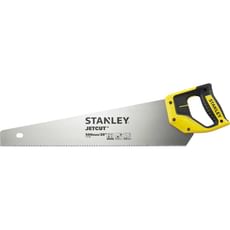
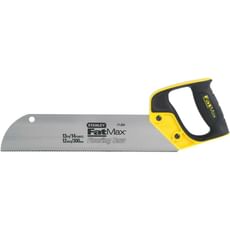
The Stanley FatMax range represents the pinnacle of Stanley's hand saw development, incorporating their most advanced blade technologies and premium handle designs. These professional-grade saws deliver exceptional cutting speed and accuracy for demanding trade applications.
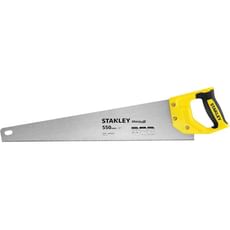
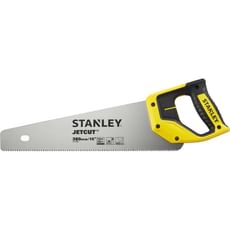
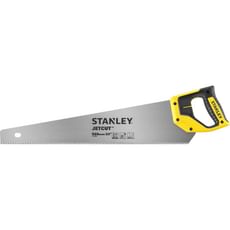
Stanley Hardpoint Saws remain among the most popular general-purpose saws in the UK, offering excellent value with hardened teeth that outlast traditional saw patterns. Available in various tooth counts and blade lengths to suit different cutting requirements.
Stanley Tenon Saws provide the precision required for fine joinery work, with reinforced backs that keep the blade rigid during detailed cutting. These are essential tools for furniture making and quality carpentry.
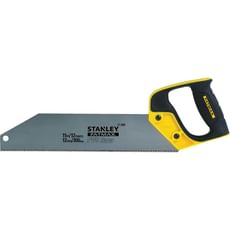
Stanley Panel Saws offer versatile cutting performance for sheet materials, with blade lengths and tooth patterns optimised for cutting manufactured boards cleanly and efficiently.
Tooled-Up stocks Stanley's specialized saws including floorboard saws with curved cutting edges for lifting boards, pad saws for cutting holes and curves, and coping saws for intricate shaping work.
Safety and Compliance
Stanley manufactures their hand saws to meet relevant UK and European safety standards, including BS EN ISO specifications for hand tools. Proper saw usage requires attention to several key safety considerations to prevent injury and ensure optimal performance.
Always inspect saw blades before use, checking for damaged or missing teeth, cracks in the blade, and secure handle attachment. Damaged saws should be replaced rather than used, as compromised blades can bind or break during cutting. When sawing, ensure your workpiece is properly secured and supported, with your free hand positioned well away from the cutting line. Use appropriate personal protective equipment including safety glasses to protect against sawdust and debris.
The HSE recommends maintaining sharp cutting tools, as dull blades require excessive force that increases the risk of the tool slipping. Stanley's hardpoint technology helps maintain sharpness, but saws should be replaced when cutting performance noticeably diminishes. Store hand saws with blade guards or in protective sheaths to prevent accidental contact with sharp teeth and to preserve cutting edges.
When working on site, be mindful of other trades and ensure saw blades won't contact hidden services, fixings, or structural elements. For overhead cutting or work in confined spaces, take extra precautions to maintain balance and control throughout each cutting stroke.
Frequently Asked Questions
What's the difference between Stanley hardpoint and traditional hand saws?
Stanley hardpoint saws feature teeth that have been induction-hardened, making them significantly more resistant to dulling compared to traditional saws. Whilst traditional saws can be resharpened, hardpoint saws maintain their factory-ground sharpness much longer and are simply replaced when eventually worn. For most users, hardpoint saws offer better value through extended service life and consistently superior cutting performance.
Which Stanley hand saw is best for cutting laminate flooring?
For laminate flooring, a Stanley hardpoint panel saw with fine teeth (typically 11-12 TPI) provides the cleanest cuts with minimal chipping. The fine tooth pattern prevents the laminate surface from splintering, whilst the hardpoint technology copes well with the abrasive nature of laminate materials. Always cut with the decorative face upward when using a hand saw to ensure any minor breakout occurs on the underside.
How long do Stanley hand saw blades typically last?
The lifespan of a Stanley hand saw depends heavily on usage intensity and the materials being cut. Under normal trade use cutting softwoods and standard sheet materials, a Stanley hardpoint saw typically provides several months of daily service. Cutting highly abrasive materials like MDF or moisture-resistant boards will reduce blade life. When you notice significantly increased cutting effort or rougher cut quality, it's time to replace the saw.
Can Stanley hand saws be sharpened, or must they be replaced?
Most modern Stanley hand saws feature hardpoint teeth which cannot be effectively resharpened using traditional methods. The induction hardening process that gives these teeth their long-lasting sharpness also makes them too hard for standard saw files. However, this trade-off is worthwhile as hardpoint saws significantly outlast traditional saws before replacement becomes necessary, and their consistent performance throughout their service life provides better value.
Are Stanley hand saws suitable for cutting plastic materials and pipes?
Whilst Stanley hand saws will cut plastic materials, they're optimised primarily for wood and wood-based products. For regular plastic cutting, especially pipes and conduit, a dedicated hacksaw or specialized plastic-cutting saw will provide cleaner results and better longevity. However, for occasional cuts in plastic skirting, trim, or similar materials, a fine-tooth Stanley panel saw will perform adequately without damage to the blade.