

Stanley Holesaws & Arbors
 Loading...
End of content
Error - No more pages to load
Stanley Holesaws & Arbors at Tooled-Up.com
Stanley has been a trusted name in cutting tools for over a century, and their holesaws and arbors continue this legacy of quality and reliability. Designed for both professional tradespeople and serious DIY enthusiasts, Stanley holesaws deliver clean, precise cuts through a variety of materials including wood, plastic, plasterboard, and metal. The range combines durable construction with practical design features that make drilling larger diameter holes faster and more efficient than traditional drilling methods.
Tooled-Up.com stocks a comprehensive selection of Stanley holesaws and arbors engineered to meet the demands of site work and workshop applications alike. From individual holesaws in popular sizes to complete holesaw sets with multiple cutting diameters, the Stanley range provides versatile solutions for creating holes for electrical outlets, plumbing installations, ventilation systems, and general construction tasks. Each holesaw is designed to work seamlessly with Stanley arbors, ensuring secure fitment and optimal cutting performance.
Stanley holesaws feature hardened cutting teeth that maintain their sharpness through repeated use, while the deep cup design helps to prevent binding and allows for efficient chip clearance. Whether cutting through softwood joists, hardwood flooring, or sheet metal, Stanley's engineering ensures consistent results that professional tradespeople can depend on day after day.
Why Choose Stanley Holesaws & Arbors?
Stanley's reputation for manufacturing reliable, durable tools extends throughout their holesaw range. The brand's commitment to practical design means their holesaws incorporate features that matter on the job site – not just in marketing materials. Stanley holesaws are built to withstand the rigours of professional use, with robust construction that resists warping and tooth damage even when cutting through challenging materials.
Value for money is a hallmark of Stanley products, and their holesaws are no exception. Whilst maintaining professional-grade quality, Stanley offers competitive pricing that makes it economical to stock multiple sizes or replace worn cutting tools without breaking the budget. The brand's widespread availability and compatibility with standard power drill chucks and drill presses makes Stanley holesaws a practical choice for workshops and tool kits across the UK.
Stanley's engineering focus on user-friendly features sets their holesaws apart. Many Stanley holesaws incorporate depth markings, pilot drill visibility slots, and optimised tooth geometry that reduces the effort required to cut through materials. This attention to the user experience means less fatigue during extended use and more precise control over the cutting process.
Who Uses Stanley Holesaws & Arbors?
Stanley holesaws and arbors are chosen by a diverse range of professionals and enthusiasts, including:
- Electricians – cutting holes for socket boxes, lighting fixtures, and cable access points
- Plumbers – creating openings for pipe penetrations through joists, walls, and panels
- Carpenters and joiners – installing door furniture, creating cable routing holes, and general woodworking applications
- Kitchen and bathroom fitters – drilling holes for taps, waste pipes, and extractor fan ducting
- Heating engineers – making penetrations for boiler flues and central heating pipework
- General builders – versatile cutting requirements across multiple trades
- Maintenance engineers – repair and installation work in commercial and industrial settings
- DIY enthusiasts – home improvement projects requiring professional-quality cutting tools
Key Features of Stanley Holesaws & Arbors
Hardened Cutting Teeth: Stanley holesaws feature heat-treated teeth that maintain their cutting edge through multiple applications, reducing the frequency of replacement and ensuring consistent performance.
Deep Cut Design: The extended cup depth on Stanley holesaws allows for cutting through thicker materials in a single pass and provides better chip clearance to prevent clogging during use.
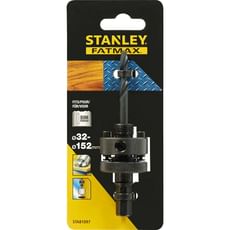
Secure Arbor Connection: Stanley's arbor systems provide a reliable connection between the holesaw and the drill, minimising wobble and ensuring accurate, round holes every time.
Quick-Change Systems: Many Stanley holesaw sets include quick-change arbors that allow rapid switching between different holesaw sizes without tools, saving valuable time on site.
Universal Fitment: Stanley arbors feature standard hex shanks compatible with 240v corded drills, cordless drill drivers, and drill presses, providing flexibility across different power tool platforms.
Material Versatility: Different Stanley holesaw ranges are optimised for specific materials – from bi-metal holesaws for metal cutting to carbide-tipped versions for abrasive materials like tiles and masonry.
Popular Stanley Holesaws & Arbors
The Stanley range available from Tooled-Up includes several popular holesaw configurations suited to different applications. Stanley bi-metal holesaws represent the most versatile option, suitable for wood, plastic, and thin metal sheet cutting with excellent durability. These holesaws typically feature high-speed steel cutting edges welded to a flexible backing material that resists cracking under stress.
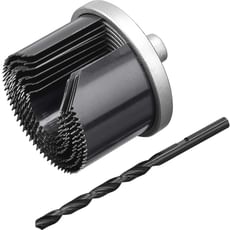
Stanley holesaw sets provide comprehensive size ranges in convenient storage cases, offering excellent value for tradespeople who need multiple cutting diameters readily available. These sets typically include the most commonly used sizes from 19mm to 76mm diameter, along with arbors and pilot drills for immediate use.
Individual Stanley holesaws in popular sizes such as 25mm, 32mm, 35mm, 50mm, and 65mm are frequently chosen by electricians and plumbers who use specific sizes repeatedly. Stanley's standard arbors and mandrels provide reliable connections for these holesaws, whilst quick-change arbor systems are favoured by professionals who switch between sizes throughout the working day.
Safety and Compliance
When using Stanley holesaws and arbors, adherence to proper safety procedures is essential. Always wear appropriate personal protective equipment including safety glasses or goggles to protect against flying debris, and consider hearing protection when using power drills at high speeds. Work gloves should be avoided when operating rotating tools due to entanglement risks.
Ensure materials being cut are securely clamped or fixed to prevent movement during drilling. When cutting metal, use appropriate cutting lubricant to reduce heat build-up and extend holesaw life. Always allow the holesaw to reach full speed before contacting the workpiece, and apply steady, even pressure without forcing the cut.
Regular inspection of Stanley holesaws for damaged or worn teeth is important for both safety and performance. Damaged holesaws should be replaced rather than used, as they can bind unexpectedly or produce poor-quality cuts. When changing holesaws, ensure power tools are switched off and, where applicable, batteries are removed to prevent accidental activation.
Frequently Asked Questions
What materials can Stanley holesaws cut through?
Stanley offers different holesaw types for various materials. Their bi-metal holesaws are suitable for wood, plastic, plasterboard, and thin metal sheets up to approximately 3mm thick. For harder metals, specialist metal-cutting holesaws are available, whilst carbide-tipped Stanley holesaws can handle abrasive materials including tiles and fibre cement board. Always select the appropriate holesaw type for your specific material to ensure optimal performance and tool life.
Are Stanley arbors compatible with other holesaw brands?
Stanley arbors typically follow industry-standard designs and thread sizes, meaning they're generally compatible with holesaws from other manufacturers that use the same thread specification. However, for optimal performance and safety, it's recommended to use Stanley arbors with Stanley holesaws, as they're engineered to work together. Quick-change arbor systems may be brand-specific and should be verified for compatibility before use.
How do I prevent Stanley holesaws from binding during use?
To prevent binding, start the cut at a moderate drill speed and apply steady, even pressure without forcing the holesaw through the material. Clear chips regularly by withdrawing the holesaw periodically, especially when cutting deeper holes. When cutting metal, use appropriate cutting fluid to reduce friction and heat. Ensure your drill has sufficient torque for the holesaw diameter being used – larger holesaws require more powerful drills to prevent stalling.
What's the difference between a standard arbor and a quick-change arbor?
Standard Stanley arbors require the holesaw to be screwed onto the arbor threads and typically need to be removed using two wrenches – one to hold the arbor and another to turn the holesaw. Quick-change arbors feature spring-loaded or clip mechanisms that allow holesaws to be attached and removed without tools, significantly speeding up the process of switching between different sizes. Quick-change systems are particularly valuable for professionals who use multiple holesaw sizes throughout the day.
How long should a Stanley holesaw last?
The lifespan of a Stanley holesaw depends on several factors including the materials being cut, cutting technique, maintenance, and frequency of use. When used correctly with appropriate speeds, feeds, and lubrication where necessary, a quality Stanley bi-metal holesaw can typically cut dozens of holes in wood or plastic before the teeth become noticeably dull. Metal cutting is more demanding and will reduce tool life more quickly. Signs that a holesaw needs replacing include difficulty starting cuts, excessive burning or smoke, and significantly increased cutting time compared to when new.