

Stanley Mitre Blocks & Boxes
 Loading...
End of content
Error - No more pages to load
Stanley Mitre Blocks & Boxes at Tooled-Up.com
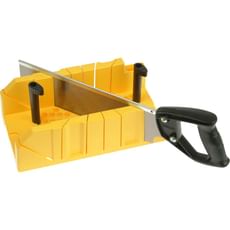
Stanley has been synonymous with precision woodworking tools for over 175 years, and their mitre blocks and boxes continue this tradition of excellence. Designed for accurate angled cuts in timber, skirting, architrave, and mouldings, Stanley mitre boxes deliver the reliability that professional carpenters and DIY enthusiasts demand. Whether you're fitting period architraves or creating picture frames, these essential tools provide consistent, clean cuts at standard angles without the need for powered equipment.
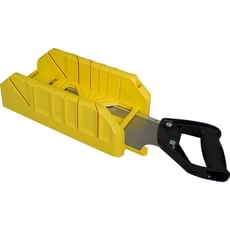
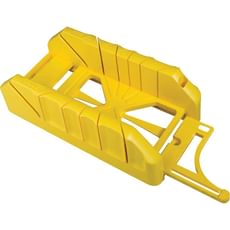
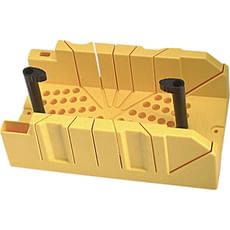
The Stanley range available from Tooled-Up.com features robust construction using high-impact ABS plastic housings combined with precision-engineered metal saw guides. These traditional yet refined tools offer pre-set cutting angles at 22.5°, 45°, and 90°, making them indispensable for joinery work requiring perfect mitres. Stanley mitre blocks provide excellent stability during cutting operations, with integrated clamps on selected models to secure workpieces firmly in position, reducing movement and ensuring accuracy with every stroke of the saw.
For tradespeople working on site installations or home improvers tackling trim carpentry projects, Stanley mitre boxes represent an affordable, portable solution that requires no power source. Their compact design makes them ideal for both workshop benches and on-site applications where precision cutting is essential but space and power availability are limited.
Why Choose Stanley Mitre Blocks & Boxes?
Stanley's reputation for manufacturing dependable hand tools extends throughout their mitre block and box range. The brand's commitment to quality ensures that each mitre box features accurately machined saw slots that maintain their precision through thousands of cuts. Unlike cheaper alternatives that can develop play in the guides over time, Stanley mitre boxes are engineered to withstand the rigours of professional use whilst maintaining tight tolerances.
The durability of Stanley mitre blocks stems from their material selection and construction methods. High-impact plastic bodies resist cracking even when subjected to workshop knocks, whilst the reinforced saw guide channels prevent widening that would compromise cutting accuracy. Many Stanley models incorporate non-slip rubber feet or base pads, providing stable support on various work surfaces and preventing movement during sawing operations.
Stanley understands that precision in joinery work directly impacts the finished appearance of any project. Their mitre boxes are manufactured to exacting standards, with saw guides positioned to deliver true angles that ensure perfect joints in skirting boards, coving, and decorative mouldings. This attention to detail has made Stanley a trusted name amongst professional joiners and carpenters who rely on consistent results for their reputation.
Who Uses Stanley Mitre Blocks & Boxes?
- Carpenters and Joiners: Professional tradespeople fitting architraves, skirting boards, and door casings who require accurate mitre cuts on site
- Picture Framers: Specialists creating custom frames who need precision angles for seamless corner joints
- Shopfitters: Commercial installers working with decorative mouldings and trim materials
- Property Maintenance Professionals: Multi-trade operatives carrying out repair and renovation work
- DIY Enthusiasts: Home improvers undertaking interior decoration projects involving skirting, coving, and trim installation
- Set Designers and Theatre Technicians: Creative professionals building scenery and props requiring accurate angled cuts
- Heritage Restoration Specialists: Craftspeople working on period properties where traditional joinery techniques are essential
Key Features of Stanley Mitre Blocks & Boxes
Stanley mitre blocks incorporate several design features that enhance their functionality and ease of use. The precision-moulded saw guide slots accommodate standard hand saws whilst maintaining close tolerances that prevent blade wandering during cutting. This ensures clean, accurate cuts without the torn fibres or splintering that can occur with freehand sawing.
Many Stanley mitre boxes feature measurement markings and material stops that enable repeatable cuts of identical length—particularly valuable when cutting multiple pieces of skirting or architrave to match. The generous depth and width of the cutting chamber accommodate various timber sections and moulding profiles, providing versatility across different applications.
The ergonomic design considerations evident in Stanley mitre boxes include comfortable work heights and clear sight lines to the cutting area, reducing user fatigue during extended use. Integrated clamping systems on certain models secure workpieces without requiring additional equipment, allowing single-handed operation whilst maintaining both hands on the saw for improved control and safety.
Stanley's attention to practical details extends to features like sawdust clearance channels that prevent debris accumulation in the cutting area, and durable construction that withstands exposure to workshop environments. The robust yet lightweight design makes these tools easy to transport between job sites without compromising structural integrity.
Popular Stanley Mitre Blocks & Boxes
The Stanley mitre box range at Tooled-Up encompasses various sizes and configurations to suit different applications. Standard mitre boxes typically accommodate timber up to 100mm wide and 50mm deep, making them suitable for most domestic skirting and architrave profiles. These versatile models provide the three most commonly required angles for general joinery work.
Stanley also produces compact mitre blocks designed for smaller trim work and detailed projects where portability is paramount. These lightweight units are ideal for picture framing, small mouldings, and precision craft work where space is limited but accuracy remains critical.
For professionals requiring enhanced work-holding capabilities, Stanley offers mitre boxes with integrated clamps or vice-style gripping mechanisms. These advanced models provide superior workpiece stability, particularly beneficial when cutting hardwoods or working with smaller offcuts that might otherwise shift during sawing operations.
Safety and Compliance
Whilst mitre blocks are relatively simple hand tools, proper usage ensures both safety and optimal results. Stanley mitre boxes should always be secured to a stable work surface or held firmly against a bench stop to prevent movement during cutting. Users should ensure workpieces are properly seated in the box with adequate support along their length to prevent binding or kickback.
When using hand saws with Stanley mitre boxes, appropriate personal protective equipment including safety glasses should be worn to protect against sawdust and potential splinters. Maintaining sharp saw blades reduces the force required during cutting operations, improving both safety and cut quality whilst extending the life of the mitre box guides.
Regular inspection of mitre boxes ensures continued accuracy and safe operation. The saw guide slots should be checked for wear or damage that might affect cutting precision, and any debris should be cleared from the cutting chamber. Stanley mitre boxes require no special maintenance beyond occasional cleaning and proper storage away from excessive moisture or extreme temperatures.
Frequently Asked Questions
What size hand saw works best with Stanley mitre boxes?
Stanley mitre boxes are designed to accommodate standard hand saws with blade depths typically between 250mm and 350mm. A fine-toothed tenon saw with 12-14 teeth per inch provides excellent results for precision joinery work, whilst a general-purpose panel saw suits larger timber sections. The saw should move smoothly through the guide slots without excessive play.
Can Stanley mitre boxes cut angles other than the preset positions?
Standard Stanley mitre boxes provide fixed angles at 22.5°, 45°, and 90°, which cover the vast majority of joinery requirements. For non-standard angles, alternative cutting methods or adjustable mitre saws would be required. However, these three angles accommodate virtually all skirting, architrave, and picture framing applications.
How do I ensure accurate cuts with a Stanley mitre box?
Accuracy depends on several factors: ensure the mitre box is secured firmly to prevent movement, position the workpiece flush against the back fence of the box, use a sharp saw appropriate for the material, and allow the saw to follow the guide slots without forcing. Marking the cut line clearly and aligning it with the appropriate slot before beginning also improves precision.
What materials can be cut using Stanley mitre blocks?
Stanley mitre boxes are primarily designed for cutting timber, including softwoods, hardwoods, MDF, and wood-based mouldings. They can also accommodate plastic trim, lightweight aluminium sections, and composite materials, provided an appropriate saw blade is used. The mitre box provides guidance and support for clean, accurate cuts across these various materials.
How do Stanley mitre boxes compare to powered mitre saws?
Stanley mitre boxes offer several advantages for certain applications: they require no power source, making them ideal for site work; they're completely portable and lightweight; they produce no noise or dust extraction requirements; and they represent a cost-effective solution for occasional use. Whilst powered mitre saws provide faster cutting for high-volume work, Stanley mitre boxes excel in situations requiring portability, quiet operation, or where power availability is limited.