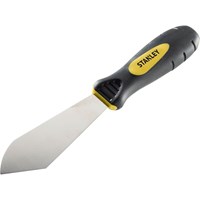
Stanley Putty Knives
Stanley Putty Knives at Tooled-Up.com
Stanley has been a trusted name in hand tools for over 175 years, and their putty knives represent the same commitment to quality and durability that professionals have relied on for generations. The Stanley putty knife range combines precision-ground blades with ergonomic handles, delivering the perfect balance of flexibility and control for applications ranging from fine finishing work to heavy-duty scraping tasks. Whether you're a decorator preparing surfaces for painting, a glazier fitting windows, or a general tradesperson tackling various filling and smoothing jobs, Stanley putty knives offer the reliability needed for professional results.
Each Stanley putty knife is manufactured to exacting standards, featuring blades crafted from high-carbon steel that's heat-treated for optimal flexibility and edge retention. The range available at Tooled-Up includes flexible filling knives for delicate finishing work, stiffer stripping knives for removing old paint and wallpaper, and specialist glazing tools designed specifically for window installation. Stanley's attention to detail extends to the handle design, with many models featuring cushioned grips that reduce hand fatigue during extended use whilst maintaining precise control.
Tooled-Up.com stocks Stanley putty knives in various blade widths to suit different applications, from narrow 25mm blades ideal for detailed work to wide 100mm blades that cover larger surface areas efficiently. The brand's commitment to manufacturing excellence ensures that each knife delivers consistent performance across thousands of uses, making them a cost-effective investment for both professional tradespeople and serious DIY enthusiasts.
Why Choose Stanley Putty Knives?
Stanley's reputation for quality hand tools is built on generations of proven performance on job sites across the UK and worldwide. Their putty knives feature precisely ground, flexible blades that maintain their edge through demanding applications, whilst the full tang construction ensures strength and balance that cheaper alternatives simply cannot match. The high-carbon steel used in Stanley blades offers superior flexibility without compromising durability, allowing decorators to achieve smooth, professional finishes whilst maintaining confidence that the blade won't bend or break under pressure.
The ergonomic handle design on Stanley putty knives reduces user fatigue significantly compared to basic wooden-handled alternatives. Many models incorporate bi-material grips that provide comfort during extended use whilst offering secure control even when working with wet materials. Stanley also uses solvent-resistant handles that won't deteriorate when exposed to paint thinners, strippers, or other chemicals commonly encountered in decorating and renovation work. This attention to real-world working conditions demonstrates why Stanley remains the preferred choice for professional tradespeople who demand tools that perform reliably day after day.
Stanley backs their putty knives with quality assurance that reflects their confidence in manufacturing standards. The brand's global presence means that their tools are tested across diverse working conditions and applications, with feedback from professional users informing continuous product development. When you choose Stanley, you're selecting tools refined through decades of practical experience and manufactured to standards that consistently exceed cheaper alternatives.
Who Uses Stanley Putty Knives?
- Painters and Decorators - for filling cracks, applying filler, and creating smooth surfaces ready for painting
- Plasterers - for detailed finishing work and repairing minor imperfections
- Glaziers - for applying putty when fitting glass panes and window repairs
- Maintenance Professionals - for general repair work in commercial and residential properties
- Renovation Specialists - for stripping old paint, wallpaper, and preparing surfaces for restoration
- Joiners and Carpenters - for filling nail holes, gaps, and achieving smooth wood finishes
- DIY Enthusiasts - for home improvement projects requiring professional-quality tools
- Property Maintenance Teams - for versatile filling and scraping applications across various sites
Key Features of Stanley Putty Knives
High-Carbon Steel Blades: Stanley uses premium high-carbon steel that's heat-treated to achieve the ideal balance between flexibility and strength. The blades are precision-ground to ensure consistent thickness and flexibility across the entire surface, enabling smooth application of fillers and compounds without gouging or leaving ridges.
Full Tang Construction: Many Stanley putty knives feature full tang design where the blade extends completely through the handle, providing superior balance and strength. This construction method prevents the common problem of blade separation from handles that afflicts cheaper tools, ensuring long-term reliability.
Ergonomic Handle Design: Stanley incorporates ergonomically shaped handles that fit naturally in the hand, reducing pressure points and fatigue during extended use. Bi-material grips on many models combine firm support with cushioned comfort, whilst the solvent-resistant materials ensure durability when exposed to decorating chemicals.
Multiple Blade Widths: The Stanley range includes putty knives from narrow specialist blades through to wide filling knives, allowing professionals to select the perfect tool for each specific application. This variety ensures optimal efficiency whether you're working on detailed repairs or covering large surface areas.
Corrosion-Resistant Finish: Stanley blades feature protective finishes that resist rust and corrosion, maintaining performance even when exposed to moisture and harsh working conditions. This protection extends tool life significantly compared to unprotected steel alternatives.
Popular Stanley Putty Knives
Stanley's putty knife collection encompasses several distinct tool types designed for specific applications. Their flexible filling knives are particularly popular with decorators, featuring thin, springy blades ideal for applying filler smoothly into cracks and imperfections. These tools excel at creating seamless repairs that require minimal sanding before painting.
The Stanley stripping knife range offers stiffer blades designed for removing old paint, wallpaper, and adhesives. These heavier-duty tools feature reinforced construction that withstands the leverage forces involved in scraping work, whilst maintaining enough flexibility to follow surface contours without gouging underlying materials.
Glazing knives represent another specialist category within the Stanley putty knife range, featuring specific blade angles and flexibility characteristics optimised for applying putty when fitting glass. These tools help glaziers achieve professional seals that protect against weather infiltration whilst creating neat, uniform finishes.
Stanley also produces joint knives with wider blades specifically designed for taping and finishing plasterboard joints. Though technically distinct from traditional putty knives, these tools share the same quality construction and are often used alongside putty knives by decorators and plasterers for comprehensive surface preparation work.
Safety and Compliance
Whilst putty knives are relatively simple hand tools, Stanley incorporates several safety features into their designs. Rounded handle ends prevent pressure points and potential injury if the tool is accidentally struck or dropped. The secure blade-to-handle attachment on Stanley putty knives eliminates the risk of blade separation during use, a common failure mode in cheaper alternatives that can result in injury.
When using Stanley putty knives, always inspect the blade for damage before each use, particularly if the tool has been used for heavy scraping applications. Ensure handles remain clean and free from built-up filler or paint that might compromise grip security. Store putty knives with blade guards or in dedicated tool rolls to protect both the blades and other tools from damage.
For professional users, Stanley putty knives comply with relevant health and safety expectations for hand tools used on UK construction sites. The tools meet HSE guidelines for manual handling equipment when used appropriately for their intended purposes. Always wear appropriate personal protective equipment including safety glasses when scraping or stripping, as dislodged paint chips and other materials can pose eye injury risks.
Frequently Asked Questions
What's the difference between a putty knife and a filling knife?
The terms are often used interchangeably, though traditionally putty knives were specifically designed for glazing work with slightly stiffer blades, whilst filling knives feature more flexible blades optimised for applying filler to walls and woodwork. Stanley produces both types, with their filling knives offering greater flexibility for smooth filler application and their putty knives providing the firmer blade needed for glazing compound work.
Can Stanley putty knives be sharpened?
Yes, Stanley putty knife blades can be resharpened when edges become dull from scraping applications. Use a fine file or sharpening stone at a shallow angle to restore the edge, working along the blade length. However, excessive sharpening will reduce blade width over time, so reserve sharpening for tools primarily used for scraping rather than filling applications where a keen edge is less critical.
Are Stanley putty knives suitable for removing silicone sealant?
Stanley putty knives can be used for removing old silicone sealant, though care must be taken to avoid scratching surrounding surfaces. The flexible blade allows you to work carefully around bath edges, tiles, and other areas where silicone is commonly applied. For delicate surfaces, consider using a plastic scraper instead, but Stanley putty knives excel at removing stubborn, aged silicone from more robust surfaces.
What blade width should I choose for general decorating work?
For general decorating and filling applications, a 50mm to 75mm Stanley putty knife provides excellent versatility. This size range offers enough coverage for efficient work on larger repairs whilst remaining manageable for detailed filling in confined areas. Many decorators working at Tooled-Up customers keep several widths available to match different job requirements efficiently.
How do I prevent filler from drying on my Stanley putty knife during use?
Keep a damp cloth nearby and wipe the blade regularly during extended filling sessions. The high-quality steel used in Stanley blades cleans easily when filler is still wet. If filler does dry on the blade, soak the knife in warm water before cleaning rather than forcing dried material off, which could damage the blade edge or finish. Stanley's solvent-resistant handles allow safe cleaning with appropriate solvents if necessary.

Loading...