

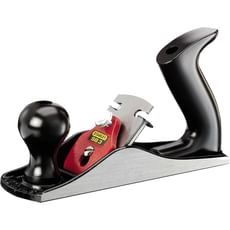
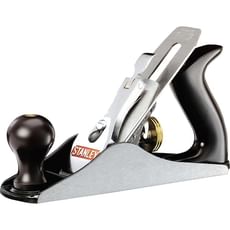
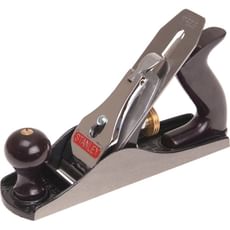
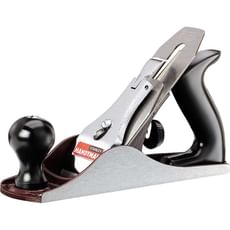
Stanley Smoothing Planes
 Loading...
End of content
Error - No more pages to load
Stanley Smoothing Planes at Tooled-Up.com
Stanley has been a trusted name in woodworking tools for over 175 years, and their smoothing planes exemplify the brand's commitment to precision engineering and lasting quality. As one of the most recognised names in hand tools worldwide, Stanley smoothing planes continue to be the benchmark against which all others are measured. Whether you're a professional joiner working on high-end cabinetry or a dedicated DIY enthusiast restoring period furniture, Stanley's range delivers the performance and reliability that generations of craftspeople have depended upon.
The Stanley smoothing plane collection represents the culmination of decades of refinement and innovation in hand plane design. From the iconic No. 4 smoothing plane to specialist models designed for fine finishing work, each tool is engineered to deliver glass-smooth surfaces on even the most challenging grain patterns. Tooled-Up.com stocks Stanley's comprehensive range of smoothing planes, ensuring that both professional tradespeople and hobbyist woodworkers can access these legendary tools with the convenience of fast UK delivery and competitive pricing.
Stanley smoothing planes are designed to bridge the gap between stock preparation and final finishing, typically measuring between 9 and 10 inches in length. This optimal size provides excellent control and manoeuvrability whilst maintaining sufficient mass to power through difficult grain without chatter or tear-out. The precision-ground bases and carefully engineered blade adjustment mechanisms ensure consistent, predictable performance that experienced craftspeople demand.
Why Choose Stanley Smoothing Planes?
Stanley's reputation in the smoothing plane category is built on decades of proven performance across professional workshops and construction sites throughout the UK. The brand's commitment to manufacturing standards means that even entry-level Stanley smoothing planes offer features and build quality that exceed many competitors' premium offerings. The precision-cast bodies resist warping and maintain their flatness over years of intensive use, whilst the high-carbon steel blades hold their edge significantly longer than lesser alternatives.
One of the defining characteristics of Stanley smoothing planes is their exceptional value proposition. Whilst delivering professional-grade performance, Stanley tools remain accessible to serious hobbyists and apprentices starting their careers. The availability of replacement parts and blades means these planes represent a long-term investment rather than disposable tools, with many Stanley smoothing planes remaining in active service for decades when properly maintained.
Stanley's innovations in blade adjustment mechanisms have set industry standards that other manufacturers aspire to match. The lateral adjustment lever and depth adjustment wheel provide precise, repeatable settings that allow woodworkers to dial in shavings measured in thousandths of an inch. This level of control is essential when working with figured woods or achieving the perfectly smooth surface required before finishing.
Who Uses Stanley Smoothing Planes?
- Professional Joiners and Cabinetmakers – relying on Stanley smoothing planes for fine finishing work on bespoke furniture and architectural joinery
- Bench Carpenters – using these planes for fitting doors, windows and creating perfectly smooth surfaces on internal woodwork
- Restoration Specialists – depending on Stanley tools to match the quality of original craftsmanship in period properties
- Shopfitters and Shopfitting Contractors – requiring reliable smoothing planes for on-site finishing of display units and retail installations
- Musical Instrument Makers – utilising the precision of Stanley smoothing planes for fine work on guitars, violins and other wooden instruments
- Boat Builders – employing these planes for smoothing curved surfaces and achieving perfect fits in marine joinery
- Woodworking Educators and Students – teaching and learning fundamental hand tool skills with dependable Stanley equipment
- Dedicated DIY Enthusiasts – investing in quality tools for home workshop projects and furniture making
Key Features of Stanley Smoothing Planes
Stanley smoothing planes incorporate several distinctive features that contribute to their legendary performance. The precision-ground cast iron bodies provide the mass necessary to maintain momentum through difficult grain whilst the carefully machined sole ensures perfect flatness across the cutting area. This flat sole is critical for achieving consistent shaving thickness and preventing the plane from following undulations in the workpiece surface.
The cutting iron assemblies in Stanley smoothing planes feature high-carbon steel blades that are heat-treated to achieve the optimal balance between edge retention and ease of sharpening. The cap iron (or chipbreaker) is carefully designed to curve away from the cutting edge at precisely the right angle to curl shavings upward and prevent tear-out in figured or interlocked grain. This two-piece blade assembly can be adjusted to suit different wood species and grain conditions.
Stanley's signature depth adjustment mechanism allows for incredibly fine control over cutting depth, with each rotation of the adjustment wheel moving the blade by mere thousandths of an inch. The lateral adjustment lever enables quick correction of blade alignment to ensure the cutting edge remains parallel to the sole. These adjustment features mean that users can quickly set up the plane for tasks ranging from heavy stock removal to producing shavings so thin they're translucent.
The ergonomically designed handles on Stanley smoothing planes reflect over a century of refinement based on user feedback. The front knob provides secure grip and precise directional control, whilst the rear tote is shaped to fit comfortably in the hand during extended planing sessions. This attention to ergonomic design reduces fatigue and improves accuracy during prolonged use.
Popular Stanley Smoothing Planes
The Stanley No. 4 Smoothing Plane remains the most popular and versatile model in the range, with its 9-inch length and 2-inch blade width making it suitable for the vast majority of smoothing tasks. This model has been in continuous production for over a hundred years and is often the first bench plane that serious woodworkers acquire. Its size strikes the perfect balance between control and capability, making it equally at home smoothing tabletops or fine-tuning edge joints.
The Stanley No. 3 Smoothing Plane offers a slightly shorter 8-inch body that provides enhanced manoeuvrability for working on smaller workpieces or in confined areas. This model is particularly favoured by luthiers and box makers who require the smoothing capabilities of a full-sized plane but with improved control in tight spaces.
For those seeking the ultimate in smoothing performance, the Stanley No. 4-1/2 Smoothing Plane features a wider 2-3/8 inch blade and additional mass that helps power through highly figured hardwoods. The increased width allows for faster coverage of broad surfaces whilst the extra weight reduces the effort required from the user. Browse the Stanley selection at Tooled-Up to find the model that best suits your specific woodworking requirements.
Safety and Compliance
Whilst smoothing planes are manually powered tools that don't require electrical safety considerations, proper handling and maintenance remain essential for safe operation. The blades in Stanley smoothing planes should always be kept sharp, as dull blades require excessive force that can lead to loss of control and injury. When not in use, planes should be stored on their sides rather than resting on the sole to protect both the blade edge and work surfaces.
Eye protection is recommended when planing woods that may produce sharp splinters or chips, particularly when working with resinous softwoods or brittle tropical hardwoods. Dust extraction or appropriate respiratory protection should be employed when planing species known to cause respiratory sensitisation, in accordance with COSHH regulations applicable to UK woodworking environments.
Stanley recommends regular inspection of plane components, particularly checking that the blade is securely fastened and that adjustment mechanisms operate smoothly. The cap iron screw should be tightened adequately to prevent blade chatter, but not so tight as to make lateral adjustment difficult. When sharpening blades, appropriate safety guards should be used on grinding wheels, and proper technique employed to prevent overheating the steel and losing its temper.
Frequently Asked Questions
What's the difference between a Stanley No. 4 and No. 4-1/2 smoothing plane?
The Stanley No. 4-1/2 features a wider blade (2-3/8 inches versus 2 inches) and a heavier casting than the No. 4, making it better suited to smoothing highly figured hardwoods and wider boards. The No. 4 is more versatile for general-purpose work and offers better control in confined spaces, whilst the No. 4-1/2 excels at final smoothing of large flat surfaces where its additional mass helps maintain momentum through difficult grain.
How often should I sharpen my Stanley smoothing plane blade?
Sharpening frequency depends on the wood species being worked and the amount of use, but most professional woodworkers hone their plane blades every 20-30 minutes of active use when working hardwoods. You'll know sharpening is needed when the plane requires increased pressure to cut, produces dusty shavings instead of clean curls, or leaves a fuzzy rather than glass-smooth surface. Regular honing on a fine stone maintains the edge with minimal material removal.
Can Stanley smoothing planes be used on both hardwoods and softwoods?
Yes, Stanley smoothing planes are designed to work effectively across the full spectrum of wood species, from soft pine to dense tropical hardwoods. The key is adjusting the blade depth and cap iron position appropriately for the material. Softwoods generally require a slightly deeper cut and the cap iron positioned further back, whilst hardwoods benefit from very fine shavings with the cap iron set close to the cutting edge to prevent tear-out.
Are replacement parts readily available for Stanley smoothing planes?
Stanley smoothing planes benefit from excellent parts availability, with replacement blades, cap irons, adjustment mechanisms and other components readily sourced through specialist tool retailers. The Tooled-Up range includes compatible replacement parts for Stanley planes, ensuring these tools can be maintained in working order for decades. This serviceability is one of the key advantages of choosing Stanley over lesser-known brands.
Do I need a smoothing plane if I already own a jack plane?
Whilst a jack plane can perform some smoothing tasks, a dedicated smoothing plane like those in Stanley's range offers several advantages for final surface preparation. The shorter sole allows the smoothing plane to remove minor undulations left by longer planes, whilst the optimised blade angle and finer adjustment capabilities enable the whisper-thin shavings necessary for achieving a glass-smooth, ready-to-finish surface. Professional joiners typically use jack planes for initial dimensioning and smoothing planes for final finishing.