

Stanley Vices

 Loading...
End of content
Error - No more pages to load
Stanley Vices at Tooled-Up.com
Stanley has been a trusted name in workshop equipment for over a century, and their range of vices continues this tradition of reliability and robust construction. When professionals and serious DIY enthusiasts need dependable workholding solutions, Stanley vices deliver the strength and precision required for demanding applications. Built to withstand the rigours of daily workshop use, these tools combine traditional engineering principles with modern manufacturing standards to provide secure clamping across a wide variety of tasks.
The Stanley vice collection encompasses both bench-mounted and portable workholding solutions, each designed to meet specific workshop requirements. From metalworking and woodworking to general maintenance tasks, Stanley engineers their vices with hardened jaws, durable castings, and smooth-operating mechanisms that maintain their performance year after year. Whether you're securing components for drilling, filing, sawing, or assembly work, Stanley vices provide the solid foundation that quality craftsmanship demands.
Available from Tooled-Up.com, the Stanley vice range represents excellent value without compromising on the build quality and longevity that professional tradespeople expect. Each vice undergoes rigorous quality control to ensure it meets Stanley's exacting standards, giving users confidence that their workholding equipment will perform reliably across countless projects.
Why Choose Stanley Vices?
Stanley's reputation in the hand tool and workshop equipment market is built on decades of proven performance in professional environments. Their vices reflect this heritage, incorporating design features that address real-world workshop challenges. The brand's commitment to durability means that Stanley vices are engineered with robust cast iron bodies, precision-machined screw mechanisms, and hardened steel jaws that resist wear even under heavy use.
One of the key advantages of choosing Stanley is the brand's understanding of what working professionals need. Their vices feature practical design elements such as integrated anvil surfaces for light metalworking, pipe jaw grooves for securing round stock, and swivel bases on selected models for improved positioning flexibility. The attention to detail extends to the quality of the castings and the smooth operation of the screw threads, which maintain their precision even after extended use in dusty or demanding workshop environments.
Stanley's global manufacturing scale also translates into competitive pricing, making professional-grade vices accessible to a broader range of users. This combination of proven reliability, practical features, and value for money has made Stanley a go-to choice for workshops across the UK, from small home garages to large industrial facilities.
Who Uses Stanley Vices?
Stanley vices serve a diverse range of users across multiple trades and applications:
- General Engineers - For precision metalworking, drilling, and fabrication tasks
- Motor Vehicle Technicians - Securing components during repair and maintenance work
- Woodworkers and Carpenters - Holding timber and joinery components safely during cutting and shaping
- Maintenance Fitters - For on-site and workshop repair applications
- Plumbers and Pipefitters - Utilising pipe jaw features for secure grip on cylindrical materials
- Educational Workshops - Schools, colleges, and training centres requiring reliable, safe equipment
- DIY Enthusiasts - Home workshop users undertaking projects requiring secure workholding
- Model Makers and Hobbyists - Precision work on smaller components and detailed projects
Key Features of Stanley Vices
Stanley vices incorporate several distinctive features that enhance their functionality and longevity. The cast iron construction provides exceptional rigidity and vibration damping, essential for accurate work and tool longevity. Many models feature a powder-coated finish that offers superior corrosion resistance compared to traditional paint, maintaining the vice's appearance and protecting against workshop moisture and chemicals.
The jaw design on Stanley vices typically includes serrated faces for maximum grip on workpieces, with replaceable jaw plates on many models to extend the vice's working life. Integrated anvil surfaces on selected models provide a convenient work surface for light hammering and forming operations, eliminating the need for separate anvil equipment in space-constrained workshops.
Stanley engineers their screw mechanisms with precision-cut threads that deliver smooth, consistent operation and minimal backlash. Large handles provide excellent leverage for secure clamping without excessive effort, whilst the robust construction of the screw assembly ensures it maintains its accuracy even under substantial clamping loads. Swivel base models incorporate a positive locking mechanism that securely holds the vice at any angle, providing positioning flexibility for complex workpieces.
Popular Stanley Vices
The Stanley vice range encompasses several popular configurations to suit different workshop requirements. The Tooled-Up Stanley collection typically includes bench vices in various jaw widths, from compact 75mm models suitable for smaller workshops or occasional use, through to substantial 150mm and larger vices for heavy-duty professional applications.
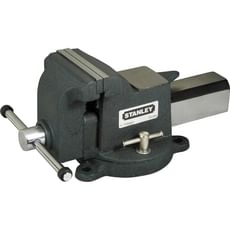
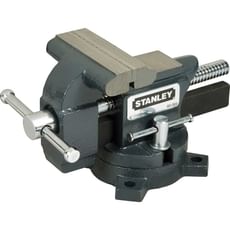
Fixed base models provide maximum rigidity and are ideal for permanent bench installations where the vice position rarely needs adjustment. Swivel base variants offer enhanced versatility, allowing the vice to rotate through 360 degrees and lock at any angle, particularly useful for accessing awkward workpiece orientations without constantly repositioning materials.
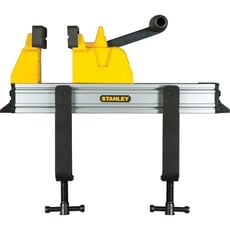
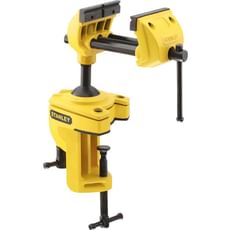
Stanley also manufactures portable vices and clamp-on models that provide workholding capability without permanent bench mounting, making them popular with mobile tradespeople and those with limited workshop space. These lighter-duty models maintain Stanley's build quality standards whilst offering the flexibility of temporary installation.
Safety and Compliance
Whilst vices themselves are mechanical devices without electrical components, their safe use remains paramount in any workshop environment. Stanley vices should be securely mounted to a sturdy workbench using appropriate fixings, with the bench itself being stable and level. The HSE recommends that bench-mounted vices be positioned at a comfortable working height to reduce strain and improve control during use.
Users should regularly inspect their vice for signs of wear, particularly checking the screw mechanism for smooth operation and examining jaw faces for excessive wear or damage. Any damaged components should be replaced promptly to maintain safe operation. When clamping workpieces, ensure materials are positioned correctly in the jaws and adequately supported, particularly when working with long or heavy items that could tip or rotate unexpectedly.
Always ensure the vice is tightened sufficiently to secure the workpiece without over-tightening, which could damage either the vice mechanism or the material being held. When using the integrated anvil surface on equipped models, ensure the vice is rated for striking operations and that workpieces are securely held before applying hammer blows.
Frequently Asked Questions
What jaw width Stanley vice do I need for my workshop?
Jaw width selection depends on your typical workpiece sizes and available bench space. For general home workshop use, a 100mm to 125mm jaw width provides excellent versatility. Professional workshops handling larger components typically opt for 150mm or wider vices. Consider the maximum width of materials you'll regularly clamp, and choose a vice with jaws approximately 25-50mm wider than this dimension.
Can Stanley vices be used for both metalwork and woodwork?
Yes, Stanley bench vices are suitable for both applications. However, when working with softwoods or finished surfaces, consider using protective jaw covers to prevent the serrated jaw faces from marking the workpiece. Some users keep dedicated wooden jaw inserts for woodworking tasks, which can be easily made and fitted over the standard metal jaws.
How do I maintain my Stanley vice for long-term performance?
Regular maintenance involves keeping the screw mechanism clean and lightly lubricated with machine oil or light grease. Wipe down the vice after use to remove metal filings and dust, paying particular attention to the screw threads. Periodically check mounting bolts for tightness and inspect jaw faces for excessive wear. With proper care, a Stanley vice will provide decades of reliable service.
Are replacement parts available for Stanley vices?
Stanley manufactures replacement jaw plates and other wearing components for many of their vice models. Availability varies by specific model, but common parts such as jaw plates and handles can typically be sourced through specialist suppliers. The robust construction of Stanley vices means that with appropriate maintenance and occasional part replacement, they can provide virtually lifetime service.
What's the difference between fixed base and swivel base Stanley vices?
Fixed base vices mount directly to the bench and remain in a stationary position, offering maximum rigidity for heavy-duty work. Swivel base models incorporate a rotating mechanism that allows the vice body to turn horizontally and lock at any angle, providing greater flexibility when accessing different faces of a workpiece. Swivel bases are particularly useful in workshops where space constraints make workpiece repositioning difficult, though they typically carry a slight premium over fixed base equivalents.