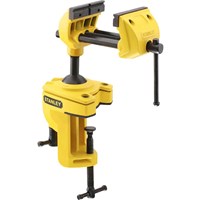
Stanley Wood Working Vices
Loading...
End of content
Error - No more pages to load

Stanley Wood Working Vices at Tooled-Up.com
Stanley has been a trusted name in workshop equipment for over 175 years, and their wood working vices represent the same commitment to quality and durability that has made the brand a staple in workshops across the UK. From professional joiners' workshops to home DIY spaces, Stanley wood working vices deliver the secure clamping force and reliability that woodworkers demand for precision work. These vices are engineered to withstand the rigours of daily use whilst maintaining their accuracy and smooth operation over years of service.
The Stanley range available from Tooled-Up.com encompasses traditional bench vices designed specifically for woodworking applications, featuring large wooden jaw faces that protect delicate workpieces from damage whilst providing superior grip. Stanley's wood working vices are constructed from robust materials with precision-machined components that ensure parallel jaw movement and consistent clamping pressure across the entire jaw surface. This attention to detail makes them ideal for holding everything from delicate carving projects to substantial timber components during sawing, planing, chiselling, and assembly operations.
Whether you're a professional cabinet maker requiring a heavy-duty vice for daily production work or a weekend woodworker seeking reliable equipment for hobby projects, Stanley wood working vices deliver the performance and longevity that justify their investment. The brand's reputation for creating tools that stand the test of time is particularly evident in their vice range, with many Stanley vices remaining in active service for decades.
Why Choose Stanley Wood Working Vices?
Stanley's heritage in hand tool manufacturing translates directly into their wood working vice designs, with decades of refinement resulting in products that address real workshop challenges. The brand understands that a vice must function as a precision instrument whilst enduring considerable mechanical stress, and this balance is achieved through careful material selection and robust engineering. Stanley vices feature hardened steel components in critical areas to resist wear, whilst their screw mechanisms are designed for smooth operation even under heavy loads.
Quality control is paramount in Stanley's manufacturing process, ensuring that each vice meets exacting standards for parallel jaw alignment and consistent clamping force. This precision is essential for accurate woodworking, where even slight misalignment can compromise joint quality or finishing work. Stanley's reputation within the trade community means that their vices are specified by colleges, training centres, and professional workshops where reliability cannot be compromised. The availability of replacement parts for many Stanley vice models further demonstrates the brand's commitment to longevity and sustainability, allowing users to maintain their equipment rather than replace it.
Who Uses Stanley Wood Working Vices?
Stanley wood working vices serve a diverse range of users across professional and recreational woodworking:
- Cabinet makers and joiners who require reliable clamping for precision joinery and assembly work
- Carpenters undertaking bench work and component preparation before site installation
- Furniture makers holding workpieces securely during detailed shaping and finishing operations
- Wood turners using bench vices for preparation work and tool maintenance
- Educational institutions equipping workshops for carpentry and joinery training programmes
- Boat builders working with timber components requiring secure holding during complex joinery
- Luthiers and instrument makers who need gentle yet firm clamping for delicate work
- DIY enthusiasts establishing well-equipped home workshops for woodworking projects
- Restoration specialists working on antique furniture and historic timber structures
Key Features of Stanley Wood Working Vices
Stanley wood working vices incorporate several distinctive features that enhance their functionality and durability. The large wooden jaw faces, typically made from hardwood, distribute clamping pressure evenly whilst protecting finished surfaces from marking or bruising. These wooden jaws can be easily replaced when worn, extending the vice's service life considerably. The main casting is manufactured from high-grade materials providing the structural rigidity essential for accurate work holding without flexing under load.
The screw mechanism represents a critical component in any wood working vice, and Stanley designs feature robust threading with generous proportions to resist wear and maintain smooth operation. Many Stanley vices incorporate a quick-release mechanism allowing rapid jaw adjustment without tedious winding, significantly improving workflow efficiency. The guide bars ensure that jaws remain parallel throughout their travel, preventing workpiece distortion and maintaining consistent clamping pressure across the entire contact area.
Mounting arrangements on Stanley wood working vices are designed for straightforward installation to standard bench thicknesses, with clear instructions and appropriate fixings provided. The jaw opening capacity varies across the range, allowing users to select a vice appropriate to their typical workpiece dimensions. Surface finishes incorporate protective treatments to resist workshop moisture and prevent corrosion, ensuring long-term appearance and functionality.
Popular Stanley Wood Working Vices
Stanley's wood working vice range encompasses several configurations to suit different workshop requirements and bench arrangements. Traditional front-mounted bench vices represent the most common type, fitted to the front edge of the workbench and providing versatile clamping for a wide variety of operations. These typically feature jaw widths ranging from 175mm to 230mm, with opening capacities suited to most general woodworking tasks.
Quick-release models have gained popularity amongst professional users who value the time-saving benefits during production work, allowing instant jaw repositioning without continuous screw rotation. Heavy-duty variants with increased jaw width and deeper throat dimensions accommodate larger workpieces and provide enhanced stability for demanding operations. Some Stanley wood working vices incorporate additional features such as integral bench dogs or auxiliary clamping points that expand their versatility for specific holding requirements.
Safety and Compliance
Proper installation and use of wood working vices is essential for both safety and performance. Tooled-Up stocks Stanley vices that should be securely mounted to a sturdy workbench capable of withstanding the forces generated during clamping and work operations. The HSE recommends ensuring that benches and mounted equipment are regularly inspected for signs of loosening or deterioration, particularly in professional environments where equipment receives intensive use.
Users should avoid over-tightening vices beyond what is necessary to secure the workpiece, as excessive force can damage both the vice mechanism and the work itself. Wooden jaw faces should be inspected regularly and replaced when significantly worn or damaged to maintain proper grip and protect workpieces. When working with hand tools in conjunction with a vice, proper tool handling techniques should be observed to prevent injury should tools slip from the workpiece.
Stanley wood working vices should be kept clean and free from accumulated sawdust and debris, with moving parts occasionally lubricated according to the manufacturer's guidance. Regular maintenance not only ensures smooth operation but also extends service life and maintains the precision essential for quality woodworking. In educational settings, appropriate supervision and instruction should be provided to ensure students understand correct vice operation and workpiece securing techniques.
Frequently Asked Questions
What jaw width should I choose for a Stanley wood working vice?
For general woodworking, a jaw width of 175-230mm suits most applications, providing sufficient capacity for typical projects whilst remaining manageable in smaller workshops. Professional cabinet makers often prefer wider jaws (230mm+) for increased clamping capacity when working with large panels or multiple components simultaneously. Consider your most common workpiece dimensions and workshop space when selecting jaw width.
How do I maintain my Stanley wood working vice?
Regular maintenance involves cleaning sawdust and debris from the screw mechanism and guide bars, applying a light machine oil to moving parts every few months, and inspecting wooden jaw faces for wear. Tighten mounting bolts periodically to ensure the vice remains securely attached to your bench. Replace wooden jaws when they become excessively worn or damaged to maintain proper grip and workpiece protection.
Can Stanley wood working vices be mounted on any workbench?
Stanley vices require a sturdy workbench with sufficient thickness and structural integrity to withstand clamping forces. Most models are designed for benches between 40-75mm thick, though specific requirements vary by model. The bench should be constructed from solid timber or quality manufactured board, securely supported, and positioned at a comfortable working height for the user.
What's the difference between quick-release and standard Stanley vices?
Quick-release mechanisms allow the front jaw to slide freely along the guide bars when a trigger is activated, enabling rapid repositioning without rotating the handle. This significantly speeds up workflow when frequently changing workpieces. Standard vices require continuous handle rotation to adjust jaw position, which is slower but typically offers a more robust mechanism with fewer moving parts requiring maintenance.
Are replacement parts available for Stanley wood working vices?
Stanley supports their vice range with availability of key replacement components including wooden jaw faces, handle assemblies, and in some cases complete screw mechanisms. This commitment to parts availability extends the service life of Stanley vices considerably, allowing users to maintain their equipment economically rather than replacing entire units. Contact the team at Tooled-Up.com for information about specific replacement parts for your Stanley vice model.