

Wiha Voltage Testers
 Loading...
End of content
Error - No more pages to load
Wiha Voltage Testers at Tooled-Up.com
Wiha has earned its reputation as one of the most trusted names in electrical testing equipment, combining German precision engineering with practical innovation that meets the demanding needs of professional electricians and engineers. The Wiha voltage tester range represents decades of expertise in creating reliable, safe, and intuitive testing instruments that professionals depend on daily. From simple two-pole voltage testers to sophisticated non-contact detection devices, Wiha's commitment to quality and safety standards makes their voltage testers an essential addition to any electrical professional's toolkit.
Tooled-Up.com stocks a comprehensive selection of Wiha voltage testers designed to meet UK electrical standards and the specific requirements of tradespeople working with 240V installations. Each Wiha voltage tester undergoes rigorous quality control and testing to ensure it delivers accurate readings in demanding site conditions. Whether you're working on domestic installations, commercial projects, or industrial maintenance, Wiha provides voltage testing solutions that combine durability with precision measurement capabilities that electricians can rely upon.
The engineering excellence that defines Wiha's hand tools extends seamlessly into their electrical testing equipment. Every voltage tester in the Wiha range features ergonomic design principles that reduce hand fatigue during extended use, whilst maintaining the robust construction necessary for daily professional use. With clear indication systems, reliable probe construction, and thoughtful safety features, Wiha voltage testers deliver the confidence that comes from using genuinely professional-grade equipment on every job.
Why Choose Wiha Voltage Testers?
Wiha's reputation for manufacturing excellence translates directly into voltage testers that deliver consistent, accurate results in real-world conditions. The brand's commitment to quality begins with material selection, using only premium components that can withstand the rigours of professional electrical work. Wiha voltage testers feature robust housing that protects internal components from drops and impacts, whilst maintaining the sensitivity required for accurate voltage detection. Their German engineering heritage ensures that every tester meets exacting standards for reliability and longevity.
Safety sits at the heart of Wiha's voltage tester design philosophy. Every model incorporates multiple safety features including insulated probes, secure grip zones, and clear visual and audible indicators that leave no room for ambiguity when testing electrical circuits. Wiha voltage testers comply with stringent international safety standards, providing peace of mind for professionals who work with potentially hazardous electrical systems daily. The brand's attention to ergonomic design also reduces user fatigue, which directly contributes to safer working practices on site.
Innovation distinguishes Wiha from competitors in the voltage testing market. The company continuously refines its products based on feedback from working electricians, incorporating features that solve real-world challenges. From improved probe tip designs that ensure reliable contact to enhanced indication systems that work in various lighting conditions, Wiha voltage testers reflect a deep understanding of what professionals need from their testing equipment. This combination of traditional quality and modern innovation makes Wiha a preferred choice for discerning tradespeople.
Who Uses Wiha Voltage Testers?
Wiha voltage testers serve a diverse range of electrical professionals and trades:
- Qualified Electricians: Domestic, commercial, and industrial sparks who require reliable voltage detection for safe working practices
- Electrical Contractors: Professionals managing installation and maintenance projects who demand dependable testing equipment
- Maintenance Engineers: Technicians responsible for keeping electrical systems operational in commercial and industrial settings
- Building Services Engineers: Specialists working on complex electrical installations in construction projects
- Panel Builders: Professionals assembling and testing electrical control panels and distribution boards
- Facilities Managers: Those responsible for maintaining safe electrical systems in commercial properties
- Renewable Energy Installers: Technicians working with solar PV and other renewable electrical systems
- Automotive Electricians: Specialists testing electrical systems in vehicles and machinery
- Apprentice Electricians: Trainees learning proper voltage testing techniques with professional-grade equipment
Key Features of Wiha Voltage Testers
Wiha voltage testers incorporate numerous features that set them apart from standard testing equipment. The robust probe construction uses hardened steel tips that maintain their shape even after repeated use, ensuring reliable electrical contact every time. Insulated probe bodies feature clearly marked safety zones, guiding users to grip the tester correctly and safely. The housing materials resist common workshop chemicals and solvents, maintaining integrity even in harsh working environments.
Clear indication systems represent another hallmark of Wiha voltage testers. Models feature bright LED displays or unmistakable acoustic signals that confirm voltage presence, designed to be easily perceived in noisy environments or difficult lighting conditions. Many Wiha voltage testers also incorporate continuity testing functions, eliminating the need to carry multiple testing devices. The thoughtful integration of multiple functions in compact, pocket-friendly formats demonstrates Wiha's understanding of what working electricians value.
Ergonomic design considerations ensure Wiha voltage testers remain comfortable during extended use. Carefully contoured grips reduce hand fatigue whilst providing secure hold even with wet or gloved hands. The balanced weight distribution prevents wrist strain during repetitive testing operations. Pocket clips and lanyard attachment points add practical convenience for site work. These seemingly small details reflect Wiha's commitment to creating tools that genuinely enhance the working experience for professional tradespeople.
Popular Wiha Voltage Testers
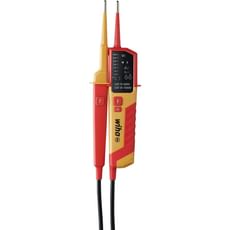
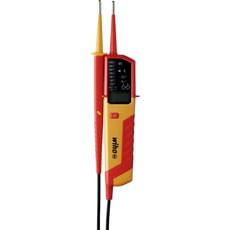
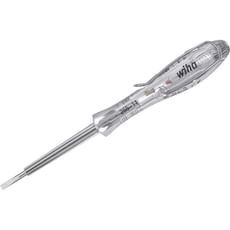
The Wiha voltage tester range available from Tooled-Up includes several proven designs favoured by UK electricians. Two-pole voltage testers remain the most popular choice for straightforward 240V detection, offering simple, reliable operation with clear visual indication. These compact testers slip easily into pockets and provide instant confirmation of live circuits before commencing work. Their robust construction ensures they survive the inevitable drops and knocks that occur during daily professional use.
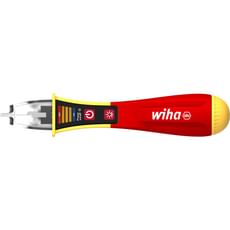
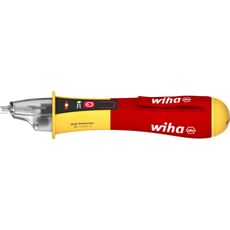
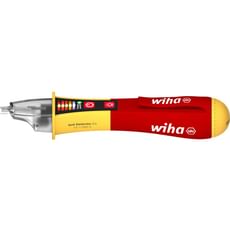
Non-contact voltage testers represent another significant category within the Wiha range. These innovative devices detect voltage presence without requiring direct contact with conductors, allowing preliminary checks before exposing live parts. Particularly valuable for initial safety checks, non-contact testers help electricians identify energised circuits quickly and safely. The sensitivity adjustment features found on Wiha models allow users to fine-tune detection to suit specific applications, from low-voltage control circuits to 240V mains installations.
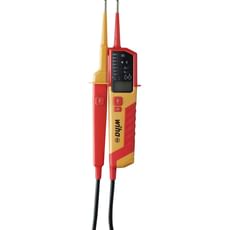
Multi-function voltage testers combine several testing capabilities in single instruments, delivering exceptional value for professionals. These versatile devices typically incorporate voltage detection, continuity testing, and phase rotation checking in compact formats. For electricians managing varied work across different electrical systems, multi-function Wiha voltage testers eliminate the need to carry multiple separate instruments, streamlining toolkit organisation whilst ensuring the right testing capability is always available.
Safety and Compliance
Wiha voltage testers meet or exceed relevant British and European safety standards for electrical testing equipment. Compliance with BS EN 61243-3 and IEC 61010 standards ensures these testers provide appropriate protection for users working with hazardous voltages. The CAT (Category) ratings clearly displayed on Wiha voltage testers indicate their suitability for specific electrical environments, from CAT II for domestic installations through to higher categories for industrial applications.
Proper usage of voltage testers forms an essential component of electrical safety protocols required by the HSE. Wiha voltage testers should always be proven before and after use by testing against a known live source, following the industry-standard "prove-test-prove" methodology. Regular inspection of probe condition, housing integrity, and indication function ensures continued safe operation. Users should never rely solely on voltage testers to confirm dead circuits; comprehensive safe isolation procedures including disconnection, locking off, and testing remain essential.
The insulation and protection ratings on Wiha voltage testers indicate their suitability for working with UK 240V electrical systems. Users must select testers with appropriate voltage ratings for their specific applications, never exceeding the maximum voltage specification. Damaged voltage testers should be withdrawn from service immediately and replaced, as compromised insulation presents serious safety hazards. Regular calibration and verification, whilst not always required for simple presence/absence testers, demonstrates professional commitment to accuracy and safety.
Frequently Asked Questions
What voltage range do Wiha voltage testers cover?
Wiha voltage testers are designed to safely detect voltages commonly encountered in UK electrical installations, typically from 12V through to 690V AC. Most models are optimised for 240V mains detection, which represents the vast majority of domestic and commercial electrical work. Always check the specific voltage rating marked on your Wiha tester to ensure it's appropriate for your intended application. Never use a voltage tester on electrical systems exceeding its rated capacity.
How do I maintain my Wiha voltage tester?
Regular inspection forms the foundation of voltage tester maintenance. Before each use, check probe tips for damage or wear, examine insulation for cracks or degradation, and verify the indication system functions correctly by testing against a known live source. Keep the tester clean and dry, storing it in a protective case when not in use. Replace batteries in electronic models according to manufacturer recommendations. If a Wiha voltage tester shows any signs of damage or fails to indicate correctly, withdraw it from service immediately and replace it.
Are Wiha voltage testers suitable for professional electrical work?
Absolutely. Wiha voltage testers meet professional standards required for commercial electrical work in the UK. They comply with relevant British and European safety standards and provide the reliability that qualified electricians demand. Many professional electricians choose Wiha specifically because of the brand's reputation for quality and durability. The combination of robust construction, clear indication systems, and appropriate safety certifications makes Wiha voltage testers entirely suitable for professional trade use across domestic, commercial, and industrial electrical installations.
What's the difference between contact and non-contact voltage testers?
Contact voltage testers require direct connection to conductors to detect voltage, typically using two probes that complete a circuit through the tester when voltage is present. Non-contact testers detect the electromagnetic field surrounding energised conductors without requiring physical contact, making them ideal for preliminary safety checks. Contact testers generally provide more definitive confirmation of voltage presence and are essential for proper dead testing procedures. Non-contact models offer convenient initial screening but should not be relied upon as the sole means of confirming isolation before working on electrical circuits.
Do Wiha voltage testers need calibration?
Simple two-pole voltage presence testers like many in the Wiha range typically don't require formal calibration as they indicate presence or absence of voltage rather than measuring specific values. However, regular functional testing remains essential to confirm they're working correctly. The "prove-test-prove" methodology, where you test the device on a known live source before and after checking your target circuit, effectively verifies function each time you use it. For Wiha testers with measurement capabilities or digital displays, periodic verification against known voltage sources ensures continued accuracy, though formal calibration schedules may not be mandatory for basic voltage detection functions.