

Grinder Cup Brushes
Pay in 3 interest-free payments on purchases from £30-2000 with  . Learn more.
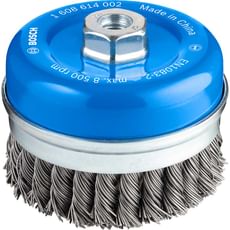
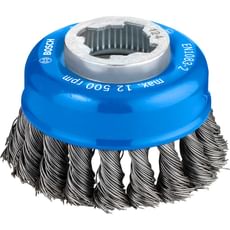
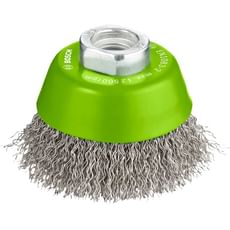
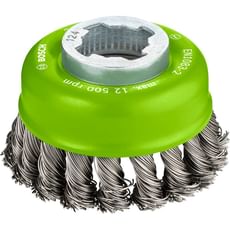
 Loading...
End of content
Error - No more pages to load
About Grinder Cup Brushes
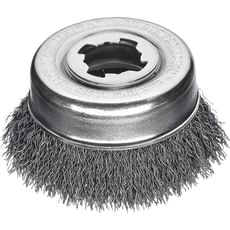
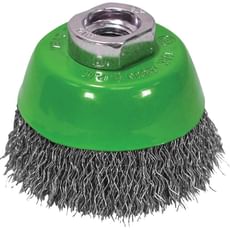
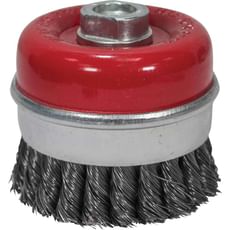
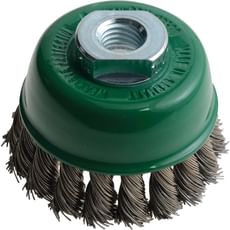
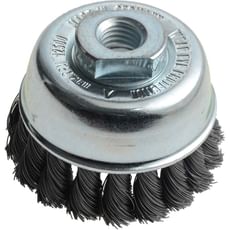
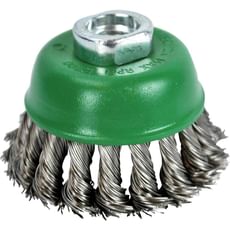
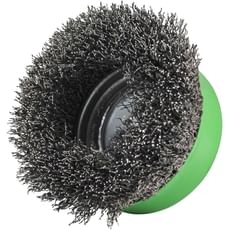
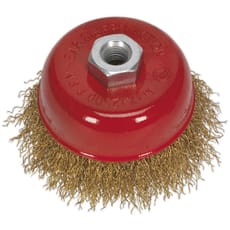
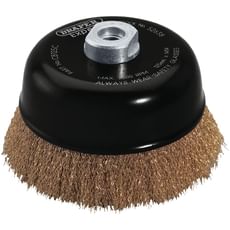
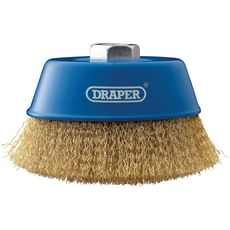
Grinder cup brushes are robust rotary wire brushes engineered to transform angle grinders into powerful surface preparation and cleaning tools. Featuring a female threaded connector—typically M14 as standard across UK angle grinders—these brushes mount securely to the grinder spindle, allowing tradespeople to tackle demanding metalwork tasks with speed and aggression that handheld brushes simply cannot match. Unlike drill-mounted wire brushes which serve lighter duties, grinder cup brushes deliver industrial-strength performance for removing rust, weld slag, paint, mill scale, and corrosion from metal surfaces.
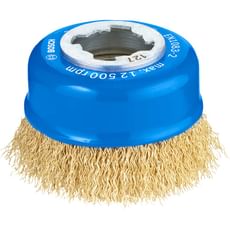
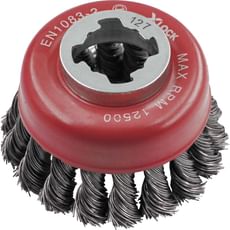
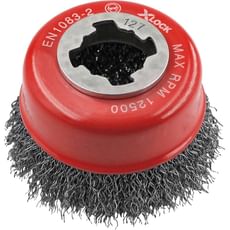
The selection at Tooled-Up.com encompasses over 40 different grinder cup brushes from trusted manufacturers including Bosch Professional, Lessmann, Faithfull, Draper, and Sealey. This comprehensive range spans various wire configurations and materials—from delicate crimped brass wire brushes ideal for aluminium and softer metals, through versatile crimped steel variants for general cleaning, to aggressive twisted knot steel brushes that power through heavy rust and scale. For stainless steel fabrication, dedicated inox wire brushes prevent the contamination that carbon steel wires would cause, maintaining the corrosion resistance properties that make stainless steel valuable.
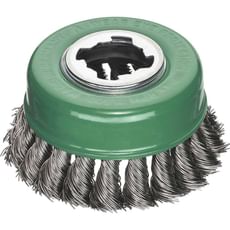
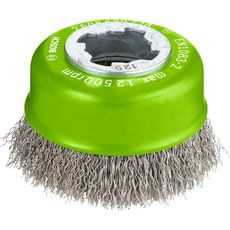
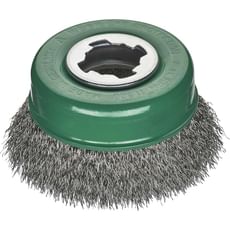
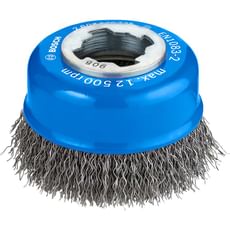
Modern developments such as Bosch's X-Lock quick-change system have revolutionised efficiency on site, enabling tool-free brush changes in seconds without spanners or locking pins. Available in diameters ranging from 65mm to 100mm, these brushes match perfectly with the 115mm and 125mm angle grinders commonly found in UK workshops, fabrication shops, and construction sites. Whether preparing structural steelwork for welding, stripping paint from automotive components, or renovating corroded metalwork, Tooled-Up stocks the right cup brush specification for every metalworking challenge.
Jargon Buster
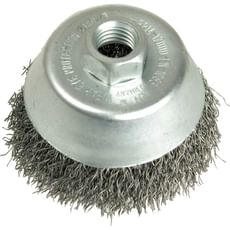
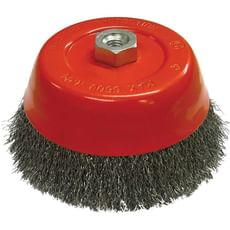
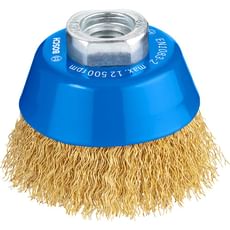
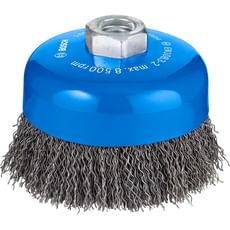
- Crimped Wire: Individual wires that have been mechanically waved or crimped to create flexibility and reduced aggression. Crimped wire cup brushes excel at lighter cleaning tasks, surface finishing, and working into recesses without excessive material removal or surface damage to the substrate.
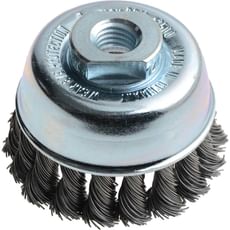
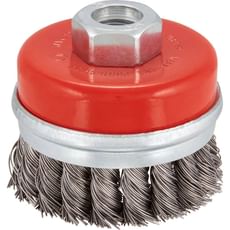
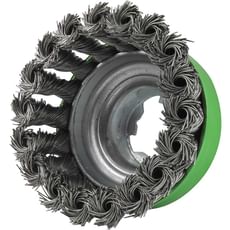
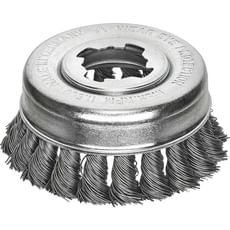
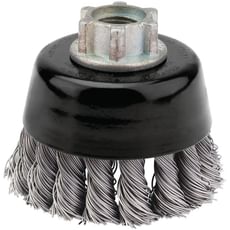
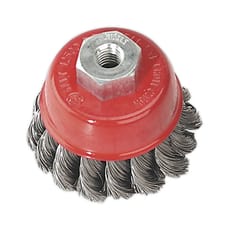
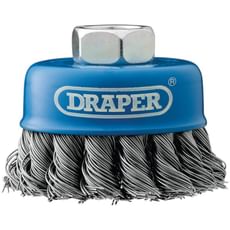
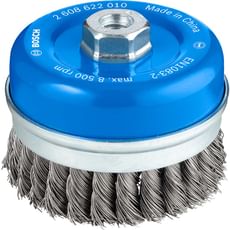
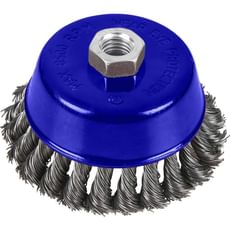
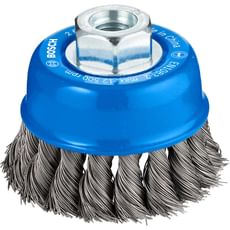
- Twisted Knot Wire: Heavy-gauge wires bunched together in tight knots that create maximum aggression and material removal rates. These brushes tackle heavy descaling, thick rust removal, and stubborn coatings quickly, though they will mark and scratch softer metals if used without care.
- Inox Wire: Stainless steel wire specifically manufactured for use on stainless steel and other non-ferrous metals. Using standard carbon steel brushes on stainless steel causes iron contamination that creates rust spots and defeats the material's corrosion resistance—inox brushes eliminate this cross-contamination risk entirely.
- Wire Gauge: The thickness of individual wire filaments measured in millimetres, typically ranging from 0.3mm through to 0.8mm. Thicker gauges deliver more aggressive cutting action and longer brush life but reduced flexibility, whilst finer gauges provide gentler cleaning ideal for delicate surfaces and detailed work.
- Maximum RPM: The maximum safe rotational speed for the brush stated in revolutions per minute. Exceeding this rating causes wire breakage and dangerous projectiles—always verify your grinder's no-load speed against the brush rating before mounting and operation.
- M14 Thread: The standard metric thread size (14mm diameter) used on angle grinder spindles throughout the UK and Europe, ensuring compatibility across different grinder brands including Makita, DeWalt, Milwaukee, and Bosch without requiring adaptors.
Who Uses Grinder Cup Brushes?
- Welders and Metal Fabricators: Removing mill scale, cleaning weld seams, preparing joints before welding, and removing spatter and oxidation after welding operations
- Steel Erectors and Structural Engineers: Cleaning and preparing structural steelwork, removing corrosion from girders and beams, preparing surfaces for protective coatings
- Automotive Mechanics and Body Shop Technicians: Paint stripping from panels and chassis components, rust removal, cleaning engine parts, preparing surfaces for repainting
- Maintenance Engineers and Plant Fitters: General metal cleaning, removing corrosion from machinery, refurbishing industrial equipment, cleaning conveyor components
- Shipyard Workers and Marine Engineers: Heavy-duty descaling of marine metalwork, rust removal from ship components, preparing surfaces in harsh saltwater environments
- Agricultural Engineers: Cleaning and restoring farm machinery, removing paint and corrosion from implements, maintaining equipment longevity
- Metal Restoration Specialists: Preparing architectural ironwork, gates, railings, and heritage metalwork for refinishing whilst preserving underlying material
- DIY Enthusiasts: Home restoration projects, garden furniture renovation, general metalwork cleaning, and rust removal for household projects
How to Choose the Right Grinder Cup Brushes
Wire Type and Material: Select crimped wire brushes for lighter cleaning duties, surface finishing, and applications requiring flexibility to work into recesses without aggressive material removal. Choose twisted knot brushes when tackling heavy rust, thick scale, weld slag, or rapid paint stripping where maximum aggression matters. For stainless steel fabrication, always specify inox (stainless steel) wire brushes to prevent iron contamination that causes rust spotting. Brass wire brushes suit softer metals including aluminium, copper, and brass, and excel at decarbonising automotive components without damaging the base material.
Wire Gauge Selection: Finer wire gauges around 0.3mm provide gentler cleaning action with excellent flexibility, suitable for delicate surfaces, detailed work, and softer metals. Medium gauges at 0.5mm offer versatile performance for general-purpose cleaning and preparation tasks across most applications. Thicker gauges at 0.8mm deliver maximum aggression and extended brush life for heavy industrial applications, though they prove less forgiving on softer materials and create more pronounced surface scratching.
Brush Diameter and Thread Compatibility: Match brush diameter to your grinder size—65mm to 75mm brushes work optimally with 115mm angle grinders, whilst 100mm brushes suit 125mm grinders better for proper clearance and balance. Verify the thread size matches your grinder's spindle; M14 threading is standard across most UK angle grinders from manufacturers like Makita, DeWalt, Milwaukee, and Bosch, though older or specialist models may differ.
Speed Rating Compliance: Always check the maximum RPM rating stamped on the brush hub matches or exceeds your grinder's no-load operating speed. Most standard angle grinders operate between 10,000 and 12,000 RPM, so ensure your chosen brush carries appropriate certification. Running brushes above their rated speed risks catastrophic wire breakage and serious injury from high-velocity projectiles.
Quick-Change Systems: For professionals who frequently swap between brushes, cutting discs, and grinding wheels throughout the working day, consider Bosch X-Lock compatible brushes that enable tool-free changes without spanners. This system dramatically reduces changeover time on busy sites and eliminates the frustration of seized-on accessories that waste valuable time.
Brand Quality Considerations: Premium manufacturers like Bosch Professional and Lessmann utilise higher-grade wire that resists breakage, maintains consistent performance throughout the brush life, and sheds fewer loose wires during operation compared with budget alternatives. For professional daily use where reliability and safety matter, the longevity and predictable performance justify the investment.
Popular Accessories
- Angle Grinders: Corded and cordless models in 115mm and 125mm sizes from Makita, DeWalt, Milwaukee, and Bosch suitable for cup brush mounting
- Grinding Discs: Depressed centre grinding discs for finishing after brush cleaning and material removal
- Flap Discs: Abrasive flap discs for smoothing and finishing surfaces after wire brush preparation work
- PPE Equipment: Full-face shields, safety glasses with side protection, heavy-duty gloves, and protective clothing from DeWalt and Portwest
- Dust Extraction Attachments: Grinder shrouds and extraction systems to minimise airborne metal particles and improve visibility
- Grinder Guards: Replacement and enhanced protective guards for improved operator safety during brushing operations
- Anti-Vibration Gloves: Specialist gloves that reduce fatigue and comply with Hand-Arm Vibration Syndrome (HAVS) prevention during extended grinding and brushing
- Cutting Discs: Thin cutting discs for separating metalwork before cleaning and preparation with cup brushes
Safety Information
Grinder cup brushes demand strict adherence to safety protocols due to the high-velocity wire projectiles they can generate during operation. Wire bristles detach during use and become dangerous projectiles travelling at extremely high speeds capable of causing serious injury. Always wear appropriate eye protection—the HSE recommends full-face shields rather than safety glasses alone, as loose wires can travel around standard glasses and cause severe eye injuries. Heavy-duty gloves and appropriate protective clothing covering all exposed skin are essential, as loose wires easily puncture unprotected skin.
Never exceed the maximum RPM rating stamped on the brush hub. Check this rating against your grinder's specification plate before mounting—running a brush above its rated speed can cause catastrophic failure with wires flying off at dangerous velocities. Always inspect brushes before mounting for any visible damage, deformation, bent wires, or loose sections, and discard any compromised brushes immediately rather than risking failure during operation.
Ensure your grinder's guard remains correctly positioned to deflect debris and sparks away from your body and face. Work in well-ventilated areas or employ appropriate dust extraction equipment, as wire brushing generates fine metal particles that present serious inhalation hazards when concentrated. When brushing painted surfaces, remain aware of potential lead paint or other hazardous coatings—follow COSHH regulations and use appropriate respiratory protection where risk assessments indicate requirement.
Allow new brushes to run at full operating speed for at least one minute whilst pointing towards the ground before beginning work. This procedure allows any loose, defective, or improperly secured wires to detach safely away from yourself and bystanders. Always maintain a firm two-handed grip on your grinder and position yourself to the side of the rotation direction rather than directly behind the brush plane. Ensure workpieces are securely clamped in a vice or fixed position—never hold small items by hand whilst brushing, as loss of control can result in serious injury.
Frequently Asked Questions
What's the difference between a cup brush and a wheel brush for grinders?
Cup brushes feature wires arranged perpendicular to the mounting arbor, creating a flat brushing surface that excels at cleaning large flat or slightly curved surfaces with excellent coverage. Wheel brushes have wires arranged radially around the arbor in a circular configuration, making them superior for edge cleaning, deburring corners, and accessing narrow spaces between components. For general surface preparation, rust removal, and weld cleaning across flat metalwork, cup brushes provide better efficiency and productivity.
Can I use a standard steel wire brush on stainless steel surfaces?
No, never use standard carbon steel wire brushes on stainless steel. The carbon steel particles embed into the stainless steel surface and cause rust spots and contamination that completely defeat the corrosion resistance properties stainless steel provides. This contamination proves extremely difficult to remove and permanently compromises the material. Always use inox (stainless steel) wire brushes specifically manufactured for stainless steel work to maintain the integrity, appearance, and corrosion resistance of the material.
How long should a grinder cup brush typically last?
Lifespan varies considerably depending on application intensity, wire type, material being cleaned, and usage technique. Crimped wire brushes typically wear faster than twisted knot varieties due to their finer, more flexible construction. For professional daily use, expect several hours of continuous operation from quality brands like Bosch Professional or Lessmann before noticeable performance degradation. Budget brushes may wear 50% faster under identical conditions. Replace brushes when wire length reduces to within 10mm of the mounting hub, when uneven wear patterns develop, or when excessive wire shedding occurs during operation.
What size cup brush do I need for my angle grinder?
Match brush diameter to your grinder's disc capacity—65mm to 75mm brushes suit 115mm (4.5 inch) angle grinders, whilst 100mm brushes work best with 125mm (5 inch) grinders for proper clearance and balanced operation. Also verify the thread size matches your grinder's spindle; M14 threading is standard on most UK angle grinders from major manufacturers. The brush diameter must remain smaller than your grinder's maximum disc capacity to ensure adequate guard clearance and safe operation. Consult your grinder's instruction manual if uncertain about specifications.
Why does my grinder cup brush vibrate excessively during use?
Excessive vibration typically indicates an improperly mounted brush, damaged or cross-threaded mounting, or worn grinder bearings requiring service. Ensure the brush tightens securely onto the spindle—loose mounting causes dangerous wobbling and potential detachment. Inspect the brush hub and your grinder's spindle threads for damage, deformation, or debris preventing proper seating. If the brush mounts correctly but still vibrates excessively, your grinder's spindle bearings may be worn and require professional service. Never continue using equipment exhibiting excessive vibration, as this indicates an unsafe condition that could lead to brush failure, loss of control, or serious injury.