

Grinding Discs
Pay in 3 interest-free payments on purchases from £30-2000 with  . Learn more.

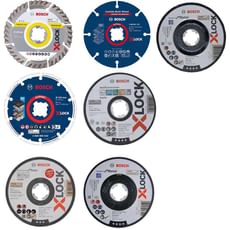
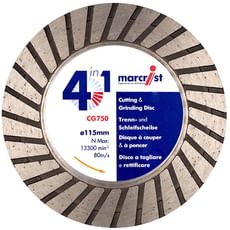
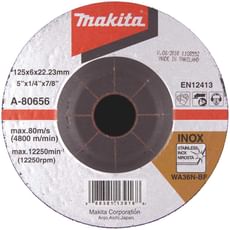
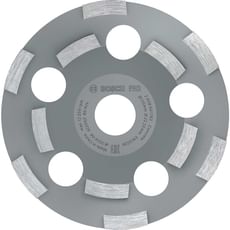
 Loading...
End of content
Error - No more pages to load
About Grinding Discs
Grinding discs are essential abrasive accessories designed specifically for use with angle grinders, enabling tradespeople and DIY enthusiasts to remove material, smooth surfaces, and finish metalwork and masonry with precision. Unlike cutting discs which slice through material, grinding discs feature a thicker construction that allows for controlled material removal across a broader surface area. Whether you're removing welding seams, preparing surfaces for painting, cleaning up fabrication work, or smoothing concrete, having the right grinding disc makes all the difference to the quality and efficiency of your work.
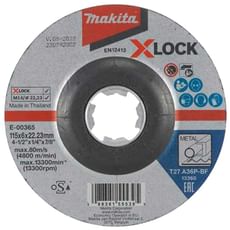
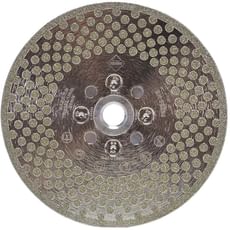
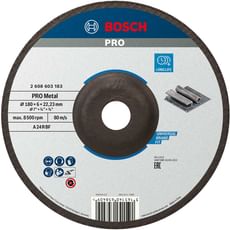
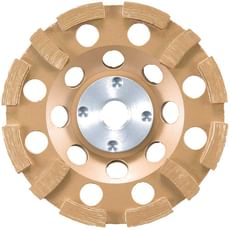
The selection at Tooled-Up.com includes depressed centre grinding discs, diamond grinding wheels, and specialised discs for various materials including metal, stone, and concrete. Available in the most common sizes including 115mm and 125mm grinding discs, the range features trusted brands such as Bosch Professional, Makita, Faithfull, and Draper. Modern innovations like Bosch's X-Lock system offer tool-free disc changes, significantly improving productivity on site, while expert-grade diamond grinding heads provide exceptional longevity when working with demanding materials like reinforced concrete and natural stone.
The quality and specification of your grinding disc directly impacts both the finish achieved and the safety of the operation. Professional-grade discs from manufacturers like Bosch and Makita are engineered to specific standards, with carefully controlled abrasive grain composition and bonding agents that determine grinding efficiency, disc life, and the quality of finish. Understanding which disc suits your specific application – whether it's aggressive stock removal with an A24 grit or finer finishing work with an A30T specification – ensures you achieve professional results whilst maximising the working life of your abrasives.
Jargon Buster
- Depressed Centre: A disc design where the mounting area is recessed below the grinding surface, allowing the disc to grind flat against surfaces and into corners. This is the most common profile for general grinding work.
- Grit Rating (e.g. A24, A30T): Indicates the size and type of abrasive particles. Lower numbers (A24) mean coarser grit for aggressive material removal, whilst higher numbers provide finer finishes. The letter prefix identifies the abrasive type – 'A' typically denotes aluminium oxide.
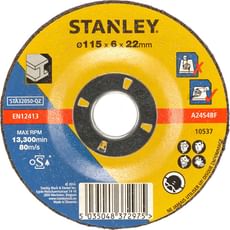
- Maximum RPM: The highest rotational speed at which a disc can be safely operated, clearly marked on every disc. Exceeding this speed can cause disc failure and serious injury. Always ensure your angle grinder's speed doesn't exceed the disc's maximum RPM rating.
- X-Lock System: A tool-free mounting system developed by Bosch that allows grinding and cutting discs to be changed without spanners, using a simple twist-and-click mechanism that significantly speeds up disc changes on site.
- Inox Specification: Discs specifically formulated for grinding stainless steel (inox), manufactured without iron, sulphur, or chlorine contamination that could cause corrosion on stainless steel surfaces.
- Semi-Flex / BF (Bonded Fibre): Discs with some flexibility built into the construction, ideal for contoured surfaces and applications requiring a degree of give, whilst still providing aggressive grinding action.
Who Uses Grinding Discs?
Grinding discs are indispensable tools across numerous trades and applications:
- Welders and Fabricators: For cleaning welds, removing spatter, bevelling edges, and preparing joints
- Steel Erectors and Metal Workers: Surface preparation, deburring, and shaping structural steelwork
- General Builders and Contractors: Grinding back concrete, removing mortar, and general site preparation work
- Automotive and Vehicle Body Repair: Paint removal, rust elimination, and panel preparation
- Plumbers and Heating Engineers: Cleaning pipework, removing rust, and preparing surfaces for welding
- Stone Masons and Tilers: Shaping and finishing stone, concrete, and masonry surfaces
- Maintenance Engineers: General repair work, removing corrosion, and equipment refurbishment
- DIY Enthusiasts: Home metalwork projects, garden fabrication, and restoration work
How to Choose the Right Grinding Discs
Match the Disc Size to Your Grinder: Grinding discs must match your angle grinder's disc diameter – typically 115mm, 125mm, or 230mm. Check your grinder's specification plate and never use an incorrectly sized disc.
Select for Material Type: Metal grinding discs feature aluminium oxide abrasives, whilst stone and concrete require diamond grinding wheels. Using the wrong disc type delivers poor results and creates safety risks. For stainless steel work, always choose inox-specification discs to prevent contamination.
Consider the Grit Rating: Coarser grits (A24) remove material quickly but leave a rougher finish, ideal for heavy stock removal and weld preparation. Finer grits (A30T, A36) provide smoother finishes for final surface preparation. Match the grit to your intended finish quality.
Check Maximum RPM Rating: This is critical for safety. The disc's maximum RPM must meet or exceed your grinder's no-load speed. Variable speed grinders offer more versatility but you must still verify compatibility with each disc.
Depressed Centre vs Flat Profile: Depressed centre discs allow you to grind flat against surfaces and reach into corners, making them the most versatile choice. Flat discs are less common for grinding applications but may be specified for particular tasks.
Professional vs Economy Grade: Professional discs from brands like Bosch Expert, Makita Pro, and Faithfull feature superior abrasive formulations that cut faster, last longer, and maintain performance throughout their life. For regular professional use, premium discs offer better value through improved productivity and longevity.
Consider Quick-Change Systems: If you frequently swap between grinding and cutting operations, Bosch's X-Lock system eliminates the time spent changing discs with spanners, significantly improving site productivity.
Popular Accessories
- Angle Grinders: Corded and cordless models from Makita, Bosch, Milwaukee, and DeWalt
- Backing Pads: For use with flap discs and fibre-backed grinding discs
- Spanner Sets: For traditional disc mounting and removal (unless using X-Lock)
- Grinding Disc Storage Cases: Protect discs from moisture and damage between uses
- Cutting Discs: Complementary abrasives for slicing through materials before grinding
- Flap Discs: Alternative grinding and finishing accessories for contoured surfaces
- Wire Cup Brushes: For cleaning and surface preparation work
- Safety Guards: Replacement or upgraded guards for enhanced protection
- Dust Extraction Attachments: Reduce airborne particles when grinding
Safety Information
Personal Protective Equipment: Always wear appropriate PPE when using grinding discs. Safety glasses or a full face shield are essential to protect against flying particles and disc fragments. Use hearing protection as angle grinders generate high noise levels. Wear sturdy work gloves and ensure you have respiratory protection when grinding generates significant dust, particularly when working with materials that may contain silica.
Check Discs Before Use: Inspect every grinding disc for cracks, chips, or damage before mounting. A damaged disc can disintegrate at high speed with catastrophic consequences. Ring-test discs by suspending them and tapping gently – an undamaged disc produces a clear ring, whilst a damaged disc sounds dull or dead.
Observe Use-By Dates: Grinding discs have expiry dates printed on the label. The bonding agents that hold the abrasive particles deteriorate over time, particularly if stored in damp conditions. Never use discs beyond their expiry date, and store them in dry conditions away from temperature extremes.
Never Exceed Maximum RPM: This is the most critical safety specification. Running a disc faster than its rated maximum RPM can cause it to fly apart. Always verify that your grinder's speed doesn't exceed the disc's maximum RPM marking.
Mount Discs Correctly: Ensure discs are properly seated against the backing flange with the locking nut tightened securely but not over-tightened. For traditional mounting systems, use the correct spanners. For X-Lock systems, ensure the disc clicks fully into place.
Dispose of Damaged Discs Safely: Any disc that becomes damaged during use should be immediately discarded. Good practice is to break damaged discs in half to prevent anyone retrieving and using them. HSE guidance recommends proper disposal procedures for abrasive materials.
Maintain Proper Grinding Angle: For depressed centre discs, maintain a grinding angle between 15-30 degrees to the workpiece. Never use the flat face of a depressed centre grinding disc, and don't apply excessive pressure – let the disc do the work.
Frequently Asked Questions
What's the difference between a cutting disc and a grinding disc?
Grinding discs are significantly thicker (typically 6mm) and designed for removing material across a surface, whilst cutting discs are thin (1-3mm) and designed to slice through materials. Using a cutting disc for grinding or vice versa is dangerous and will damage the disc. Grinding discs remove material through abrasive action across their face, whilst cutting discs work on their edge.
How long should a grinding disc last?
Disc life varies enormously depending on the material being ground, pressure applied, and disc quality. Professional-grade discs from manufacturers like Bosch Expert or Makita Pro typically outlast economy alternatives by 50-100%. For reference, a quality 115mm metal grinding disc might last 10-15 minutes of continuous aggressive grinding on mild steel, or considerably longer with lighter finishing work. Diamond grinding wheels for concrete and stone offer significantly longer life, often lasting through multiple projects.
Can I use metal grinding discs on stone or concrete?
No. Metal grinding discs use aluminium oxide abrasives which are ineffective on masonry materials and will quickly become clogged and glazed. Stone, concrete, and masonry require diamond grinding wheels which feature industrial diamonds bonded to the disc surface. Using the incorrect disc type delivers poor results, wastes money, and can create safety hazards.
Do I need different discs for stainless steel?
Yes. Standard grinding discs contain iron particles that can contaminate stainless steel surfaces and cause rust spots. Always use inox-specification grinding discs when working with stainless steel. These discs are manufactured without iron, sulphur, or chlorine contamination, ensuring the corrosion-resistant properties of stainless steel are maintained.
Why do grinding discs have expiry dates?
The resin bonding agents that hold the abrasive particles together deteriorate over time, particularly when exposed to moisture and temperature fluctuations. Using discs beyond their expiry date risks the bonding failing during use, potentially causing disc disintegration. Always check the use-by date printed on the disc label and store discs in dry conditions to maximise their shelf life. Most manufacturers specify a shelf life of three years from manufacture date when stored correctly.