

Hot Air Heat Guns
Pay in 3 interest-free payments on purchases from £30-2000 with  . Learn more.
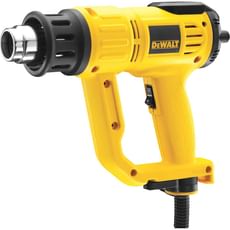
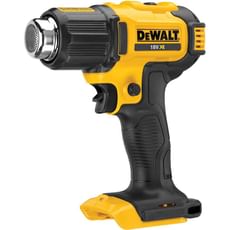
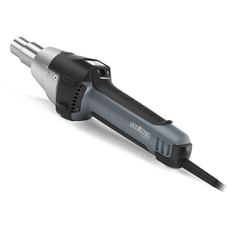
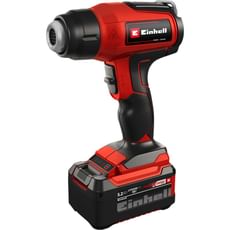
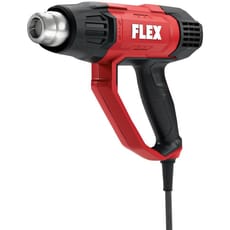
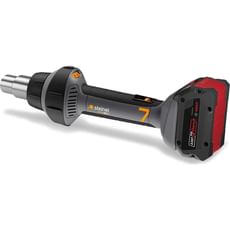
 Loading...
End of content
Error - No more pages to load
About Hot Air Heat Guns
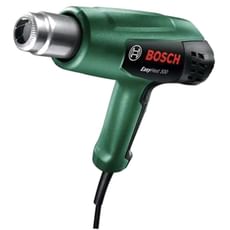
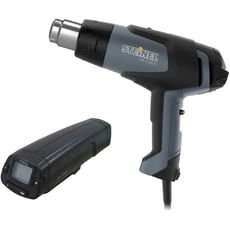
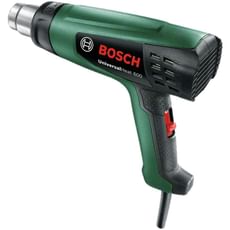
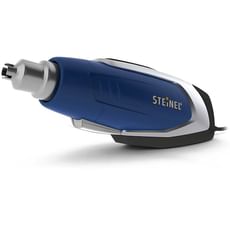
Hot air heat guns are among the most versatile power tools available to tradespeople and DIY enthusiasts, delivering concentrated streams of heated air for a diverse range of applications. From stripping paint and varnish to plastic welding, soldering pipes, shrink-wrapping cables, and thawing frozen pipework, these indispensable tools offer precision heat control for countless tasks across construction, maintenance, automotive, and craft projects. Modern heat guns typically operate on 240v mains power, though cordless models are increasingly popular for site work and remote locations.
Available in two primary designs, heat guns come as either gun-type tools suited to precision work and general applications, or barrel-type models favoured by roofers and floor layers for larger surface areas. Professional-grade models offer variable temperature control ranging from approximately 50°C up to 650°C, adjustable airflow settings, and digital displays for precise temperature monitoring. Entry-level DIY heat guns provide simpler two or three-stage heat settings that suit occasional use and less demanding applications.
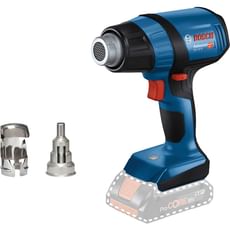
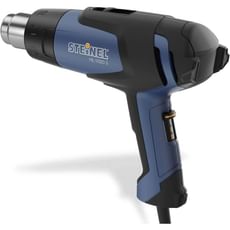
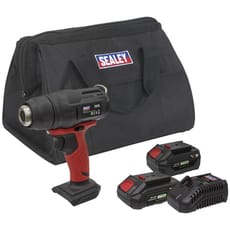
The selection at Tooled-Up.com includes both corded and cordless heat guns from leading manufacturers including Steinel, DeWalt, Milwaukee, Makita, Bosch, and Sealey. Cordless 18v models integrate seamlessly with existing battery platforms, offering genuine portability without compromising on performance, whilst corded variants deliver continuous power for extended professional use. Many models accept a comprehensive range of nozzle attachments to focus or diffuse airflow for specific tasks.
Jargon Buster
- Airflow Rate: Measured in litres per minute (l/min), this indicates the volume of air expelled by the heat gun. Higher airflow rates spread heat across larger areas more quickly, whilst lower rates provide concentrated heat for precision work. Typical ranges span from 250 l/min to 800 l/min.
- Temperature Range: The span of heat settings available, usually between 50°C and 650°C. Variable temperature control allows precise adjustment for different materials and applications, preventing damage to heat-sensitive surfaces whilst providing sufficient heat for demanding tasks.
- Thermal Cut-Out: An essential safety feature that automatically shuts down the heat gun if internal temperatures exceed safe operating limits, preventing motor damage and reducing fire risk during prolonged use or when ventilation is obstructed.
- Barrel-Type Design: A cylindrical configuration where the heating element and airflow run along the tool's length. This design distributes weight evenly and allows comfortable two-handed operation for extended periods, particularly popular with flooring and roofing professionals.
- LCD Temperature Display: A digital screen showing the exact operating temperature in real-time, enabling precise temperature monitoring and adjustment for applications requiring specific heat levels, such as plastic welding or heat-shrink applications.
- Cool-Down Mode: A feature that continues fan operation after the heating element switches off, rapidly cooling internal components and allowing safer storage immediately after use without waiting for natural cooling.
Who Uses Hot Air Heat Guns?
- Painters and Decorators: Stripping paint and varnish from woodwork, softening adhesives, removing wallpaper, and drying filler or paint in damp conditions.
- Plumbers: Soldering copper pipes, thawing frozen pipework, bending plastic pipes, heat-shrinking cable connections, and removing old pipe insulation.
- Electricians: Heat-shrinking cable sleeves and terminals, removing cable insulation, softening conduit for bending, and drying electrical enclosures.
- Roofers and Floor Layers: Welding vinyl and PVC membranes, activating adhesives, shrinking roofing felt, and softening flooring materials for precise fitting.
- Automotive Technicians: Removing decals and vinyl wraps, softening adhesives, heat-shrinking wiring looms, plastic repair work, and loosening rusted bolts.
- Fabricators and Workshop Engineers: Plastic welding and bending, heat-forming acrylic, loosening seized components, curing adhesives, and shrink-wrapping products.
- Maintenance Engineers: General repairs, removing damaged components, thawing equipment, drying machinery, and loosening thread-locked fixings.
- DIY Enthusiasts: Home renovation projects, furniture restoration, craft applications, and general household repairs.
How to Choose the Right Hot Air Heat Gun
Power Source: Decide between corded 240v models for workshop use and continuous operation, or cordless 18v versions for site work and locations without mains power. Cordless models suit tradespeople already invested in battery platforms from DeWalt, Milwaukee, Makita, or Bosch, enabling battery sharing across multiple tools.
Temperature Control: Professional applications benefit from variable temperature control with precise adjustment, whilst occasional DIY use may only require two or three preset temperature stages. Digital displays provide accurate temperature monitoring for critical applications like plastic welding where specific temperatures must be maintained.
Airflow Adjustment: Variable airflow control allows you to concentrate heat for precision work or spread it across larger areas. Look for models offering independent temperature and airflow adjustment for maximum versatility across different applications.
Design Type: Gun-type models offer excellent control for detailed work and suit most general applications. Barrel-type designs provide better balance for extended use and suit flooring, roofing, and large-surface applications where two-handed operation proves more comfortable.
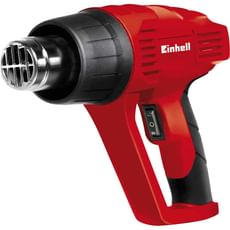
Build Quality: Professional tradespeople should invest in robust models from manufacturers like Steinel, DeWalt, Milwaukee, or Bosch Professional, featuring metal components, comfortable handles, and comprehensive warranties. DIY users can opt for lighter-duty models from ranges such as Einhell, Draper, or Bosch Home and Garden that balance performance with affordability.
Accessories and Attachments: Consider what nozzles and accessories come supplied. Reflector nozzles suit pipe work, reduction nozzles focus heat precisely, fishtail nozzles spread heat widely, and glass protection nozzles prevent damage when working near windows. Models accepting a wide range of optional attachments from Tooled-Up provide greater long-term versatility.
Safety Features: Thermal cut-out protection prevents overheating, integrated stands allow safe placement during work, cool-down modes reduce waiting time, and heat shields protect hands from radiated heat during extended use.
Popular Accessories
- Nozzle Sets: Comprehensive collections including reflector nozzles for pipes, reduction nozzles for concentrated heat, wide slot nozzles for broad surfaces, and glass protection nozzles for window frame work.
- Scraper Attachments: Hook scrapers, flat scrapers, and triangular scrapers that attach directly to the heat gun for simultaneous heating and paint removal.
- Reflector Nozzles: Wrap-around attachments for uniform heating of pipes during soldering, bending, or heat-shrink applications.
- Surface Protection Nozzles: Glass protection attachments that prevent direct heat contact when stripping paint from window frames and glazed doors.
- Welding Nozzles: Specialist attachments for plastic welding applications, including tack welding tips, speed welding nozzles, and wide slot nozzles for membrane welding.
- Carry Cases: Protective storage cases accommodating the heat gun plus nozzles and accessories, essential for site work and safe transportation.
- Spare Heating Elements: Replacement elements extending tool lifespan, particularly valuable for professional users who rely on their heat gun daily.
- Heat-Resistant Gloves: Specialist gloves protecting hands during prolonged heat gun operation or when working in confined spaces where heat reflection increases temperature.
Safety Information
Ventilation: Always ensure adequate ventilation when using heat guns, particularly when stripping paint, varnish, or working with plastics and adhesives. Many older paints contain lead, and heated plastics release fumes that require proper extraction or outdoor working. Follow COSHH guidelines when working with materials that release harmful vapours.
Fire Prevention: Heat guns reach temperatures exceeding 600°C, sufficient to ignite flammable materials. Keep a fire extinguisher nearby, never direct heat at flammable substances, and be aware that heat can penetrate materials and ignite hidden combustibles behind surfaces you're working on. Always inspect work areas for hidden risks.
Electrical Safety: Inspect cables regularly for damage, never use heat guns in damp conditions or near water, and ensure 240v models are protected by RCD devices. Keep cables away from the hot nozzle, and allow adequate cooling before storage to prevent cable insulation damage.
Personal Protection: Wear heat-resistant gloves when necessary, use safety glasses to protect eyes from falling paint chips and debris, and wear respiratory protection when working with materials that release harmful fumes. Never touch the nozzle or recently heated surfaces.
Safe Operation: Use the integrated stand or place the tool on a non-flammable surface when setting it down. Never obstruct air vents during operation, keep the nozzle moving to prevent localised overheating, and test heat settings on inconspicuous areas before tackling visible surfaces. Allow tools to cool completely using the cool-down function before storage.
Frequently Asked Questions
Can I use a heat gun to remove paint from all surfaces?
Heat guns work excellently on wood and metal but require extreme caution on glass (which can crack from thermal shock) and should never be used on plastic surfaces you wish to preserve. Always test on an inconspicuous area first, and use lower temperature settings with glass protection nozzles when working near windows. Lead-based paints require proper precautions including respiratory protection and containment of debris.
What's the difference between DIY and professional heat guns?
Professional models feature more robust construction with metal components, variable temperature and airflow control, digital displays, longer duty cycles allowing extended continuous use, and comprehensive accessory compatibility. DIY models offer simpler preset temperature stages, lighter construction, and suit occasional use. Professional tools from manufacturers like Steinel and Milwaukee typically include longer warranties reflecting their commercial-grade durability.
How do cordless heat guns compare to corded models?
Modern 18v cordless heat guns from DeWalt, Milwaukee, and Makita deliver performance approaching corded equivalents, with maximum temperatures around 550°C compared to 650°C on premium corded models. Battery runtime varies with temperature settings but typically provides 10-20 minutes of continuous high-heat operation per battery charge. Cordless models excel for site work and locations without mains power, whilst corded versions suit workshop use and extended applications.
What temperature should I use for different applications?
Paint stripping typically requires 500-600°C, heat-shrink tubing needs 300-400°C, plastic bending works at 300-450°C depending on material type, and thawing pipes requires just 50-100°C applied carefully. Always consult material specifications and start with lower temperatures, increasing gradually until achieving the desired effect. Using excessive heat wastes energy and risks material damage.
Are heat gun nozzles interchangeable between brands?
Nozzle compatibility varies between manufacturers, with some using proprietary fittings whilst others adopt more universal designs. Steinel accessories typically fit Steinel tools, whilst some aftermarket suppliers produce universal nozzles fitting multiple brands. Check specific compatibility before purchasing accessories, and consider nozzle availability when choosing your heat gun model to ensure long-term versatility.