

Voltage Testers
Pay in 3 interest-free payments on purchases from £30-2000 with  . Learn more.
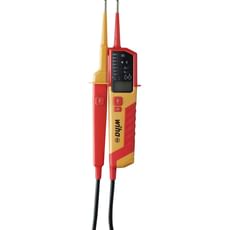
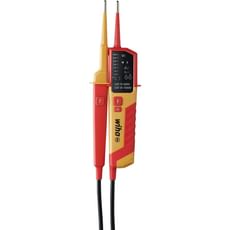
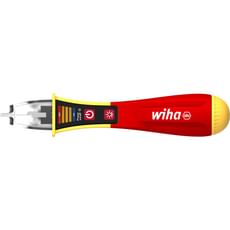
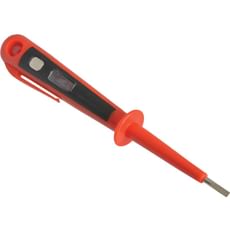


 Loading...
End of content
Error - No more pages to load
About Voltage Testers
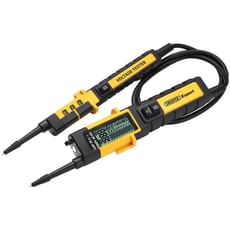
Voltage testers are essential electrical testing instruments used to detect the presence of live electrical current in circuits, outlets, switches, and wiring. These safety-critical tools come in two main types: contact voltage testers (including the familiar mains tester screwdrivers) that require physical contact with conductors, and non-contact voltage detectors that can identify live voltage through insulation without direct contact. Voltage testers are indispensable for ensuring electrical safety before commencing any work on electrical systems, helping prevent potentially fatal electric shocks.
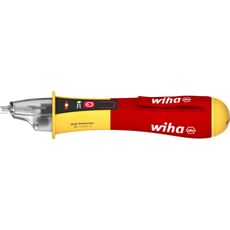
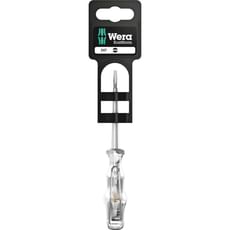
The voltage tester range at Tooled-Up.com includes everything from simple single-pole mains tester screwdrivers for basic 240v domestic circuits through to sophisticated CAT III and CAT IV rated instruments capable of safely testing high-voltage industrial installations up to 1000v. Models from trusted brands including Bosch Professional, Wiha, Wera, Draper, and Sealey offer various features such as LED indicators, audible alerts, vibration warnings, and integrated torch functions. Non-contact voltage detectors have become increasingly popular for their enhanced safety, allowing electricians to quickly scan for live cables behind walls or identify energised circuits without exposing conductors.
Modern voltage testers incorporate advanced safety features and comply with relevant BS EN standards for electrical test equipment. Many professional models feature automatic power-off functions to preserve battery life, robust construction for demanding site conditions, and clear visual displays that remain visible in various lighting conditions. Whether you need a basic mains tester for occasional DIY work or a professional-grade CAT IV instrument for commercial electrical installations, selecting the appropriate voltage tester for your specific testing requirements is crucial for both safety and accuracy.
Jargon Buster
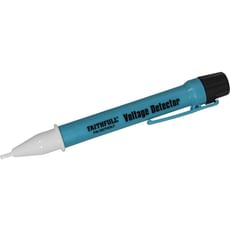
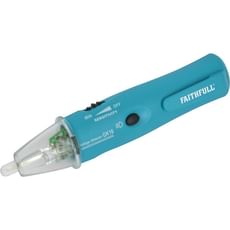
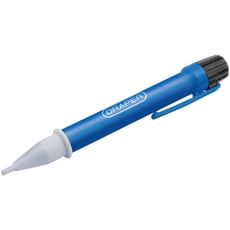
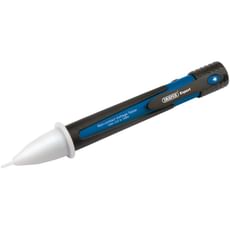
- Non-Contact Voltage Detector (NCVD): A battery-powered tester that detects live voltage through electromagnetic field sensing without requiring direct contact with conductors. Ideal for locating live cables in walls or testing insulated wiring safely.
- CAT Rating (Overvoltage Category): Safety classification indicating the maximum voltage transient levels the tester can safely withstand. CAT II suits domestic circuits, CAT III covers distribution panels and commercial installations, whilst CAT IV is rated for utility connections and industrial equipment.
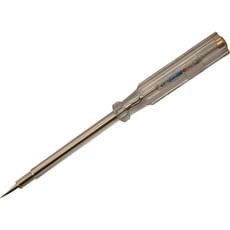
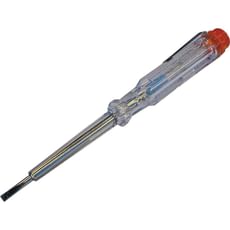
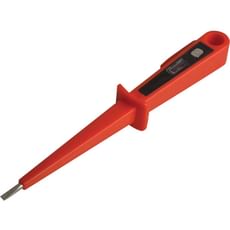
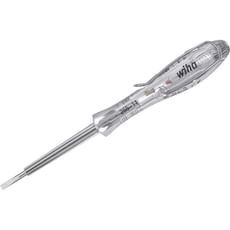
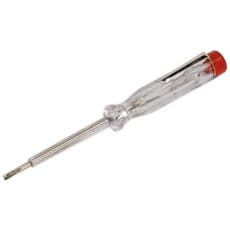
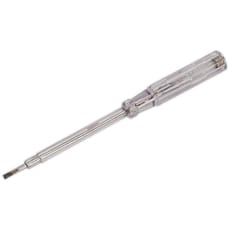
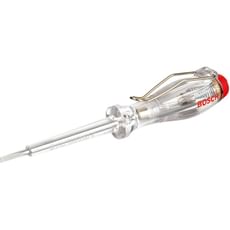
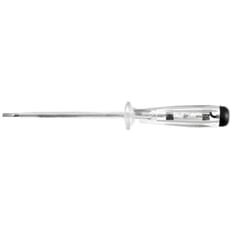
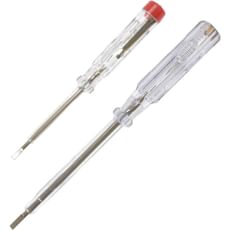
- Single-Pole Voltage Tester: A traditional mains tester screwdriver with an internal neon bulb that illuminates when the tip contacts live voltage whilst the user provides an earth path through the metal cap. Tests 100-250v circuits.
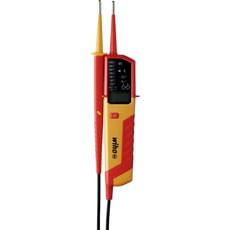
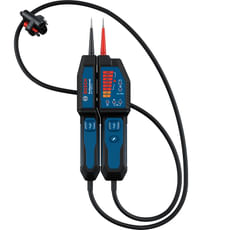
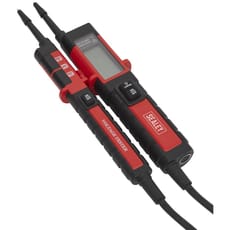
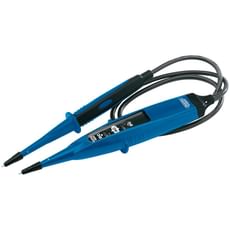
- Two-Pole Voltage Tester: A device with separate probes that requires connection to both live and neutral or earth to complete a circuit, providing more accurate voltage measurements than single-pole testers.
- Proving Unit: A separate device used to verify that a voltage tester is functioning correctly before and after testing, essential for safe working practices as required by GS38 guidance.
- GS38: HSE guidance document specifying requirements for electrical test equipment including insulated probe design, fused leads, and finger barriers to prevent accidental contact with live parts.
Who Uses Voltage Testers?
- Electricians and Electrical Contractors: Essential daily tools for safe isolation verification and circuit testing during installations, maintenance, and fault-finding work
- Maintenance Engineers: Required for safely working on industrial machinery, control panels, and building services electrical systems
- Heating Engineers and Plumbers: Used when working on boilers, immersion heaters, pumps, and other electrical components of heating and water systems
- General Building Contractors: Necessary for identifying live cables before drilling or cutting into walls, ceilings, and floors
- Joiners and Carpenters: Important for detecting hidden electrical cables before fixing battens, architraves, or installing kitchens and fitted furniture
- Facilities Managers: Required for routine safety checks and basic electrical troubleshooting in commercial and institutional buildings
- DIY Enthusiasts: Essential for anyone undertaking domestic electrical work, changing light fittings, or performing home renovations involving electrical circuits
- Appliance Repair Technicians: Used for safely diagnosing faults in domestic and commercial electrical appliances
How to Choose the Right Voltage Testers
Voltage Range and Application: Determine the voltage levels you'll be testing. For domestic work on 240v circuits, a standard mains tester or non-contact detector rated up to 250v or 400v is sufficient. Industrial applications requiring testing of three-phase supplies, control panels, or distribution equipment need instruments rated to 600v or 1000v with appropriate CAT III or CAT IV ratings.
Contact vs Non-Contact: Non-contact voltage detectors offer enhanced safety by detecting live voltage through insulation without exposing conductors, making them ideal for locating cables in walls or quick safety checks. However, they cannot provide precise voltage readings. Contact testers, including two-pole instruments, offer more accurate verification of voltage presence and are essential for proper isolation verification following safe isolation procedures. Many professionals at Tooled-Up carry both types for different testing scenarios.
CAT Rating and Safety Standards: The CAT (overvoltage category) rating indicates the level of electrical stress the tester can safely withstand. CAT II is suitable for portable equipment and domestic installations. CAT III covers fixed installations, distribution boards, and commercial wiring. CAT IV is required for utility supply connections and outdoor overhead lines. Always select a tester with a CAT rating appropriate to your working environment and ensure it complies with BS EN 61243-3 or similar standards.
Indication Method: Consider how the tester alerts you to live voltage. Basic mains testers use neon bulbs visible through a window. Modern non-contact detectors typically feature LED indicators (often with traffic light colour coding), audible beeps, and vibration alerts. Multi-sensory indication is valuable in noisy environments or bright sunlight where a single indicator might be difficult to perceive.
Build Quality and Durability: Professional testers should feature robust construction with impact-resistant housings, sealed battery compartments, and reliable switches. GS38-compliant contact testers must have adequately insulated probes with finger barriers, fused test leads, and minimal exposed conductor length. Check for IP ratings if working in damp conditions.
Additional Features: Useful extras include integrated LED torches for working in poorly lit areas, pocket clips for convenient carrying, automatic power-off to preserve battery life, and low battery indicators. Some advanced models from brands like Bosch Professional offer adjustable sensitivity settings and the ability to distinguish between live cables and static fields.
Popular Accessories
- Proving Units: Essential companion devices for verifying voltage tester functionality before and after use, meeting safe isolation procedure requirements
- Replacement Test Leads: GS38-compliant fused leads with insulated probes and appropriate finger guards for two-pole voltage testers
- Voltage Tester Holsters and Pouches: Protective carrying cases and belt holsters for safe storage and convenient access on site
- Multifunction Electrical Testers: Comprehensive instruments combining voltage testing with continuity, resistance, and socket testing functions
- Socket Testers: Plug-in devices for quickly verifying correct wiring of 240v 13A sockets including earth connection verification
- Replacement Batteries: Spare AAA or 9v batteries to ensure your voltage detector remains operational when needed
- Electrical Tool Kits: Complete sets including voltage testers alongside screwdrivers, wire strippers, and other electrical installation tools
- Warning Labels and Lock-off Devices: Essential safety equipment for use during electrical isolation procedures
Safety Information
Never Rely on a Voltage Tester Alone: Voltage testers are one component of a safe isolation procedure but must never be solely relied upon. Always follow proper lock-off/tag-out procedures, use proving units to verify tester functionality both before and after testing, and never assume a circuit is dead based solely on one test result. The HSE's GS38 guidance provides comprehensive safety requirements for electrical test equipment and procedures.
Appropriate Personal Protective Equipment: Always wear suitable PPE when testing electrical circuits, including insulated gloves and safety glasses. Even when using voltage testers, treat all circuits as live until definitively proven otherwise through proper isolation procedures.
Know Your Limitations: Only undertake electrical work that you are competent and qualified to perform. Work on domestic fixed electrical installations must comply with Part P of the Building Regulations and may require certification by a qualified electrician registered with a competent person scheme. High-voltage and industrial electrical systems should only be worked on by appropriately qualified personnel.
Regular Equipment Inspection: Before each use, visually inspect voltage testers for damage to casings, probes, or leads. Cracked insulation, damaged probe tips, or broken indicator windows render a tester unsafe and it must be withdrawn from service immediately. Test equipment should be calibrated and tested by qualified technicians at regular intervals according to manufacturer recommendations.
Environmental Conditions: Do not use voltage testers in wet conditions unless specifically rated for such use (check IP ratings). Be aware that extremely cold conditions can affect battery performance and LCD displays. Never exceed the voltage or CAT rating marked on the tester.
Frequently Asked Questions
What's the difference between a contact and non-contact voltage tester?
Contact voltage testers require physical connection to the conductor being tested, either through direct probe contact or via the metal tip of a mains tester screwdriver. They provide definitive confirmation of voltage presence but require exposure of live parts. Non-contact voltage detectors sense the electromagnetic field around live conductors and can detect voltage through insulation, cable sheathing, or even walls without direct contact, offering enhanced safety. However, they can be less precise and may give false positives from nearby electromagnetic sources. Professional electricians typically carry both types for different testing situations.
Why do I need different CAT ratings?
CAT (overvoltage category) ratings indicate the level of transient overvoltage that test equipment can safely withstand. Higher CAT ratings provide protection against more severe voltage spikes that occur closer to the electrical supply source. CAT II suits socket testing and portable equipment. CAT III is required for testing distribution boards, fixed installations, and commercial wiring where higher energy transients may occur. CAT IV is essential for utility supply testing, service entrance equipment, and overhead lines where the most severe transients are present. Using an inadequately rated tester in high-energy environments risks catastrophic failure and serious injury.
Can I use a voltage tester to verify safe isolation?
A voltage tester is one essential component of a safe isolation procedure, but proper isolation requires a systematic approach. You must use a proving unit to verify your tester is functioning correctly before testing, then test the isolated circuit to confirm no voltage is present, then immediately re-test your voltage tester with the proving unit to ensure it hasn't failed during the test. This "prove-test-prove" sequence is essential. Additionally, proper isolation includes identifying the correct circuit, using appropriate lock-off devices, displaying warning notices, and checking for other possible sources of back-feed or induced voltage.
Do voltage testers need calibration?
Yes, voltage testers should be regularly inspected, tested, and calibrated according to manufacturer recommendations and company safety policies. The HSE recommends that test equipment used in commercial and industrial environments should be formally tested at intervals appropriate to the severity of use and working conditions. Many organisations adopt six-monthly or annual testing schedules. Even if formal calibration isn't legally required for your application, regularly verifying functionality with a proving unit before each use is essential, and any tester showing signs of damage or inconsistent operation should be withdrawn from service immediately.
Why does my non-contact voltage detector sometimes beep near walls with no cables?
Non-contact voltage detectors work by sensing electromagnetic fields and can occasionally give false indications from static electricity, radio frequency interference, or electromagnetic fields from nearby transformers, motors, or other electrical equipment. Moisture in walls, certain types of insulation, and fluorescent lighting can also trigger false positives. This is why non-contact detectors should be used as initial screening tools rather than definitive confirmation of cable presence or absence. For critical applications like drilling into walls, use multiple detection methods including cable detectors specifically designed for locating buried wiring, and always drill pilot holes carefully whilst remaining alert for resistance indicating cable presence.