

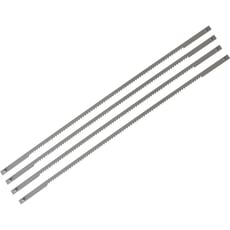
Stanley Coping Saw Blades
 Loading...
Stanley Coping Saw Blades at Tooled-Up.com
Stanley has been a trusted name in hand tools for over 175 years, and their coping saw blades exemplify the brand's commitment to precision cutting solutions for both professional tradespeople and dedicated DIY enthusiasts. Known for manufacturing blades that deliver clean, accurate cuts in wood, plastic, and other materials, Stanley coping saw blades are engineered to meet the demands of intricate curved work, detailed joinery, and fine finish carpentry. Whether you're cutting complex patterns, trimming dowels, or executing delicate scroll work, Stanley's range of replacement blades ensures your coping saw remains a reliable tool in your workshop.
The Stanley coping saw blade range available from Tooled-Up features various teeth-per-inch (TPI) configurations to suit different materials and cutting requirements. From coarser blades for rapid stock removal to fine-toothed options for smooth, precise cuts, Stanley provides the versatility that woodworkers, joiners, and furniture makers demand. These blades are designed for quick and secure fitting to standard coping saw frames, with hardened steel construction that maintains sharpness throughout extended use whilst resisting wear and breakage during demanding applications.
Why Choose Stanley Coping Saw Blades?
Stanley's reputation for quality and durability extends throughout their coping saw blade range, making them a preferred choice for professionals who cannot afford tool failure on site or in the workshop. Each blade undergoes rigorous quality control to ensure consistent tooth geometry, proper set, and uniform hardness—factors that directly impact cutting performance and blade longevity. Stanley's manufacturing processes incorporate decades of metallurgical expertise, resulting in blades that resist flexing during use whilst maintaining the necessary flexibility for tight radius cuts.
The value proposition of Stanley coping saw blades lies not only in their initial cutting performance but in their sustained sharpness over time. Professional joiners and cabinet makers appreciate that Stanley blades maintain their edge through multiple projects, reducing downtime for blade changes and ensuring consistent cut quality. The brand's commitment to affordability without compromising on standards means that Tooled-Up customers can stock multiple blade types for different applications without breaking the budget, making Stanley an economically sound choice for busy workshops.
Who Uses Stanley Coping Saw Blades?
- Joiners and Cabinet Makers: For intricate curved cuts in hardwood and softwood furniture components
- Picture Framers: Cutting precise mitre joints and curved moulding profiles
- Model Makers: Detailed work in wood, plastic, and composite materials requiring tight radius cuts
- Luthiers and Instrument Makers: Shaping musical instrument components with precision
- Property Maintenance Professionals: General cutting tasks involving awkward access or curved sections
- Theatre and Set Builders: Creating decorative woodwork and scenery elements
- DIY Enthusiasts: Home woodworking projects, crafts, and restoration work
- Carpenters: Site work requiring detailed cutting of architraves, skirting, and trim
Key Features of Stanley Coping Saw Blades
Hardened Steel Construction: Stanley manufactures their coping saw blades from high-carbon steel that's been heat-treated to achieve optimal hardness, providing excellent edge retention whilst maintaining the flexibility required for curved cutting applications.
Precision Tooth Geometry: Each tooth is precisely formed and set to ensure efficient material removal with minimal binding. The consistent tooth pattern delivers smooth cuts with reduced splintering, particularly important when working with visible surfaces.
Multiple TPI Options: Stanley offers various teeth-per-inch configurations within their range, allowing users to select the appropriate blade for their specific material and desired finish quality. Coarser blades excel at rapid cutting, whilst finer blades produce smoother results.
Universal Fitting: Designed to fit standard coping saw frames with pin-end fittings, Stanley blades are compatible with most professional and DIY coping saws, ensuring easy replacement and secure tensioning during use.
Break-Resistant Design: The tempered steel construction balances hardness with flexibility, reducing the likelihood of blade snapping during use—particularly valuable when working with hard woods or making tight radius cuts.
Popular Stanley Coping Saw Blades
Stanley's coping saw blade range typically includes standard 165mm (6½-inch) length blades in various TPI configurations. The 15 TPI blades represent the most versatile option, suitable for general woodworking tasks in both hardwoods and softwoods with a good balance between cutting speed and finish quality. These are the go-to choice for joiners and general woodworkers tackling everyday curved cutting tasks.
For finer work, Stanley produces 20 TPI blades that excel at detailed cutting where surface finish is paramount. These finer-toothed blades are favoured by cabinet makers and picture framers who require minimal tear-out and smooth edges that need little subsequent finishing. The Stanley range at Tooled-Up also includes coarser options for rapid stock removal in softwoods and man-made boards.
Safety and Compliance
When using Stanley coping saw blades, proper installation and tensioning are essential for both safety and cutting performance. Always ensure the blade is correctly fitted with teeth pointing away from the handle and towards the direction of cut, and tension the blade adequately to prevent wandering during use. Worn or damaged blades should be replaced immediately as they can snag, bind, or break unexpectedly.
Appropriate personal protective equipment should be worn when using coping saws, including safety glasses to protect against flying debris and dust masks when cutting materials that produce fine particles. Ensure workpieces are securely clamped to prevent movement during cutting, and keep fingers well clear of the cutting line. Stanley coping saw blades are sharp precision tools and should be stored carefully to prevent injury and maintain their cutting edge.
Frequently Asked Questions
What TPI should I choose for Stanley coping saw blades?
For general woodworking in softwoods and hardwoods, a 15 TPI Stanley blade offers the best balance between cutting speed and finish quality. Choose 20 TPI or finer for detailed work requiring smooth cuts, or coarser blades (10-12 TPI) for rapid cutting in softwoods and man-made boards.
How long do Stanley coping saw blades typically last?
Blade longevity depends on usage intensity and materials being cut, but Stanley blades are known for maintaining sharpness longer than economy alternatives. Professional users might replace blades weekly with intensive use, whilst occasional DIY users may find a blade lasts for several months of intermittent projects.
Are Stanley coping saw blades compatible with all coping saw frames?
Stanley coping saw blades feature standard pin-end fittings that are compatible with the vast majority of coping saw frames from various manufacturers. They fit any frame designed for 165mm (6½-inch) blades with pin-end mounting systems.
Can Stanley coping saw blades cut materials other than wood?
Whilst primarily designed for wood cutting, Stanley coping saw blades can also cut plastic, soft metals like aluminium, and various composite materials. However, blade life may be reduced when cutting harder materials, and specialised blades may be more appropriate for extensive metalworking applications.
What's the best way to store Stanley coping saw blades?
Store Stanley coping saw blades in a dry environment to prevent rust formation. Many professionals keep spare blades in their original packaging or use blade guards. Avoid loose storage where blades can contact other metal tools, which may damage the teeth and reduce cutting performance.