

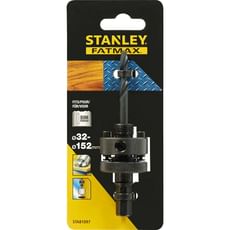
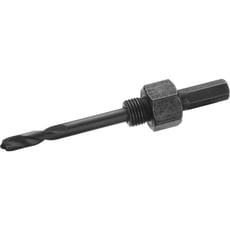
Stanley Holesaw Arbors & Pilot Drills
 Loading...
End of content
Error - No more pages to load
Stanley Holesaw Arbors & Pilot Drills at Tooled-Up.com
Stanley has established itself as a trusted name in professional drilling accessories, and their holesaw arbors and pilot drills exemplify the brand's commitment to precision engineering and reliability. These essential components form the backbone of any professional holesaw system, providing the secure connection between power drill and cutting crown whilst ensuring accurate hole placement through high-quality pilot drill bits. When professional tradespeople require dependable arbor systems that deliver consistent performance across demanding applications, Stanley's range offers proven solutions built to withstand the rigours of daily site work.
The Stanley holesaw arbor collection at Tooled-Up.com encompasses various sizes and configurations designed to accommodate different holesaw diameters and drilling requirements. From standard quick-change arbors that enable rapid bit swaps to heavy-duty variants engineered for deep-cut applications, Stanley's arbor systems incorporate robust threading, secure locking mechanisms, and precision-ground pilot drills that ensure true running and accurate positioning. The brand's focus on durability means these arbors resist thread stripping and pilot drill breakage—two common frustrations that compromise productivity on professional job sites.
Whether you're working with wood, plastic, or metal, Stanley arbors provide the versatility needed across diverse materials whilst maintaining the tight tolerances essential for professional results. Tooled-Up stocks Stanley's holesaw arbor systems to support both individual tradespeople and larger contracting operations requiring reliable drilling accessories that won't let them down mid-project.
Why Choose Stanley Holesaw Arbors & Pilot Drills?
Stanley's reputation for manufacturing tools that balance performance with affordability makes their holesaw arbors and pilot drills particularly attractive to cost-conscious professionals who won't compromise on quality. The brand's arbor systems feature heat-treated components that resist wear and deformation even under high-torque applications, whilst precision-machined threads ensure secure holesaw attachment without wobble or slippage during operation.
One significant advantage of Stanley arbors is their compatibility across multiple holesaw brands and systems, providing flexibility for tradespeople who may use various cutting crown manufacturers. The pilot drills supplied with Stanley arbors are manufactured from high-speed steel with precision-ground points that bite accurately into materials, preventing the wandering that can ruin workpiece aesthetics and waste valuable time. Stanley's quality control processes ensure consistent manufacturing tolerances, meaning replacement arbors and pilot drills perform identically to the originals—a crucial consideration for professionals who demand predictable results across multiple tools.
The brand's heritage spanning over 175 years demonstrates a sustained commitment to understanding tradesperson needs, and this expertise is evident in thoughtful design features such as hex-shank pilot drills that prevent slippage in chuck jaws and arbor designs that facilitate easy holesaw removal after cutting.
Who Uses Stanley Holesaw Arbors & Pilot Drills?
Stanley holesaw arbors and pilot drills serve a broad spectrum of professional users, including:
- Electricians – installing cable entry points, switch boxes, and lighting fixtures requiring precise holes through various substrates
- Plumbers – cutting access holes for pipework, waste outlets, and service penetrations in floors, walls, and cabinetry
- HVAC installers – creating ventilation openings and ductwork penetrations through structural elements
- Carpenters and joiners – producing clean holes for door hardware, doweling operations, and cable management in fitted furniture
- Maintenance engineers – performing repairs and modifications across facilities requiring holesaw cutting in diverse materials
- Shopfitters – installing retail fixtures, display systems, and point-of-sale equipment requiring precise cutting
- DIY enthusiasts – tackling home improvement projects that demand professional-quality results without professional-level budgets
Key Features of Stanley Holesaw Arbors & Pilot Drills
Stanley holesaw arbors incorporate several distinctive features that enhance their functionality and longevity. The arbor shafts typically feature robust hex drives that provide positive engagement with drill chucks, preventing the frustrating slippage that can occur with round shanks under heavy load. Threading systems are precision-cut to provide secure holesaw attachment whilst allowing relatively easy removal—a balance that cheaper arbors often fail to achieve.
The pilot drills supplied with Stanley arbors feature split-point geometries that reduce walking on smooth surfaces, enabling accurate hole placement without centre-punching in many applications. Heat treatment processes applied to both arbor components and pilot drills enhance wear resistance, extending service life even when cutting abrasive materials or working in demanding site conditions.
Stanley's arbor systems often include quick-change features that eliminate the need for tools when swapping holesaws, significantly improving efficiency when projects require multiple hole sizes. The spring-loaded ejection mechanisms found on many Stanley arbors help release cut plugs that would otherwise remain wedged inside holesaws—a thoughtful detail that saves time and prevents accidents from manual plug removal attempts.
Popular Stanley Holesaw Arbors & Pilot Drills
Stanley's holesaw arbor range typically includes standard arbors for holesaws up to approximately 30mm diameter, alongside heavy-duty variants designed for larger cutting crowns up to 200mm or beyond. These heavy-duty arbors feature extended shanks and reinforced construction to handle the increased torque demands of large-diameter cutting whilst maintaining stability during operation.
Quick-change arbor systems represent popular choices for professionals who regularly switch between holesaw sizes, offering tool-free bit changes that dramatically reduce setup time. Stanley also produces replacement pilot drills in various lengths and diameters, allowing users to refresh worn components without replacing entire arbor assemblies—an economical approach that extends the working life of existing equipment.
Multi-purpose arbors compatible with both imperial and metric thread holesaws provide versatility for tradespeople working with mixed equipment inventories, whilst specialised arbors for deep-cut applications accommodate the extended cutting depth requirements of thick-wall penetrations.
Safety and Compliance
When using Stanley holesaw arbors and pilot drills, adherence to proper safety protocols remains essential. Always ensure arbors are securely tightened before operation to prevent holesaw detachment during cutting—a hazardous situation that can cause injury or workpiece damage. Verify that pilot drills are firmly seated and that any set screws or locking mechanisms are properly engaged before applying power.
Select appropriate drilling speeds for the material being cut, as excessive RPM can cause premature wear, overheating, or component failure. When drilling through metal, use appropriate cutting lubricants to reduce friction and heat buildup. Always wear appropriate personal protective equipment including safety glasses, as holesaw operations generate swarf and metal fragments that pose eye injury risks.
Ensure your power drill is suitable for the holesaw size being used—larger diameter holesaws generate substantial torque that can overwhelm underpowered tools, creating control difficulties. When using 240v mains-powered drills, verify that equipment meets current UK electrical safety standards and that any extension leads are appropriately rated for the tool's power consumption.
Frequently Asked Questions
Are Stanley holesaw arbors compatible with other brands of holesaws?
Yes, Stanley arbors typically feature standard threading that accommodates holesaws from various manufacturers. However, always verify thread compatibility before purchase, as some specialised holesaws may use proprietary attachment systems. The universal design of most Stanley arbors makes them suitable for mixed-brand holesaw collections.
How do I remove a stuck holesaw from a Stanley arbor?
If a holesaw becomes difficult to remove, avoid using excessive force that might damage threads. Instead, secure the arbor in a vice (protecting threads with soft jaw covers) and use the holesaw body for leverage whilst unscrewing. Applying penetrating oil to the threads and allowing time to soak can help release seized connections. For future prevention, apply anti-seize compound to threads before assembly.
Can Stanley pilot drills be sharpened when they become dull?
Whilst technically possible to sharpen HSS pilot drills using appropriate grinding equipment, the precision required to maintain the correct point geometry makes replacement more practical for most users. Incorrectly sharpened pilot drills will wander during use, compromising hole accuracy. Stanley replacement pilot drills are readily available and represent an economical solution compared to the time investment of sharpening.
What size arbor do I need for my Stanley holesaw?
Arbor selection depends on your holesaw's diameter. Standard arbors typically accommodate holesaws from approximately 14mm to 30mm, whilst larger cutting crowns require heavy-duty arbors with extended shanks. Check your holesaw's specifications for the recommended arbor size, as using undersized arbors with large holesaws creates safety risks and poor cutting performance.
Why does my pilot drill keep breaking when using Stanley arbors?
Pilot drill breakage typically results from excessive drilling pressure, inappropriate speeds for the material, or dulled cutting edges forcing the user to apply more pressure. Ensure you're using appropriate RPM settings—slower speeds for metal, faster for wood—and allow the pilot drill to cut rather than forcing it. Replace worn pilot drills promptly, as dull bits require excessive force that leads to breakage and inaccurate hole placement.