

Cable, Pipe & Stud Detectors

Pay in 3 interest-free payments on purchases from £20-£3000 with  . Learn more.
 Loading...
End of content
Error - No more pages to load
About Cable, Pipe & Stud Detectors
Cable, pipe and stud detectors are essential electronic scanning tools that reveal what's hidden behind walls, ceilings and floors before drilling or fixing. These sophisticated safety devices use multiple detection technologies to locate wooden studs for secure mounting points, identify metal pipes and electrical cables that could be dangerous to penetrate, and map the internal structure of walls. Whether you're a professional tradesperson working on complex installations or a DIY enthusiast hanging shelves at home, a reliable detector prevents costly damage to utilities, avoids dangerous accidents involving live electrical cables or pressurised water pipes, and helps locate the strongest fixing points for heavy fixtures and fittings.
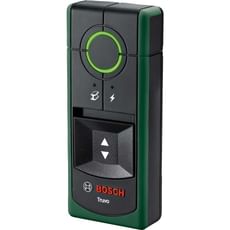
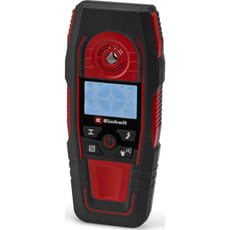
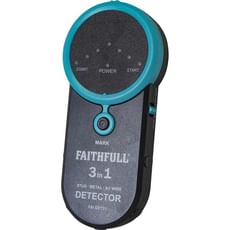
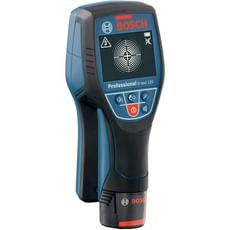
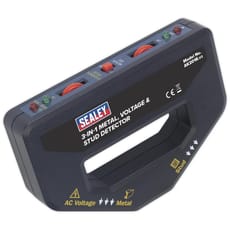
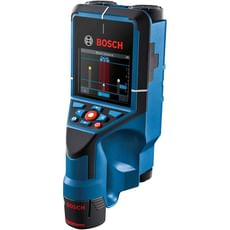
Modern detectors available from Tooled-Up.com range from straightforward single-function models that simply locate wooden studs, through to advanced multi-scanners that differentiate between ferrous and non-ferrous metals, detect live AC voltage at 240v, identify plastic pipes using radar technology, and pinpoint wooden framework—all within one compact device. Entry-level models like the Bosch TRUVO and Faithfull 3 in 1 detectors offer excellent value for occasional domestic use, whilst professional-grade scanners such as the Bosch D-Tect 120 and D-Tect 200 C provide advanced features including precise depth indication, target sizing, material identification and clear digital displays for accurate readings on demanding commercial jobs. Trusted brands including Bosch Professional, Makita, Stanley, Draper and Sealey deliver proven reliability across different price points and specification levels.
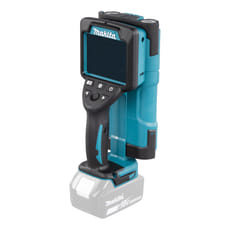
Detection depth represents a critical specification when choosing a detector, with basic models typically scanning 20-40mm beneath the surface and professional wall scanners capable of penetrating 100-150mm into various wall materials. The type of wall construction significantly affects performance—modern stud partition walls with plasterboard are generally easier to scan than dense solid brick walls or period properties with metal lath and thick lime plaster. Quality detectors will alert you to live AC voltage at 240v, providing an essential safety layer when working near electrical installations that comply with UK wiring regulations and BS 7671 standards. Professional cordless models like the Makita DWD181 integrate with existing battery platforms such as Makita's 18v LXT system, eliminating disposable battery costs whilst providing consistent power throughout the working day.
Jargon Buster
- Ferrous Metal Detection: The capability to detect iron-based metals including steel pipes, screws, nails and reinforcement bar. Most detectors identify ferrous metals more easily than non-ferrous types due to their magnetic properties, making this the most common detection mode in basic models.
- Non-Ferrous Metal Detection: Detection of metals without iron content, including copper pipes (common throughout UK plumbing systems), aluminium conduit and brass fittings. This requires more sophisticated sensor technology and is typically found in mid to high-end models like the Bosch GMS 120-27.
- Live AC Detection (Voltage Detection): The ability to sense live electrical current at 240v without physical contact, warning you of cables carrying mains electricity before you drill into them. Essential for safety around UK domestic and commercial electrical installations, this feature provides distinct audio and visual warnings when live voltage is detected.
- Detection Depth: The maximum distance below the surface that the detector can reliably identify targets, measured in millimetres. Professional models may offer 120mm+ depth on wood and 80mm on metal, whilst basic models typically manage 20-40mm depending on material density and wall composition.
- Centre Location/Edge Detection: Advanced detectors can identify either the edges or the precise centre point of a stud, pipe or cable. Centre location proves more useful when you need to know exactly where to drive a fixing for maximum holding strength, whilst edge detection helps you avoid drilling into services.
- Auto-Calibration: A feature where the detector automatically adjusts its sensitivity when placed against the wall surface, compensating for different materials and improving accuracy without manual adjustment. Models like the Stanley Intelli Tools range include this function for reliable operation across varied wall types.
Who Uses Cable, Pipe & Stud Detectors?
- Electricians and electrical contractors checking for existing cables before drilling cable routes or mounting consumer units, socket outlets and lighting accessories
- Plumbers and heating engineers locating existing pipework to avoid damage when installing new heating systems or mounting radiators, boilers and bathroom fixtures
- Carpenters and joiners finding studs in partition walls for secure fixing of door frames, architrave, skirting boards and heavy joinery components
- Shopfitters and commercial installers mounting shelving systems, retail displays and heavy equipment safely in commercial premises where service locations may not be documented
- Kitchen and bathroom fitters ensuring safe installation of units, wall cabinets, tiling and fixtures without damaging hidden services behind plasterboard and tiles
- General builders and maintenance contractors carrying out renovation work, extensions and property maintenance safely across residential and commercial projects
- Plasterers and drylining specialists locating studs behind plasterboard for secure fixing of plasterboard sheets, metal tracks and finishing trims
- TV and satellite installers mounting brackets securely to studs whilst avoiding cables and pipes that could be damaged during installation
- DIY enthusiasts and homeowners hanging pictures, shelves, mirrors, TV brackets and storage solutions safely in their homes
- Facilities maintenance teams working in schools, hospitals, offices and public buildings where original service locations may not be accurately documented
- Security system installers routing cables and mounting equipment whilst avoiding damage to existing electrical and plumbing installations
How to Choose the Right Cable, Pipe & Stud Detectors
Detection Capabilities: Consider which materials you need to detect most frequently. Basic models detect wood and ferrous metals, suitable for straightforward stud finding and avoiding obvious steel pipes. Mid-range detectors add non-ferrous metal detection for copper pipes and aluminium conduit, whilst professional models like the Bosch D-Tect 200 C offer comprehensive detection including plastic pipes using advanced radar technology for complete visibility through walls.
Detection Depth Requirements: Match the depth capability to your typical wall types and working environment. Shallow detection of 20-40mm suffices for modern stud walls with services in standard zones, but older properties, solid masonry walls or commercial premises often require 80-120mm depth capabilities to locate services buried under thick plaster, running through dense brickwork or concealed behind multiple layers of building materials.
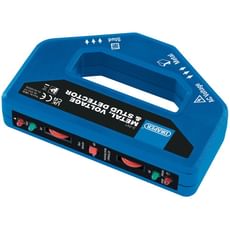
Live Voltage Detection: This feature is essential if you'll be working anywhere near electrical installations. UK mains voltage at 240v can be fatal, so detecting live cables before drilling provides critical safety protection. Look for models that clearly differentiate between dead metal pipes and live electrical cables with distinct audio and visual warnings, such as the Draper 501G Combined Metal Voltage and Stud Detector.
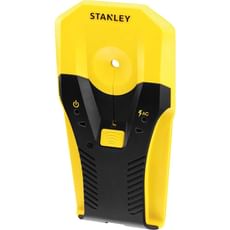
Display Type and Readability: Basic models use simple LED lights or needle gauges, adequate for straightforward detection in good lighting conditions. LCD and digital displays on models like the Stanley Intelli Tools S160 provide more detailed information including target depth, material type and precise positioning—invaluable for complex installations, working in poor site lighting, or when you need documentation for safety records and quality assurance purposes.
Frequency of Use: Occasional users can opt for basic battery-powered models from Draper, Faithfull, Einhell or Sealey that offer excellent value and simple operation for periodic home improvements. Professional tradespeople working daily benefit from investing in robust professional-grade scanners from Bosch Professional or Makita, including cordless models like the Makita DWD181 that integrate with existing battery platforms, eliminating ongoing disposable battery costs whilst ensuring consistent performance throughout long working days.
Wall Material Compatibility: Check that your chosen detector works reliably on your typical wall types and construction methods. Different technologies perform better on specific materials—capacitance sensors excel on plasterboard and timber frame, electromagnetic sensors work well through masonry and brick, whilst radar-based professional scanners like the Bosch D-Tect series can penetrate diverse materials including reinforced concrete, providing the most versatile performance across varied site conditions and building ages.
Ergonomics and Usability: Consider the physical design, especially for extended use throughout the working day. Clear button layouts, comfortable grips, bright displays visible in poor site lighting, intuitive operation without constantly referring to instruction manuals, and logical menu structures all contribute to efficient, error-free operation on busy sites where time and accuracy both matter.
Popular Accessories
- Replacement and spare batteries (9V or AA types) for battery-powered models to ensure you're never caught without power on site or mid-installation
- Compatible lithium-ion battery packs and chargers for cordless professional models from Makita 18v LXT and Bosch Professional 12v systems
- Protective carry cases and belt pouches to prevent damage to sensitive electronic components when transporting in toolboxes or between sites
- Marker pencils, carpenter's pencils and chalk for clearly marking detected stud centres and service locations before drilling commences
- Drill bits suitable for detected materials including HSS twist bits for metal, brad point bits for wood and masonry bits for safe drilling after scanning
- Wall plugs and fixings appropriate to the substrate such as plasterboard cavity fixings for hollow walls or frame fixings for secure mounting to timber studs
- Cable and pipe protector plates to shield newly installed services that your detector will need to locate reliably in future maintenance work
- Laser levels, spirit levels and measuring tools from Stanley, Bosch and Makita to work alongside your detector for accurate positioning of multiple fixings at consistent heights
- Warning tape and cable markers to identify service routes during installation for future reference and safety compliance
Safety Information
Never rely solely on electronic detection: Whilst modern detectors at Tooled-Up are sophisticated devices, they cannot guarantee 100% accuracy in all conditions. Wall composition, moisture content, overlapping services, metal reinforcement and electromagnetic interference can all affect readings. The HSE recommends using detectors as part of a broader risk assessment strategy, not as the sole safety measure. Always cross-reference with building plans, visual inspection of surface clues (socket positions, pipe entry points, service zones), and logical deduction about likely service routes based on building age and construction methods.
Understand your detector's limitations: Read the manufacturer's instruction manual thoroughly before first use and keep it accessible for reference. Each model has specific limitations regarding wall materials, maximum detection depth, minimum target size, and environmental conditions that affect performance. Some wall materials including metal lath, foil-backed insulation boards, dense Victorian solid walls and very thick concrete can cause false readings or prevent detection altogether. Test your detector on known pipe or cable locations in the same room to verify it's functioning correctly before relying on its readings for critical work.
Multiple passes and cross-checking: Professional best practice involves scanning the same area multiple times from different angles, heights and starting positions. Mark all detected targets clearly with a pencil or chalk, then rescan to confirm positions before drilling or fixing. If you're drilling for critical installations or in areas where services are particularly dangerous (near consumer units, boilers, incoming mains supplies or gas meters), consider supplementing electronic detection with other verification methods, consulting original building plans, or instructing specialist service location surveys.
Voltage detection warnings: If your detector indicates live voltage at 240v, do not proceed until the circuit is properly isolated and tested dead using a properly calibrated two-pole voltage tester or proving unit. The voltage detection feature alerts you to danger but is not a substitute for proper electrical isolation procedures as required by BS 7671 wiring regulations and CDM regulations. Only competent persons with appropriate training should work on or near electrical installations, and Part P Building Regulations must be observed for notifiable electrical work.
Regular calibration and testing: Before starting work each day, perform the auto-calibration procedure (if your model includes this feature) and test the detector on known targets to ensure it's functioning correctly. Weak or depleted batteries can cause unreliable readings, false positives or missed detections, so replace or recharge batteries regularly according to the manufacturer's recommendations. Keep the detector clean, dry and properly stored in its case to maintain sensor accuracy and protect sensitive electronics throughout its working life.
Frequently Asked Questions
Q: How accurate are cable, pipe and stud detectors?
A: Accuracy varies significantly by model quality and site conditions. Basic stud detectors are generally reliable on standard plasterboard partition walls, typically accurate to within 10-20mm for locating timber framework. Professional multi-scanners like the Bosch D-Tect series can pinpoint targets to within a few millimetres in ideal conditions with proper calibration. However, all detectors can be affected by wall material composition, moisture content, overlapping services, metal reinforcement and electromagnetic interference. They should be considered highly useful guidance tools providing strong indications rather than absolute certainty. Always scan multiple times from different positions, mark suspected service locations clearly, and drill exploratory pilot holes carefully when precision is critical for structural fixings or expensive installations.
Q: Can these detectors find plastic pipes?
A: Basic and mid-range detectors generally cannot detect plastic pipes directly, as they rely on detecting metal content or changes in electrical properties. However, high-end professional models using radar technology, such as the Bosch D-Tect 120 and D-Tect 200 C, can identify plastic pipes by detecting the density difference and void they create within wall structures. If you regularly need to locate plastic waste pipes, modern plastic supply pipes or PVC conduit in your professional work, invest in a professional-grade scanner with this capability clearly specified in the technical specifications, as it requires fundamentally different sensor technology from basic electromagnetic detection.
Q: Will my detector work on solid brick or concrete walls?
A: Detection through solid masonry is considerably more challenging than through hollow stud walls, and maximum depth is typically reduced significantly. Basic detectors may struggle entirely on very dense materials like engineering brick or reinforced concrete. Professional models with higher power sensors and radar technology perform better, but even these have limitations—typically 80-100mm maximum in concrete versus 120mm+ in plasterboard and timber frame construction. Steel reinforcement bar (rebar) in reinforced concrete can also cause interference and false readings. Check your model's specifications for masonry performance ratings, and consider hiring or purchasing a professional-grade scanner for regular work on solid walls in commercial or period properties.
Q: Do I need different detectors for different jobs?
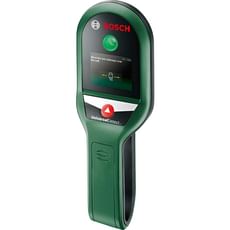
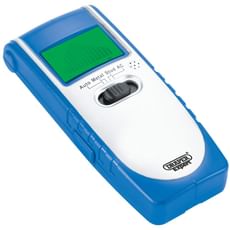
A: Not necessarily for most users. Multi-function detectors that can identify wood, ferrous and non-ferrous metal, plus live voltage detection, cover most requirements for general trade work and DIY projects. Models like the Draper Expert D389 or Bosch UNIVERSALDETECT provide versatile detection across multiple materials in a single compact tool. However, specialists working predominantly on one specific task—for example, drylining contractors focused primarily on stud finding—might prefer a dedicated stud detector optimised for that particular purpose with enhanced features for their specialism. Professional contractors working on varied, complex sites with diverse building types benefit most from investing in advanced multi-scanners offering comprehensive detection with depth indication and material identification like the Bosch D-Tect range.
Q: How deep can these detectors see into walls?
A: Detection depth varies considerably by model grade and target material properties. Entry-level detectors like the Einhell TC-MD 50 typically scan 20-40mm, suitable for services in shallow chases or immediately behind single-layer plasterboard. Mid-range models extend to 50-80mm, adequate for most domestic installations and standard construction methods. Professional scanners reach 100-150mm or considerably more, necessary for locating deeply buried services in thick walls, commercial installations or period properties with multiple layers of plaster and building material. Metal objects are generally detectable at greater depth than wooden studs due to their different electromagnetic properties. Always check detailed specifications for the specific materials you'll be scanning, as manufacturers typically list separate maximum depth figures for wood, ferrous metal, non-ferrous metal and live cables under different wall conditions.