

Guide Rails

Pay in 3 interest-free payments on purchases from £20-£3000 with  . Learn more.
 Loading...
End of content
Error - No more pages to load
About Guide Rails
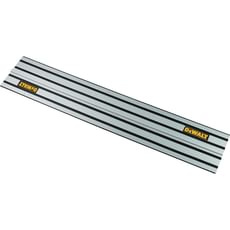
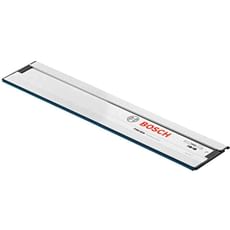
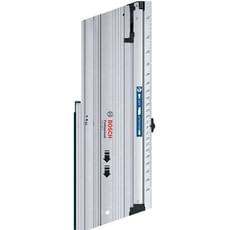
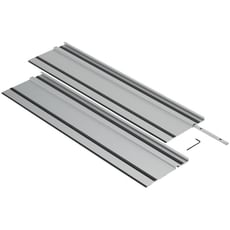
Guide rails are precision-engineered aluminium tracks that transform handheld circular saws and plunge saws into highly accurate cutting systems. By providing a rigid, straight edge for your saw to travel along, guide rails eliminate the guesswork from long cuts, enabling you to achieve perfectly straight, splinter-free results consistently. Whether you're breaking down sheet materials, making precise rip cuts, or creating clean crosscuts in worktops and doors, a quality guide rail system dramatically improves both accuracy and safety compared to freehand cutting.
Tooled-Up.com stocks guide rails from leading professional brands including Festool, Bosch Professional, DeWalt, Makita, Milwaukee, and Draper, with lengths ranging from compact 800mm options through to extended 3000mm rails for full sheet breakdown. Most guide rails feature anti-slip rubber strips on the underside to prevent movement during cutting, pre-marked measurement scales for quick setup, and splinter guards that protect the workpiece edge. Many systems are compatible with connector accessories, allowing you to join multiple rails together for even longer cutting capacities.
Professional guide rail systems are designed to work seamlessly with specific plunge saw models, though many brands offer cross-compatibility. The rails typically incorporate a guide channel that engages with the saw base, whilst the anti-tip design prevents the saw from lifting away from the rail during operation. This combination delivers remarkably clean cuts with minimal tear-out, making guide rails indispensable for kitchen fitters, shopfitters, and cabinetmakers who demand cabinet-grade finish quality on site.
Jargon Buster
- Splinter Guard: A replaceable rubber or plastic strip along the rail edge that's cut into by the saw blade on first use, creating a zero-clearance edge that virtually eliminates breakout and splintering on the cut surface.
- Guide Channel: The machined groove or profile on the guide rail that the saw base engages with, ensuring the blade tracks perfectly parallel to the rail edge throughout the cut.
- Rail Connector: A joining accessory that securely links two guide rails end-to-end, creating extended cutting lengths for breaking down full sheets or making extra-long cuts beyond a single rail's capacity.
- Anti-Tip Design: An engineered profile that prevents the saw from tilting or lifting off the rail during cutting, maintaining consistent blade depth and cut quality throughout the stroke.
- Variable Angle Guide: An adjustable accessory that attaches to standard guide rails, enabling precise angled and mitre cuts without requiring separate jigs or complex setup procedures.
- Cross Cut Square: A perpendicular attachment for guide rails that enables perfect 90-degree crosscuts, particularly useful for accurately sizing sheet materials and creating square ends on boards.
Who Uses Guide Rails?
Guide rails are essential equipment across numerous trades and applications:
- Kitchen Fitters – for precise worktop cuts, scribing, and breakdown of cabinet panels on-site
- Carpenters and Joiners – for accurate dimensioning of sheet materials and creating clean, square cuts in timber
- Shopfitters – for cutting display units, cladding panels, and bespoke retail fixtures with professional finish quality
- Flooring Contractors – for trimming engineered boards, cutting through laminate, and sizing hardwood with minimal splintering
- Cabinetmakers – for breaking down expensive sheet materials with cabinet-grade edge quality directly from the saw
- Roofing and Cladding Specialists – for cutting fibre cement boards, insulation panels, and composite materials safely and accurately
- Refurbishment Contractors – for on-site breakdown of boards where table saws aren't practical or available
- Serious DIY Enthusiasts – for home renovations, furniture making, and projects requiring professional-standard accuracy
How to Choose the Right Guide Rails
Compatibility with Your Saw: The most critical factor is ensuring the guide rail matches your plunge saw or circular saw model. Festool, Bosch, Makita, DeWalt, and Milwaukee each have proprietary rail systems designed specifically for their saws. Some aftermarket rails offer cross-compatibility, but always verify fitment before purchasing to ensure proper engagement and safe operation.
Rail Length: Consider the typical materials you'll be cutting. For breaking down full 2440mm sheets, a 1500mm rail or connector system is essential. Kitchen fitters often opt for 1400mm rails as a versatile middle ground, whilst 800mm-1000mm rails excel for crosscutting and site work where portability matters. Many professionals maintain multiple lengths or use connector systems for maximum flexibility.
Build Quality and Accuracy: Professional-grade rails from Festool, Bosch Professional, and DeWalt feature precisely machined aluminium extrusions that maintain straightness over time. Check for anti-slip rubber strips on the underside, clear measurement markings, and robust splinter guards. Premium rails may cost more initially but deliver consistent accuracy across thousands of cuts, justifying the investment for trade users.
Accessories and System Integration: Consider whether you'll need cross cut squares, variable angle guides, clamps, or rail connectors. Brands like Festool offer comprehensive accessory ecosystems, whilst others provide more basic options. If you're building a complete cutting system for varied applications, factor in the availability and cost of these complementary items available from Tooled-Up.
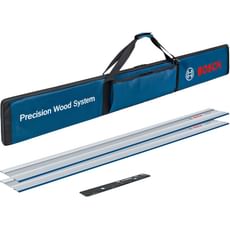
Portability Requirements: For site work, consider guide rails with carry bags or cases that protect the precision edges during transport. Some manufacturers offer twin-rail kits with dedicated storage, ideal for van-based tradespeople who need to keep equipment organised and protected between jobs.
Popular Accessories
- Rail Connectors – join multiple guide rails for extended cutting lengths up to 5 metres or more
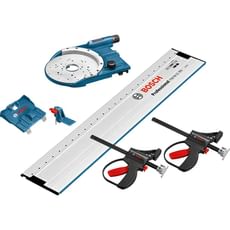
- Cross Cut Squares – attach perpendicular to the rail for perfect 90-degree crosscuts without measuring
- Variable Angle Guides – enable precise mitres and angled cuts using your existing straight guide rail
- Guide Rail Clamps – secure the rail firmly to the workpiece, preventing any movement during cutting
- Parallel Guides and Ripping Fences – maintain consistent offset distances when making multiple parallel cuts
- Replacement Splinter Guards – maintain zero-clearance cutting quality when the original guard becomes worn
- Rail Carry Bags and Cases – protect precision edges during transport and storage on site
- Guide Rail Adapters – allow certain circular saws without dedicated plunge bases to run on guide rail systems
Safety Information
When using guide rails with plunge saws or circular saws, always follow HSE guidance for powered cutting equipment. Ensure the rail is clamped or firmly positioned on a stable surface before commencing any cut – the anti-slip base alone may not prevent movement on all materials, particularly when cutting vertically or on smooth surfaces.
Always allow the blade to reach full speed before engaging with the workpiece, and maintain steady, controlled forward pressure throughout the cut. Never force the saw or attempt to cut faster than the blade can cleanly remove material, as this may cause kickback or blade binding. Ensure the workpiece is properly supported along its entire length, with particular attention to the off-cut section which can pinch the blade as the cut completes.
Wear appropriate PPE including safety glasses, hearing protection, and dust masks – even guide rail systems with dust extraction don't capture 100% of airborne particles. Keep hands well clear of the cut line, and never reach underneath the workpiece whilst cutting. Disconnect 240v power tools from the mains when changing blades, adjusting settings, or clearing any blade obstructions.
Frequently Asked Questions
Can I use any plunge saw with any guide rail?
Generally no – most guide rails are brand-specific and designed to work with particular saw models. Festool rails work with Festool saws, Bosch rails with Bosch saws, and so forth. Some aftermarket rails claim cross-compatibility, but for safety and optimal performance, it's best to match the rail system to your saw manufacturer. The guide channel profiles and anti-tip features differ between brands.
What length guide rail should I buy first?
For most tradespeople and serious DIYers, a 1400mm-1500mm rail offers the best versatility, allowing you to rip-cut sheet materials lengthways and handle most kitchen worktop cuts. If you frequently break down full sheets, consider a 1500mm rail with connectors, or start with both a 1400mm and an 800mm rail to cover long cuts and more portable crosscutting needs.
Do guide rails work on both sides of the rail?
No – guide rails have a designated working edge where the splinter guard and measurement scale are positioned. The saw always runs along this specific edge. The opposite edge is simply the back of the rail. Always position the rail so the marked working edge aligns with your cut line.
How do I prevent the rail moving during cutting?
Most quality guide rails have anti-slip rubber strips that grip the workpiece effectively on timber and board materials. For additional security, particularly on smooth surfaces or vertical cuts, use dedicated rail clamps at each end. Some professionals also apply light downward pressure on the rail ahead of the saw during cutting.
Can guide rails be used with routers as well as saws?
Yes – many manufacturers offer router adapter bases that allow their routers to run along the same guide rail system used for plunge saws. This extends the versatility of your guide rail investment, enabling precision routing for grooves, rebates, and edge profiling using the same accurate reference system.