

Micrometers
Pay in 3 interest-free payments on purchases from £30-2000 with  . Learn more.
 Loading...
End of content
Error - No more pages to load
About Micrometers
Micrometers are precision measuring instruments essential for achieving accurate measurements down to one-thousandth of a millimetre. Used across engineering, machining, and manufacturing industries, these tools allow professionals to measure external dimensions, internal diameters, and depths with exceptional accuracy. Whether you're inspecting machined components, verifying tolerances, or conducting quality control checks, a reliable micrometer is an indispensable tool in any precision workshop.
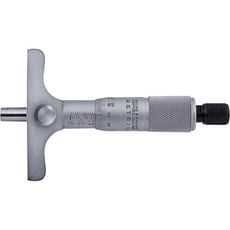
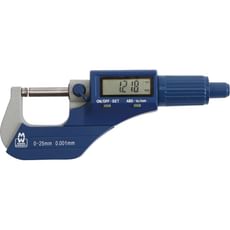
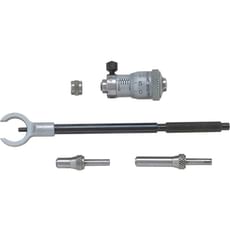
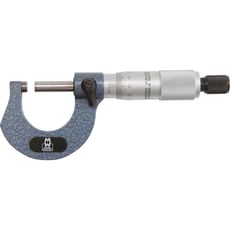
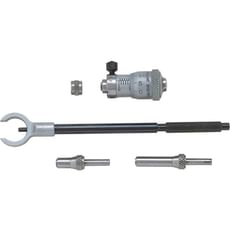
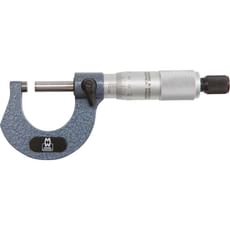
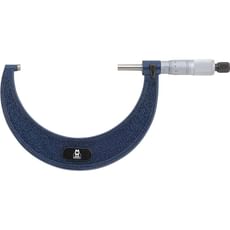
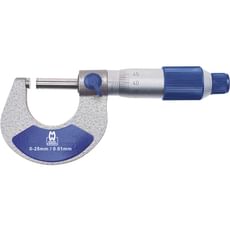
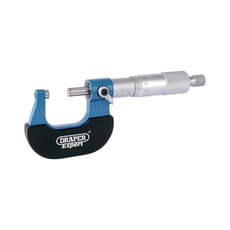
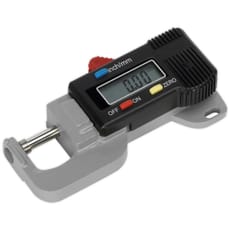
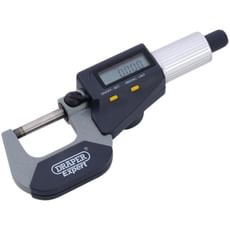
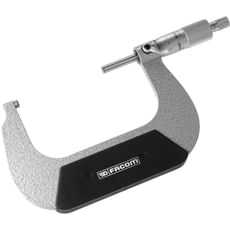
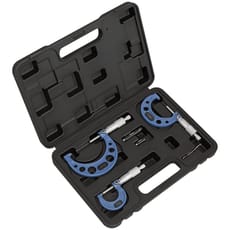
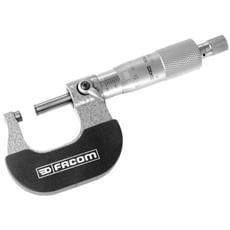
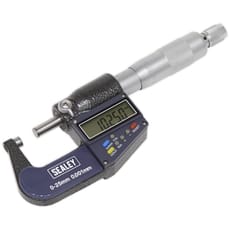
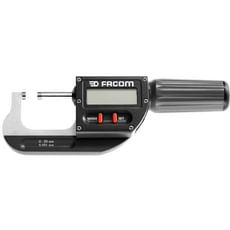
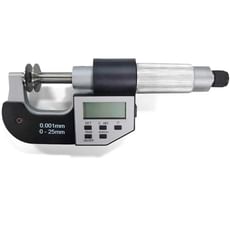
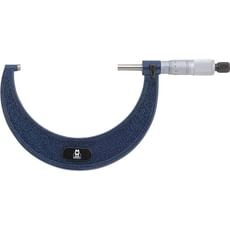
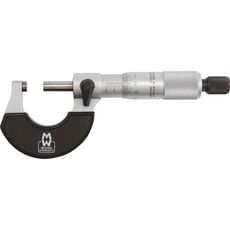
The comprehensive range at Tooled-Up.com includes external micrometers for measuring outside dimensions, internal micrometers for bore measurements, and depth micrometers for assessing recess depths. Available in both traditional mechanical versions with vernier scales and modern digital models with LCD displays, customers will find options from trusted brands including Moore and Wright, Facom, Draper Expert, Sealey, and Sirius. Digital micrometers offer easy-to-read measurements with instant metric/imperial conversion, whilst mechanical models provide robust, battery-free reliability that many experienced engineers prefer.
Quality micrometers feature hardened, ground, and lapped measuring faces for long-lasting accuracy, with measurement ranges typically starting from 0-25mm and extending up to 150mm or more. Many come supplied in protective cases with calibration standards to ensure measurement integrity. Whether you're working in a metrology lab, machine shop, or on-site maintenance, investing in a quality micrometer ensures your work meets the exacting standards required in precision engineering.
Jargon Buster
- Resolution: The smallest increment a micrometer can measure. Mechanical micrometers typically offer 0.01mm resolution, whilst digital models often provide 0.001mm (1 micron) resolution for ultra-precise measurements.
- Ratchet Stop/Thimble: A friction or ratchet mechanism at the end of the micrometer that prevents over-tightening and ensures consistent measuring pressure, improving accuracy and preventing damage to both the instrument and workpiece.
- Anvil and Spindle: The two measuring faces of a micrometer. The anvil is the fixed measuring surface, whilst the spindle moves via the threaded mechanism to close against the workpiece being measured.
- Vernier Scale: An auxiliary scale on mechanical micrometers that enables reading to an additional decimal place beyond the main scale, typically allowing measurements to 0.001mm accuracy.
- Measuring Range: The span of dimensions a micrometer can measure, commonly available in 25mm increments (0-25mm, 25-50mm, 50-75mm, etc.). Larger ranges require correspondingly larger micrometers.
- Datum/Zero Setting: The process of calibrating a micrometer using a gauge block or setting standard to ensure accurate readings at a known measurement point.
Who Uses Micrometers?
Micrometers are essential measuring tools for a wide range of precision-focused professionals and applications:
- Machinists and CNC Operators: Verifying dimensions of turned, milled, and ground components to ensure they meet drawing specifications and tolerances.
- Tool and Die Makers: Measuring precision tooling, jigs, and fixtures where accuracy is critical to component quality.
- Quality Control Inspectors: Conducting first-off and in-process inspections to maintain manufacturing standards and catch out-of-tolerance parts.
- Automotive Engineers and Mechanics: Measuring engine components, brake discs, bearing clearances, and other critical parts during rebuilds and maintenance.
- Aerospace Technicians: Working to extremely tight tolerances where component accuracy is safety-critical.
- Model Engineers and Hobbyists: Building precision miniature engines, locomotives, and mechanical models requiring accurate component manufacture.
- Maintenance Engineers: Assessing wear on shafts, bearings, and other components to determine service intervals and replacement schedules.
- Metrology Departments: Calibrating other measuring equipment and maintaining measurement standards across manufacturing facilities.
How to Choose the Right Micrometers
Type of Measurement: Determine whether you need external micrometers for outside dimensions (the most common type), internal micrometers for bore measurements, or depth micrometers for measuring hole depths and step heights. For comprehensive measuring capability, consider a micrometer set covering multiple ranges.
Digital vs. Mechanical: Digital micrometers offer quick, easy-to-read measurements with features like data output, metric/imperial switching, and preset functions. They're ideal for high-volume inspection work. Mechanical micrometers with vernier scales are more traditional, require no batteries, and are often preferred by experienced engineers who appreciate their tactile feedback and robust construction.
Measuring Range: Micrometers are manufactured in specific ranges, typically in 25mm increments. A 0-25mm micrometer is essential for most workshops, but larger components require correspondingly sized instruments. Four-piece sets covering 0-100mm provide excellent versatility for general engineering work.
Accuracy and Resolution: Consider the tolerances you work to. Mechanical micrometers typically measure to 0.01mm, sufficient for most engineering applications. Digital models often provide 0.001mm resolution for ultra-precision work. Brands like Moore and Wright and Facom are renowned for their accuracy and build quality.
Build Quality: Premium micrometers feature hardened and ground measuring faces, chrome-plated or carbide-tipped anvils for wear resistance, and precision-machined threads. Satin chrome or satin finish frames reduce glare and are more comfortable in extended use. Check for supplied calibration certificates if working to ISO standards.
Budget Considerations: Entry-level micrometers from brands like Sealey and Draper offer good accuracy for general workshop use at accessible prices. Professional-grade instruments from Moore and Wright or Facom command higher prices but deliver exceptional accuracy, repeatability, and longevity for daily commercial use.
Popular Accessories
- Calibration Standards/Setting Gauges: Precision gauge blocks or setting rings used to verify micrometer accuracy and adjust zero settings, essential for maintaining measurement traceability.
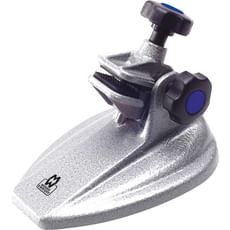
- Micrometer Stands: Bench-mounted stands that hold micrometers securely, enabling hands-free operation and more consistent measurements, particularly useful for production inspection work.
- Protective Cases: Padded storage cases protect micrometers from damage and contamination, with many quality instruments supplied with fitted cases as standard.
- Cleaning Materials: Lint-free cloths and specialist cleaning fluids remove swarf, coolant, and oils from measuring faces to maintain accuracy.
- Anti-Corrosion Paper: VCI (Vapour Corrosion Inhibitor) paper or silica gel sachets stored with micrometers prevent rust formation on precision surfaces during storage.
- Depth Micrometer Extensions: Interchangeable rods that extend the measuring range of depth micrometers for various recess depths.
Safety Information
Whilst micrometers themselves present minimal safety hazards, proper handling ensures both personal safety and instrument longevity:
- Always clean workpieces before measuring to avoid trapping swarf or debris between measuring faces, which can damage precision surfaces or cause inaccurate readings.
- Never force a micrometer closed or over-tighten on a workpiece. Always use the ratchet stop or friction thimble to apply consistent, appropriate pressure.
- Avoid measuring rotating components or using micrometers on machinery in operation – stop the machine and ensure workpieces are secure.
- Store micrometers in their cases in a clean, dry environment away from temperature extremes, which can affect calibration and cause premature wear.
- When working with contaminated components or in dirty environments, wear appropriate PPE including safety glasses and gloves to protect against metal swarf and cutting fluids.
- Handle micrometers with clean, dry hands as perspiration can cause corrosion on precision measuring surfaces over time.
Frequently Asked Questions
What's the difference between a micrometer and a vernier calliper?
Micrometers are more accurate than vernier callipers, typically measuring to 0.01mm or better compared to 0.02mm for callipers. However, micrometers have a limited measuring range (usually 25mm) and are specific to external, internal, or depth measurements, whilst callipers are more versatile tools that can perform multiple types of measurements across larger ranges. For precision engineering work requiring tolerances below 0.05mm, micrometers are the preferred choice.
How do I read a mechanical micrometer?
Reading a mechanical micrometer involves three steps: read the millimetre divisions visible on the sleeve (barrel), add any half-millimetre marks also visible, then add the hundredths shown where the thimble edge aligns with the datum line on the sleeve. If your micrometer has a vernier scale, this provides an additional digit for thousandths. Many find digital micrometers easier initially, but with practice, mechanical versions become second nature.
How often should micrometers be calibrated?
For workshop use, checking calibration monthly using gauge blocks or setting standards is good practice. In quality-critical or ISO-certified environments, annual calibration by an accredited laboratory is typically required, with more frequent checks if the instrument is heavily used or subjected to harsh conditions. Always re-check zero settings before important measurements and after any impact or suspected damage.
Can micrometers measure in both metric and imperial?
Digital micrometers typically feature instant metric/imperial conversion with the press of a button. Mechanical micrometers are manufactured in either metric (mm) or imperial (inch) formats, so you'll need the appropriate version for your requirements. In UK engineering, metric micrometers are standard, though some industries working with older equipment or American specifications may require imperial instruments.
Why are there gaps in micrometer measuring ranges?
Micrometers are manufactured in fixed ranges (0-25mm, 25-50mm, 50-75mm, etc.) because increasing the measuring range would make the frame too large and flexible, compromising accuracy. To measure across a wide range of dimensions, you'll need multiple micrometers or a set available from Tooled-Up. This design ensures each instrument maintains the rigidity and precision required for accurate measurements within its specific range.