

Transmission Jacks

Pay in 3 interest-free payments on purchases from £20-£3000 with  . Learn more.
 Loading...
End of content
Error - No more pages to load
About Transmission Jacks
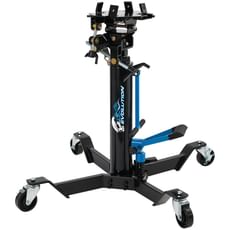
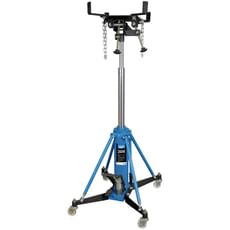
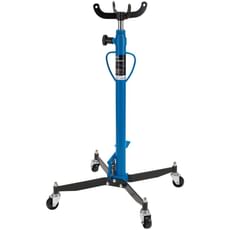
Transmission jacks are specialised hydraulic lifting equipment designed to support and manoeuvre vehicle gearboxes, transmissions, and related drivetrain components during removal, installation, and servicing. These essential workshop tools feature adjustable saddles with multi-directional tilting mechanisms that allow precise alignment when mating transmissions to engine bellhousings—a task that would be nearly impossible using standard lifting equipment. Available in both vertical and floor-mounted configurations, transmission jacks typically offer safe working capacities ranging from 150kg for light vehicle gearboxes to 600kg for heavy commercial vehicle transmissions. The robust construction, combined with features such as quick-lift hydraulic systems, safety chains, and manoeuvrable castors with individual brakes, makes these tools indispensable for professional automotive workshops and serious DIY mechanics alike.
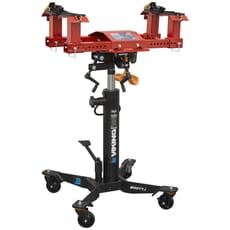
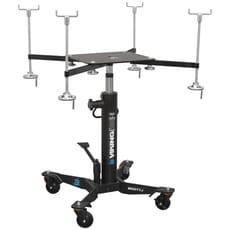
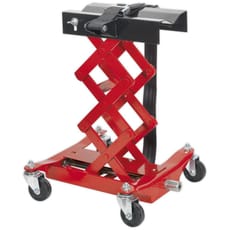
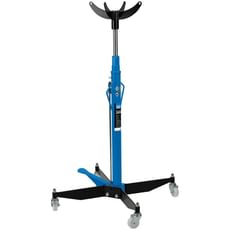
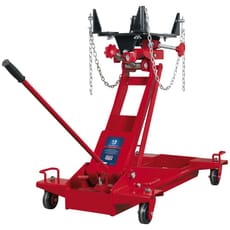
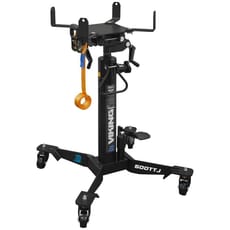
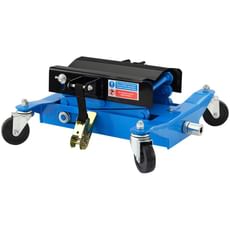
The selection at Tooled-Up.com includes vertical transmission jacks and floor transmission jacks from leading manufacturers Sealey and Draper, with models suited to everything from home garage clutch replacements to busy commercial vehicle workshops. Vertical transmission jacks are characterised by their tall, narrow design with a compact footprint, making them ideal for professional garages equipped with two-post or four-post vehicle lifts where headroom is abundant but floor space is at a premium. Floor transmission jacks, sometimes called low-profile transmission jacks, feature a wider, more stable base and are designed for use with vehicles supported on axle stands or ramps where vertical clearance is more restricted. Many professional-grade models incorporate telescopic twin-stage rams for extended reach, foot-pedal operation for hands-free height adjustment, and ratchet saddle claws for rapid positioning.
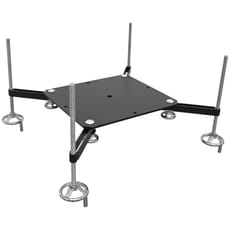
Modern transmission jacks have evolved significantly from basic trolley-style supports, now incorporating numerous safety features and ergonomic enhancements that dramatically reduce the physical strain and risk associated with gearbox work. Heavy-duty swivel castors allow precise positioning even when loaded, whilst ratcheting safety bars prevent accidental lowering during critical alignment procedures. Many models available from Tooled-Up accept interchangeable adaptors and cradles—including fuel tank cradles, subframe adaptors, and engine load supports—transforming a transmission jack into a versatile lifting tool suitable for various underbody component servicing tasks. This adaptability makes them valuable investments for workshops where space and budget considerations limit equipment purchases.
Jargon Buster
- Vertical Transmission Jack – A tall, slender design that raises transmissions vertically from beneath the vehicle, typically reaching heights of 1.5-2 metres. These models have a smaller base footprint and are specifically designed for use with vehicles on workshop lifts where floor space is limited but vertical clearance is available.
- Saddle Capacity – The maximum safe working load that the jack's supporting platform can handle, typically ranging from 150kg to 600kg. This rating must exceed the weight of the heaviest transmission you intend to service, with adequate safety margin for the additional weight of mounting hardware and fluid.
- Tilting Mechanism – An adjustable feature allowing the transmission cradle to tilt forwards, backwards, and side-to-side (typically 20-30° in all directions with 360° rotation). This adjustment is essential for aligning splines, clutch plates, and mounting points during installation without supporting the transmission's full weight manually.
- Quick Lift System – A hydraulic foot-pedal mechanism enabling rapid initial height adjustment before fine-tuning with the standard hydraulic pump handle. This feature significantly reduces setup time when positioning the jack under the vehicle and during rough positioning of the transmission.
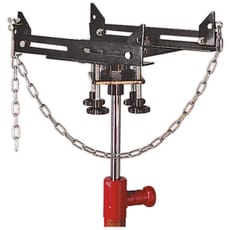
- Safety Chain – A critical securing device that wraps around the transmission and attaches to the jack saddle, preventing the load from shifting, rotating, or falling during manoeuvring. This is mandatory safety equipment in professional workshops and required for HSE compliance when working with suspended loads.
- Telescopic Ram – A twin-stage or multi-stage hydraulic cylinder that extends to greater heights whilst maintaining a lower collapsed position. This design provides extended working range without compromising the jack's ability to fit under low-clearance vehicles or through restricted access points.
Who Uses Transmission Jacks?
- Motor Vehicle Technicians – Professional mechanics in independent garages, franchised dealerships, and fast-fit centres who regularly service clutches, gearboxes, and complete drivetrain systems
- Transmission Specialists – Technicians focused specifically on automatic and manual gearbox diagnostics, repairs, rebuilds, and replacement work requiring frequent transmission removal
- MOT Testing Stations – Workshops that need safe access to transmissions, subframes, and exhaust systems for inspection, repair, and advisory work during statutory vehicle testing
- Commercial Vehicle Mechanics – Technicians servicing HGVs, buses, lorries, and heavy goods vehicles requiring high-capacity transmission jacks rated for substantial commercial gearbox weights
- Agricultural and Plant Engineers – Mechanics maintaining tractors, combines, excavators, and other heavy machinery with large, awkwardly positioned transmissions and drivetrain components
- Automotive Restoration Specialists – Professionals and dedicated enthusiasts restoring classic, vintage, and collector vehicles requiring careful transmission removal to preserve original components
- Fleet Maintenance Departments – In-house workshops managing company vehicle fleets, delivery vans, and commercial transport requiring regular scheduled transmission servicing
- Advanced DIY Enthusiasts – Home mechanics with properly equipped workshop facilities undertaking major drivetrain repairs, performance upgrades, and clutch replacement work
- Mobile Mechanics – Travelling technicians equipped with portable floor transmission jacks for on-site gearbox repairs and clutch replacement services
How to Choose the Right Transmission Jacks
Weight Capacity: Select a transmission jack with a safe working load substantially above the heaviest gearbox you'll handle. Typical passenger car transmissions weigh 50-100kg, light commercial vehicles 100-200kg, and heavy commercial units can exceed 400kg. Always consult vehicle manufacturer specifications and choose a capacity with at least 30-50% safety margin to account for mounting hardware, fluid weight, and safe working practices required by HSE guidelines.
Vertical vs Floor Design: Vertical transmission jacks are essential for workshops with two-post or four-post vehicle lifts, offering extended height reach (typically 1.5-2 metres) with a compact footprint that manoeuvres easily in tight spaces. Floor transmission jacks are better suited for garages using axle stands or ramps, providing greater stability with their wider base but operating at lower maximum heights. Consider your typical working environment and vehicle support equipment when deciding between these configurations.
Minimum and Maximum Height Range: The collapsed height determines whether the jack will fit under your typical working scenarios, particularly important for low-clearance vehicles or when working with limited ground clearance on ramps. Equally, the maximum extended height must reach the transmission mounting points comfortably. Vertical models typically offer the greatest range (200mm minimum to 2000mm maximum), whilst floor models focus on lower working heights (100mm to 600mm) with enhanced stability.
Adjustment and Tilting Features: Quality transmission jacks should offer comprehensive multi-directional adjustment including 360° saddle rotation and at least 20-30° tilting angle in all directions. This adjustment range is crucial for aligning gearbox input shafts with clutch splines and positioning mounting bolts without manually supporting the transmission's weight. Ratchet saddle claws and quick-release mechanisms significantly speed up positioning and clamping operations during busy workshop schedules.
Construction Quality and Stability: Heavy-gauge steel construction with reinforced bases ensures stability when supporting substantial loads. Look for models with wide-stance designs, robust hydraulic rams with overload protection, and quality swivel castors rated for the jack's maximum capacity. Professional-grade models from Sealey and Draper offer superior durability for daily workshop use, with powder-coated finishes resisting corrosion from transmission fluid and typical garage environment exposure.
Safety Features: Essential safety elements include safety chains with secure attachment points, ratchet safety bars preventing accidental lowering, and individual castor brakes on all wheels. These features aren't merely good practice—they're required to meet HSE workplace safety standards for lifting equipment. Models with built-in safety straps, non-marking ratchet straps, and overload valves provide additional protection for both operators and expensive drivetrain components.
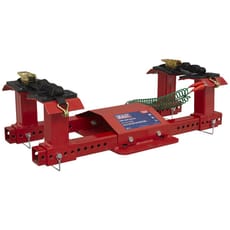
Adaptability and Versatility: Consider transmission jacks that accept additional adaptors such as fuel tank cradles, subframe mounting plates, and engine support adaptors. This versatility maximises your investment, particularly valuable in smaller workshops where space and budget constraints limit equipment purchases. Sealey offers dedicated adaptors that transform their transmission jacks into multi-purpose lifting tools for various underbody component servicing tasks beyond gearbox work alone.
Operational Features: Foot-pedal operation allows hands-free height adjustment, keeping both hands available for guiding and securing the transmission. Quick-lift systems dramatically reduce pumping time during initial positioning. Look for models with ergonomic pump handles, smooth hydraulic action without jerking, and precise lowering control via release valves. These operational refinements significantly reduce operator fatigue during lengthy gearbox removal and installation procedures.
Popular Accessories
- Fuel Tank Cradles – Specialist saddle adaptors designed specifically for safe fuel tank removal and installation, featuring shaped supports that prevent tank deformation and secure strapping points
- Subframe Adaptors – Heavy-duty mounting plates and brackets for supporting vehicle subframes during suspension overhauls, steering rack replacement, and major underbody structural work
- Engine Load Adaptors – Alternative cradle systems that convert transmission jacks for supporting engine blocks during removal or installation when used in conjunction with engine hoists
- Universal Gearbox Support Brackets – Adjustable mounting hardware with multiple positioning holes for securing different transmission shapes, sizes, and mounting configurations
- Replacement Safety Chains – Essential safety equipment rated for appropriate working loads that should be replaced immediately if damaged, worn, or stretched beyond manufacturer specifications
- Axle Stands – Critical safety equipment for supporting the vehicle's weight whilst the transmission jack supports only the gearbox—never work under a vehicle supported solely by jacks
- Workshop Ramps – Provide necessary access height and working clearance for using floor transmission jacks safely, with appropriate load ratings for your vehicle types
- Hydraulic Trolley Jacks – For initial vehicle lifting before positioning on stands or ramps, essential for ground-level access to transmission mounting points
- Transmission Fluid Drain Pans – Large-capacity low-profile pans for collecting gearbox oil during transmission removal, preventing workshop contamination and environmental hazards
- Wheel Chocks – Prevent vehicle movement during transmission work, providing additional security alongside handbrake and gear selection safety measures
Safety Information
Never work under a vehicle supported only by a transmission jack. Always use appropriate axle stands, workshop ramps, or vehicle lifts rated for the vehicle's weight to support the chassis. The transmission jack must only support the transmission itself, never the vehicle's weight. This is a fundamental HSE requirement for safe workshop practices and is non-negotiable regardless of time pressures or workspace limitations.
Ensure the transmission jack is positioned on level, solid ground before raising any load. Uneven surfaces, loose workshop flooring, or contaminated areas with oil or fluid spillage can cause instability and dangerous load shifting. Always engage all castor brakes before raising or lowering loads, and never attempt to reposition a loaded transmission jack with brakes disengaged. Keep the work area clear of obstructions, tools, and trip hazards throughout the entire procedure.
Verify that the transmission jack's rated capacity substantially exceeds the weight of the component being lifted. Overloading causes hydraulic failure, structural damage, and potentially catastrophic equipment failure resulting in serious injury. When transmission weights are unknown, consult vehicle manufacturer specifications or err on the side of caution by selecting higher-capacity equipment. Remember that fluid-filled transmissions weigh significantly more than drained units.
Always use the safety chain to secure the transmission to the jack saddle before moving, tilting, or adjusting height. This prevents unexpected load shifting during positioning and is mandatory under HSE lifting equipment regulations. Inspect safety chains before every use for wear, distortion, damaged links, or compromised attachment points. Replace chains immediately if any defects are identified—never attempt temporary repairs or continued use of damaged safety equipment.
Wear appropriate personal protective equipment including steel-toe-capped safety boots, protective gloves rated for mechanical work, and safety glasses when operating transmission jacks. Gearbox work involves heavy components overhead, sharp metal edges, and hot surfaces on recently operated vehicles. Transmission fluid spillage creates serious slip hazards—clean up immediately using appropriate absorbent materials and ensure adequate workshop ventilation when working with gearbox oils which may emit harmful vapours.
Regularly inspect hydraulic transmission jacks for fluid leaks around rams and reservoirs, damaged or seized castors, bent frames or saddle arms, worn adjustment mechanisms, and degraded hydraulic seals. Equipment showing any signs of damage, unusual operation, or reduced performance must be removed from service immediately and repaired by qualified personnel or returned to the manufacturer. Follow the manufacturer's maintenance schedule including hydraulic fluid changes, lubrication of pivot points, and annual thorough examination as required by LOLER regulations for workplace lifting equipment. Proper maintenance ensures continued safe operation and compliance with HSE workplace equipment standards.
Frequently Asked Questions
What's the main difference between vertical and floor transmission jacks?
Vertical transmission jacks feature a tall, narrow design ideal for vehicles on workshop lifts or ramps, typically reaching heights of 1.5-2 metres with a compact footprint measuring around 600mm square. Floor transmission jacks are low-profile units designed for vehicles on axle stands, trading maximum height for greater stability with their wider base and lower centre of gravity. Vertical models are preferred in professional workshops with two-post or four-post lifts, whilst floor jacks suit home garages and facilities without permanent lifting equipment. The choice depends primarily on your vehicle support method and available working height rather than performance differences.
Can transmission jacks be used for removing fuel tanks and subframes?
Yes, many transmission jacks accept specialist adaptors for fuel tank removal, subframe servicing, differential work, and even auxiliary engine support tasks. Both Sealey and Draper offer dedicated cradles and mounting plates that transform transmission jacks into versatile underbody component lifting tools. However, always verify that adaptors are specifically designed for your jack model and that the combined weight of the component plus adaptor doesn't exceed the jack's rated capacity. Using appropriate adaptors significantly increases equipment versatility and return on investment, particularly valuable in smaller workshops where space limits equipment purchases.
Do I really need a transmission jack for DIY clutch replacement?
Whilst it's technically possible to remove gearboxes using trolley jacks, timber supports, and assistance from helpers, a proper transmission jack makes the job considerably safer, easier, and far less likely to result in personal injury or expensive component damage. The adjustable tilting mechanism is particularly valuable for aligning the transmission input shaft with clutch splines during reinstallation—a task that's extremely difficult without proper equipment. For frequent gearbox work or professional applications, a transmission jack is essential equipment. Even serious DIY enthusiasts undertaking occasional clutch replacements benefit significantly from the control, safety, and reduced physical strain these specialised tools provide.
What capacity transmission jack do I need for a standard family car?
Most passenger car manual transmissions weigh between 50-100kg, whilst automatic gearboxes typically weigh 80-120kg due to their torque converter and additional fluid capacity. A transmission jack with 150-300kg capacity is generally sufficient for standard family cars, hatchbacks, and saloons. However, larger vehicles including 4x4s, SUVs, people carriers, and commercial vehicles require higher capacities—often 400-600kg for their substantially heavier transmission assemblies. Always choose capacity well above your typical requirements to provide safety margin and accommodate heavier units should your work expand. Consult vehicle workshop manuals or manufacturer specifications for precise transmission weights before purchasing equipment.
How should I maintain my transmission jack to ensure longevity?
Regularly inspect all moving parts, castors, saddle adjustment mechanisms, and hydraulic components for wear, damage, or unusual operation. Keep the hydraulic ram clean and lightly lubricated with appropriate hydraulic oil, checking reservoir fluid levels if accessible according to manufacturer guidelines. Grease all pivot points, adjustment screws, and tilting mechanisms according to the maintenance schedule provided. Store the jack in a dry environment to prevent corrosion, particularly important given exposure to transmission fluid and typical garage moisture. Never exceed the stated capacity or use damaged equipment. If hydraulic performance decreases, you notice fluid leaks, or mechanical components show wear, have the jack serviced by qualified personnel before further use to maintain HSE compliance and safe operation.