

Welding Safety & Protection

Pay in 3 interest-free payments on purchases from £20-£3000 with  . Learn more.
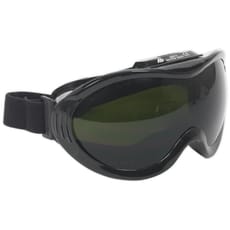


 Loading...
End of content
Error - No more pages to load
About Welding Safety & Protection
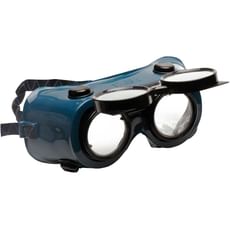
Welding operations expose workers to some of the most hazardous conditions in any workshop or fabrication environment, including intense UV and infrared radiation, molten metal spatter, toxic fumes, and extreme heat. Proper welding safety equipment isn't just recommended—it's essential for preventing serious injuries ranging from arc eye and skin burns to permanent vision damage. Tooled-Up.com provides a comprehensive selection of specialist welding protection designed to safeguard every part of the body exposed during MIG, TIG, arc, and gas welding processes.
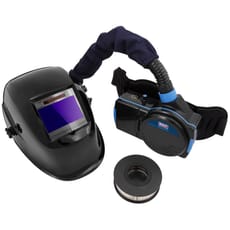
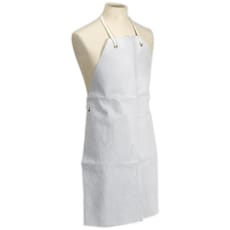
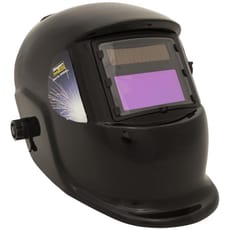
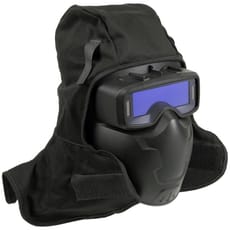
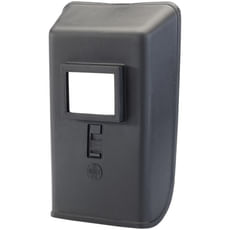
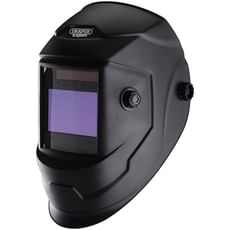
This category encompasses all the critical personal protective equipment (PPE) required for safe welding operations, from auto-darkening helmets and fixed-shade welding masks to heat-resistant aprons, gauntlets, and leg protection. Whether you're tackling occasional repair work in a home workshop or running a professional fabrication shop with multiple welding bays, selecting appropriate protection that meets current British and European safety standards is non-negotiable. Modern welding safety gear combines robust protection with improved comfort and visibility, helping welders work more efficiently without compromising on safety.
Beyond the basic requirements, today's welding protection has evolved significantly with innovations like auto-darkening filters that adjust instantaneously to arc brightness, flame-retardant fabrics with enhanced breathability, and ergonomic designs that reduce fatigue during extended welding sessions. The range available from Tooled-Up includes options suitable for light-duty DIY projects through to heavy industrial applications, ensuring tradespeople can find protection appropriate to their specific welding processes and work environments.
Jargon Buster
- Shade Number: A numerical rating (typically 8-13 for welding) that indicates how much visible light and radiation a lens filters out. Higher numbers provide greater protection for higher-amperage welding processes. MIG welding typically requires shade 10-11, whilst TIG work often uses shade 11-13.
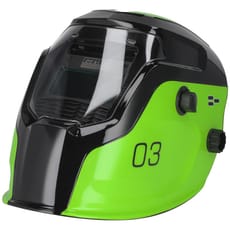
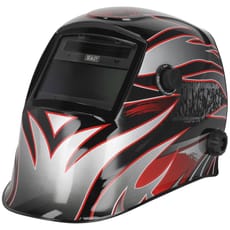
- Auto-Darkening Filter (ADF): An electronic lens system in modern welding helmets that automatically transitions from a light state (shade 3-4) to a protective dark state (shade 9-13) in milliseconds when an arc is struck, eliminating the need to constantly flip a helmet up and down between welds.
- Optical Clarity Rating: A four-digit classification (e.g., 1/1/1/2) defined by EN379 that measures optical quality, light diffusion, variations in luminous transmittance, and angle dependence. Lower numbers indicate better optical performance, with 1/1/1/1 being the highest quality.
- Arc Flash: The intense burst of ultraviolet and infrared radiation emitted when a welding arc is struck, which can cause painful "arc eye" (photokeratitis) if eyes are unprotected—even from brief exposure at a distance.
- Spatter Resistance: The ability of protective clothing and equipment to resist damage from hot metal droplets ejected during welding processes, typically achieved through leather or specially treated flame-retardant fabrics.
- Switching Speed: The time an auto-darkening filter takes to change from light to dark state when detecting an arc, measured in fractions of a second. Quality filters switch in 1/25,000th of a second or faster to protect eyes before harmful radiation reaches them.
Who Uses Welding Safety & Protection?
- Fabricators and Welding Professionals: Full-time welders in manufacturing, construction, and repair industries requiring complete protection systems for daily arc welding operations
- Mobile Welders: Site-based welders who need portable, durable protection that withstands transport between locations and varied working conditions
- Agricultural Engineers: Farm machinery repair specialists who carry out welding repairs on equipment, often in outdoor or field conditions
- Automotive Technicians: Mechanics and body shop workers performing welding repairs on vehicle chassis, exhaust systems, and structural components
- Maintenance Engineers: Industrial maintenance teams who undertake repair welding on machinery, pipework, and structural steelwork
- Metal Artists and Sculptors: Creative professionals working with welded metal who require protection during artistic fabrication processes
- Construction Workers: Steel erectors, structural engineers, and general builders who perform welding as part of construction and renovation projects
- DIY Enthusiasts: Home workshop users tackling occasional welding projects on garden equipment, trailers, gates, and restoration work
- Educational Institutions: Colleges and training centres teaching welding skills that require compliant safety equipment for students and instructors
How to Choose the Right Welding Safety & Protection
Assess Your Welding Process: Different welding methods generate varying levels of radiation, heat, and spatter. MIG welding typically produces more spatter requiring comprehensive coverage, whilst TIG welding generates less but demands excellent visibility due to its precision nature. Match your protection level to the specific amperage and process you'll be using most frequently.
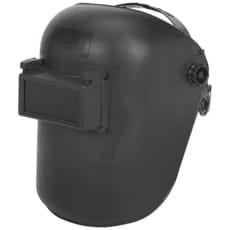
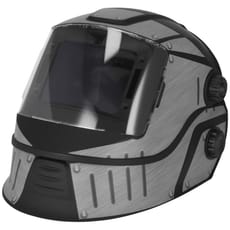
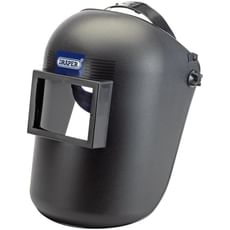
Helmet or Mask Selection: Auto-darkening helmets offer significant advantages over traditional passive flip-front designs, particularly for repetitive work where constantly raising and lowering a helmet becomes tiresome. Consider the viewing area size—larger screens provide better peripheral vision and are especially beneficial for out-of-position welding. Check the shade range covers your welding processes, and verify the switching speed is adequate (1/20,000th second or faster for professional use).
Optical Quality Matters: Don't compromise on lens quality, as you'll be looking through the filter for extended periods. Premium helmets with 1/1/1/1 optical clarity ratings reduce eye strain and provide sharper, truer colour perception, helping you see the weld pool more clearly and produce better quality work. Solar-powered auto-darkening filters with replaceable batteries offer better reliability than battery-only systems.
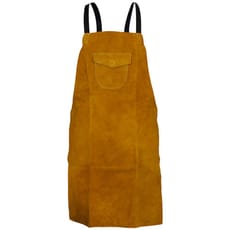
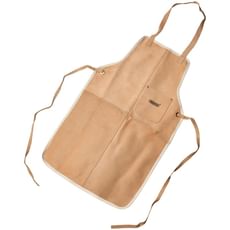
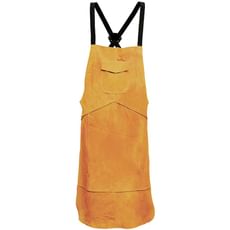
Body Protection Coverage: Leather remains the gold standard for welding aprons and sleeves due to its exceptional heat and spatter resistance, though modern flame-retardant fabrics offer lighter-weight alternatives for lower-intensity work. Ensure aprons provide adequate coverage—chest-to-knee protection is standard, but consider waist-to-ankle styles for overhead welding. Split-leg aprons offer better mobility when working in confined spaces.
Consider Comfort for Extended Use: Professional welders spending hours behind a helmet should prioritise comfort features including adjustable headbands, adequate padding, balanced weight distribution, and good ventilation. Lightweight helmets (under 500g) reduce neck strain, whilst helmets with grinding modes that switch to shade 3-4 eliminate the need to remove the helmet between tasks.
Compliance with Standards: All welding PPE sold in the UK must comply with relevant EN standards—EN175 for head protection, EN166 for eye protection, EN407 for thermal hazards, and EN11611 for protective clothing. The Tooled-Up range includes products certified to current British and European safety standards, ensuring legal compliance and genuine protection. Check certification markings before purchase, particularly when buying welding helmets.
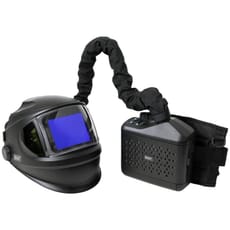
Additional Features: For professional environments, consider helmets with respiratory integration compatibility if working with stainless steel or galvanised materials that produce hazardous fumes. Magnetic lens holders simplify changing cover plates, whilst helmets with external grind buttons allow adjustment without removing gloves. Some premium models include arc sensors positioned to avoid false triggering from nearby welders.
Popular Accessories
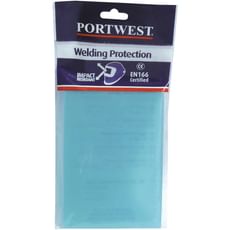
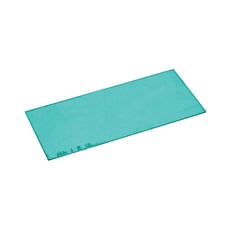
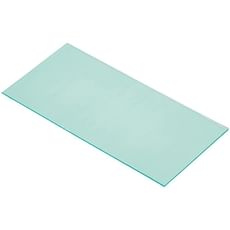
- Replacement Cover Plates: Clear protective outer lenses that shield expensive auto-darkening filters from spatter damage and scratches—essential consumables that should be replaced regularly
- Welding Gauntlets: Extended-cuff leather gloves providing wrist and forearm protection from heat, sparks, and UV radiation
- Replacement Filters: Spare auto-darkening cartridges and passive lens inserts to extend helmet life and maintain optical quality
- Welding Screens and Curtains: Portable partitions that protect nearby workers from arc flash and contain sparks in shared workshop environments
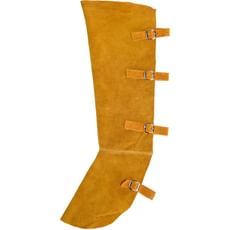
- Spats and Boot Protectors: Leather covers that prevent hot spatter from entering footwear, particularly important for overhead welding positions
- Welding Jackets: Full upper-body protection in leather or flame-retardant fabric for extended welding sessions or high-spatter processes
- Respirators and Fume Extraction: Breathing protection for welding processes that generate hazardous fumes, particularly when working with stainless steel, galvanised, or painted metals
- Helmet Sweatbands: Absorbent replaceable liners that improve comfort and hygiene inside welding helmets
- Cleaning Products: Specialised cleaners for maintaining optical clarity of lenses and filters without causing scratches or damage
Safety Information
Regular Equipment Inspection: Welding safety equipment deteriorates with use and must be inspected before each use. Check auto-darkening filters function correctly by testing them in bright light before striking an arc. Examine leather aprons and gauntlets for cracks, burns, or thin spots that compromise protection. Replace cracked or scratched lenses immediately, as optical defects cause eye strain and damaged filters may not provide adequate UV/IR protection.
Understanding Radiation Hazards: Welding arcs emit ultraviolet and infrared radiation that causes damage even without direct viewing—reflected radiation from shiny surfaces can cause arc eye. Never strike an arc without proper eye protection in place, and ensure nearby workers are protected by screens or are positioned outside the hazard zone. Even brief exposure can cause painful photokeratitis (arc eye) symptoms appearing several hours after exposure.
Protective Clothing Requirements: Standard work clothing offers insufficient protection during welding. Dark, tightly-woven fabrics underneath welding PPE help prevent UV radiation reaching skin. Never wear synthetic fabrics like polyester or nylon that can melt and cause severe burns—cotton or wool underlayers are essential. Ensure all skin is covered, as UV radiation causes sunburn-like injuries even to areas not directly facing the arc.
Electrical and Fire Safety: Welding environments present electrical shock and fire hazards alongside radiation risks. Leather welding PPE provides some electrical insulation but should never be relied upon as primary electrical protection. Keep flammable materials away from welding areas, and ensure adequate ventilation when working in confined spaces where fumes can accumulate. Be aware that some auto-darkening helmets may malfunction near strong electromagnetic fields or when batteries are depleted.
HSE Guidance Compliance: Employers must provide appropriate PPE at no cost to employees under the Health and Safety at Work Act and Personal Protective Equipment at Work Regulations. Risk assessments should identify specific hazards of each welding process and specify required protection levels. Training on correct use, maintenance, and limitations of welding safety equipment is mandatory, not optional.
Frequently Asked Questions
What shade number do I need for different welding processes?
MIG welding typically requires shade 10-11, TIG welding uses shade 11-13 depending on amperage, whilst arc welding (stick) generally needs shade 10-12. Gas welding and cutting use lower shades around 4-6. Most auto-darkening helmets offer adjustable shade ranges (typically shade 9-13) that cover multiple processes. When in doubt, start with a darker shade and adjust lighter if needed—it's safer to have slightly more protection than insufficient. The appropriate shade should allow you to clearly see the weld pool whilst feeling no eye discomfort.
Are auto-darkening helmets worth the extra cost compared to passive helmets?
For anything beyond occasional hobby welding, auto-darkening helmets deliver substantial benefits that justify their higher cost. They eliminate the constant helmet-flipping required with passive helmets, significantly reducing neck strain and improving productivity—professional welders report up to 30% time savings. The ability to position work and check fit-up with the helmet down, then weld immediately without adjustment, improves both comfort and weld quality. Modern auto-darkening filters from reputable manufacturers are extremely reliable, with solar cells and replaceable batteries providing years of service. Entry-level auto-darkening helmets now cost little more than quality passive helmets whilst delivering far superior usability.
How often should welding safety equipment be replaced?
Replacement schedules depend on usage intensity and equipment condition rather than fixed timeframes. Auto-darkening filters typically last 5-7 years with proper care, though batteries need replacement every 2-3 years or when switching speed deteriorates. Outer cover plates should be replaced when scratched or spatter-coated—often weekly for professional welders. Leather aprons and gauntlets require replacement when cracked, burned through, or stiffened to the point of reduced flexibility. Inspect all equipment before each use and replace immediately if damage compromises protection. Keep records of inspection dates, particularly in commercial environments where HSE compliance documentation may be required.
Can I use a welding helmet for plasma cutting or grinding?
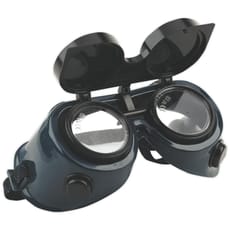
Most modern auto-darkening helmets include a grinding mode (typically shade 3-4) that's suitable for light grinding work, eliminating the need to change headgear between tasks. However, welding helmets don't provide adequate protection for extended grinding—they lack the impact resistance and coverage of dedicated grinding face shields. For plasma cutting, standard welding helmets provide appropriate protection, though you may need to adjust to a lighter shade (around 8-9) as plasma cutting produces less intense light than arc welding. Some premium helmets automatically detect and adjust to different processes, though manual adjustment is more reliable for ensuring appropriate protection levels.
Do I need respiratory protection when welding?
Respiratory protection requirements depend on the materials being welded and ventilation quality. Mild steel welding in well-ventilated areas may not require respiratory protection, but welding stainless steel, galvanised materials, painted metals, or in confined spaces mandates proper breathing protection due to toxic fume generation. Hexavalent chromium from stainless steel and zinc oxide from galvanised coatings are particularly hazardous. Options range from disposable respirators for occasional exposure to powered air-purifying respirators (PAPR) integrated with welding helmets for professional fabrication work. COSHH regulations require employers to assess fume exposure and provide appropriate respiratory protection—this isn't optional. When in doubt, use respiratory protection and ensure adequate ventilation or fume extraction.