

Pillar Drills
Pay in 3 interest-free payments on purchases from £30-2000 with  . Learn more.
 Loading...
End of content
Error - No more pages to load
About Pillar Drills
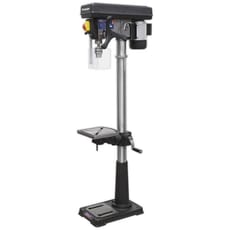
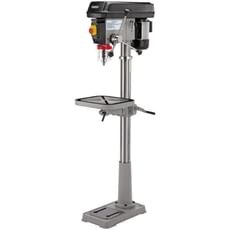
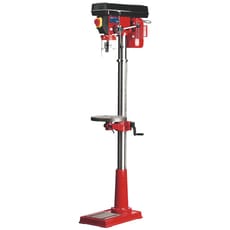
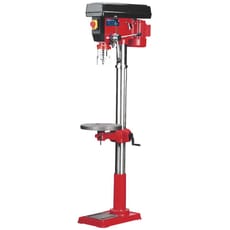
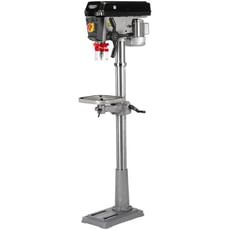
Pillar drills, also known as pedestal drills or drill presses, are essential workshop machines designed to deliver precise, vertical drilling operations with unmatched accuracy and consistency. Unlike handheld drills, these floor-standing units feature a fixed vertical column (or pillar) that supports the drilling head, allowing you to bring the drill bit down onto your workpiece with controlled depth and perfect perpendicularity. This makes them indispensable for creating accurate holes in metal, wood, plastics, and composite materials where precision is paramount.
The pillar drill selection at Tooled-Up.com includes heavy-duty floor standing models from trusted manufacturers like Sealey and Draper, offering between 5 and 16 speed settings to suit various materials and drilling applications. These robust machines feature powerful motors, substantial worktables with adjustable height settings, and chuck capacities suitable for a wide range of drill bit sizes. Whether you're drilling repetitive holes in fabrication work, creating precise mounting points, or tackling demanding metalworking projects, a quality pillar drill transforms what would be challenging handheld work into straightforward, accurate operations.
Floor-standing models dominate the range, providing the stability and throat depth required for larger workpieces. With options ranging from compact 12-speed units ideal for smaller workshops through to industrial-grade 16-speed models and even radial pillar drills that offer enhanced versatility, there's a machine to match every workshop requirement and budget.
Jargon Buster
- Speed Settings: The number of different rotational speeds (measured in RPM - revolutions per minute) available on the drill. More speeds provide greater versatility across different materials; slower speeds suit metals and larger bits, whilst faster speeds work better for wood and smaller diameter drilling.
- Chuck Capacity: The maximum drill bit shank diameter the chuck can accommodate, typically measured in millimetres. Common capacities range from 13mm to 16mm, determining the largest drill bit you can use.
- Throat Depth: The horizontal distance from the centre of the chuck to the supporting column. This determines how far from the edge of a workpiece you can drill - crucial when working with large panels or sheets.
- Quill Travel: The maximum vertical distance the spindle and chuck can move downwards, determining the maximum depth of hole you can drill in a single pass.
- Radial Pillar Drill: A more versatile design where the drill head can swing around the column and be adjusted along a radial arm, allowing you to position the drill over different areas of large workpieces without repositioning the material.
- Morse Taper: A standardised tapered fitting system used to secure the chuck to the spindle. Common in pillar drills, this self-holding taper ensures solid, accurate mounting without requiring threads.
Who Uses Pillar Drills?
Pillar drills serve a diverse range of trades and applications:
- Fabricators and welders - for precise hole placement in steel components and brackets
- Engineering workshops - creating accurate holes for bolts, pins, and assembly work
- Joiners and cabinet makers - drilling consistent dowel holes and hardware mounting points in timber
- Metalworkers and machinists - producing precision holes in various metals and alloys
- Maintenance and repair engineers - workshop-based drilling and modification work
- Model makers and craftspeople - detailed work requiring exact hole positioning
- Educational facilities - teaching workshops in colleges and training centres
- Serious DIY enthusiasts - home workshop owners tackling restoration, fabrication, and woodworking projects
- Automotive workshops - drilling and modification of vehicle components and custom brackets
- General construction contractors - workshop-based preparation and fabrication work
How to Choose the Right Pillar Drills
Selecting the appropriate pillar drill depends on several critical factors that should align with your specific workshop requirements:
Speed Range and Settings: Consider the materials you'll primarily work with. Models with 12-16 speed settings offer excellent versatility, allowing you to optimise RPM for everything from soft timbers to hard steels. Five-speed models may suffice for specialised applications but limit flexibility. Variable speed models provide even finer control for demanding operations.
Motor Power and Build Quality: Heavy-duty models feature robust cast iron construction and powerful motors capable of handling continuous professional use. Check the motor rating (typically between 250W and 750W) - higher power enables drilling larger diameter holes and working with harder materials without bogging down or overheating.
Capacity Specifications: Assess the throat depth relative to your typical workpiece sizes - deeper throats accommodate larger panels. Similarly, consider quill travel if you regularly drill deep holes. Chuck capacity determines maximum bit size; 16mm chucks offer greater versatility than 13mm variants.
Table Size and Adjustability: Larger worktables provide better support for substantial workpieces. Look for tables that tilt for angled drilling and feature smooth height adjustment. T-slots in the table surface allow secure clamping of work and the use of machine vices.
Workshop Space: Floor-standing pillar drills require significant floor space and ceiling height. Measure your available area carefully, allowing clearance for material handling and safe operation around the machine.
Brand Reputation: Sealey and Draper both offer reliable pillar drills with strong after-sales support and spare parts availability - important considerations for long-term workshop equipment investments.
Popular Accessories
- Machine Vices: Essential for securely holding workpieces during drilling, preventing dangerous rotation and ensuring accuracy
- Drill Bit Sets: HSS (high-speed steel) bits for metal, brad point bits for wood, and specialist bits for various materials
- Morse Taper Chucks: Replacement or additional chucks with different capacities to expand your drilling capabilities
- Clamp Kits: T-bolt clamps and clamping sets for securing work directly to the table or for fixing vices and jigs
- Depth Stops: For setting precise, repeatable drilling depths across multiple identical workpieces
- Sanding Drums and Attachments: Transform your pillar drill into a precision sanding station for curved work
- Centre Punches: For marking accurate starting points and preventing bit wander on hard materials
- Cutting Fluid and Lubricants: Essential for metalworking to reduce heat, improve bit life, and achieve cleaner holes
- LED Work Lights: Magnetic or clamp-on lights to illuminate the drilling area for precision work
Safety Information
Pillar drills are powerful workshop machines requiring strict safety protocols:
Personal Protective Equipment: Always wear safety glasses or a face shield to protect against flying chips and swarf. Avoid loose clothing, jewellery, and tie back long hair - rotating machinery can catch and pull loose items with devastating consequences. Never wear gloves when operating the drill, as they can be caught by the rotating chuck or bit.
Workpiece Security: Never hold workpieces by hand during drilling, especially small items or metal pieces. Always use a machine vice, clamps, or dedicated holding jigs. Workpieces can grab and spin violently when the bit breaks through, causing serious injury.
Electrical Safety: Ensure your pillar drill is correctly earthed and connected to a suitable 240v UK supply. Consider using an RCD (residual current device) for additional protection. Check power cables regularly for damage and never operate machinery with compromised electrical systems.
Operational Practices: Always allow the drill to reach full speed before engaging the workpiece. Never attempt to slow or stop the chuck with your hand. Remove the chuck key immediately after adjustment - a key left in the chuck becomes a dangerous projectile when the machine starts. Keep the work area clean and free from clutter, and ensure adequate lighting for precision work.
Maintenance and Guards: Keep all safety guards in place and properly adjusted. Regularly inspect drive belts, pulleys, and moving parts for wear. Follow the manufacturer's maintenance schedule, and consult the HSE guidelines for workshop machinery to ensure compliance with UK safety regulations.
Frequently Asked Questions
What's the difference between a 12-speed and 16-speed pillar drill?
More speed settings provide finer control over drilling operations across different materials. A 16-speed model offers more precise RPM matching for optimal results, particularly beneficial if you work with diverse materials from soft aluminium to hardened steel. However, a quality 12-speed drill covers most common applications adequately for general workshop use, whilst 5-speed models suit more specialised, repetitive work.
Can I use a pillar drill for woodwork as well as metalwork?
Absolutely. Pillar drills are highly versatile machines suitable for both disciplines. For woodworking, use higher speeds and wood-specific drill bits (brad point or spur bits). For metalwork, select lower speeds appropriate to the material hardness and use HSS or cobalt bits with cutting fluid. The ability to switch between applications makes pillar drills excellent all-round workshop investments.
How much space do I need for a floor-standing pillar drill?
Allow a minimum footprint of approximately 600mm x 600mm for the drill itself, plus adequate clearance around all sides for material handling and safe operation - typically at least 1 metre of clear space on the approach side. Ceiling height requirements vary by model but generally need 2.5-3 metres clearance. Also consider access for delivery, as these heavy machines (often 80-150kg) may require assistance or equipment to position.
Do pillar drills require three-phase power supply?
The models available from Tooled-Up.com are designed for standard UK single-phase 240v supply, making them suitable for typical workshops, garages, and domestic installations. They connect via standard 13A plugs, though some larger models may benefit from a dedicated circuit. Industrial three-phase pillar drills exist but are generally only found in large-scale manufacturing environments.
What maintenance do pillar drills require?
Regular maintenance is straightforward but essential. Keep the column and moving parts lightly oiled, check and adjust drive belt tension periodically, and clean away accumulated swarf and dust. Inspect the chuck for wear and ensure it grips securely. Lubricate the quill mechanism according to the manufacturer's schedule, and check all fixings remain tight. With proper care, a quality pillar drill will provide decades of reliable service.